Easiest Ways to Solve 3rd Grade Math Problems With Examples
Solve 3rd-grade math problems easily using visuals & simulations. Explore my expert picks for the best free math worksheets & learning games.

Parents of 3rd graders often ask: Why do students get stuck or lose confidence, even after hours of video lessons or worksheets?
3rd grade is a huge turning point in math. I see it happen every year: kids go from just learning basic math facts to actually using math to figure out complex problems.
I recently sat down with expert Cuemath tutors to find out exactly where 8-year-olds get stuck. The main issue? Moving from counting on fingers to doing math in their heads is a massive leap that trips up even the smartest kids.
We are going to show the easiest ways to solve 3rd-grade math problems with the help of Cuemath visuals and simulations and the absolute best resources available.
Where Do 3rd Graders Struggle?
According to Cuemath tutors, 3rd-grade students primarily struggle because they must read and solve word problems at the same time. If they don’t understand the question, they may lose focus or give up.
- 3rd Grade Math Problems are Difficult to Visualize
Consider this common 3rd-grade math problem:
Mia has 12 apples. She gives 5 to her friend. How many does she have left?
If reading and comprehending this feels tough, your child might lose interest before they even get to the math.
2. Distracting or Irrelevant Numbers
Some 3rd grade math problems often seem to be piling on the extra information:
“There are 10 pencils, 7 pens, and 8 crayons in a box. How many pencils are there?”
It is easy for a child to add all the numbers instead of focusing only on pencils.
3. Multi-Step Problems Introduce More Complexity
3rd-grade math often asks for two-step thinking:
“Jessie has 12 candies, buys 8 more, then gives 5 to a friend. How many candies now?”
Kids interpret one step, get confused at the second step or mix up the order.
Tips for Solving Complex 3rd Grade Word Problems
When children see a block of text, panic often sets in. Here are my top tips for solving complex 3rd-grade word problems:
- The CUBES Method: Teach them to Circle numbers, Underline the question, Box the math action words (like altogether or left over), Evaluate the steps, and Solve.
- Draw it out: Encourage them to sketch the scenario. Visualizing the story removes the intimidation factor of the text.
Solved 3rd Grade Math Problems With Answers (+ Visual Simulations)
Let's put theory into practice. I compiled the following section with the help of Cuemath tutors. Below are common 3rd-grade math problems to solve, showcasing the exact visual and simulation-based methods Cuemath uses to help 3rd-grade students learn, understand, and solve math problems.
Addition Math Problems for 3rd Graders
Concept: Add Numbers up to 4-Digits Without Regrouping
Question 1:
Let us see how to add 3-digit numbers using models.
Find 213 + 122
- Represent each number using models
- Add the ones.
- Then, add the tens.
- Finally, add the hundreds.
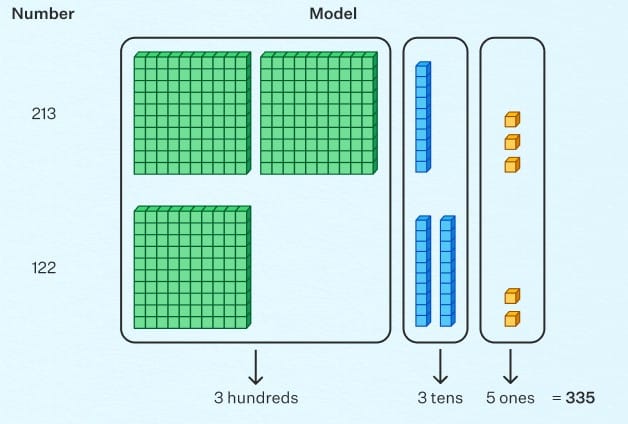
On adding, we get 3 hundreds, 3 tens, and 5 ones, which is 335
So,
213+122 = 335
These are the types of addition 3rd-grade math problems with answers that you should practice regularly, as they build crucial executive functioning skills.
Question 2:
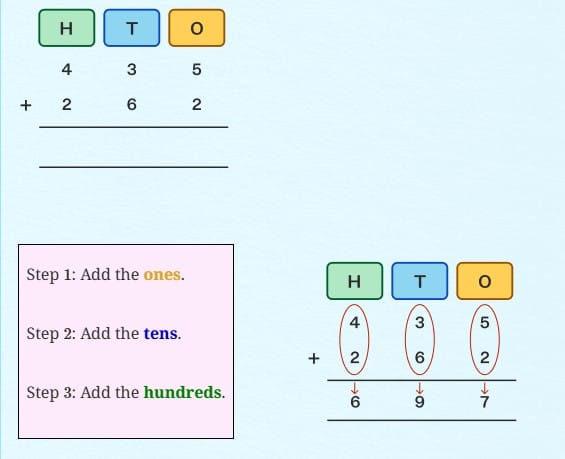
Let us now add 3-digit numbers without using models.
Find 435 + 262
We place the numbers one below the other, according to their places.
So,
435 + 262 = 697
Subtraction Math Problems for 3rd Graders
Concept: Subtract Numbers up to 4-Digits Without Regrouping
Question 3:
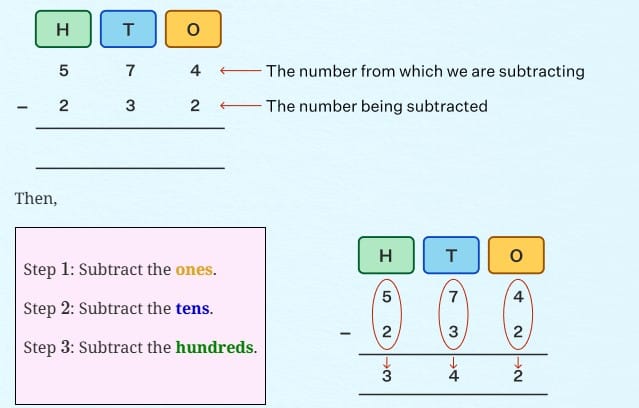
Let us now subtract 3-digit numbers without using models.
Find 574 - 232
Place the numbers one below the other, according to their places.
So,
574 - 232 = 342
Multiplication Math Problems for 3rd Graders
Here are some effective strategies for teaching third-grade multiplication.
Question 4:
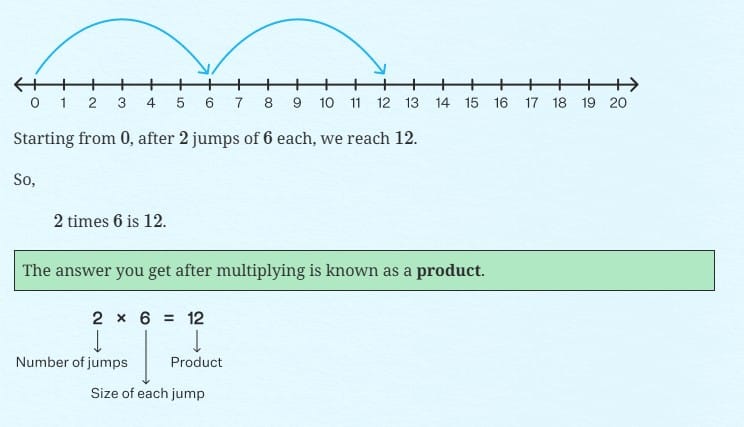
Let us learn how to multiply single-digit numbers using number lines.
Question 5:
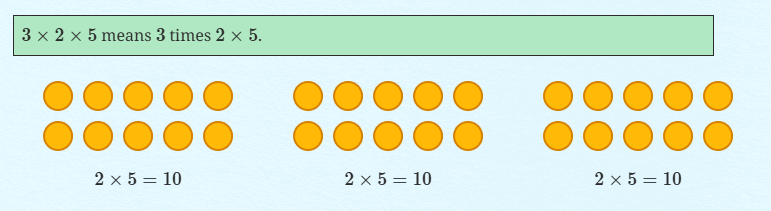
Let us learn to multiply three numbers.
Consider 3 X 2 X 5
First, find 2 X 5
2 X 5 = 10
So,
3 X 2 X 5
= 3 X 10
= 30
Division Math Problems for 3rd Graders
Let us learn how to divide numbers using multiplication.
Question 6:
Leo has 15 crayons.
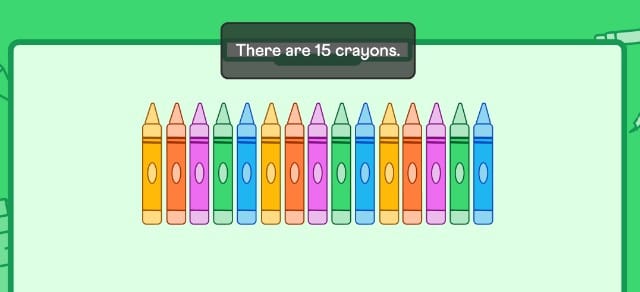
He places them equally in 3 boxes.
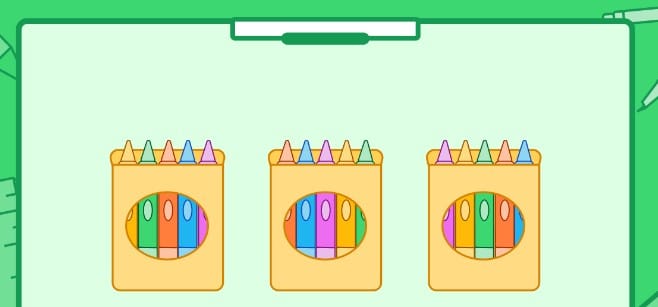
Find how many crayons will be in each box.
We can write this division as: 15 ➗ 3 = 5
Look at the boxes of crayons again
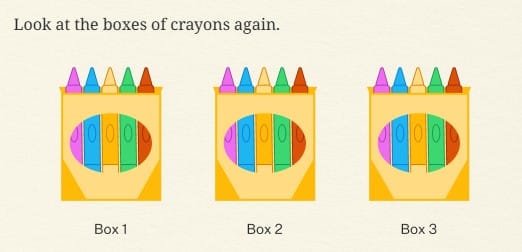
One box has 5 crayons. How many crayons are there in 3 such boxes?
Total number of crayons is:
3 X 5 = 15
Fraction Math Problems for 3rd Graders
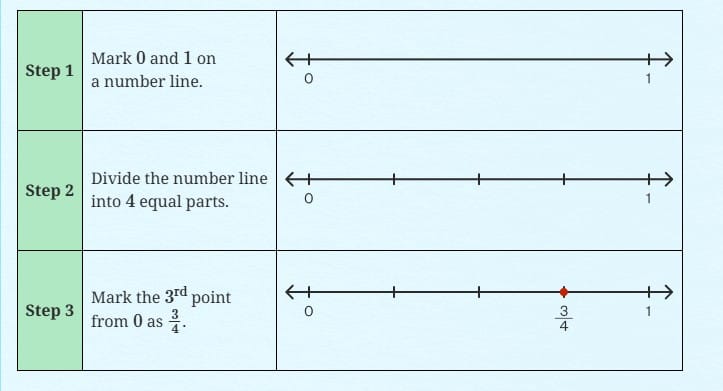
Let us learn how to plot fractions on a number line.
Question 7:
Plot the fraction 3/4 on a number line.
Time Math Problems for 3rd Graders
Let us learn how to read time to the exact minute.
Question 8:
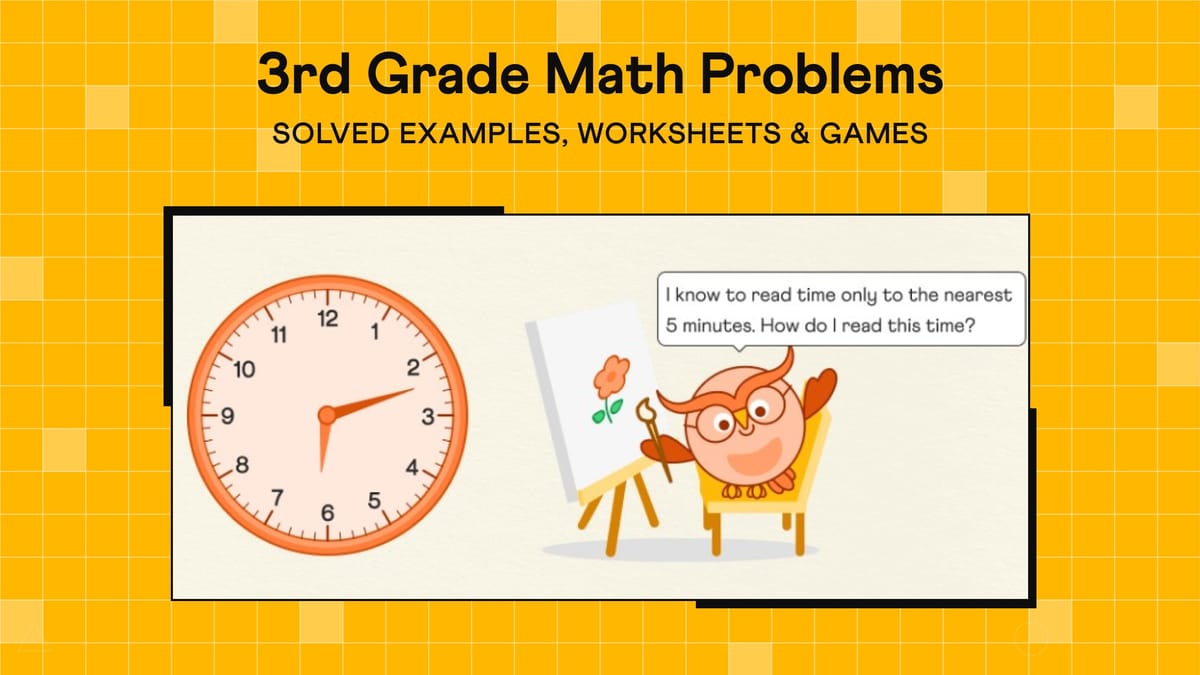
The clock shows the time Owlie finished coloring. At what time did Owlie finish coloring?
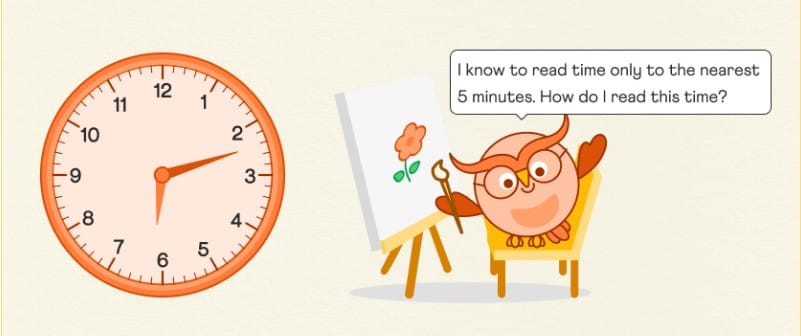
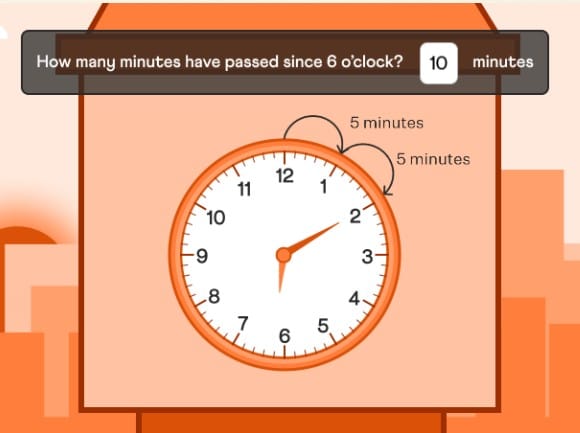
Let’s start by moving the clock ahead to 10 minutes (5+5 each time)
Now move down to 1 minute each
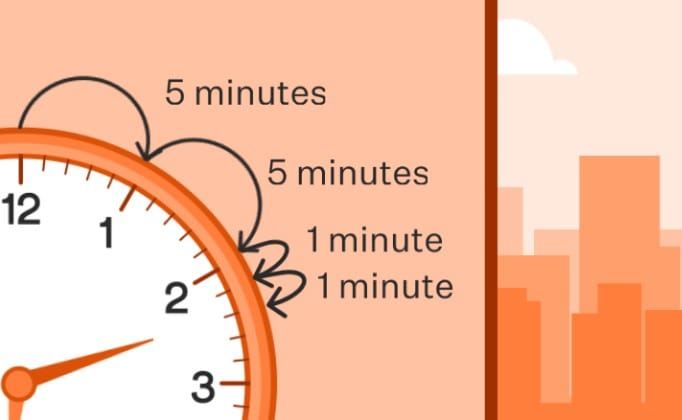
Minutes passed since 6 o’clock
= 10 + 1 + 1
= 12 minutes
So, Owlie finished coloring at 6:12
Data Handling Math Problems for 3rd Graders
Question 9:
The bar graph shows the different types of birds that Mindy saw in a jungle.
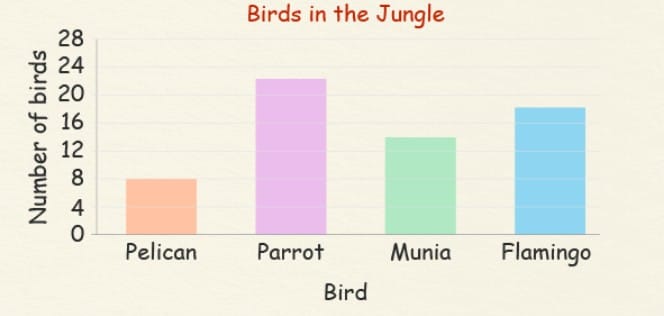
What is the difference between the number of Pelicans and Flamingos that Mindy saw?
From the bar graph we can see,
Number of Pelicans = 8
Number of Flamingos = 18 (The bar is plotted between 16 and 20, so half of this is 18)
Difference = Flamingos minus Pelicans
= 18 - 8
= 10
Area and Perimeter Math Problems for 3rd Graders
Question 10:
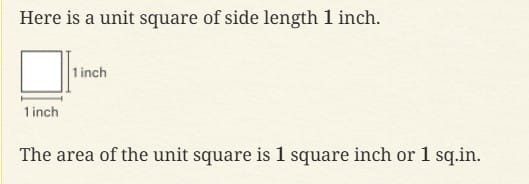
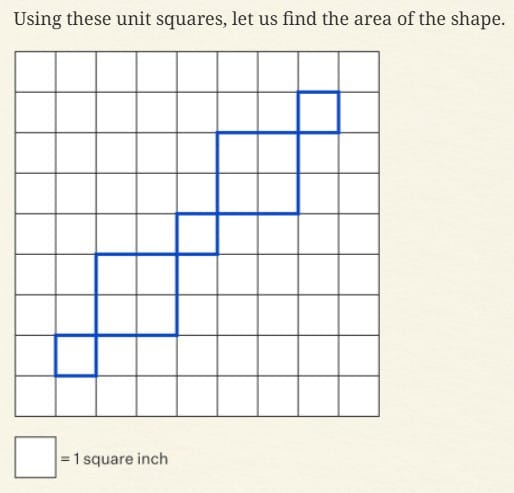
How many unit squares does the shape cover?
Answer = 11 squares
So, the area of the shape is 11 square inches
Best Online Resources for 3rd-Grade Math Practice
Based on students' and tutors' recommendations, here is a curated list of resources.
Digital Learning: Platforms, Apps, and Games
When parents ask me for the best online resources for 3rd-grade math practice, I break them down by learning style:
- Tutoring Platforms: If you are looking for structured learning, the top online platforms offering 3rd-grade math problem sets include Cuemath (personalized online 3rd-grade math classes with expert tutors) and Khan Academy (free video lessons if students are highly motivated and don’t need a tutor).
- Math Games: To make screen time productive, look for affordable online math games targeting 3rd-grade skills. Cuemath turns complex concepts like division and fractions into engaging puzzles.
- Math Apps: The best apps for practicing 3rd-grade math problems on a tablet are Cuemath (they have their own MathGym app where students can play logical and strategy games to learn 3rd-grade math concepts playfully, reviews say that it is a brilliant app) and Prodigy Math (an RPG-style game where math powers the spells).
Try a Free 1:1 Cuemath Class for Grade 3
See how your child learns with visuals, simulations, and mental-math strategies in a 1:1 session with a Cuemath tutor.
Get My Free Trial Class200K+ Students • 4.9+ Trustpilot Rating • 80+ Countries
Worksheets & Workbooks
Sometimes, you just need a pencil and paper to build muscle memory.
- Free Worksheets: If you are wondering, "Where can I find printable 3rd-grade math worksheets for free?", Cuemath. Cuemath tutors themselves can customize the difficulty of the sheets. When students finish worksheets, they are assigned puzzle cards or logical thinking games.
- Workbooks: For those asking where to find engaging math workbooks for 8-year-olds, I highly recommend Cuemath (excellent for deep conceptual understanding) or the Kumon series (unbeatable for building calculation speed).
3rd Grade Worksheets (Designed the Cuemath Way)
Most worksheets focus on repetition. Cuemath worksheets focus on understanding & strategy with grade-appropriate visuals and step-by-step thinking prompts.
Download WorksheetsFrequently Asked Questions (FAQs)
What do you learn in 3rd-grade math?
In 3rd-grade math, students learn multiplication and division, fractions, adding and subtracting within 1,000, and place value. They also study area, perimeter, and basic geometry (shapes and properties), how to tell time, measure length, mass, and volume, and work with bar graphs and word problems. These topics help build problem-solving skills and prepare students for 4th-grade math concepts.
Why is 3rd-grade math so hard for my child?
3rd grade introduces topics like multiplication, division, and fractions. They require stronger problem-solving skills and conceptual understanding.
What are the toughest math topics in 3rd grade?
Students often struggle with multi-digit addition and subtraction with regrouping, multiplication and division facts, understanding fractions, and solving word problems.
How can I help my 3rd grader with math at home?
Use real-life examples, practice with math manipulatives (such as blocks or coins), and break down problems into smaller steps. Encourage them to explain their reasoning out loud.
How do I know if my 3rd grader needs extra help in math?
If your child consistently struggles with homework, avoids math, or becomes frustrated easily, it may be time to consider extra support like tutoring.
What is an array in 3rd grade math?
An array is a set of objects, pictures, numbers arranged in rows and columns of equal value. Arrays help students understand multiplication and division visually. For example, 3 rows of 4 apples form an array, making it easier to see that 3×4=12. Arrays are a foundational math concept, used to make counting, grouping, and solving math problems simpler for kids.
What is a tape diagram in 3rd grade math?
A tape diagram in 3rd grade math is a rectangular drawing that looks like a piece of tape, divided into equal sections to show the steps of a math problem. It helps students visualize addition, subtraction, multiplication, division, and fractions by breaking down word problems into smaller, easy-to-see parts. Tape diagrams are also called bar models or strip diagrams and make solving math problems simpler for kids.
What is a bar diagram in 3rd grade math?
A bar diagram in 3rd grade math is a type of bar graph that uses rectangular bars to visually represent data. Each bar’s length or height corresponds to the value it represents, helping students easily compare quantities across different categories. Bar diagrams can be drawn vertically or horizontally, labeled with titles and scales, and are used to organize and analyze information like the number of fruits, students, or items. They help kids understand data, spot patterns, and answer questions from the visual display.
What is a strip diagram in 3rd grade math?
A strip diagram in 3rd grade math is a visual rectangular model that helps students solve addition, subtraction, multiplication, or division problems by showing quantities as parts and wholes. It usually has a top bar representing the total and one or more bottom bars representing the parts. Strip diagrams help kids visualize relationships between numbers and figure out unknown values, making word problems easier to understand and solve. Also known as bar models or tape diagrams, they support all four operations and build strong problem-solving skills.