12 Best Math Online Classes in the US (2026 Expert Guide)
Finding the best math online classes in the US can be overwhelming. We’ve reviewed 12 top programs across grades, budgets, and learning styles. Whether you need live 1-on-1 tutoring, competition preparation, or free self-paced courses, read on to discover the right fit for you.

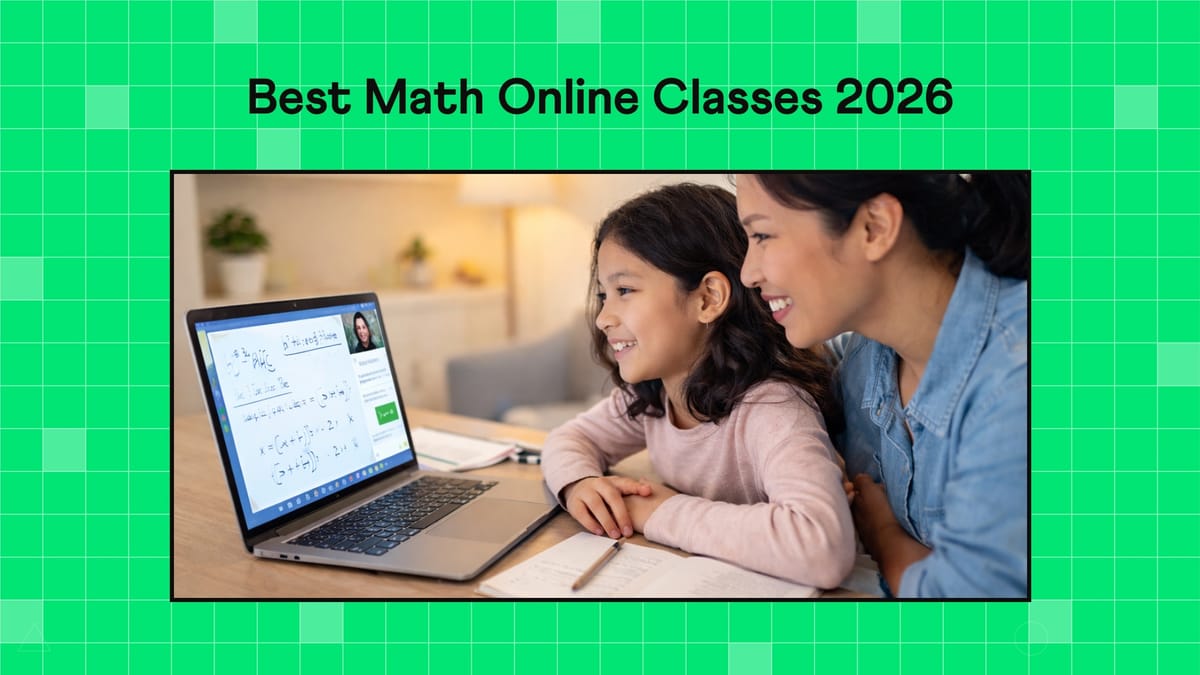
If you are searching for the best math online classes in the US, the first question to ask is: What actually makes an online class a good one? Is it one that matches your learning style, one that not only teaches but tests, one that fits your budget, one that makes your fear of the subject slowly disappear, or one that offers personalized learning? For many, the answer is a combination of all of these.
With that in mind, I decided to do my own research. I did not just look at the most popular math online classes, but the most effective ones.
This guide breaks down 12 of the best math online classes in the US, including their key features, pros and cons, pricing structure, and ideal student type. The goal is not just to list options, but to help you understand which type of class genuinely fits your needs. A quick read will give you everything you need to make an informed decision.
12 Best Math Online Classes in the US (Reviewed and Compared)
I’ve broken down 12 of the best math online classes in the US, categorised by learning needs, format, and goals. Each option has been reviewed based on structure, effectiveness, and ideal student fit.
1. Cuemath (Best Overall for Structured 1-on-1 Learning)
Cuemath is a live 1-on-1 personalized math learning platform designed for students in the US from Kindergarten through Grade 12. Each student is paired with a top 1% certified tutor who works with them consistently over time, helping identify their strengths, close learning gaps, and adjust to their pace. The focus goes beyond homework completion and centres on building strong fundamentals that last.
Key Features
- Live 1-on-1 math online classes
- Dedicated top 1% certified tutors with STEM backgrounds
- Curriculum aligned with US Common Core, IB, IGCSE & ICSE Curriculum
- Targeted practice for standardized tests and college goals
- MathGym for daily skill-building
Pros
- Personalized long-term tutor relationship handpicked to match your child’s unique personality and learning style.
- Structured remedial support for students struggling with fundamentals,
- Covers a complete K–12 spectrum: Kindergarten through Grade 8, plus Algebra 1, Geometry, and Algebra 2
- Personalized learning pathways tailored to individual goals — conceptual clarity, acceleration, or high school and college readiness.
- Comes with a user-friendly app that lets you monitor your child's progress, chat with the tutor, handle payments effortlessly, and easily reschedule sessions.
Cons
- Requires consistent scheduling
- Switching tutors can take time
- May not suit students who prefer group settings
2. Art of Problem Solving (Best for Competition Math)
Art of Problem Solving (AoPS) is designed for students who want to go beyond school math. It focuses on deep problem-solving, logical reasoning, and preparation for math competitions such as MathCounts, AMC and IMC. Students can enrol in live online classes, move through self-paced online courses, or study independently using AoPS textbooks.
Key Features
- Live small-group online classes
- Competition-focused curriculum
- AMC 8, AMC 10, AMC 12 preparation
- MathCounts Trainer resources
Pros
- Excellent preparation for top competitions like USA IMO (AoPS alumni won 65 medals in 11 years) and elite colleges.
- Year-round live classes (12-25 weeks)
- Active forums with brilliant peers in the world's largest online math community
Cons
- Can feel intimidating for beginners or struggling students
- Limited personalisation compared to 1-on-1 tutoring
- Requires self-motivation in self-paced formats
3. Khan Academy (Best Free Self-Paced Math Platform)
Khan Academy is one of the most widely used free math learning platforms in the US. It offers structured video lessons and practice exercises across elementary math, middle school topics, high school algebra and geometry, and AP-level calculus.
Key Features
- Free access to all math courses
- Video-based concept explanations
- Practice exercises with instant feedback
Pros
- Completely free
- Wide coverage from elementary to advanced math
- Flexible pacing
- Easy-to-use interface
- Helpful for extra practice and revision
Cons
- No live tutor or personalized guidance
- Requires strong self-discipline
- Limited accountability
4. Elephant Learning (Best for Early Math Skill Acceleration)
Elephant Learning offers adaptive online math classes for kids covering topics from early counting through Algebra. The platform begins with an assessment to determine where the student truly stands. From there, adaptive algorithms adjust difficulty in real time. Instead of traditional video lessons, the curriculum is delivered through gamified experiences that feel more like solving puzzles than completing worksheets.
Key Features
- Covers counting through Algebra
- Adaptive assessment and real-time level adjustment
- Gamified learning environment
Pros
- Guaranteed 1 year of math progress in 3 months with just 10 minutes/day, 3x/week
- Engaging games with personalisation
- Can support both acceleration and remediation
Cons
- No live teacher interaction
- Limited direct exam-preparation structure
- May not suit students who need a guided explanation
5. Mathnasium ((Best for Homework Support)
Mathnasium is a well-known math learning centre that also offers online instruction via Mathnasium@home for K-12 students, right from home. It focuses heavily on reinforcing foundational skills and is less focused on competitions, more on improving grades and classroom performance.
Key Features
- Live online tutoring sessions
- Real-time teaching, worksheets, and feedback—no long homework required.
- Custom plans target skill gaps through diagnostic assessments
Pros
- Freedom to switch between online and in-centre learning based on your schedule
- Easy scheduling that is perfect for busy schedules or family travel
- Immediate help with school homework
Cons
- One of the most expensive, pricing varies by location/package
- Depends heavily on instructor quality
- Less suited for competition math preparation
6. Think Academy (Best for Structured Exam Preparation)
Think Academy offers structured online math classes designed around academic progression and exam preparation. Before enrollment, students complete a skills-level assessment. Based on the results, they are placed into the appropriate course level.
Key Features
- Skills-based placement test before enrollment
- Live small-group classes with fixed schedules
- Term-based academic structure
- Curriculum covering K–12 through AP math
Pros
- Clear ability-based placement
- Strong preparation for school-level assessments
- Covers advanced high school math, including AP
Cons
- Limited scheduling flexibility
- Requires upfront commitment for the full course
- Less personalized than 1-on-1 tutoring
7. MIT OpenCourseWare (Best for College-Level and Engineering Math)
MIT OpenCourseWare provides free access to full university math courses, including lecture videos, assignments, problem sets, and exams. These are actual courses taught at MIT and made publicly available online; students follow the material independently.
Popular math offerings include Single Variable Calculus (18.01), Linear Algebra (18.06), and Mathematics for Computer Science (6.042J).
Key Features
- Free access to full MIT math courses
- Lecture videos, assignments, and exams
- Engineering-level rigor
Pros
- No enrollment or subscription required
- Extremely high academic depth
- Ideal for advanced learners
Cons
- No live instruction or feedback
- Can be overwhelming without a strong math background
- Not aligned to the K–12 curriculum structure
8. Russian School of Mathematics (Best for Traditional After-School Math)
The Russian School of Mathematics, often referred to as RSM, follows a structured after-school model rooted in the traditional Russian approach to math education. RSM is not built around gamification or flexible app-based learning. It resembles a formal academic classroom with a strong emphasis on discipline and consistent practice.
Key Features
- Small-group classes (online or in-person), building from elementary basics to advanced high school prep like algebra, geometry, and AMC competitions.
- Diagnostic placement ensures right-fit levels; full-year commitment
- Strong focus on algebraic reasoning
Pros
- Academic rigour beyond typical school math
- High-quality instruction
- Clear long-term progression model
Cons
- Fixed schedules with limited flexibility
- Group format less personalized than 1-on-1 tutoring
- Rigid full-year structure
9. Johns Hopkins Center for Talented Youth (Best for Gifted and Academically Advanced Students)
Johns Hopkins Centre for Talented Youth (CTY) offers advanced online math classes for high-performing students ready to move beyond grade-level expectations. It offers advanced online math courses ideal for gifted K-12 students who qualify through high-aptitude tests such as SCAT or SAT.
Key Features
- University-backed accelerated math online classes
- Qualification-based access that requires 98th percentile scores in math/verbal tests for entry
- Live online sessions (3-12 weeks), session-based, or individually paced courses
- Curriculum enrichment in broad math, like algebra, geometry
Pros
- Strong academic challenge
- Balances school with a 2-4 hours weekly load
- Recognised institutional credibility
Cons
- Selective entry excludes average students
- Not suitable for students needing foundational support
- Higher cost compared to many general tutoring platforms
10. HarvardX on edX (Best for Ivy-Level University Math Online Courses)
HarvardX, offered through edX, provides university-level math online classes taught by Harvard faculty.
Some of the most discussed and recommended math courses on edX include:
- Calculus Applied! (HarvardX) – Focuses on practical applications of single-variable calculus, often recommended for students moving toward STEM fields.
- Linear Algebra – Foundations to Frontiers (UT Austin via edX) – Frequently mentioned for its strong conceptual clarity and structured progression.
- MITx: 18.01x Single Variable Calculus – Known for engineering-level depth and problem-solving rigor.
- MITx Probability & Statistics courses – Often recommended for learners preparing for data science, engineering, or higher-level mathematics.
Key Features
- Ivy-level course design
- Self-paced format with 4-12 week structures, interactive exercises, and peer discussions—no qualification needed, unlike CTY.
- Beginner to advanced options
- Optional verified certification
Pros
- Prestigious credentials boost resumes for competitions/college applications
- Good preparation for engineering, data science, and advanced STEM pathways
- Independent learning skills at zero or minimal cost
Cons
- Fully self-directed with no live instructors or personalized feedback
- Requires discipline and prior foundation
11. Outschool (Best for Flexible Small-Group Math Online Classes)
Outschool is not a single math platform but a marketplace that offers a wide variety of math online classes taught by independent educators. Students can choose from short-term workshops, weekly classes, exam-prep sessions, and subject-specific courses. Parents can browse classes by topic, grade level, schedule, and price.
Key Features
- Wide range of math online classes for different age groups
- Flexible scheduling and short-term commitments
- Small live group format
- Instructor ratings and reviews transparency
- Pay-per-class or ongoing subscription options
Pros
- High scheduling flexibility
- Large selection of topics and formats
- Good for trying targeted short-term classes
- Smaller group sizes than traditional classrooms
Cons
- Quality varies by teacher (user reviews guide choices)
- Short-term focus may not build deep mastery
- Lacks a unified curriculum or progress tracking
12. 3Blue1Brown (Best for Conceptual Understanding Through Visual Learning)
What’s a list of math online classes without YouTube?
Fun fact: millions of students turn to YouTube every month to understand math concepts they didn’t fully grasp in school. And when it comes to visual, intuitive explanations, 3Blue1Brown consistently stands out.
Created by Grant Sanderson, the channel is known for turning abstract topics like linear algebra, calculus, and neural networks into clear visual stories. Instead of memorizing formulas, you see how they work.
I wouldn’t classify 3Blue1Brown as a replacement for structured math online classes. There are no assignments, no progress tracking, and no tutoring support. But sometimes, one well-explained 15-minute video can unlock what weeks of practice couldn’t.
Price Breakdown for Online Math Classes (Free to Premium)
One of the biggest factors when choosing math online classes is cost. The price range varies widely depending on format, personalization, and academic level. Free platforms exist, but structured live tutoring and term-based academies typically fall into higher brackets.
Here’s how pricing generally breaks down across the platforms reviewed above.
| Platform | Pricing Model | Starting Price |
|---|---|---|
| Khan Academy | Free access | $0 |
| MIT OpenCourseWare | Free access | $0 |
| 3Blue1Brown | Free (YouTube) | $0 |
| Elephant Learning | Subscription (practice-based) | ~ $10–$20 per month |
| Outschool | Pay-per-class | ~$10–$25 per class |
| Think Academy | Term-based small-group classes | ~ $20+ per class (varies by plan) |
| Mathnasium Online | Monthly membership | Varies by location |
| Russian School of Mathematics | Semester-based tuition | Varies by center |
| Johns Hopkins CTY | Per-course tuition | Varies by course |
| HarvardX / edX | Free audit / paid certificate | $0 – varies |
| Art of Problem Solving | Per course term | Varies by course |
| Cuemath | Live 1-on-1 sessions | Starting around $20+ per class (varies by plan). Includes standardized test prep at no additional cost on select long-term plans. |
Note: Final pricing depends on session frequency, course level, and location.
How to Choose the Right Math Online Class?
Start by identifying the goal: support, acceleration, competition prep, or independent learning. I’ve divided the classes by goal and learning style so you can quickly find what fits.
If you’re struggling with basics: Live guidance and structured progression
→ Cuemath, Mathnasium, Elephant Learning
If you wish to prepare for Competitive Exams: Advanced problem-solving and faster pacing
→ AoPS, RSM
If you’re seeking free self-paced learning: Video lessons and practice sets
→ Khan Academy, MIT OCW, 3Blue1Brown
If you want academic acceleration: Ability-based placement
→ Think Academy, CTY
If you want personalized long-term support: Dedicated tutor and steady tracking
→ Cuemath
Which Math Online Class Is Top Rated by Parents in the US?
When reviewing math online classes, I also looked at public reviews across platforms like Trustpilot and Google Reviews. Ratings vary depending on student fit, instructor quality, and expectations, but some platforms consistently receive positive feedback for structure and results.
#1 Cuemath (9K reviews, 4.9 Star Rating)
Among the many math online classes available in the US, Cuemath stands out with a 4.9 rating on Trustpilot.
What Parents Frequently Highlight:
- Dedicated tutor continuity
- Noticeable improvement in math fundamentals
- Clear lesson structure and progression
- Regular feedback and communication
Try the Best Math Online Classes for Free
Discover why thousands of parents trust structured, expert-led math learning for K–12 students. Get a free diagnostic assessment and a personalized learning plan today.
Book a Free ClassWhat Happens in a Cuemath Math Online Class?
Each Cuemath session is conducted live in a 1-on-1 format and follows a structured flow designed to build both clarity and confidence.
- Assessment & Gap Identification:: Students are evaluated to understand strengths and areas that need attention.
- Concept Explanation with Interactive Visuals:: New topics are explained step-by-step with guided interaction.
- Active Feedback: Students work through questions with real-time tutor support.
- Practice & Reinforcement: Worksheets and MathGym activities strengthen retention and fluency.
- Progress Tracking: Regular assessments ensure steady academic improvement.
After spending hours comparing platforms, reading parent reviews, studying pricing models, and understanding how different math online classes actually work, one thing became clear to me: there is no single “best” option for everyone. The best math online classes are the ones that align with your child’s goals, pace, and personality. Whether that means structured 1-on-1 guidance, competition-level depth, or flexible self-paced learning, the right fit changes everything. I hope this guide makes it all clear for you.