Math Homework Help in 2026: Best AI Tools & Programs for Kids
We can hate homework. We can love homework. But we can never skip homework. What if I told you there’s a smarter way to make math homework feel like a cakewalk? In 2026, AI tools and adaptive math programs are changing how children learn. Read on to find out.


My dad is my superhero. I genuinely believed he could fix anything in the world. Except for my math homework. That was the one thing he could not magically solve.
Back then, I thought it was because math was just too hard. Now I know better. He did not lack intelligence or effort. He lacked the right tools.
In 2026, AI has evolved, learning platforms are smarter, and no parent has to feel stuck like that.
With the right AI tools and math programs, you can guide your child through tough problems without doing the math homework for them. Let me show you exactly what to use and how to use it.
5 Proven Tips to Make Math Homework Fun and Easier
Before we talk about AI tools and programs, the approach matters most. The right method can make even difficult math homework feel manageable.
1) Start With the Concept, Not the Questions
Many children jump straight into solving problems. But if the concept is unclear, every question feels harder than it should.
Before starting:
- Ask what topic they are working on
- Review the formula or rule
- Go through one solved example
Five focused minutes of clarity can save thirty minutes of frustration. And if the topic feels unfamiliar to you, you might learn something new, too.
2) Break Big Problems Into Smaller Steps
A long word problem or a page full of numbers can feel overwhelming.
Teach your child to:
- Underline what the question is asking
- List the known values
- Solve one step at a time
This will also help you understand which steps they are lagging behind on. You can make sure they solve similar step-problems to become a master.
3) Let Them Try Before You Step In
It is tempting to rescue quickly. But learning happens in the attempt.
Instead of giving the answer, ask:
- Did you learn this in class?
- Do you find this easy, moderate, or difficult?
- How long do you think it will take to solve one problem?
These questions shift the focus from getting the right answer to understanding the thinking process.
When children explain their reasoning out loud, they recall what they were taught in class.
4) Create a Clear Learning Environment and Schedule
Some children learn better when they can see and apply things practically. So set up the right environment.
Make sure your child has:
- A quiet space to focus
- A fixed time for homework every day
- All basic tools are ready before starting
Connect math to daily life whenever possible.
Let them calculate bills. Measure ingredients. Divide food. It makes the concepts less abstract.
5) Keep Them Motivated with Rewards
Homework takes effort. Effort needs encouragement.
Use small rewards to keep motivation high.
You can:
- Give extra playtime after finishing homework
- Plan a small treat at the end of the week
- Use a simple star or points chart
- Praise improvement, not just correct answers
Understand what motivates your child, then make it part of the homework routine.
Now that the foundation is set, let us look at the tools that are changing homework in 2026.
Top 5 AI Tools for Math Homework in 2026
AI tools can solve almost any math problem instantly. When used correctly, they help children understand steps, identify mistakes, and strengthen their understanding of concepts.
Here are some of the most widely used AI tools for math homework in 2026:
- Photomath – Lets students scan math problems and view step-by-step explanations. Best for checking work and understanding solution methods.
- Wolfram Alpha – Useful for advanced math, graphing, and detailed computational breakdowns.
- Question AI – Provides instant explanations and helps clarify tricky steps.
- Mathway – Covers algebra, geometry, calculus, and more with guided solutions.
- Desmos – An interactive graphing calculator that helps students visualise equations and functions.
While AI tools have become faster and more intelligent in 2026, not every difficult math question needs an instant solution. When children reach for AI at the first sign of struggle, they bypass the thinking process that math is meant to build. Homework may get completed quickly, but independent problem-solving skills weaken.
This is where structured math programs make a real difference. Unlike instant solving tools, these programs focus on guided learning. Trained teachers work with students one-on-one and help them understand their school homework step by step.
The goal is simple. Build strong fundamentals and develop a genuine curiosity for math so children eventually complete homework confidently on their own.
3 Math Programs That Go Beyond Homework Help
If you are looking beyond quick AI tools and want long-term math growth, structured programs are a better investment. Here are three widely considered options in the US:
Cuemath
Fully aligned with US Common Core standards and AP frameworks. Offers one-on-one live online classes focused on concept mastery, logical reasoning, and structured homework support. Best for parents who want consistent guidance and measurable progress.
Mathnasium
Operates through small group sessions with personalised learning plans. Focuses heavily on foundational skill-building, though it follows its own learning plan rather than aligning directly with the school's curriculum.
Khan Academy
A free, self-paced platform aligned with US standards. Ideal for independent learners who need extra video explanations and practice, but does not provide live teacher support.
If you want a deeper comparison of curriculum alignment, format, and pricing, read our detailed guide on the comparison of the best online math programs in 2026.
AI Tools Vs Structured Programs for Math Homework
Homework was never meant to make children fear math. That brings us to the real question: AI tools or structured programs for math homework?
The answer is not complicated.
AI tools can be helpful in specific moments. They can explain a step, verify an answer, or clarify a missed concept. But they respond to problems after they appear. They do not build a structured path for long-term growth.
How Cuemath Helps Kids With Their Math Homework
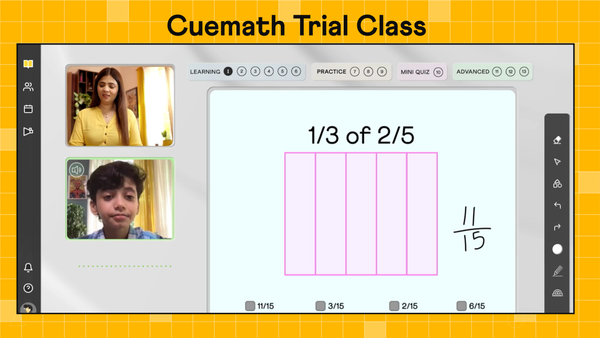
Cuemath approaches math homework differently from quick solving tools. Instead of providing instant answers, it supports students through guided, one-on-one instruction aligned with their school curriculum.
Teachers help students understand the concepts behind their math homework, strengthen weak areas through additional practice, and build fluency over time. The focus remains on independent problem-solving so that students gradually need less external support.
I hope this blog has given you everything you need to make an informed choice, one that supports not just better homework, but a stronger, more confident math journey for your child.
Frequently Asked Questions (FAQs)
- How is Cuemath different from other homework help platforms?
Unlike most homework help platforms that focus on providing instant solutions, Cuemath emphasises concept clarity and guided learning. Instead of solving a student's math homework for them, it supports them through one-on-one instruction aligned with their school curriculum, helping them build independent problem-solving skills over time.
- Why does my child struggle with math homework even after paying attention in class?
Math homework not only tests what was taught in class, but also how well a child can apply it on their own. In school, teachers guide the steps. At home, that guidance is gone.
If a concept was not fully understood or practised enough, even a focused student can struggle. It usually means they need at-home guidance, not that they were not paying attention.
- Is online math homework help effective?
Yes, math homework help online is effective when it is interactive and focused on understanding rather than just completing assignments. With step-by-step tutor guidance and targeted doubt-solving, children gain clarity on concepts rather than copying solutions.
Platforms like Cuemath combine interactive learning with structured practice, so students become more confident and MathFit™ over time.
- How much time should a child spend on math homework daily?
Consistency matters more than long hours. For most children, about 30 minutes of focused math practice each day is enough.
Set a fixed homework time and stick to it. A steady routine builds discipline and reduces stress. You can also use small rewards to keep motivation high.
- My child hates math homework. How can I change that?
It is often not the subject, but how it has been introduced.
Keep homework short and consistent, around 30 minutes daily. Focus on one concept at a time and let them try before you step in.
If the struggle continues, structured support can help. Programs like Cuemath allow you to choose a tutor your child is comfortable with. The right guidance can completely change how math feels.
- How soon can I see improvement in my child’s math homework performance?
Improvement usually starts showing within a few weeks when practice is consistent.
The key is progress tracking. Monitor accuracy, speed, and concept clarity rather than just final scores. Structured programs often provide regular feedback and visible progress reports, helping you see improvement clearly rather than guessing.
Struggling with math homework?
With structured lessons, one on one guidance, and clear progress tracking, your child can move from confusion to confidence. Start with a FREE live Cuemath class today.
Book a Free ClassFor Students in Grades K to 12 Worldwide