Math Anxiety: What it is, Signs, Causes & How to Overcome it
In my research, I discovered that forgetting formulas or methods during a test is not just nervousness. It can be categorized under something called “Math Anxiety”. Let’s understand what math anxiety really is and how to overcome it with the right approach.

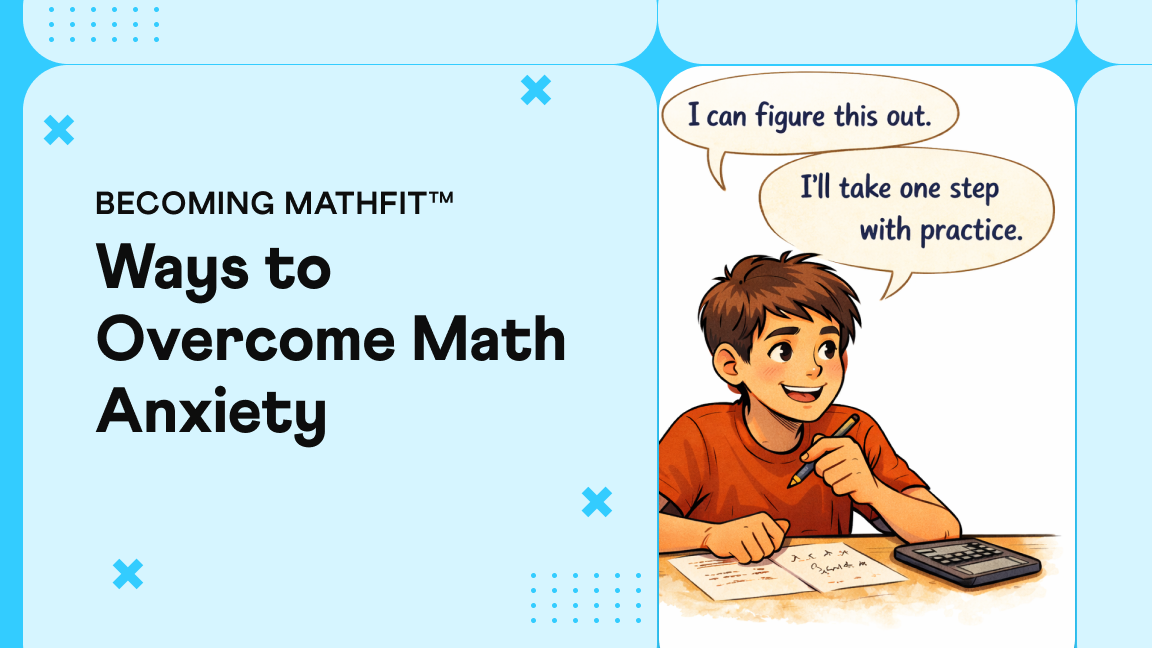
Does your child tremble when a teacher calls them to solve a problem on the board? Do they suddenly forget a formula during a test, even though they studied it the night before? These could be early signs of Math Anxiety.
When I spoke with expert teachers at Cuemath and asked them to carefully examine whether students truly experience math anxiety in classrooms, the answer was clear. Even toppers experience it, especially in primary and secondary school. Interestingly, girls tend to be more affected than boys, often due to social conditioning and performance pressure.
And while it’s more common than you think, with the right interventions and structured support, it can be reversed. In this blog, let us decode what math anxiety really means, understand its root causes, and explore practical, proven strategies to turn it around.
What is Math Anxiety?
Math anxiety, simply put, is a sense of fear or intense worry that students, and even adults, experience when they face math. It can show up in academic settings, such as classrooms and exams, or in everyday situations, such as calculating a restaurant bill or solving a word problem.
This anxiety is not just about disliking math. It can manifest physically and emotionally.
Symptoms may range from mild stress and avoidance to a racing heartbeat, sweaty palms, blanking out during a test, or, in severe cases, even panic attacks.

When stress levels rise, the brain’s working memory, which helps process and recall information, becomes less effective. That is why a student who studied well the previous night may suddenly forget a formula during an exam.
If you have never experienced this, consider yourself fortunate. But if you or your child has, you are not alone.
According to EdWeek Research Center,
Math anxiety affects 20 to 30 percent of students. In fact, in a nationally representative 2020 survey, 67 percent of teachers told that math anxiety was a significant challenge for their students. Most educators today recognize it as a legitimate and pressing concern in classrooms.
This, however, is not so much a problem of low-performing students. Math anxiety affects high-achieving and capable students just as often. In many cases, students understand the concepts but struggle when performance pressure rises.
Signs of Math Anxiety
Most students facing math anxiety show the following signs:
You have already addressed half of your anxiety if you can recognise your signs.
What Causes Math Anxiety?
Math anxiety does not appear overnight. It usually develops gradually through repeated experiences that shape a student's feelings about math.
Here are the most common causes:
1. Fear of Judgment or Embarrassment
Classroom environments that emphasise speed and correct answers can unintentionally create pressure. Being called to solve a problem on the board and getting it wrong in front of peers can leave a lasting emotional imprint.
2. Timed Tests and Performance Pressure
Strict time limits often trigger stress responses. When students feel rushed, their working memory is compromised, leading to blanking out even when they know the concept.
3. Gaps in Foundational Concepts
Math builds layer by layer. When a concept is not fully understood, future topics feel overwhelming. Students may not even realise there is a small foundational gap causing repeated confusion.
4. Negative Self-Talk
Statements like “I am just not a math person” can become internal beliefs. Over time, this mindset reinforces avoidance and lowers confidence.
5. Social Conditioning and Stereotypes
Research suggests that societal beliefs, especially around gender and math ability, can influence confidence levels. This partly explains why girls often report higher levels of math anxiety despite performing equally well.
6. Parental or Environmental Influence
Sometimes anxiety is passed down unintentionally. If a parent openly expresses fear or dislike for math, children may internalise similar beliefs.
The important thing to understand is this. Math anxiety is rarely about ability. It is about experience, environment, and emotional association. And what is learned emotionally can be unlearned with the right structure and support.
The 4-Week MathFit Plan
Following are remedial strategies to overcome, or at least take a breather from, math anxiety in four structured weeks.
Week 1: Recognise and Reset
Identify Triggers
What to Do: Write down when anxiety appears. Tests? Homework? Being called on in class?
Why It Works: Naming triggers reduces their power and builds self-awareness.
Replace Negative Self-Talk
What to Do: Change “I am bad at math” to “I am still learning this concept.”
Why It Works: Language reshapes mindset and reduces performance fear.
Practice Untimed Problems
What to Do: Solve 5–10 questions daily without a clock.
Why It Works: Removes time pressure and allows clearer thinking.
Celebrate Small Wins
What to Do: Acknowledge correct steps, not just final answers.
Why It Works: Reinforces steady progress and builds consistency.
Week 2: Fix Foundational Gaps
Math is cumulative. Every concept builds on the one before it. When a foundational idea is weak, everything layered above it feels confusing and overwhelming. This is where anxiety quietly grows.
Week 2 is about building a concrete foundation.
Start with a Structured Diagnostic
What to Do: Take a comprehensive math evaluation, like Cuemath’s Math Evaluation, that tests ability across core concepts.
Why It Works: Identifies exact foundational gaps and personalizes the learning path.
Relearn Concepts with Guided Support
What to Do: Work in 1-to-1 interaction with an expert tutor to revisit definitions and first principles.
Why It Works: Personalized attention accelerates conceptual clarity.
Learn Visually and Logically
What to Do: Use visual models, step-by-step reasoning, and logic-building exercises.
Why It Works: Strengthens number sense and reduces reliance on memorization.
Practice Targeted Worksheets
What to Do: Solve curated worksheets designed around weak areas.
Why It Works: Focused correction prevents repeated mistakes.
Track Measurable Progress
What to Do: Monitor improvement weekly with accuracy benchmarks.
Why It Works: Seeing growth reduces self-doubt and performance fear.
Week 2 is foundational. If you truly want to fix the root of math anxiety, I suggest you take a structured Math Evaluation.
The First Step to Becoming MathFit™
Take Cuemath’s Free 15-Minute Math Evaluation and discover exactly where your child stands across core math concepts and what to fix next.
Start the 15-Minute EvaluationGrades K to 12 Worldwide
Week 3: Train to Achieve a Real Goal
Math feels overwhelming when it seems abstract. It becomes manageable when it is tied to a clear outcome.
That goal could be an upcoming math test, improving school exam scores, qualifying for a competitive stream, or even something practical like being confident enough to calculate taxes or manage personal finances independently. Week 3 is your road to achieving a goal.
For example, if the goal is the SAT, begin solving one timed SAT math section every few days. Sit through it fully. Then review what went wrong and why.
If the goal is improving school performance, practice mixed questions from different chapters in a single sitting, the way they appear in actual exams.
If the goal is long-term independence, work through practical problems such as calculating simple and compound interest, understanding loan repayments, or breaking down tax slabs.
Week 4: Becoming MathFit™ with Cuemath
By Week 4, the triggers have been identified, foundational gaps have been repaired, and practice now has direction. This final phase is about building stability through structure.
Here’s what that shift can look like in real terms. Read Pratyush's whole story:
 Cuemath
How Cuemath Tutors Help Overcome Math Anxiety
- Personalised lesson plans ensure students receive a curriculum tailored to their current level and learning needs.
- 1-to-1 tutor interaction allows students to revisit definitions, clarify doubts, and learn at their own pace without pressure.
MathFit™ student attending a 1:1 Cuemath online tutoring session.
- Visual teaching methods make abstract concepts easier to understand and apply.
- Logic-building exercises help students strengthen their reasoning skills as they steadily advance in math.
- Regular progress tracking allows both parents and students to see measurable improvement, making the learning journey transparent and goal-oriented.
If you would like to understand what being MathFit™ truly means and how structured learning shapes it, you can read more about it:
 Pooja Purohit
The earlier you address math anxiety, the easier it is to reverse.
Find out where your child stands with Cuemath’s 15-minute Math Evaluation and get a structured action plan from day one.
Overcome Math Anxiety with Structured Support
Give your child consistent 1:1 guidance, personalised lesson plans, and a clear path forward. Structured learning makes the difference.
Book a Free ClassFor Grades K–12 | 1:1 Live Online Classes
Frequently Asked Questions (FAQs)
Q1: What is math anxiety?
Math anxiety is a feeling of fear, tension, or intense worry that arises when a person faces math-related tasks, whether in a classroom, during a test, or in everyday situations like calculating a bill. However, with the right structured support and consistent practice, math anxiety can be identified, addressed, and overcome.
Q2: Can online math classes help with math anxiety?
Yes, and often more effectively than traditional classroom settings. Online 1-on-1 math classes remove the fear of public judgment, allow students to ask questions freely, and let them learn at their own pace. Platforms like Cuemath are specifically structured to build concept clarity and confidence gradually, which directly addresses the root causes of math anxiety rather than just managing the symptoms.
Q3: How does Cuemath help students overcome math anxiety?
Cuemath pairs each student with a dedicated expert tutor who works with them consistently over time. Sessions focus on concept understanding rather than rote memorisation, use visual explanations to make abstract ideas approachable, and include untimed practice to remove performance pressure. Progress is tracked regularly, so both parents and students can see improvement, which itself helps reduce math anxiety over time.
Q4: How can parents help a child with math anxiety at home?
Keep sessions short and pressure-free, focus on effort over correct answers, and connect math to everyday situations like cooking or budgeting. If anxiety persists, a structured 1-on-1 program like Cuemath is often the most effective next step.