
Math Placement Test Prep Strategies + Important Topics
Math placement tests are used by over 90% of educational institutions to connect the student with the math class that actually fits their caliber.

Math placement tests are used by over 90% of schools and institutions across the USA.
Think of a math placement test as the first test of your child’s academic potential. The goal isn't to pass or fail. The school wants to connect the student with the math class that actually fits their caliber.
If you are looking at college, you’ll likely see computer-adaptive tests like the ACCUPLACER or MAP. For younger students, aptitude assessments like the CogAT® or curriculum-based exams like the PSAT are the standard for getting into advanced programs.
Math placement tests explore skills across a spectrum of core high school math topics. I’m talking about everything from Arithmetic and Pre-Algebra to Trigonometry.
Key Takeaways 👇
- Why Math Placement Tests Matter: It is a pathway to accelerated tracks, gives an advantage in college admissions, and various STEM fields.
- What topics are covered in Math Placement Tests: Arithmetic & Pre-Algebra, Algebra I & II, Trigonometry & Pre-Calculus.
- Top strategies for Math Placement Tests: Study the format, check the calculator policy, concepts over memorization, and practice via mock tests.
- Best way to prepare for Math Placement Tests: Personalized 1:1 options, such as Cuemath, offer customized learning plans that adapt to a student's specific curriculum needs, ensuring they master the logic required for CogAT, SATs, etc.
What Are Some Popular Math Placement Tests?
Why Math Placement Tests Matter?
The math placement test is not just another math competition where you earn a gold medal. It determines access to accelerated programs, impacts college graduation, and has significant financial consequences.
It Helps in Building a Competitive Edge For Middle & High School Students
- Getting into Accelerated Tracks: Math placement test scores are a primary factor for entry into Gifted & Talented (G&T) and honors programs. I found a study by the Jack Kent Cooke Foundation that highlighted a sad reality: without objective measures like test scores, many high-achieving students are completely overlooked for these programs.
- Boosting College Applications: Data from the National Association for College Admission Counseling (NACAC) states that colleges weigh an applicant's academic rigor (i.e., taking honors and AP courses) more than any standardized test scores or extracurriculars.
- Ensuring Student is Ready for College: The College Board reports that students who succeed in AP math courses are far more likely to earn a STEM degree in college. For instance, over 80% of students who scored a 5 on the AP Calculus AB exam went on to major in a STEM field.
If you are confused between AP Calculus AB and BC, I would suggest reading this blog:
 Nikita Joshi
It Saves Time and Money for High School Seniors & College Students
Here is the data that really blew my mind. According to the Center for American Progress, remedial education costs in the U.S. are approximately $1.3 billion annually.
How to Study for the Math Placement Test?
No matter what the math placement test practice is for, CogAT, PSAT, or a school-specific exam, the core mathematical concepts remain the same. We have listed every key topic and Cuemath's extensive library of resources to help your child practice and gain confidence.
Arithmetic & Pre-Algebra
These are the building blocks. A deep understanding of arithmetic and pre-algebra concepts is essential, as these skills are important for all higher-level math.
- Operations with Whole Numbers, Fractions, and Decimals
- Percentages, Ratios, and Proportions
- Order of Operations (PEMDAS)
- Integers and Absolute Value
- Basic Geometry
Geometry Support for School + SAT/ACT
Free session includes assessment + targeted practice plan
Book a Free Cuemath ClassAligned to school + AP/SAT goals
Elementary Algebra (Algebra 1)
It is the most critical section of most math placement tests, especially for college entry.
- Variables and Expressions
- Linear Equations and Inequalities
- Graphing on a Coordinate Plane
- Polynomials
- Exponents and Radicals
Ace High School Algebra 1 + SAT/PSAT Readiness
Learn core concepts and practice higher-standard questions in a 1:1 class.
Book a Free Cuemath ClassLimited slots • Reserve now
Intermediate Algebra (Algebra 2)
It is for students aiming to place into Pre-Calculus or higher in college, or advanced high school tracks.
- Advanced Factoring
- Quadratic Equations
- Functions
- Rational and Logarithmic Functions
Ace High School Algebra 2 + SAT/PSAT Readiness
Learn core concepts and practice higher-standard questions in a 1:1 class.
Book a Free Cuemath ClassLimited slots • Reserve now
Trigonometry & Pre-Calculus
It is for students taking placement tests for advanced STEM tracks or seeking to place directly into Calculus.
- Trigonometric Functions
- Trigonometric Identities
If you find that self-study or group classes aren't working and you need more focused support, an expert 1:1 tutor can be a good option, like Cuemath, for instance, which builds a personalized plan around your specific needs to help you master the high-school curriculum.
Pre-Calculus Support for School + SAT/AP Readiness
Build strong foundations with a dedicated 1:1 tutor.
Book a Free Cuemath ClassLimited slots • Reserve now
Top Strategies to Ace Your Math Placement Test
- Find a Practice Test: Many colleges provide sample tests on their websites, and organizations like the College Board offer free PSAT practice. This helps you identify your specific weak areas.
- Understand Your Test's Format: Is it adaptive (like ACCUPLACER or ALEKS), where you can't go back? Is it timed? Knowing these rules allows you to strategize effectively.
- Don't Just Memorize, Understand: Focus on why a formula works, not just what it is. This helps you apply concepts to unfamiliar problems, a skill particularly valued in tests like the CogAT.
- Review, Don't Cram: Spend 30-60 minutes each day for a week or two leading up to the test. Last-minute cramming is rarely effective for math.
- Manage Your Time: If the test is timed, don't get stuck on one hard problem. Make an educated guess and move on. You can always return if you have time remaining.
- Use Process of Elimination: On multiple-choice questions, you can often eliminate 2-3 obviously wrong answers, significantly increasing your chance of guessing correctly.
- Check Calculator Policy: Know beforehand if a calculator is allowed and what type (basic, scientific, graphing). Practice with the calculator you'll be using on test day.
The Best Way to Ensure the Right Placement: Personalized 1:1 Prep
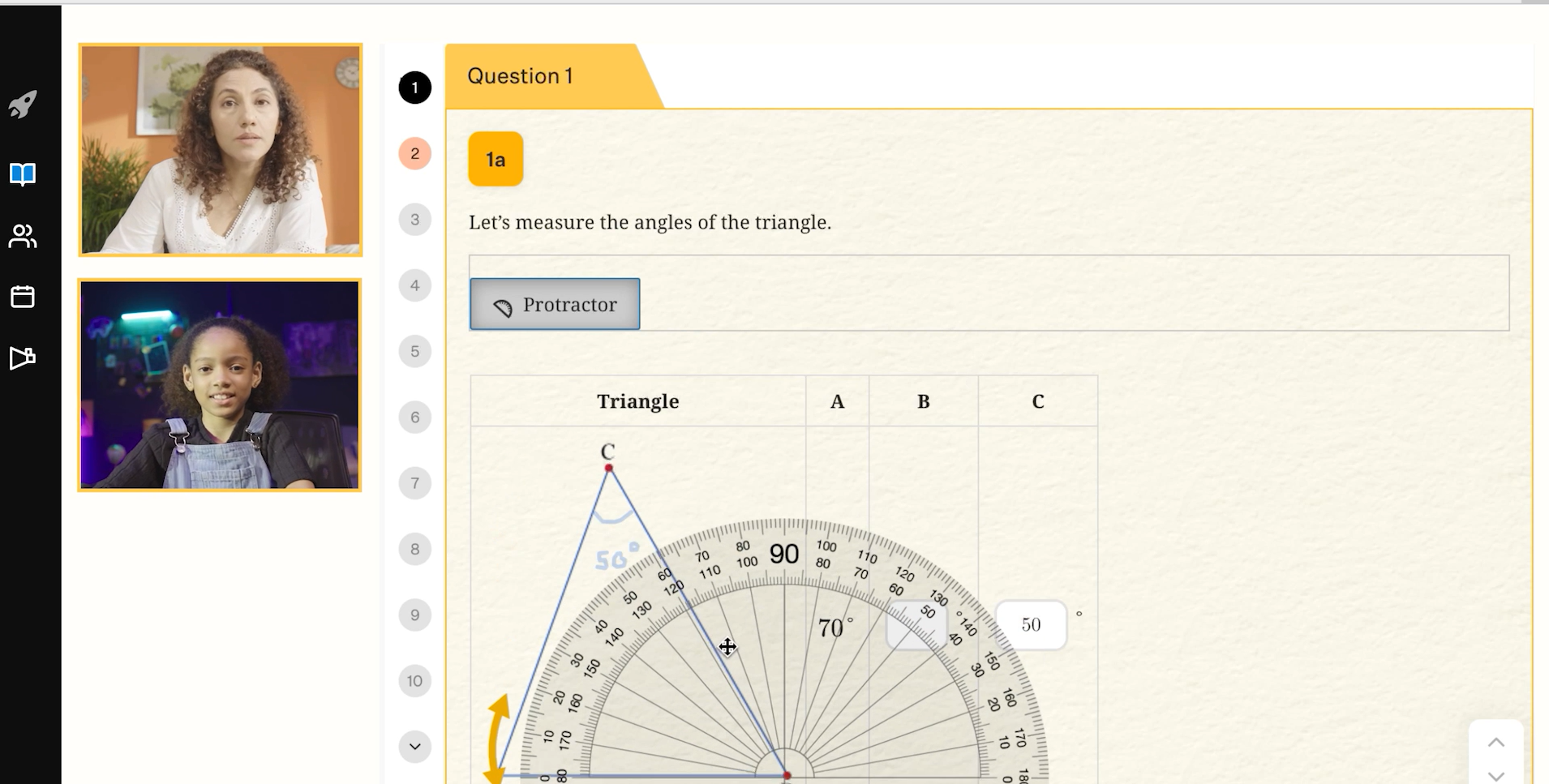
Generic worksheets are fine for drills, but math placement test practice requires more nuance. Here is my take on why Cuemath’s approach actually works for this.
- A Long-Term Tutor Who Builds Confidence: Test anxiety is real. I love that Cuemath tutors create a safe space where kids can say, "I don't get this," without fear of judgment.
- 100% Tutor Focus: In a group class, your child gets a slice of attention. In a Cuemath 1:1 class, they get the whole pie. This ensures they understand the concepts, not just the tricks.
- A Unique Learning Plan: The tutors don't just guess; they identify exactly what your child needs—whether it's rebuilding fraction fundamentals or tackling complex algebra.
- Making Practice Fun: It sounds impossible, but the interactive smart whiteboard and gamified app actually keep kids engaged.
Make Your Child MathFit™- Try Cuemath
Join 400K parents who trust Cuemath to build lifelong math skills with 1:1 expert math tutoring.
Book a Free ClassFor Students in Grades K to 12 Worldwide
Frequently Asked Questions (FAQs)
How hard is the college math placement test?
The difficulty is adaptive and varies based on the student's individual skill level and the course they aim to enter. The questions will range from foundational topics like Arithmetic and Pre-Algebra to more advanced concepts in Algebra 2, Trigonometry, and Pre-Calculus to find the upper limit of a student's current knowledge.
Is the math placement test multiple choice?
Most math placement tests, like the ACCUPLACER, are primarily multiple-choice. However, some adaptive platforms like ALEKS may use a mix of multiple-choice and fill-in-the-blank questions to precisely assess a student's knowledge.
How long is the math placement test?
The length varies by institution, but most placement tests consist of 30-60 questions and typically take between 60 to 90 minutes to complete.
Is the math placement test timed?
Yes, most math placement tests are timed. Time management is a key component, and it's important to pace yourself without spending too much time on any single question.
What kind of math is on the placement test?
Math placement tests cover a wide range of topics, including Arithmetic, Pre-Algebra (fractions, percentages, integers), Elementary and Intermediate Algebra (linear equations, polynomials, quadratic equations), and, for higher-level placement, concepts from Pre-Calculus and Trigonometry.
Is there a calculator on the math placement test?
This depends on the test. Some tests, like the ACCUPLACER, provide an on-screen calculator for certain questions but not for others. You are generally not allowed to bring your own. It is crucial to check the specific policy of the institution administering the test.
What is a good score on a math placement test?
A good score is entirely dependent on the college and the course you want to enter. For example, one college might require a score of 75 to place into College Algebra, while another might require an 85. The goal is not a specific number, but the score that places you on the most efficient path to success.
How can I improve my math placement score?
Improving your score requires identifying and closing knowledge gaps. Working with a tutor in a 1:1 setting allows you to ask questions and discuss challenges without fear of being judged. This personalized attention helps rebuild fundamentals and strengthens the problem-solving skills needed for a higher score.
Can you retake a math placement test?
Policies on retakes vary widely by institution. Some colleges allow one or two retakes, sometimes after a waiting period or after completing a study module. Others have a strict policy of no retakes. Always check your school's specific policy beforehand.
How long are math placement scores good for?
Math placement scores are typically valid for 1-2 years. If you take a test but delay your enrollment in a math course, you may be required to take the test again to ensure your skills are still fresh.
What happens if I fail a placement test?
You cannot technically fail a placement test. The goal is to determine whether the student is ready for an accelerated or honors track.
How hard is the UMD math placement test?
The difficulty of the University of Maryland (UMD) Math Placement Test depends entirely on your mathematical background and the course you are trying to place into, such as Pre-Calculus or Calculus I.
The test is officially called the ALEKS PPL Assessment, and it is not designed to be a simple pass/fail exam. Instead, it adapts its difficulty level based on your answers to pinpoint your exact knowledge.

About the Author
Nikita Joshi
Math Educator | Writer @ Cuemath
Math educator & writer by day, storyteller by night.
View My LinkedIn
Read more

NJSLA Grade 3 Level 5 in Math and ELA: How Curiosity Became Performance
Tarun scored 817 in Math and 821 in ELA on the NJSLA in Grade 3 - both at Performance Level 5. He has been learning with Cuemath since 2024. This is what happens when a child's natural love for numbers meets the right guidance.

14 Best Online Math Programs in the USA Loved by Parents (2026)
I compare 14 programs compared on curriculum, teaching quality, personalization, price, and real parent reviews, so you can make the right choice for your child.
The Complete Math Curriculum Guide: What Students Learn From K–12
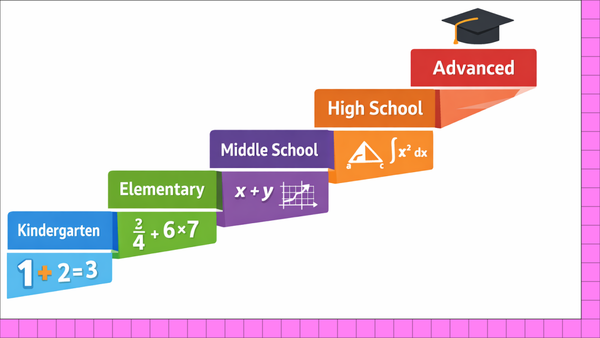
In this blog, I cover what a math curriculum is, how it progresses across grade levels, and the key concepts students learn from early number sense to advanced topics like algebra, geometry, and statistics.

7 Math Tips Cuemath Tutors Use to Help Middle Schoolers Improve Their Grades
How Cuemath Students in Grades 6, 7, and 8 Went From Struggling to Top 2%, Accelerated Programs, and Competition Rank 1.