1st Grade Math Problems: 40 Practice Questions With Answers
Practice 40 first grade math problems across 9 topics with step-by-step answers. Covers addition, subtraction, place value, shapes, telling time, and more. Reviewed by Cuemath’s expert tutors.

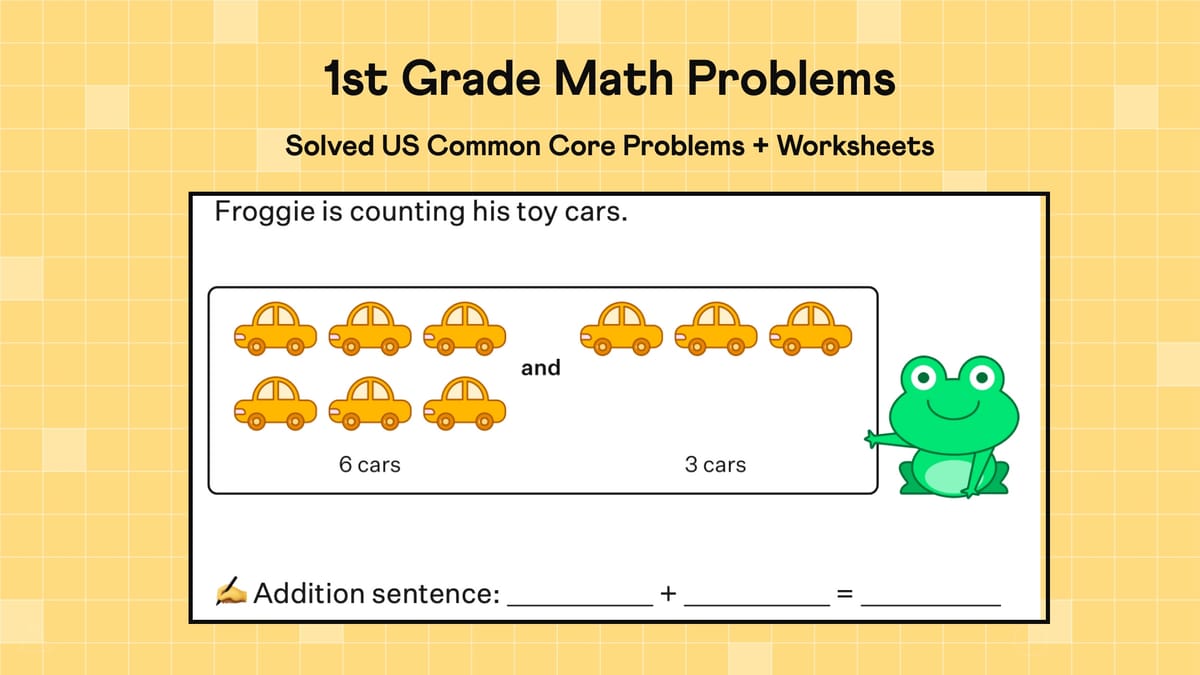
Finding the right math problems for 1st graders can be harder than it looks. Grade 1 covers a lot of ground: addition and subtraction within 20, two-digit place value, skip counting, measurement, shapes, telling time, and ordinal numbers. Most children need focused, topic-by-topic practice to build confidence before all of these skills are tested together.
This blog gives you 40 first grade math problems across 9 topics, all drawn directly from Cuemath’s Grade 1 curriculum and reviewed by Cuemath’s expert tutors. Each question comes with a step-by-step solution you can reveal with a click. Work through sections in order, or jump straight to the topic your child is practicing right now.

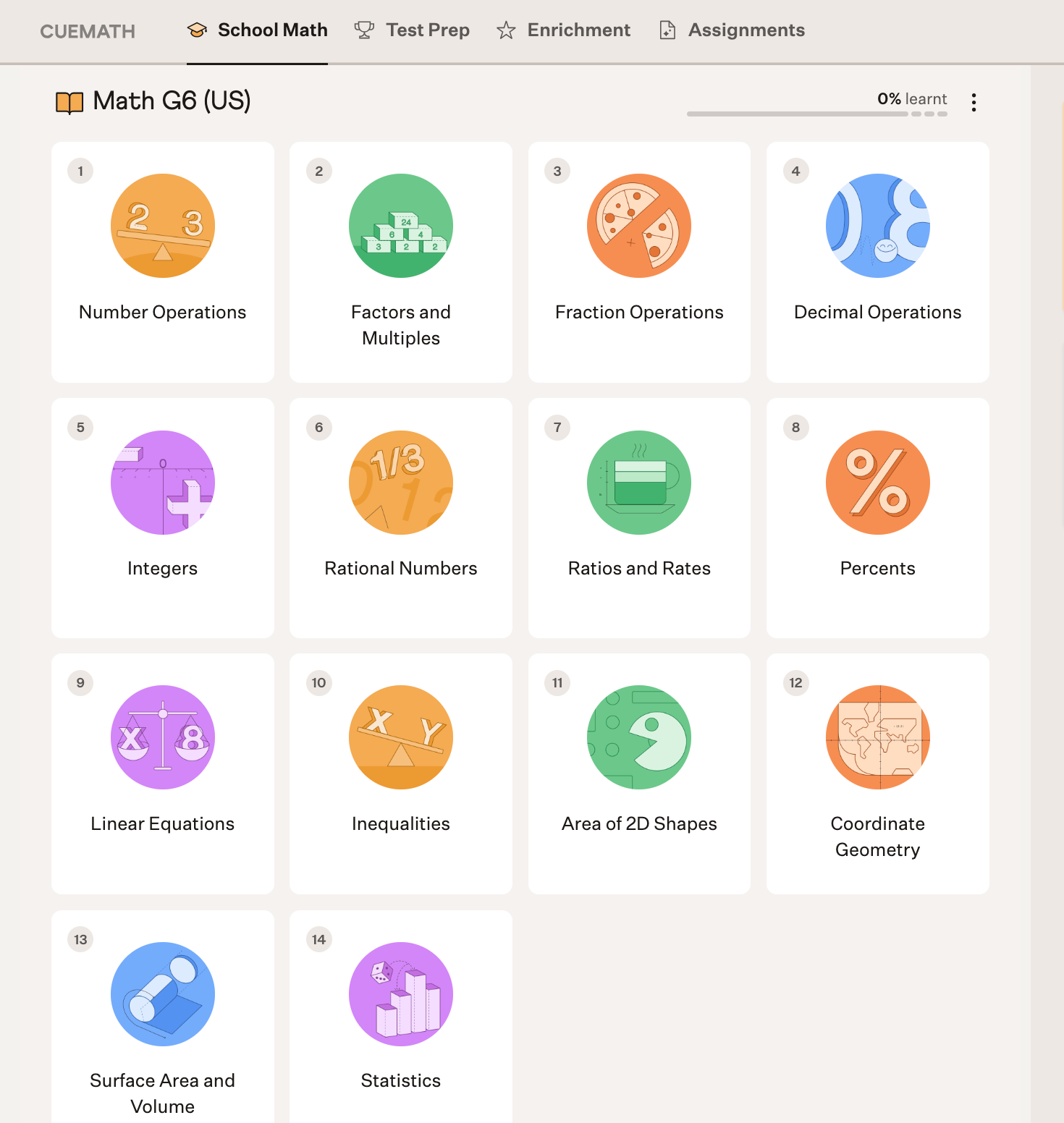
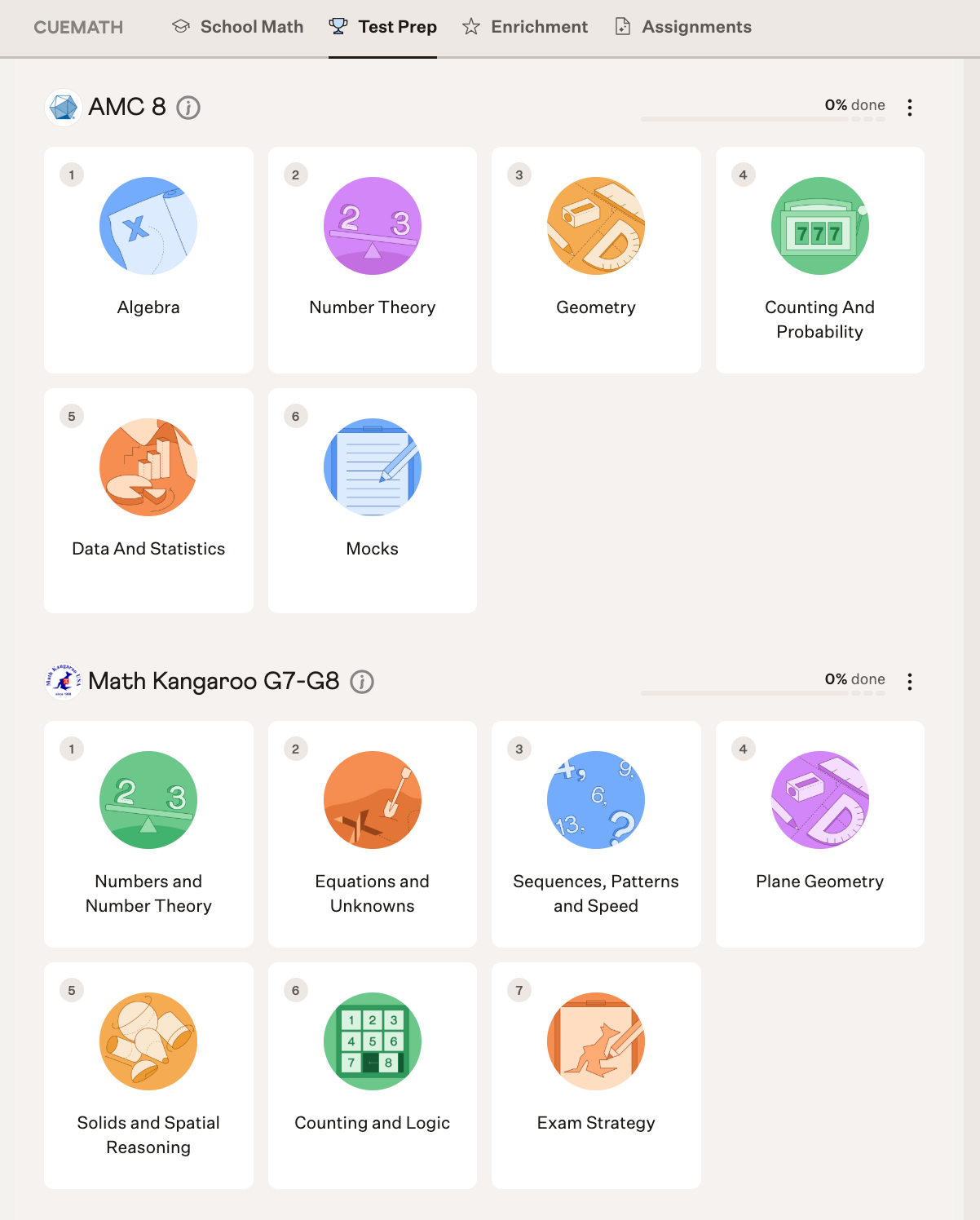
School math + test prep + skills AI can't match, at $0 cost.
Everything your child needs from Grade K to 12, curriculum mastery, test prep, and enrichment math, is now in one free app.
Simple log in with email, nothing else
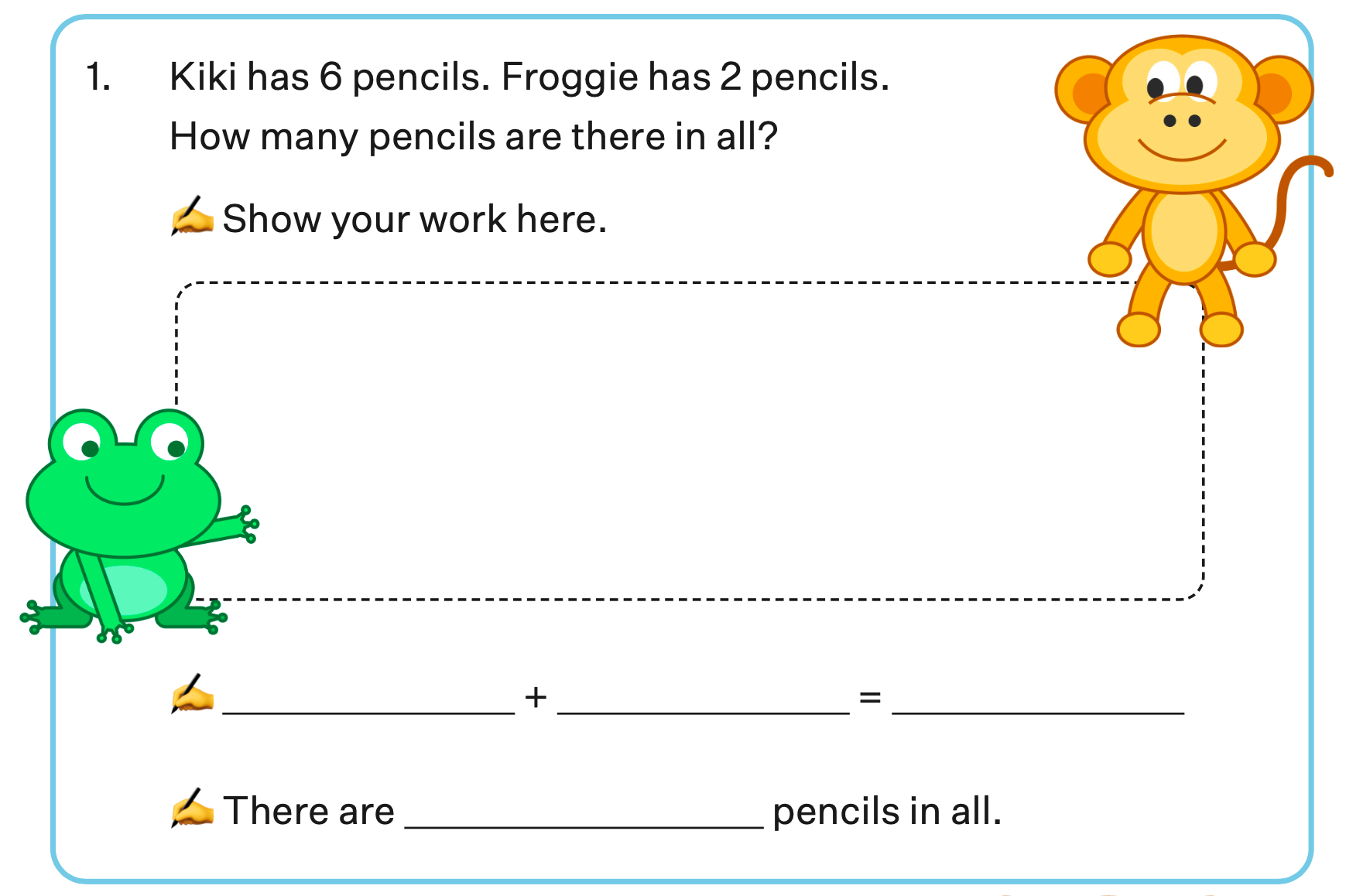
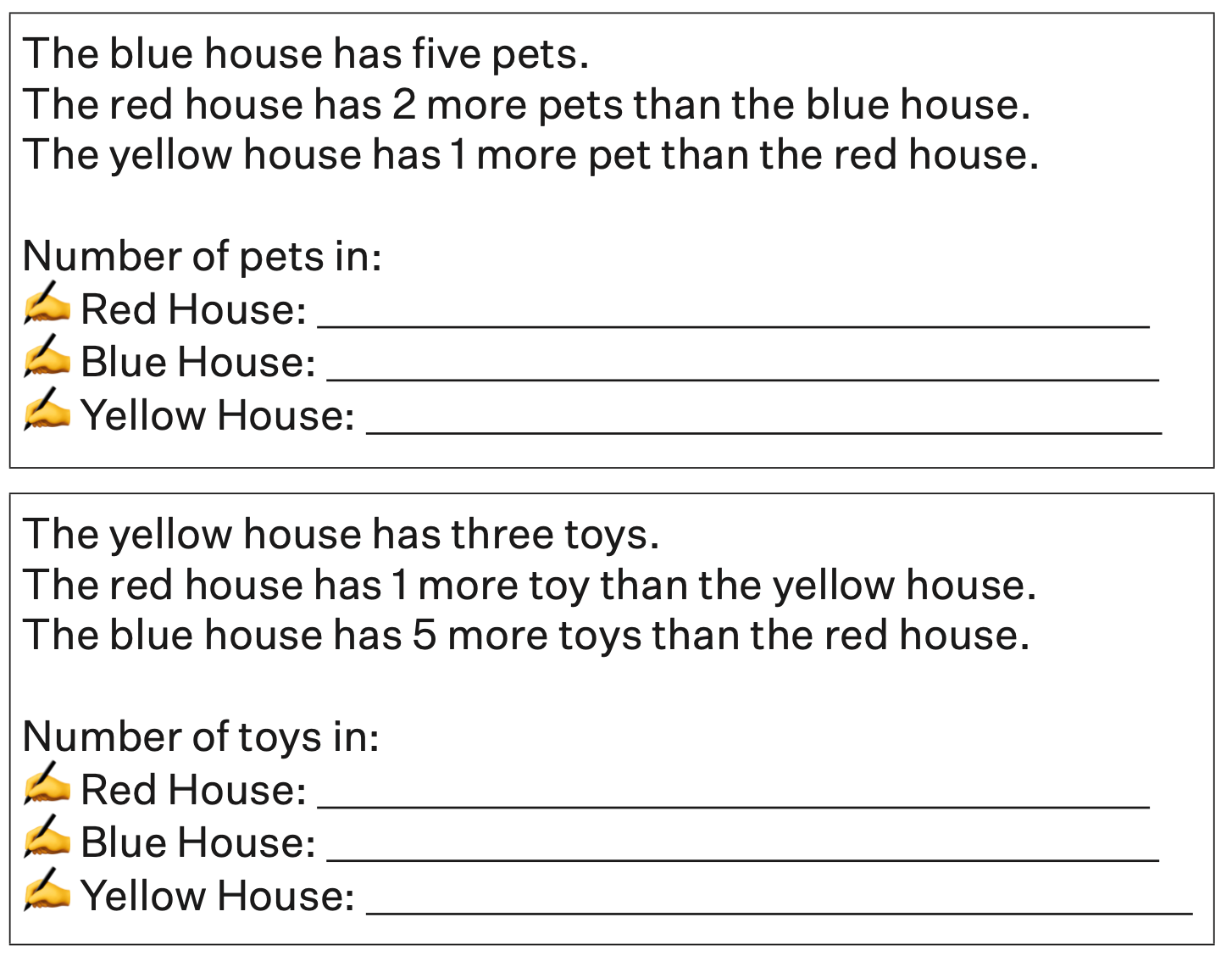
➕ 1. Addition Problems for 1st Graders
Objective: Add and subtract within 20, demonstrating fluency for addition and subtraction within 10.
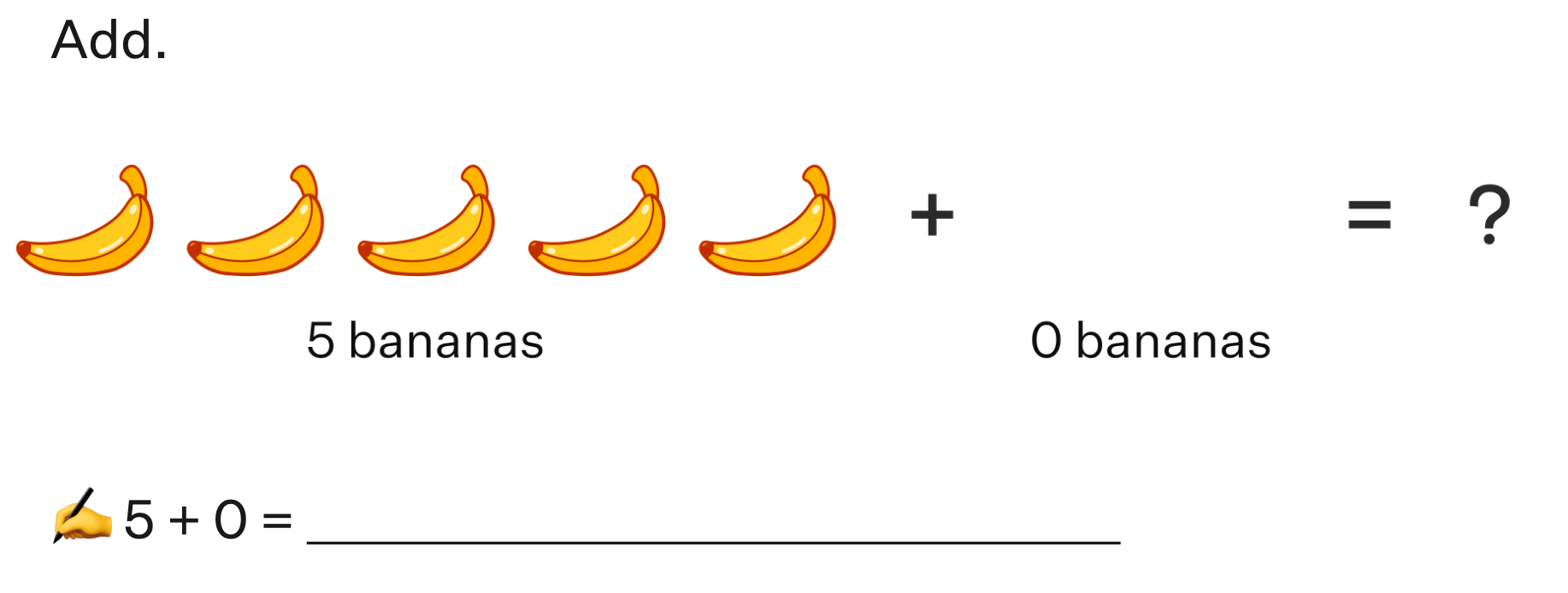
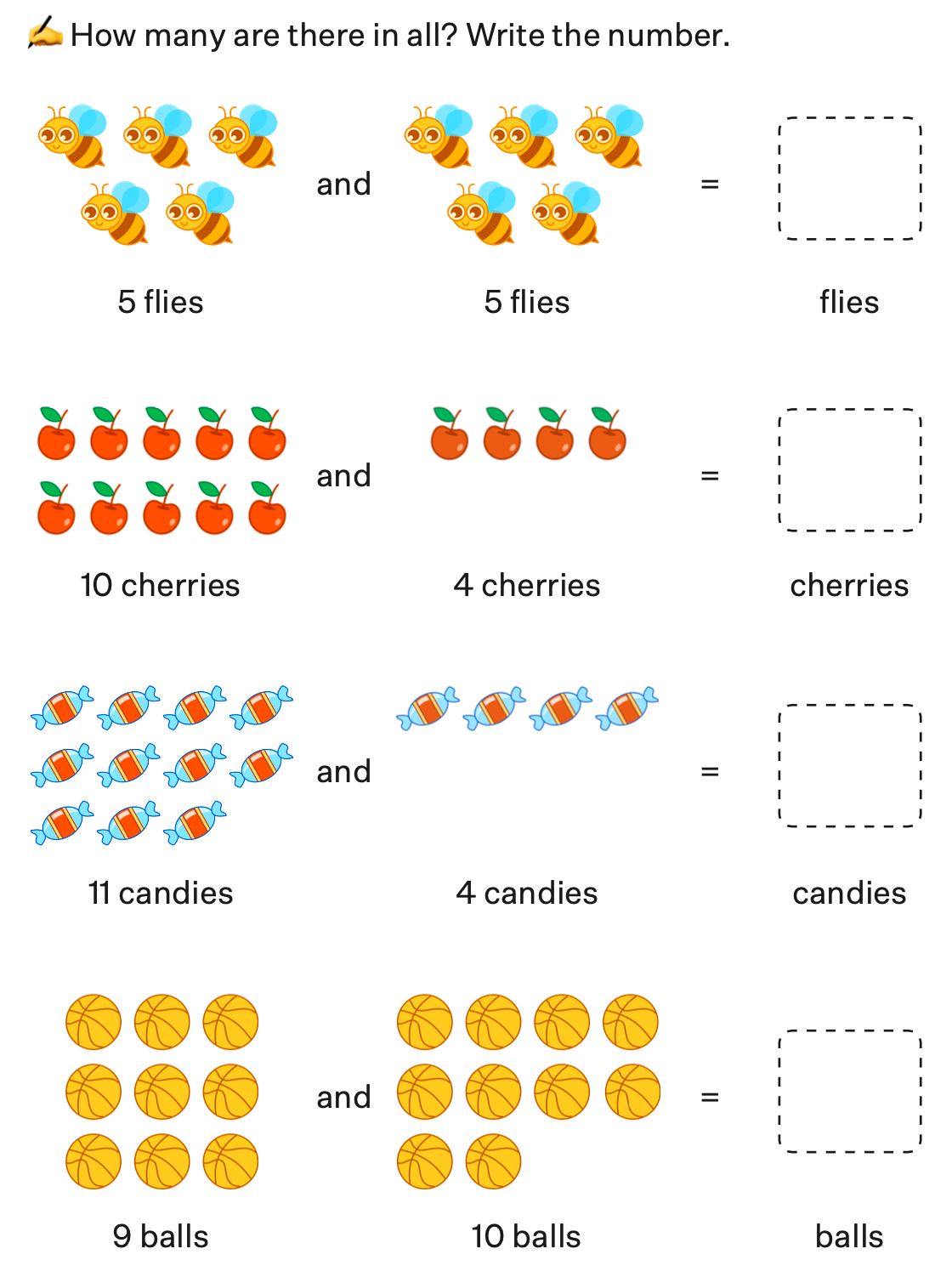
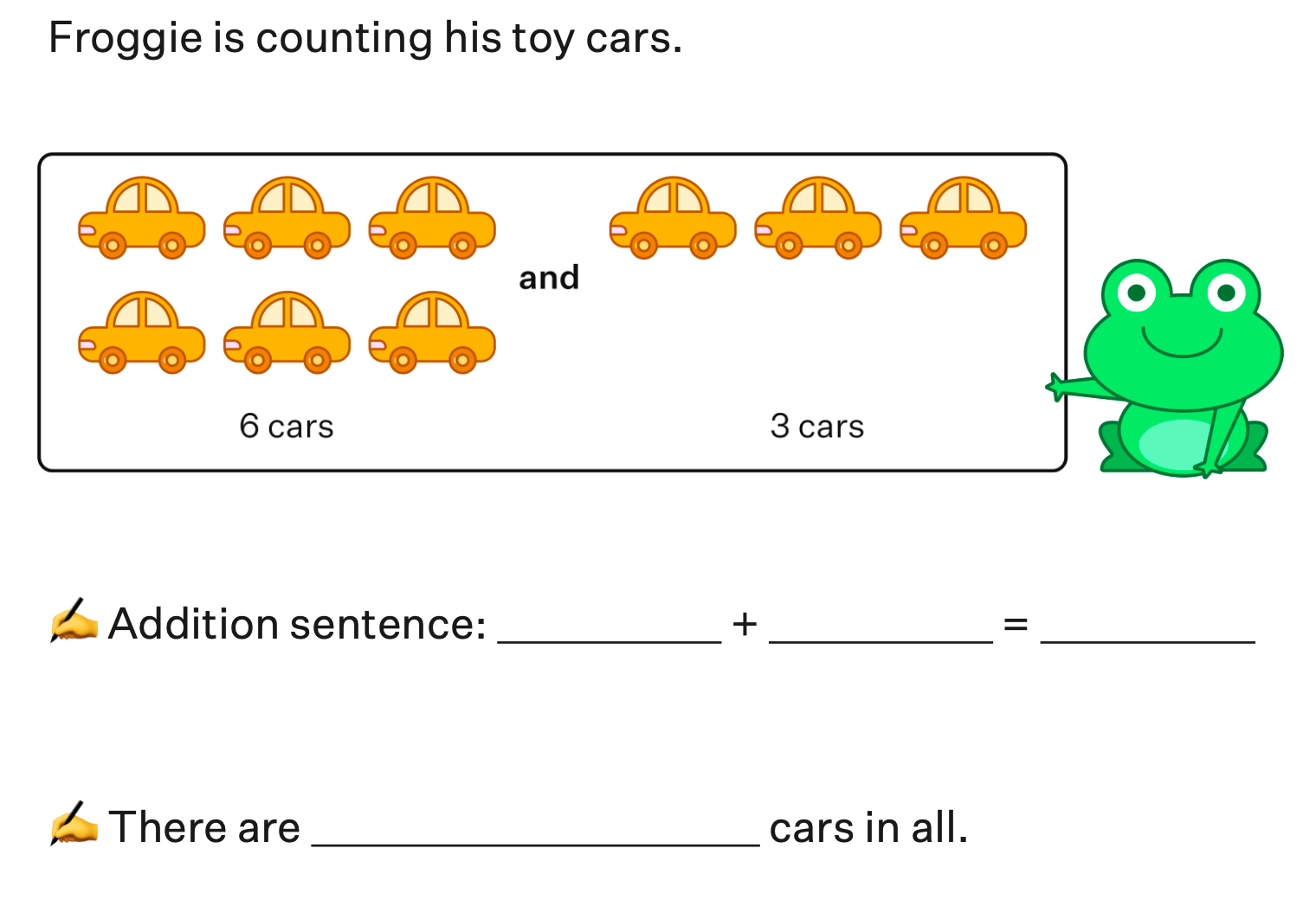
Addition in Grade 1 builds from counting all objects to counting on from the larger number, and finally to using known facts. By the end of first grade, students should recall all addition facts within 10 from memory and add numbers up to 20 using strategies like making ten or using doubles.
Where students make mistakes: Students often restart counting from 1 instead of using the count-on strategy. For 7 + 3, a student who counts from 1 says: 1, 2, 3, 4, 5, 6, 7, 8, 9, 10. A student using count-on starts from 7 and says: 8, 9, 10. Both reach the right answer, but count-on is faster and sets up mental math skills. Always start from the bigger number.
➖ 2. Subtraction Problems for 1st Graders
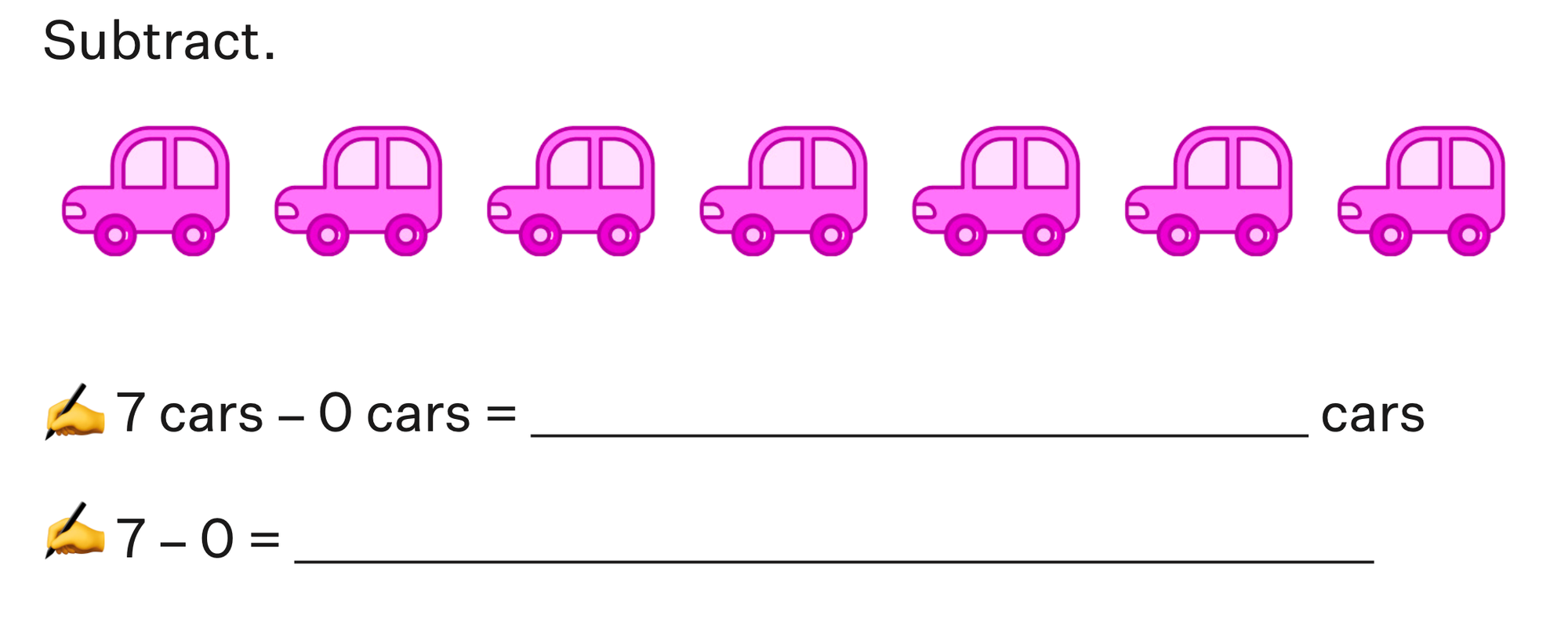
Objective: Demonstrate fluency for subtraction within 10; subtract within 20 using strategies.
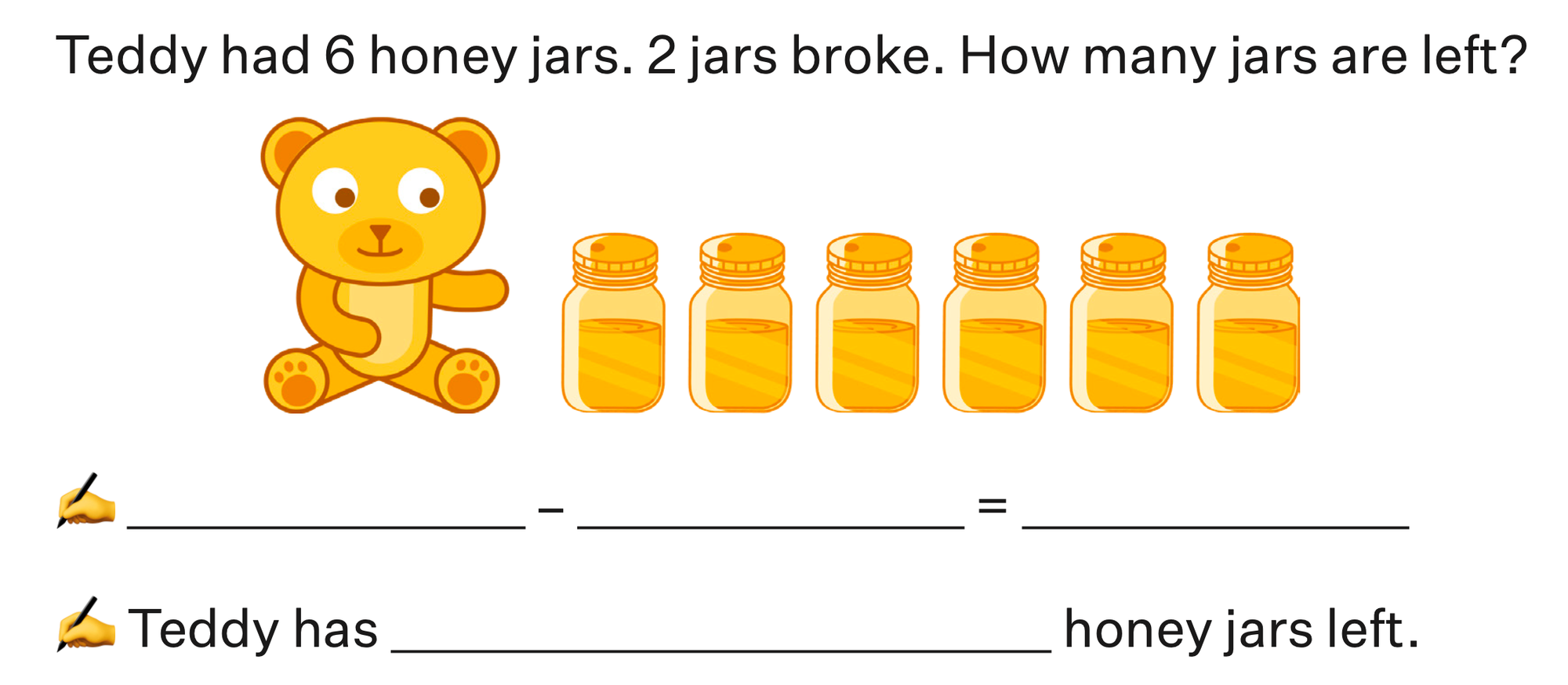
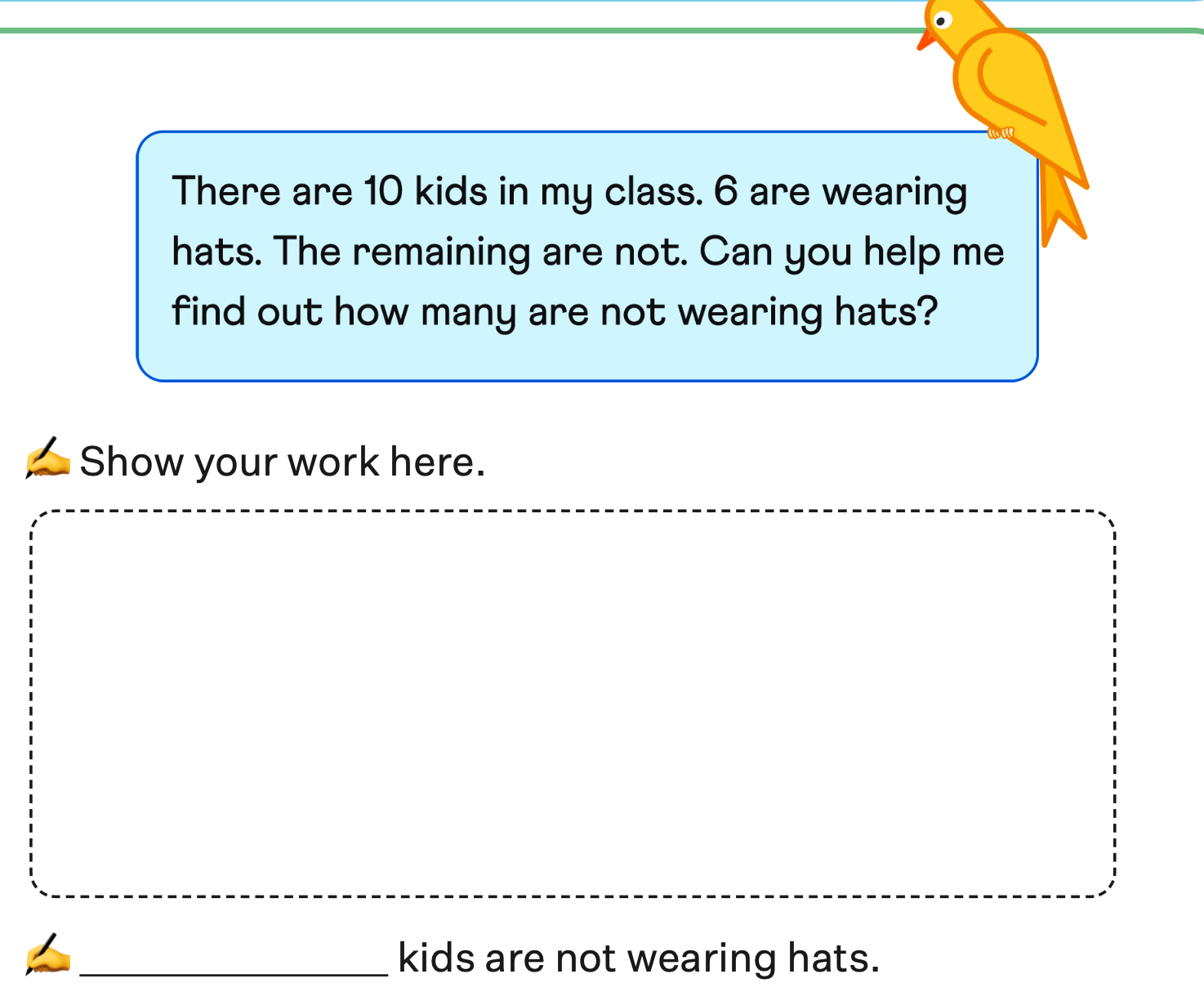
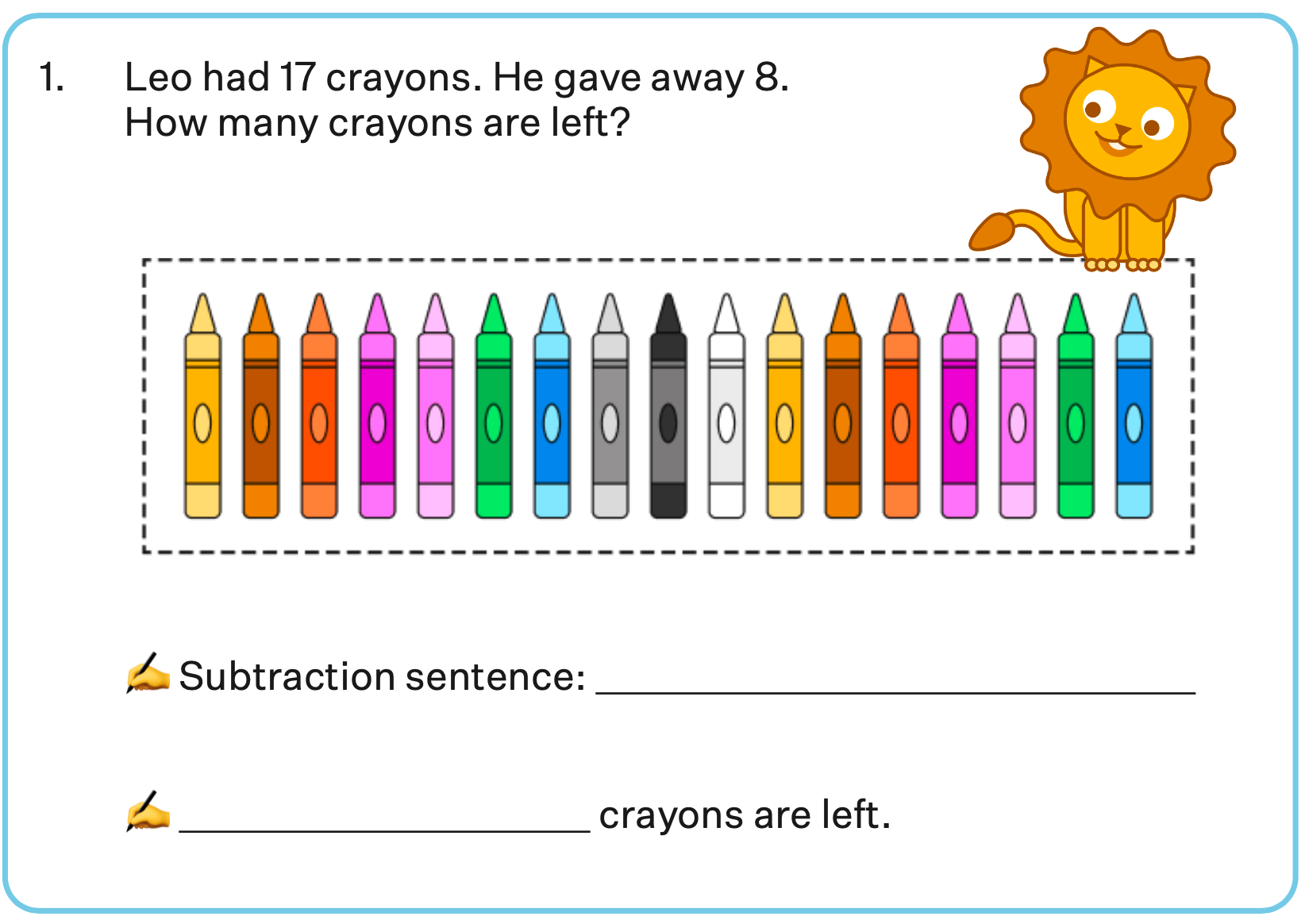
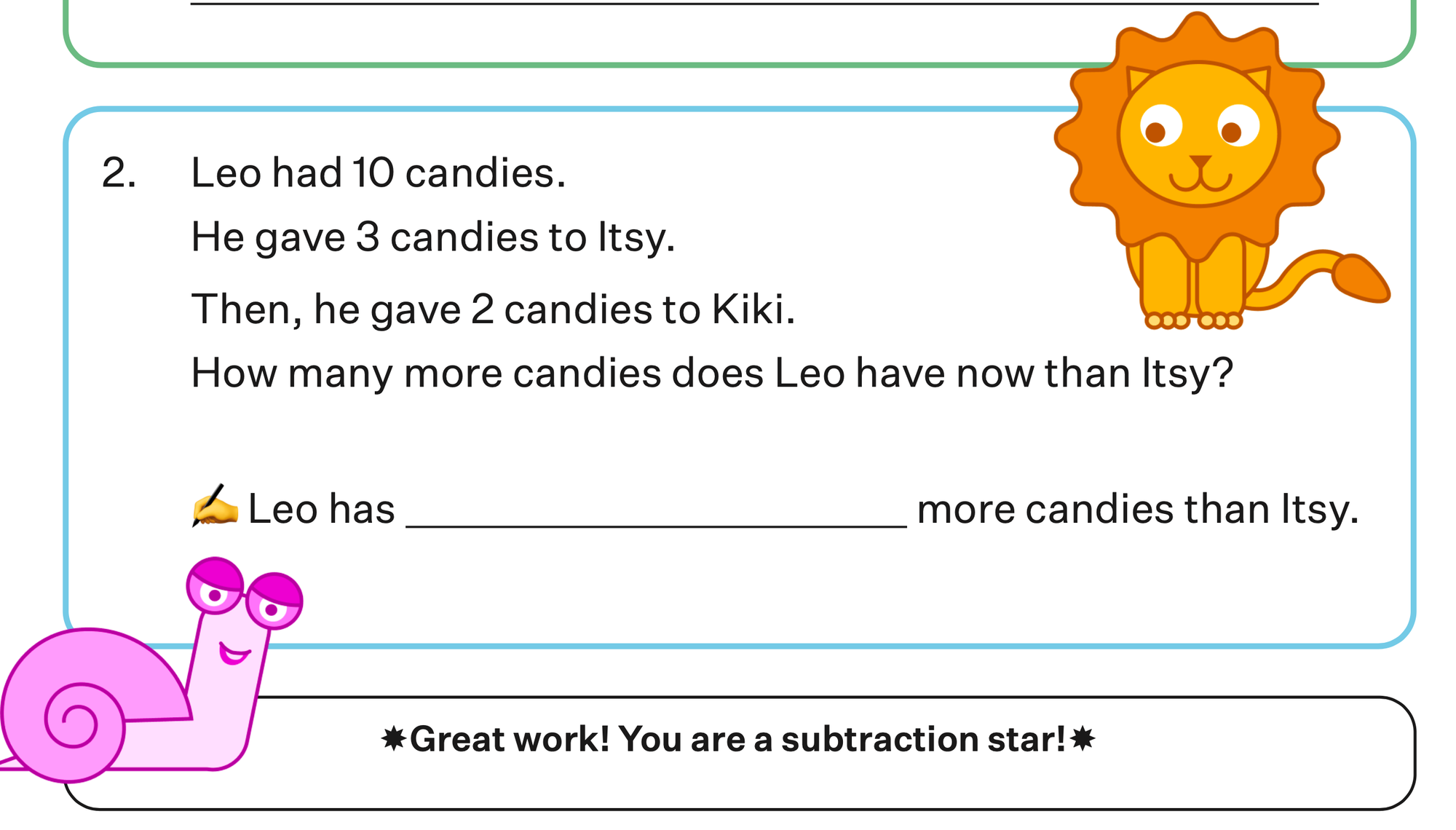
Subtraction in Grade 1 covers three meanings: taking away, finding the difference, and comparing two quantities. Students move from using physical objects to drawing pictures to using number relationships. Key signal words that tell students to subtract include “left,” “fewer,” “more than,” and “difference.”
Where students make mistakes: Students often identify the wrong starting number in word problems. They may subtract the smaller number from the larger regardless of what the problem is actually asking. Teach students to first identify the starting quantity, then the amount being removed or compared.
Suggested Reading
🔢 3. Place Value Problems for 1st Graders
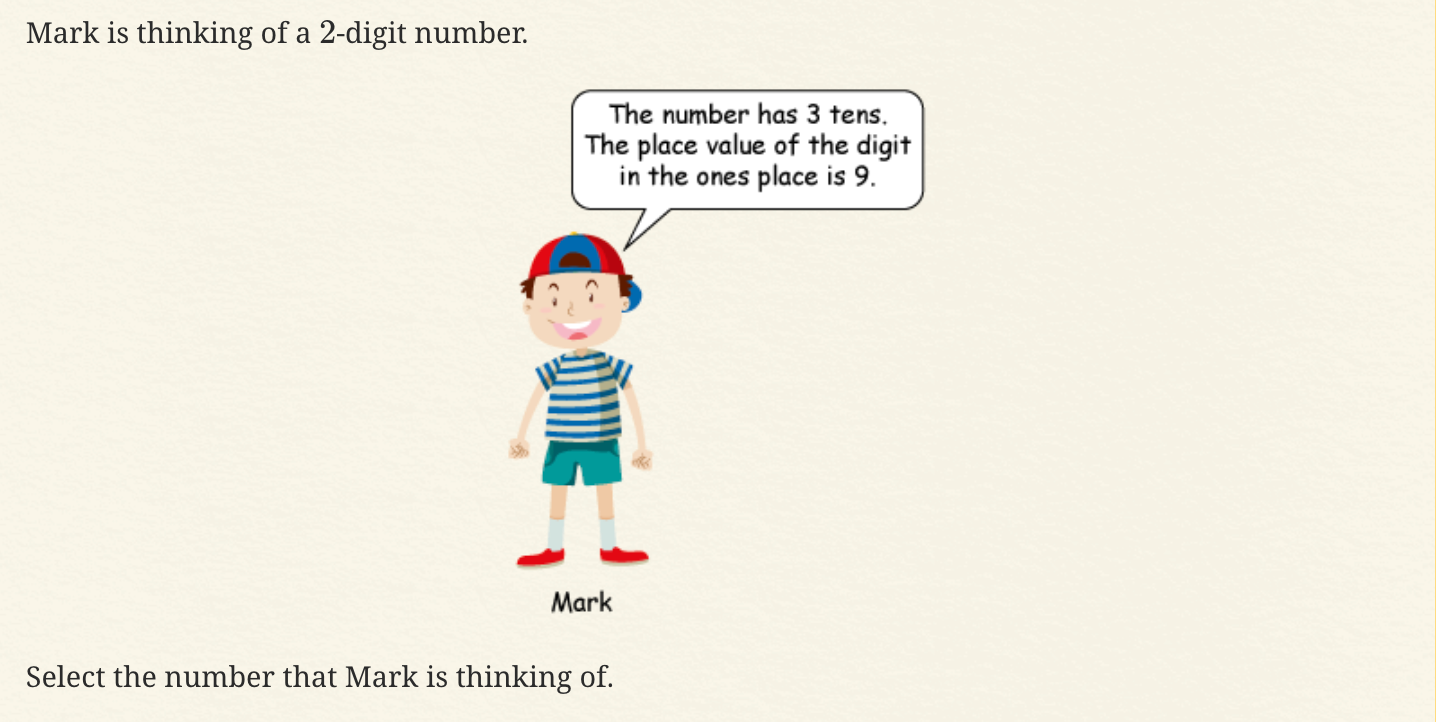
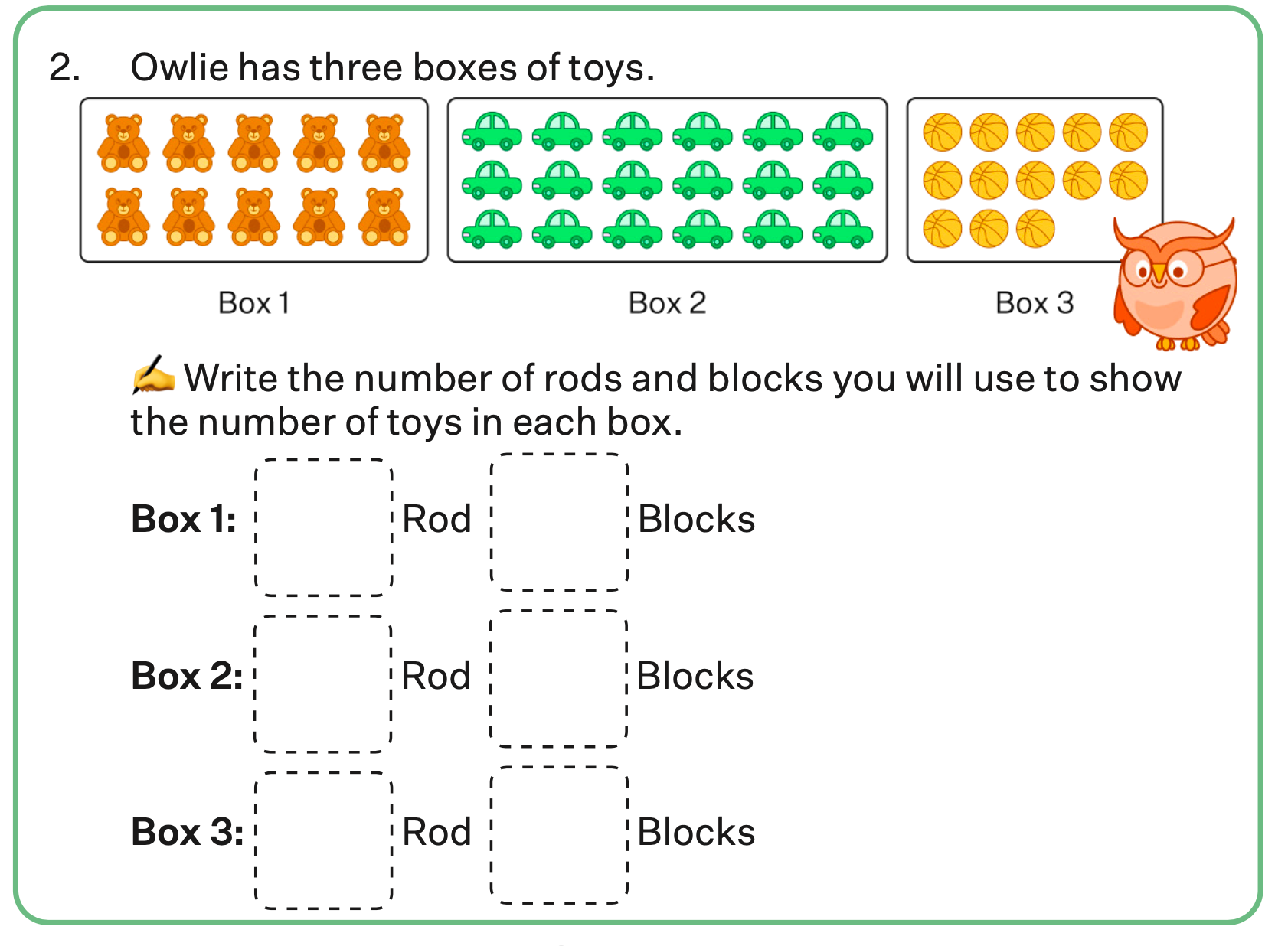
Objective: Understand that the two digits of a two-digit number represent amounts of tens and ones.
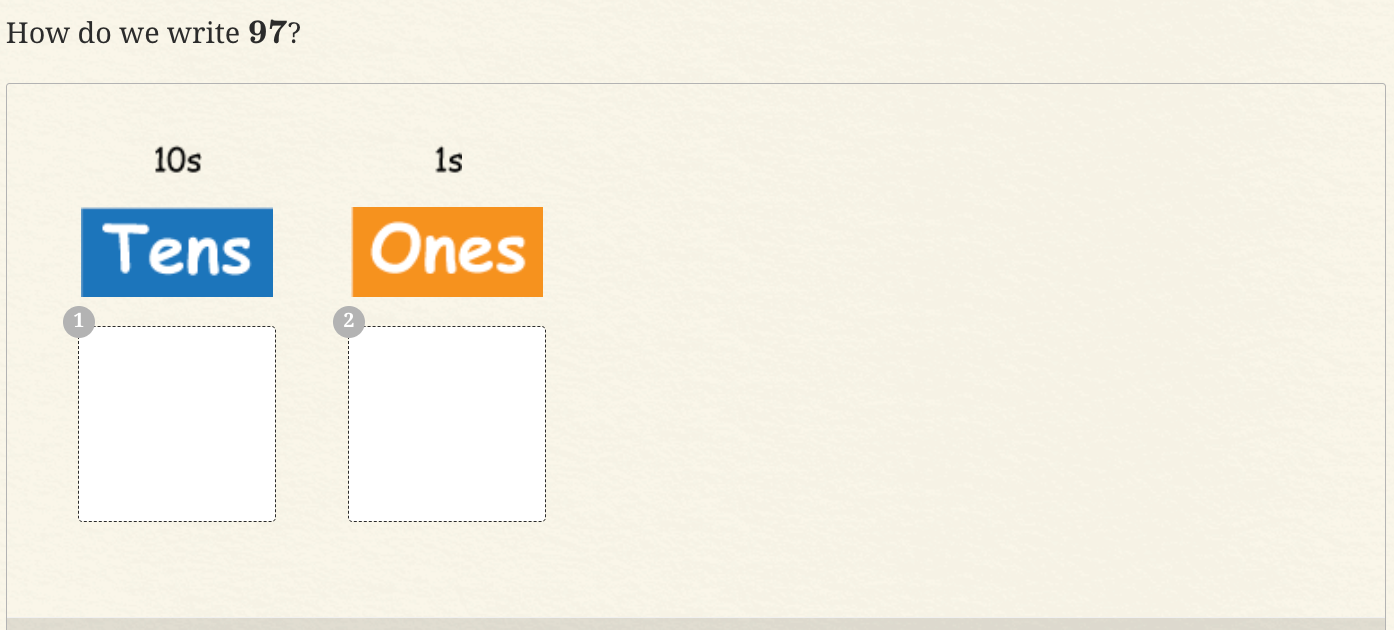
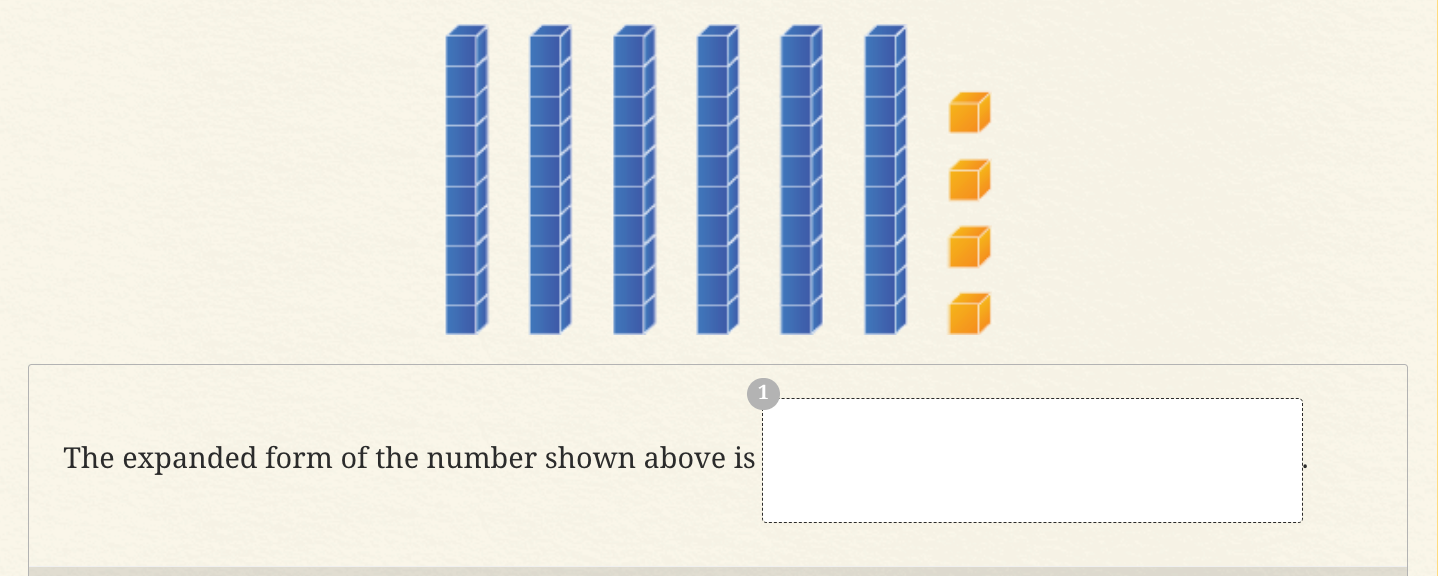
Place value is one of the most important concepts in Grade 1. Students learn that a number like 54 means 5 groups of ten (50) and 4 ones (4). This understanding extends to reading numbers up to 120, writing numbers in expanded form, and comparing two-digit numbers. Base-ten blocks are the main tool used to build this understanding.
Where students make mistakes: When reading a two-digit number like 34, students sometimes read it as “forty-three” because they see the 4 first and assume the larger single digit means a larger place value. Reinforce that the left digit always tells the tens. Use rods (each worth 10) and unit cubes (each worth 1) side by side with the written number until the connection is automatic.
🔄 4. Skip Counting Problems for 1st Graders
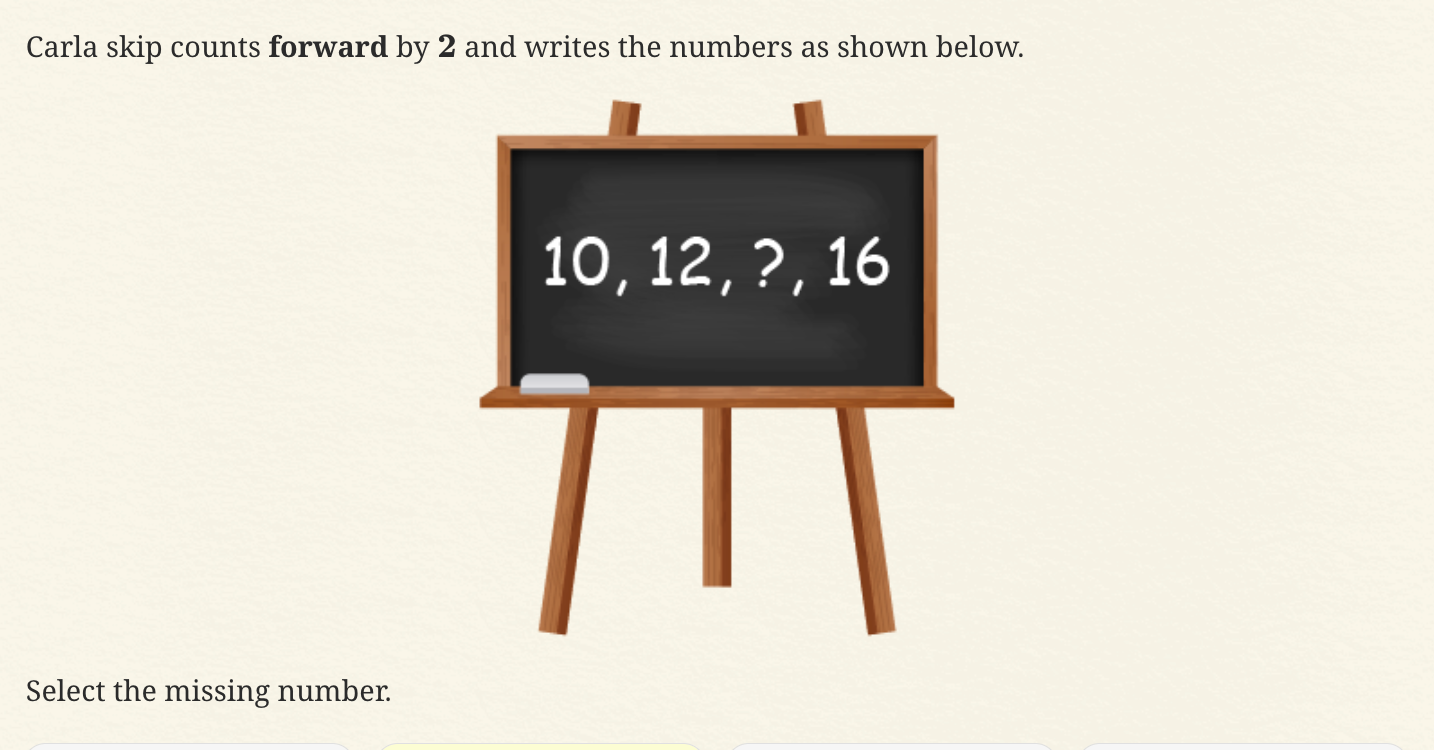
Objective: Count to 120, starting at any number less than 120.
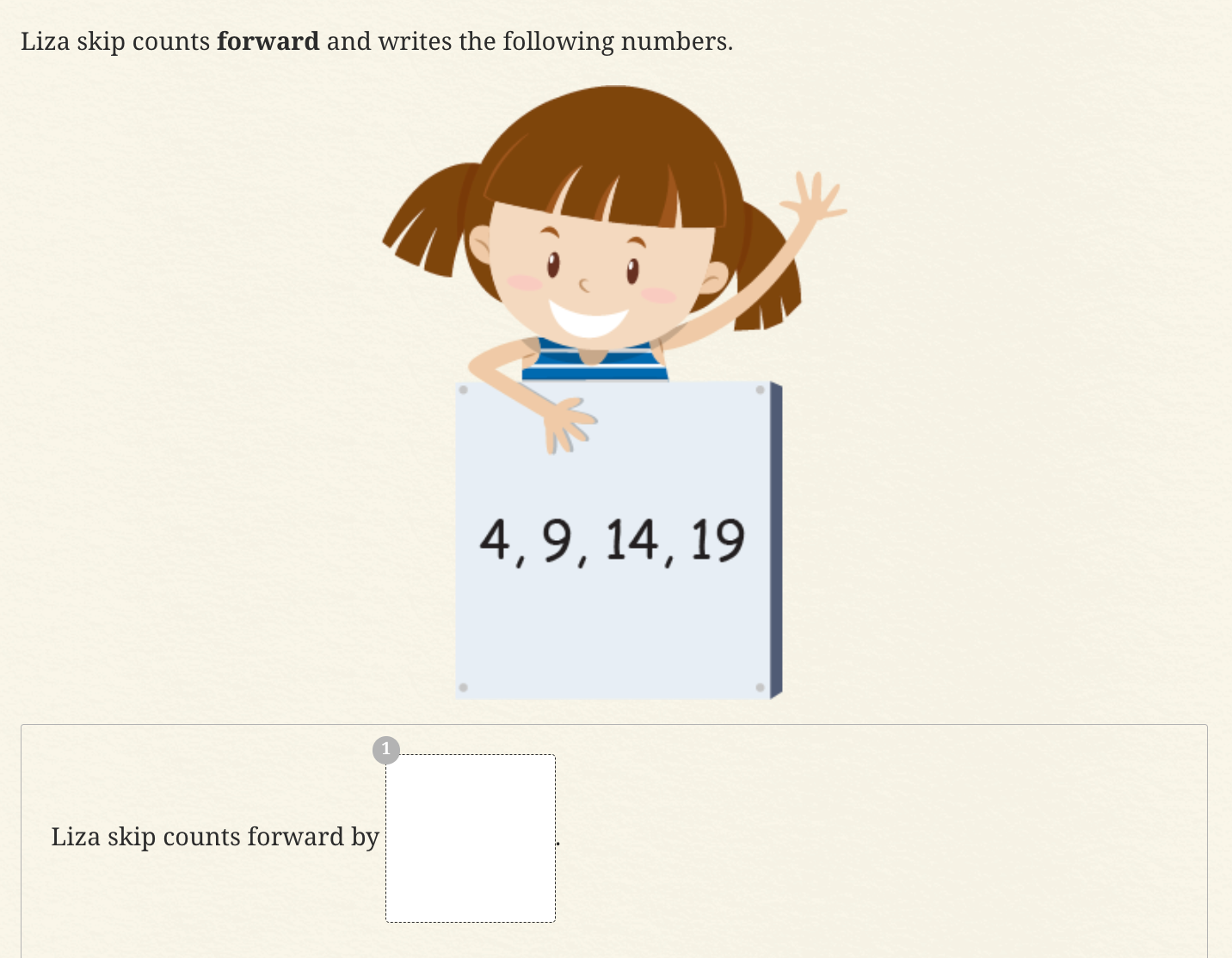
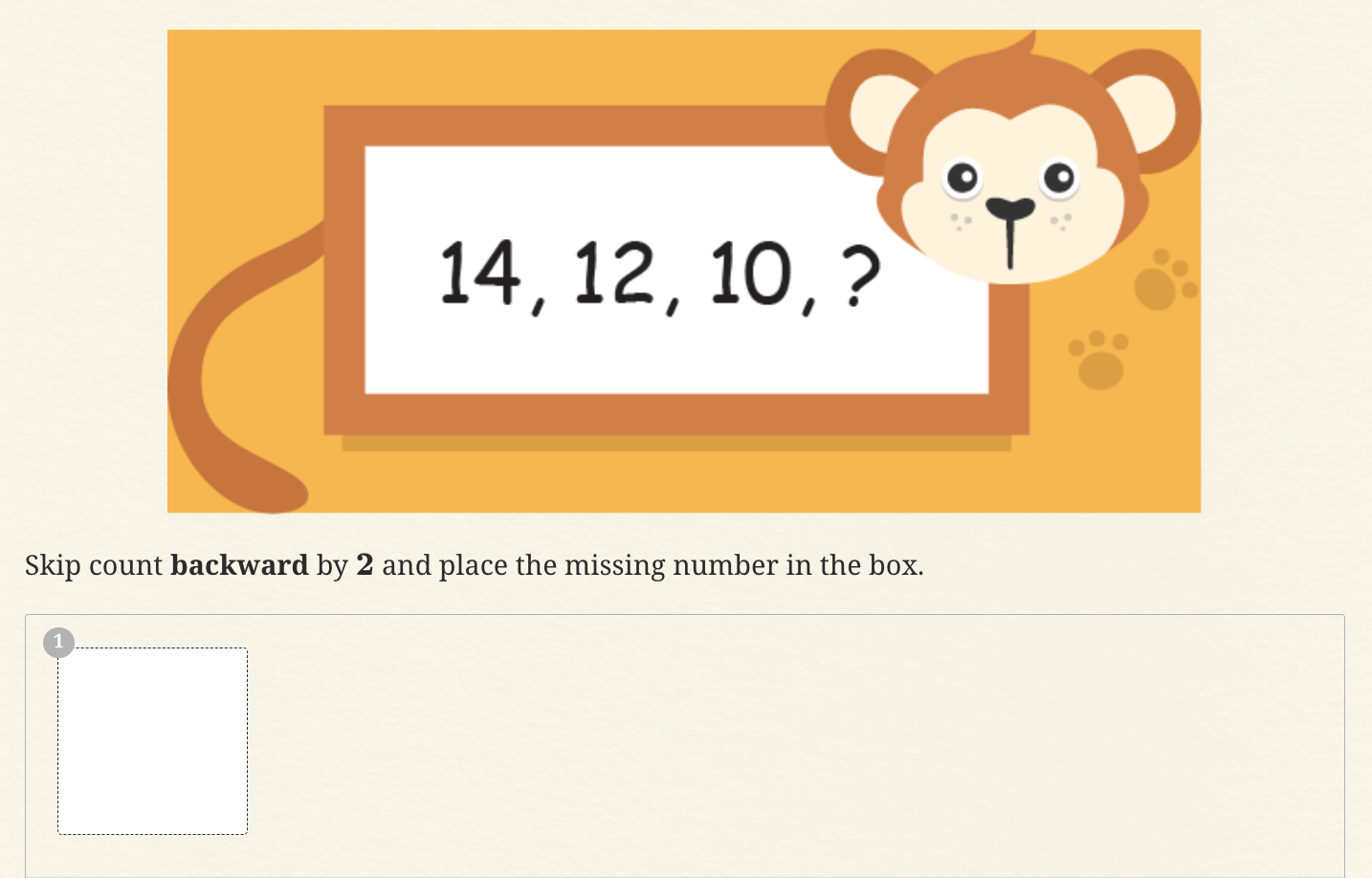
Skip counting in Grade 1 builds the pattern recognition that underpins multiplication in Grade 3. Students count by 2s, 5s, and 10s, both forward and backward. Skip counting also strengthens understanding of even and odd numbers and helps students use the number line more efficiently.
Where students make mistakes: Students lose the pattern when skip counting backward. They often count backward by 1s instead of the correct interval. Keep a number line visible during backward practice. Have your child point to each number as they say it aloud before attempting it without the visual aid.
📊 5. Comparing and Ordering Numbers
Objective: Compare two two-digit numbers using the symbols >, <, and =.
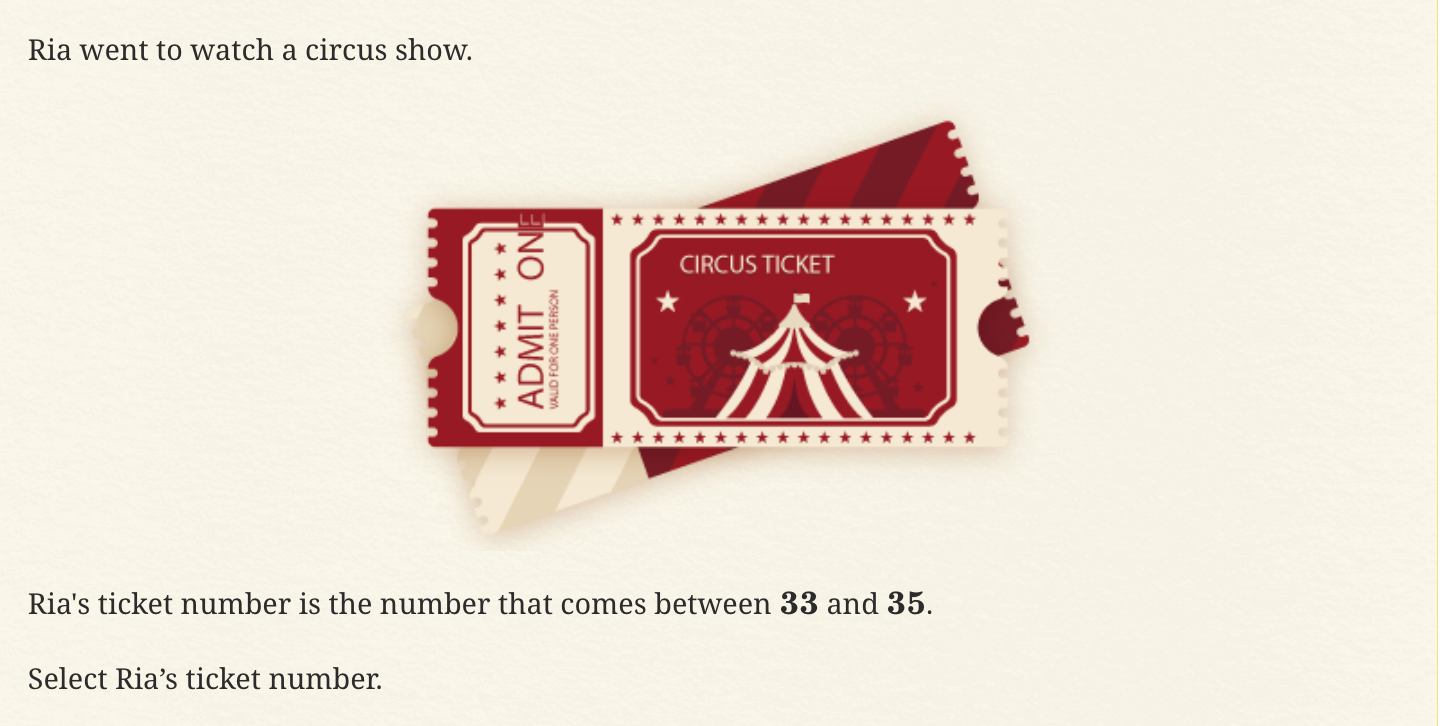
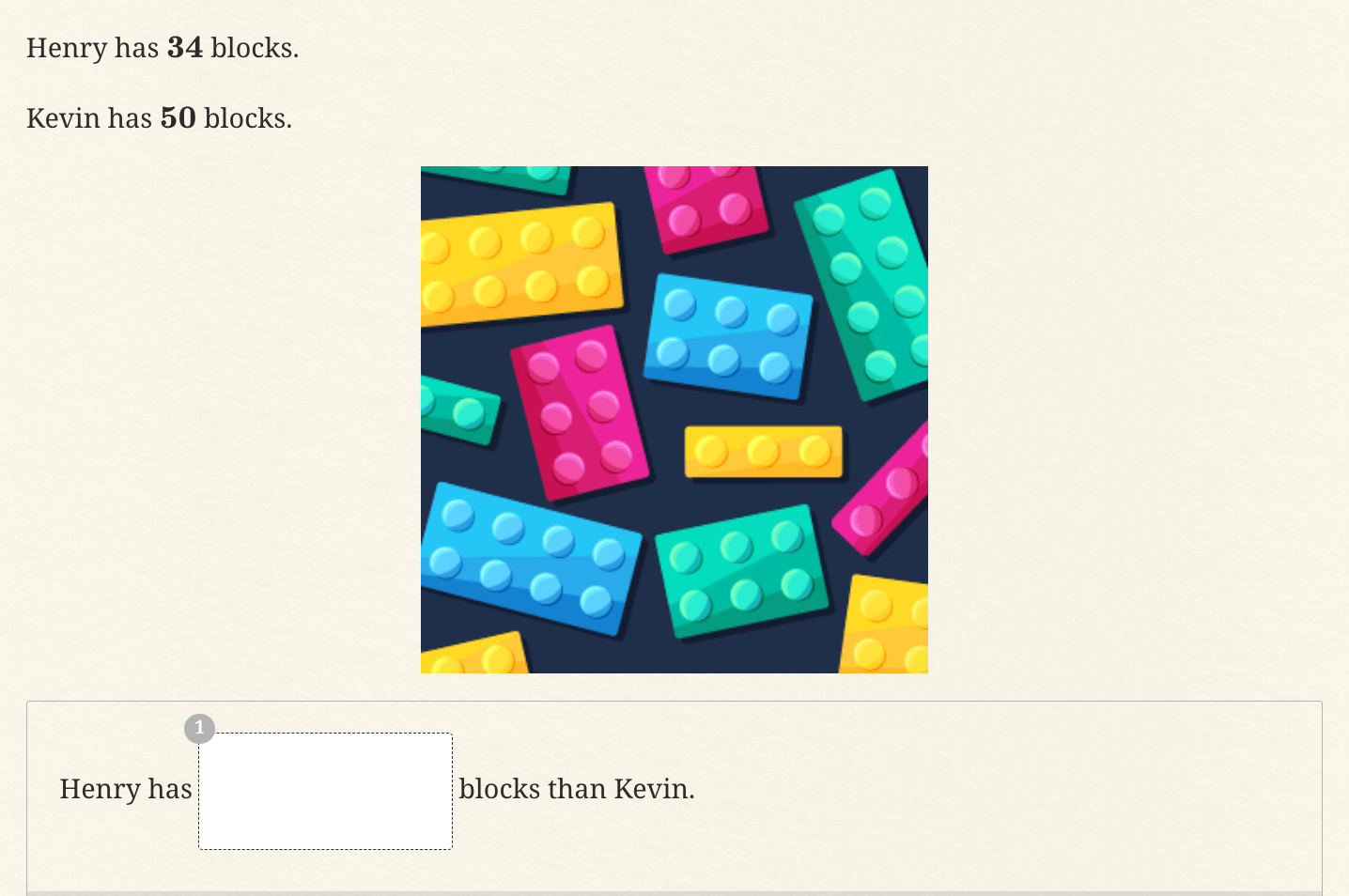
Comparing numbers in Grade 1 means looking at the place value of each digit to determine which number is greater, lesser, or equal. Students compare the tens digit first. If the tens digits are the same, they compare the ones digits. Students also practice ordering a set of numbers from least to greatest.
Where students make mistakes: A common error when comparing 34 and 43 is comparing individual digits without thinking about place value: “The 4 in 34 is bigger than the 3 in 43, so 34 is bigger.” This is wrong. Teach students to always compare the tens digit first: 3 tens is less than 4 tens, so 34 < 43. Drawing base-ten blocks next to each number makes this error almost impossible.
📏 6. Measurement Problems for 1st Graders
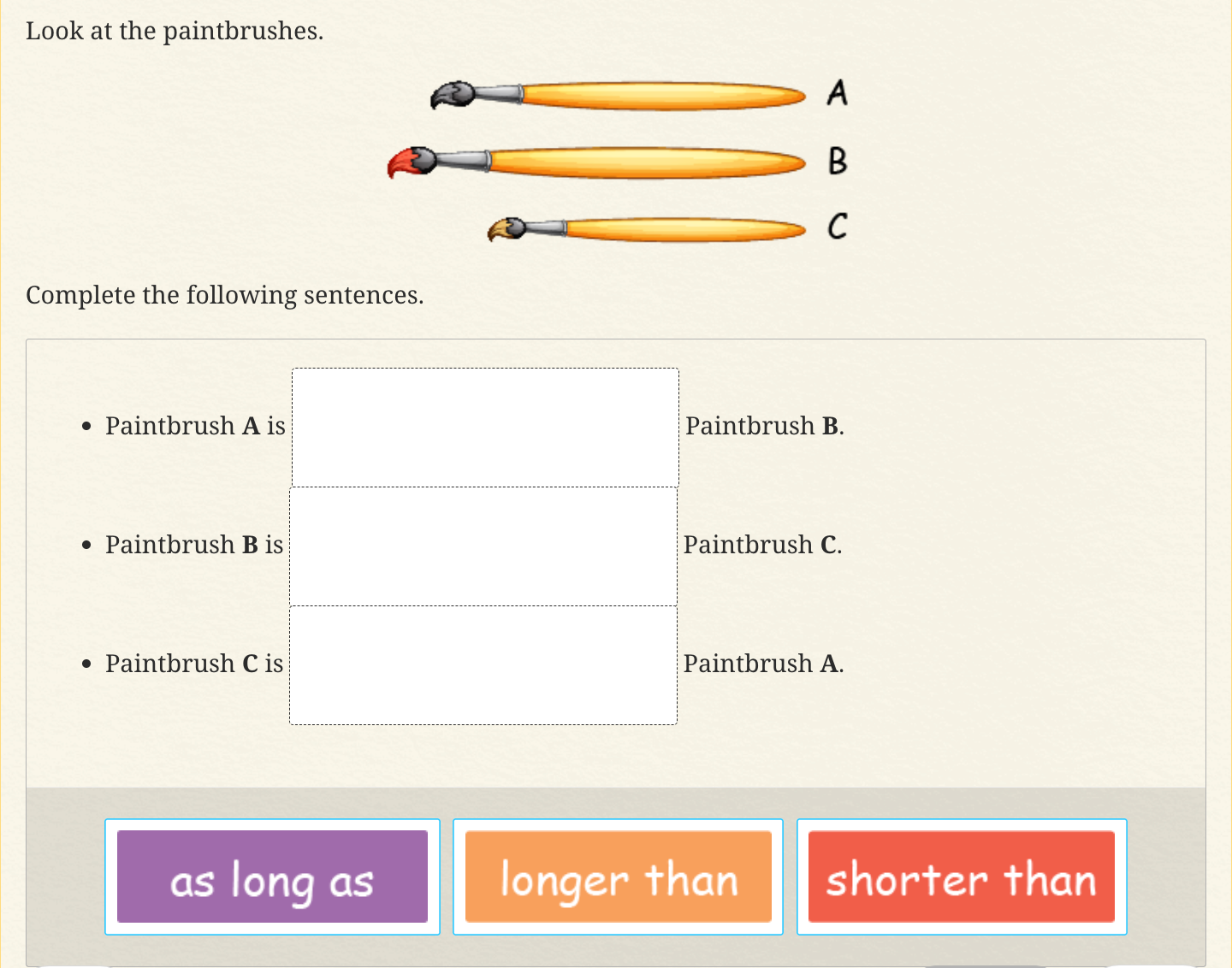
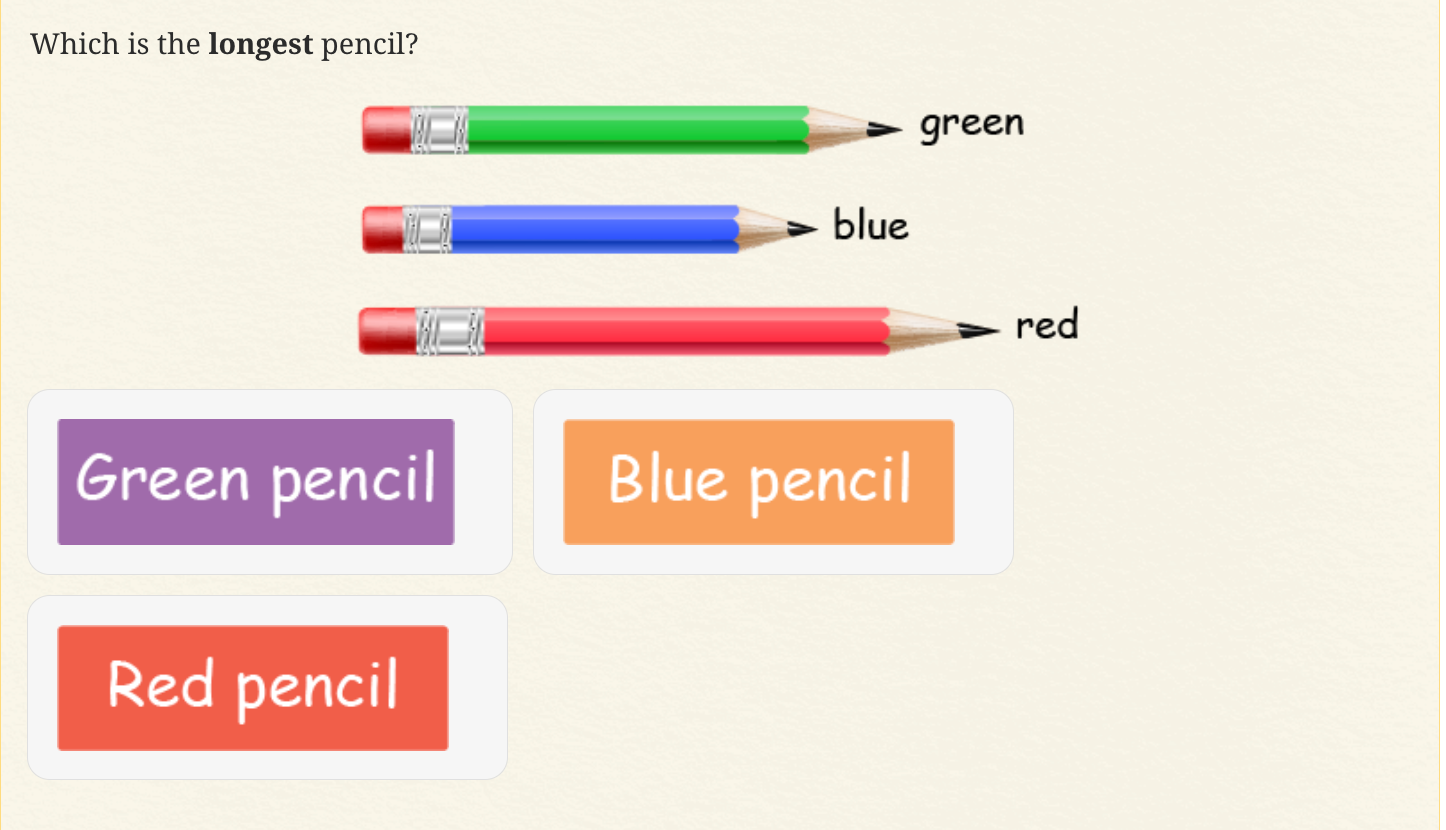
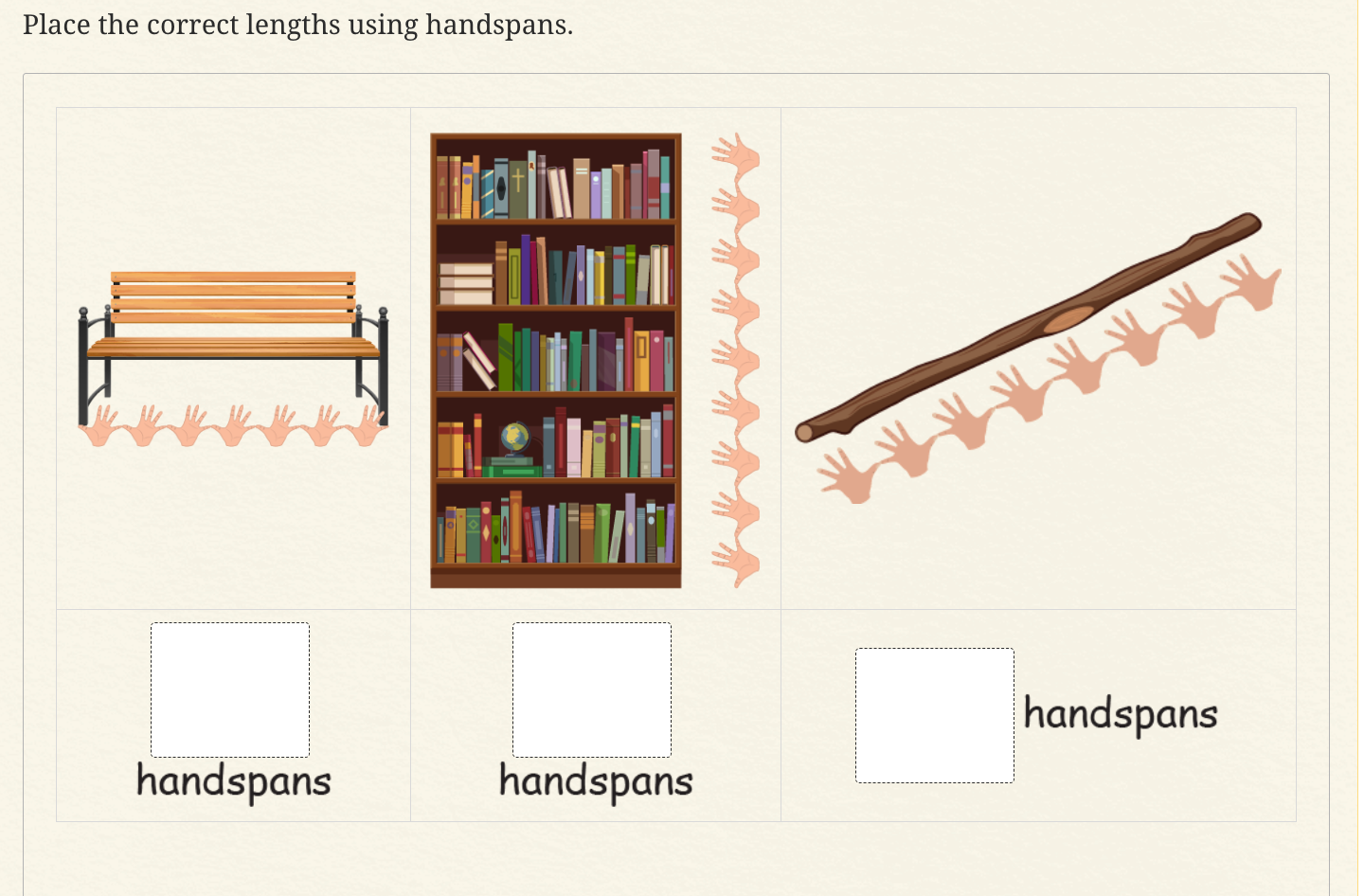
Objective: Order three objects by length; measure lengths using non-standard units.
Measurement in Grade 1 focuses on two skills: ordering objects by length and measuring using repeated non-standard units like hand spans, paper clips, or cubes. Students learn that measurement must start at the edge of the object and that units cannot overlap or leave gaps. These skills build toward using rulers and standard units in Grade 2.
Where students make mistakes: Students often start measuring from somewhere in the middle of an object, not from its edge. They may also leave gaps between units or overlap them. When practicing with non-standard units, ask your child to lay units end-to-end carefully before counting, and always start from one end of the object.
🔷 7. Shapes Problems for 1st Graders
Objective: Distinguish between defining and non-defining attributes; build and draw shapes to possess defining attributes.
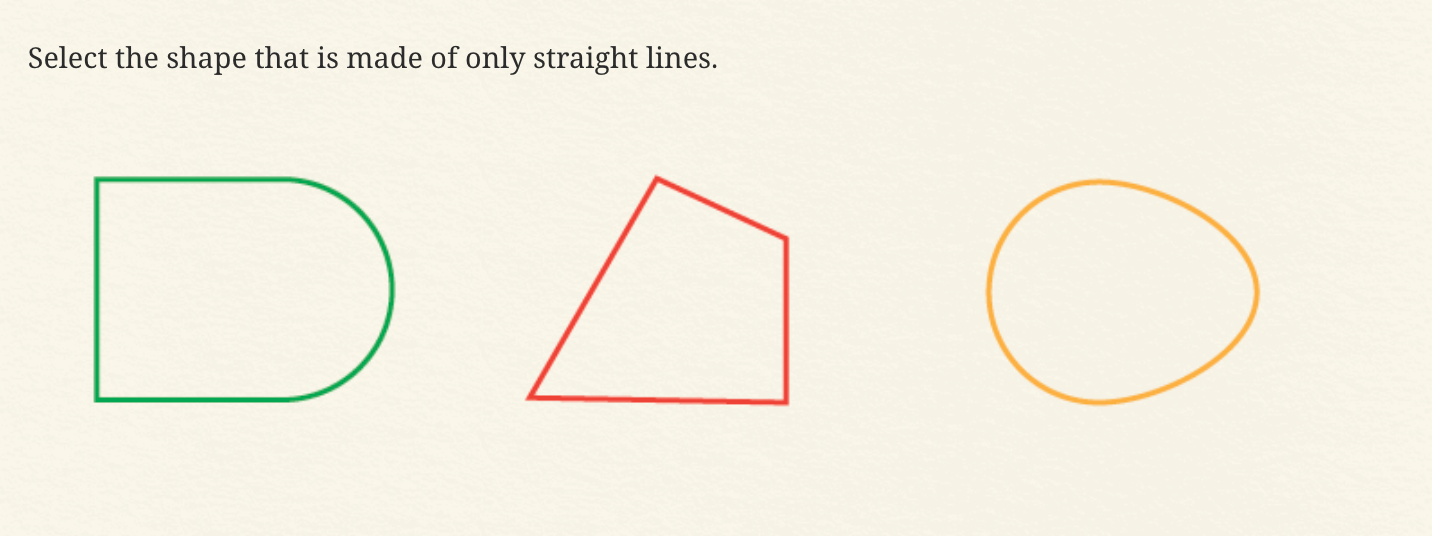
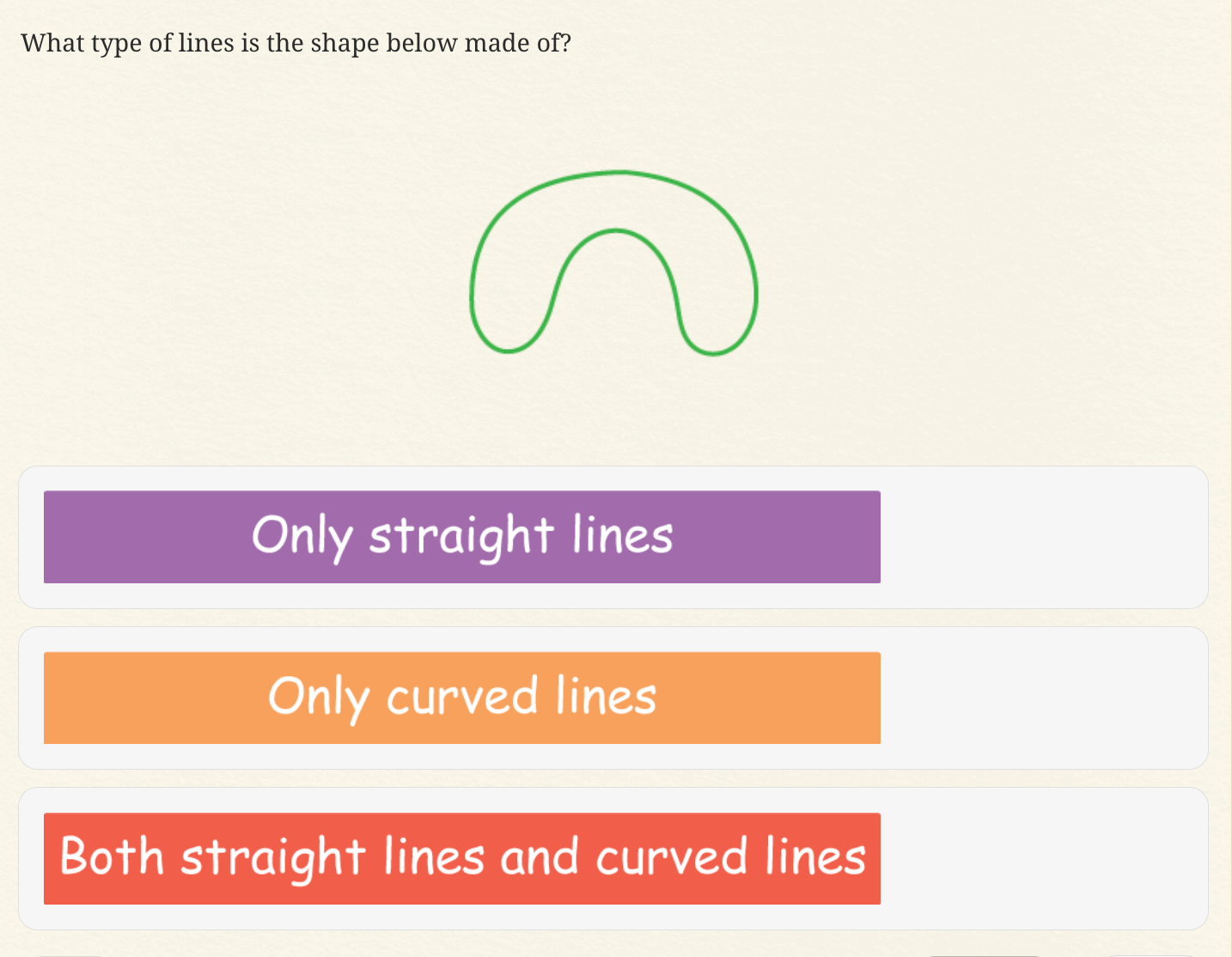
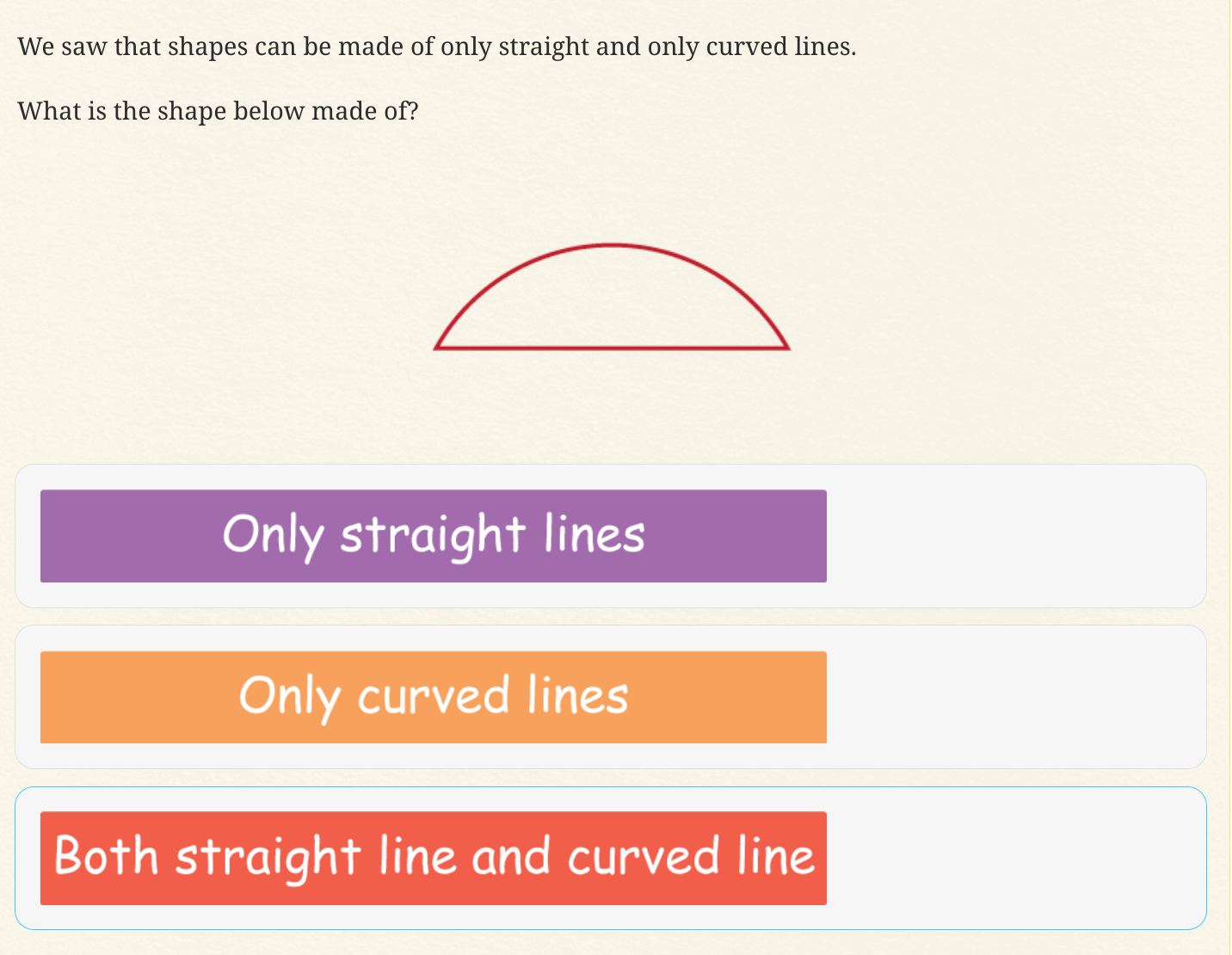
In Grade 1, students move beyond naming shapes to describing them by their defining attributes: the number of sides, the number of corners, and the type of lines (straight, curved, or both). They learn that the same shape can look different depending on its size or orientation, and that this does not change what kind of shape it is.
Where students make mistakes: Students identify shapes by appearance rather than by attributes. They may call a tilted square a “diamond,” or reject a very flat triangle as “not a real triangle.” Teach students to ask: How many sides? Are they straight or curved? How many corners? These attributes define the shape, not its size or orientation.
🕐 8. Telling Time Problems for 1st Graders
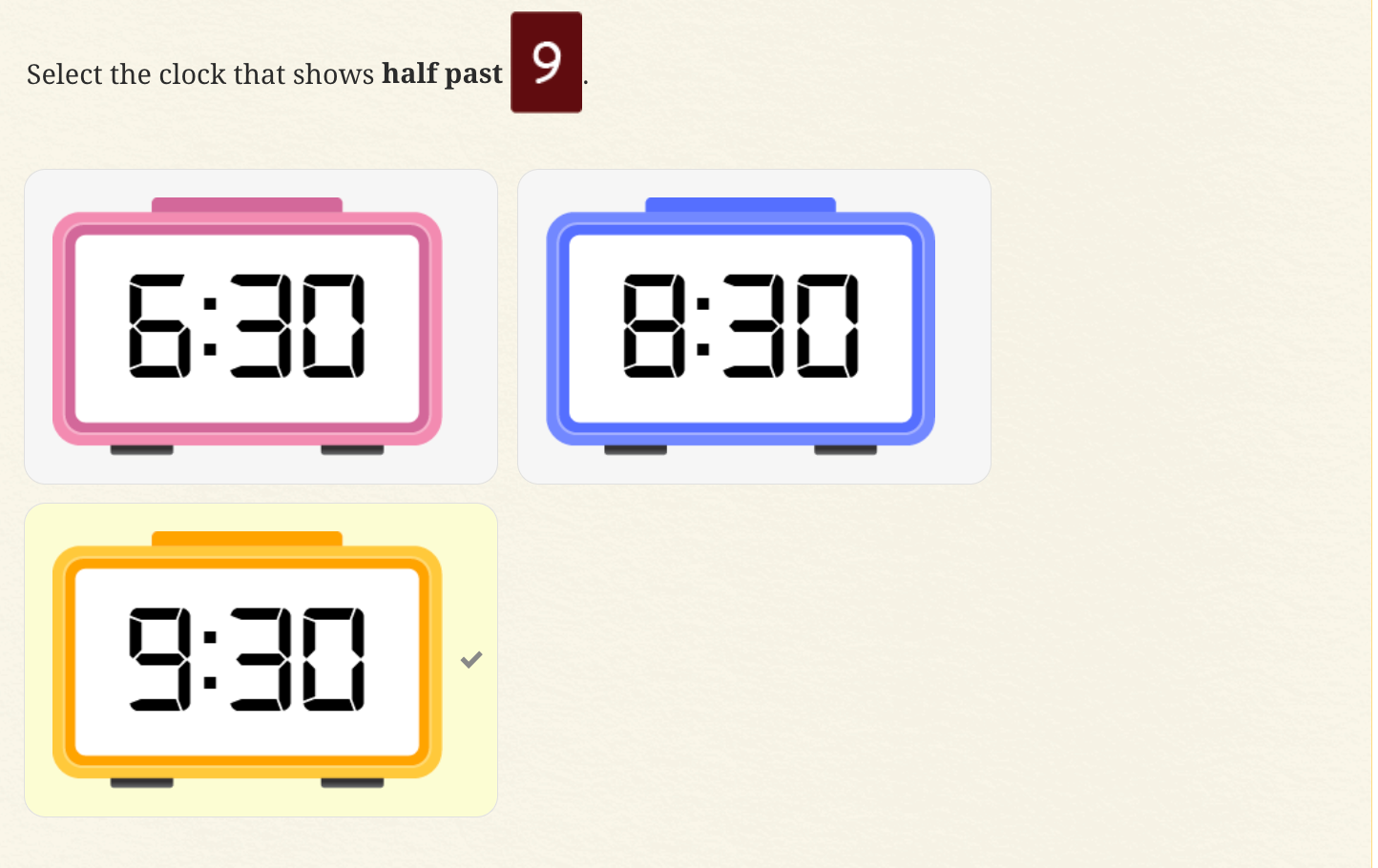
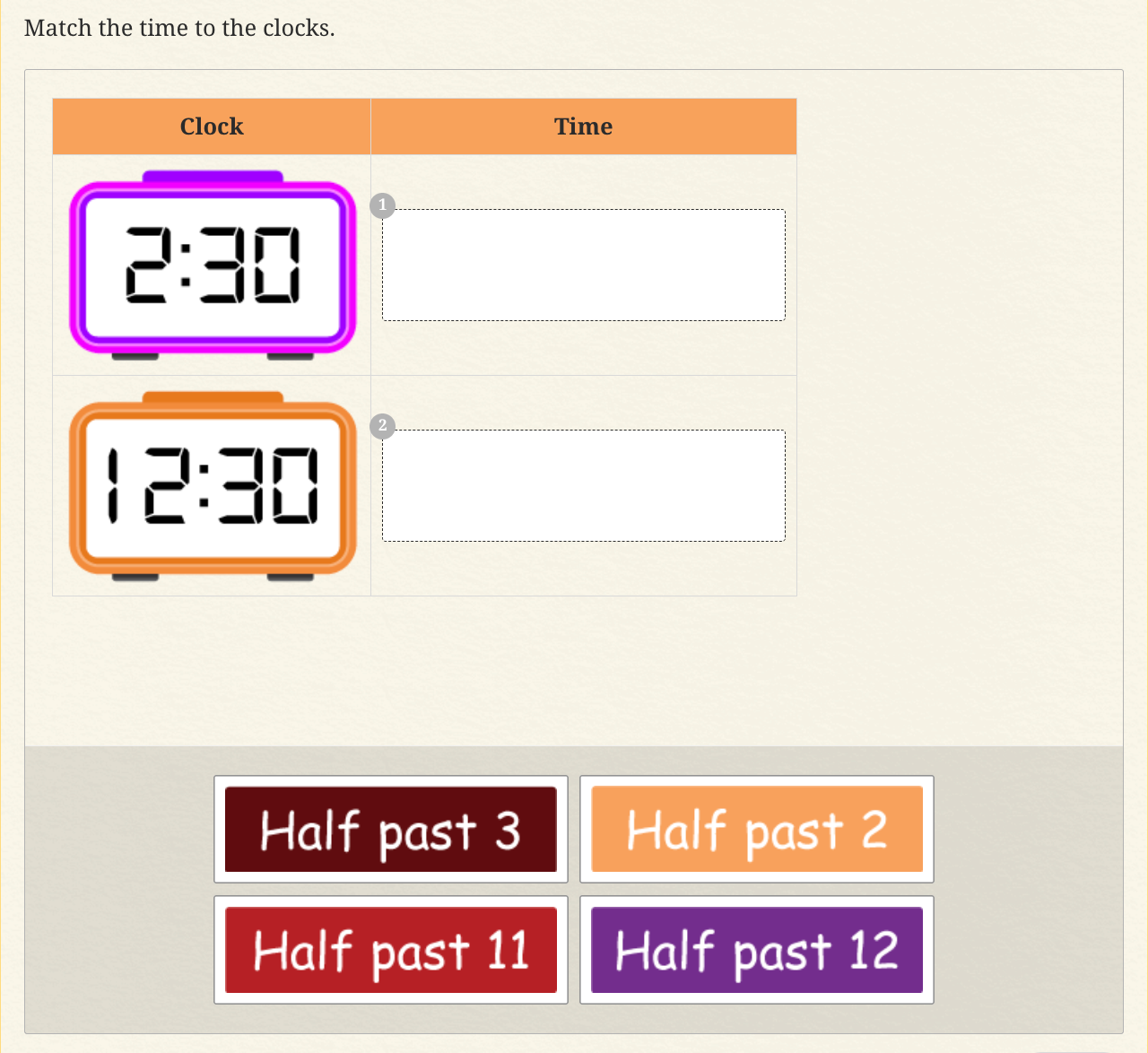
Objective: Tell and write time in hours and half-hours using both analog and digital clocks.
In Grade 1, students read analog and digital clocks to the hour and half hour. They learn that “half past” means 30 minutes after the hour. On an analog clock, the minute hand points to 12 for o’clock and to 6 for half past. At half past, the hour hand sits halfway between two numbers.
Where students make mistakes: The most common error is reading the minute hand as the hour hand. Students look at where the longer hand points and call it the hour. Teach the rule: the shorter hand tells the hour, the longer hand tells the minutes. At half-past times, the hour hand will be between two numbers, not pointing directly at one.
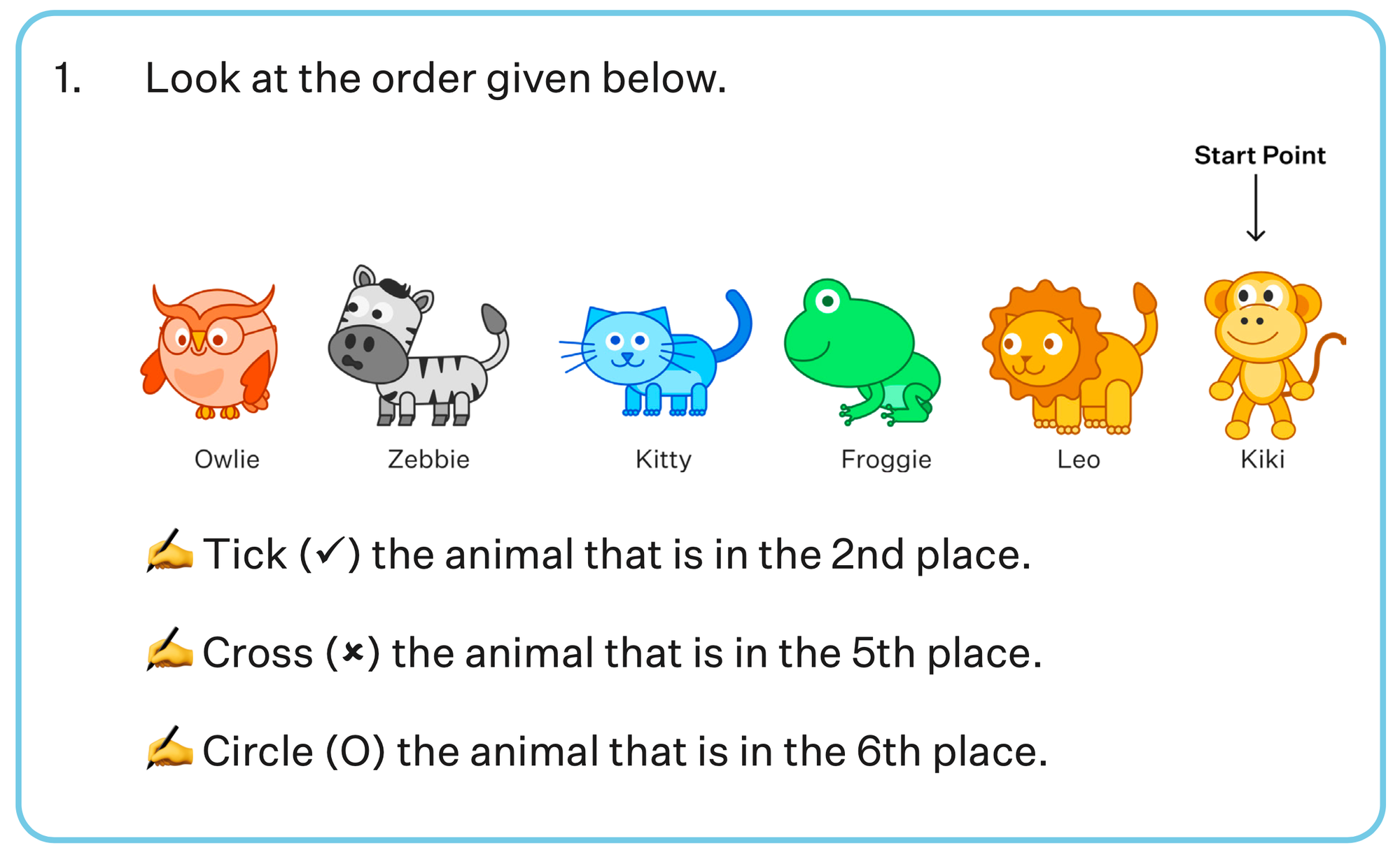
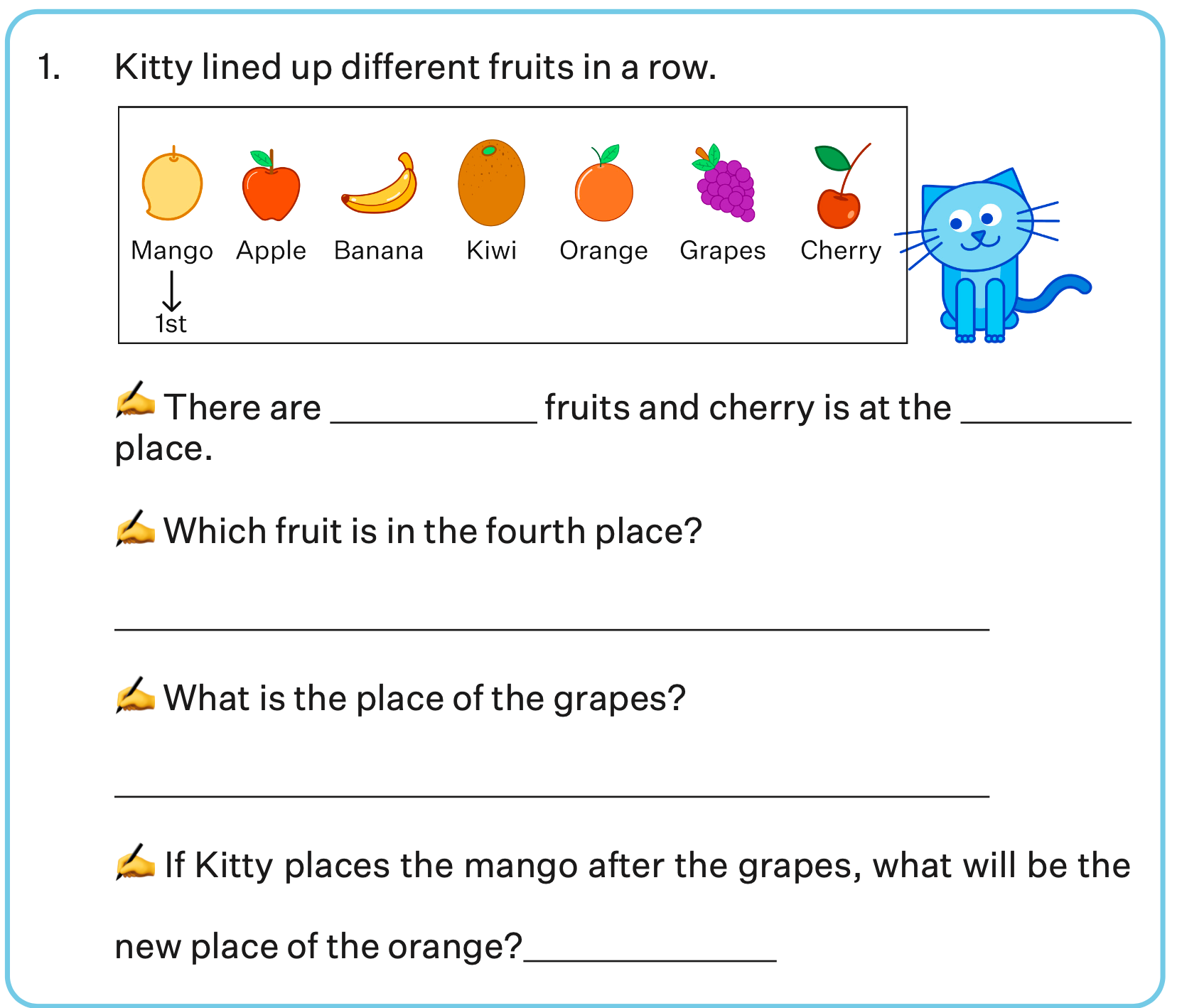
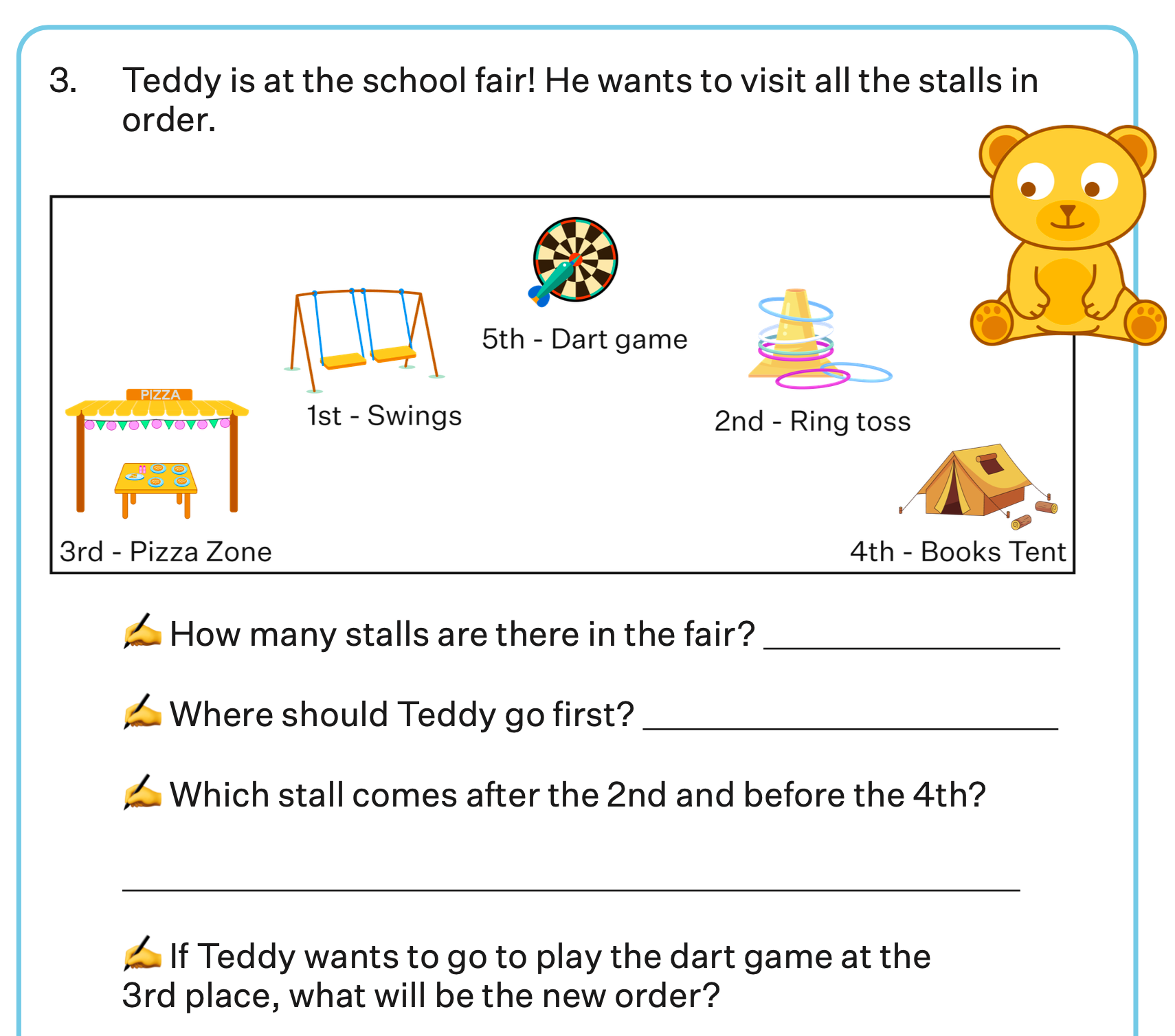
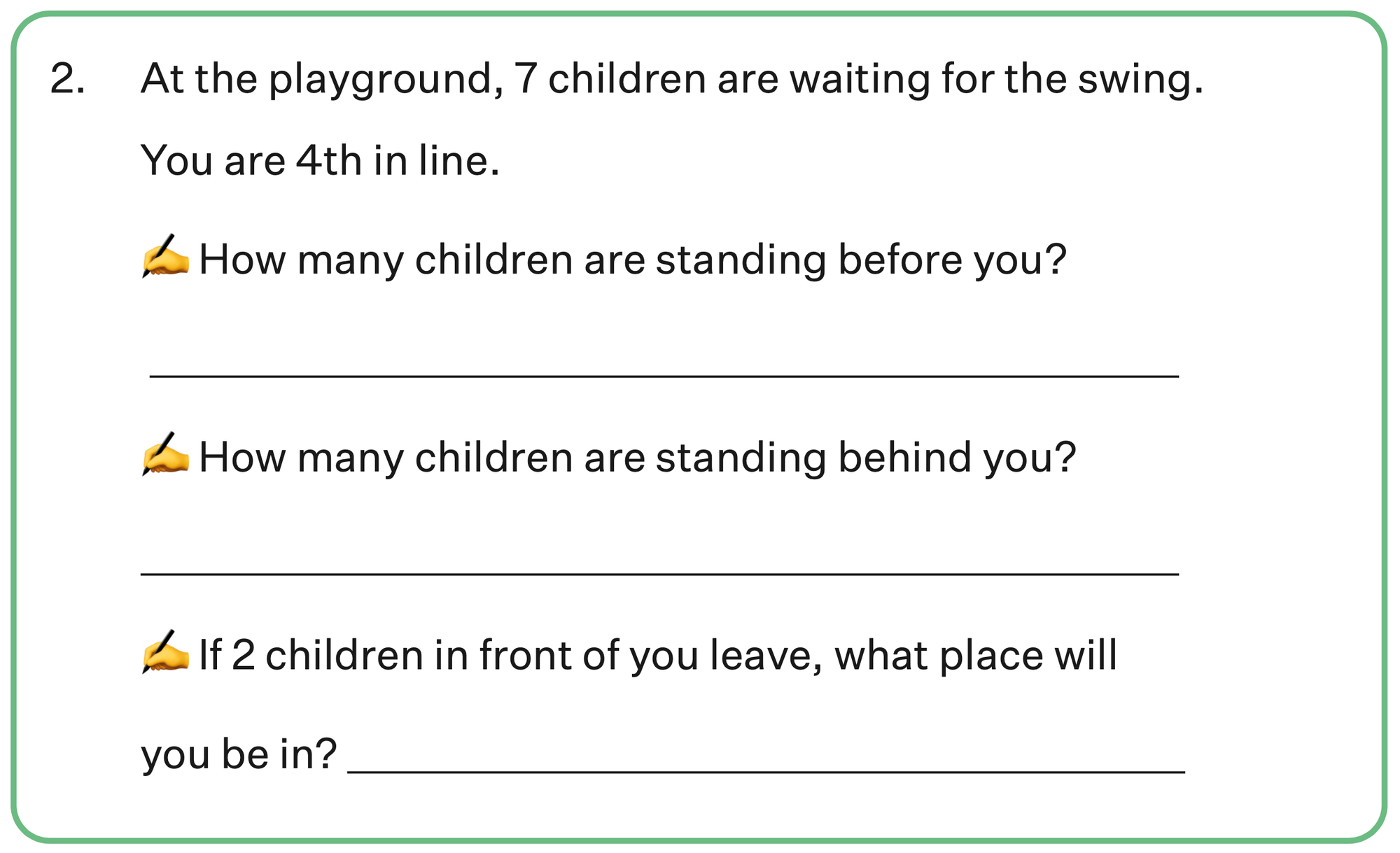
🏆 9. Ordinal Numbers Problems for 1st Graders
Objective: Use ordinal words and numbers to describe position; order objects first through twentieth.
Ordinal numbers describe position in a sequence: 1st, 2nd, 3rd, and so on. In Grade 1, students practice ordinal positions up to 20th. They also learn that position changes depending on which end you count from; 2nd from the front is a different position than 2nd from the back.
Where students make mistakes: Problems that ask about position from the back confuse many students. They count from the front by default, even when asked to count from the back. Encourage students to draw the line of objects and label positions from both ends before answering. A physical line-up with classmates is one of the best ways to build this intuition.
🧪 10. Mixed 1st Grade Math Questions: Practice Test
Mixed Practice — 10 Questions. Time: 15 minutes. Try all questions before checking answers. Topics: Addition, Subtraction, Place Value, Skip Counting, Comparing Numbers, Shapes, and Telling Time.
- 9 + 7 = ___
- 15 − 6 = ___
- What number has 4 tens and 2 ones?
- Fill in the missing number: 5, 10, ___, 20
- Which is greater: 47 or 74?
- Milo has 8 flowers. He picks 5 more. How many does he have now?
- Is a circle made of straight lines, curved lines, or both?
- What time is it when the minute hand is on 6 and the hour hand is between 3 and 4?
- Tom has 12 stickers. He gives 4 away. How many does he have left?
- Three students are in a line. Riya is 1st, Ben is behind Riya, Sam is behind Ben. Who is in 2nd position?
Answers: 1) 16 • 2) 9 • 3) 42 • 4) 15 • 5) 74 • 6) 13 flowers • 7) Curved lines only • 8) Half past 3 (3:30) • 9) 8 stickers • 10) Ben
Frequently Asked Questions
What are math problems for 1st graders?
Math problems for 1st graders are practice exercises aligned to US Common Core Grade 1 standards, covering addition and subtraction within 20, two-digit place value, skip counting, measurement, basic shapes, telling time to the half hour, and ordinal numbers. These problems are designed for children ages 6 and 7 and can be used for homework help, test prep, or extra practice at home.
What are easy math problems for 1st graders?
Easy math problems for 1st graders include simple addition facts within 10 (like 3 + 4 = 7), subtraction of small numbers (like 8 − 3 = 5), identifying shapes by their sides and corners, counting forward and backward by 2s or 5s, and telling time to the hour. The problems in this blog cover all of these topics with clear step-by-step solutions.
What are 1st grade math questions every student should know?
The 1st grade math questions every student should know cover eight Common Core topics: addition and subtraction within 20, two-digit place value, counting to 120, measuring and comparing lengths, telling time to the hour and half hour, reading simple graphs, identifying 2D shapes by their lines and sides, and ordinal numbers up to 20. This blog covers practice questions from all eight topics.
How can I help my 1st grader with math at home?
You can help your 1st grader with math at home by practicing addition and subtraction during daily routines, using physical objects like coins or blocks for place value, reading analog clocks together, and working through practice problems like the ones in this blog. Cuemath tutors recommend spending 10 to 15 minutes on focused math practice three to four days per week for best results.
What are simple math problems for 1st graders with answers?
Simple 1st grade math problems include questions like: 6 + 3 = ? (answer: 9), 10 − 4 = ? (answer: 6), what number has 2 tens and 5 ones (answer: 25), and which shape has only curved lines (answer: a circle). This blog includes 40 problems across 9 topics, all with step-by-step answers.
What are first grade math problems on place value?
First grade place value problems ask students to identify tens and ones in two-digit numbers, read and build numbers using base-ten blocks, write numbers in expanded form (like 43 = 40 + 3), and compare two-digit numbers. Grade 1 place value covers numbers up to 120. A free Cuemath MathFit Evaluation can identify exactly where a student needs support in place value before the first tutoring class.
Can Cuemath help my 1st grader with math problems?
Yes. Cuemath offers 1-on-1 live tutoring for Grade 1 students aligned to US Common Core standards. Every student starts with a free MathFit Evaluation to identify where they stand, and a dedicated tutor works through concepts like addition, place value, and measurement at the child’s pace, starting at $25 per class. Cuemath’s Curriculum V3.1 includes interactive simulations and real-world practice problems designed specifically for Grade 1 learners.
What are the best math questions for 1st graders to practice daily?
The best math questions for 1st graders to practice daily mix topics rather than drilling just one. A short session covering one addition question, one subtraction question, one place value question, and one shapes or measurement question builds connections across concepts instead of isolated facts. Cuemath’s MathFit Daily Workout does exactly this, with five short exercises across five math domains in every session.
Sources
- Common Core State Standards Initiative — Mathematics, Grade 1
- National Council of Teachers of Mathematics (NCTM)
- National Center for Education Statistics (NCES) — Grade 1 Achievement
- Khan Academy — Grade 1 Math curriculum overview

I grew up a science kid. Math was not my best subject. Class moved fast, I was too shy to ask for help, and I somehow ended up more curious about how people learn than about the subjects themselves.
That's what pulled me into education — not to teach, but to understand how colleges and tutoring programs actually work and what students genuinely need from them.
My love for writing did the rest. I had too many observations and nowhere to put them, so I started writing, and haven't stopped. Over the last five years I've written about edtech, student life, and college programs. For the past year, my focus has been math tutoring specifically.
I work at Cuemath now, so factor that in. I research by going where parents actually talk: forums, reviews, and direct conversations with students and families. I'm writing for the kid who's too scared to raise their hand in class. I was that kid.