Cuemath vs RSM: Which Online Math Program is Better in 2026?
I compared Cuemath and RSM across learning model, cost, and parent reviews. RSM is group-based and competition-driven, while Cuemath offers true 1:1 personalized learning focused on conceptual understanding.

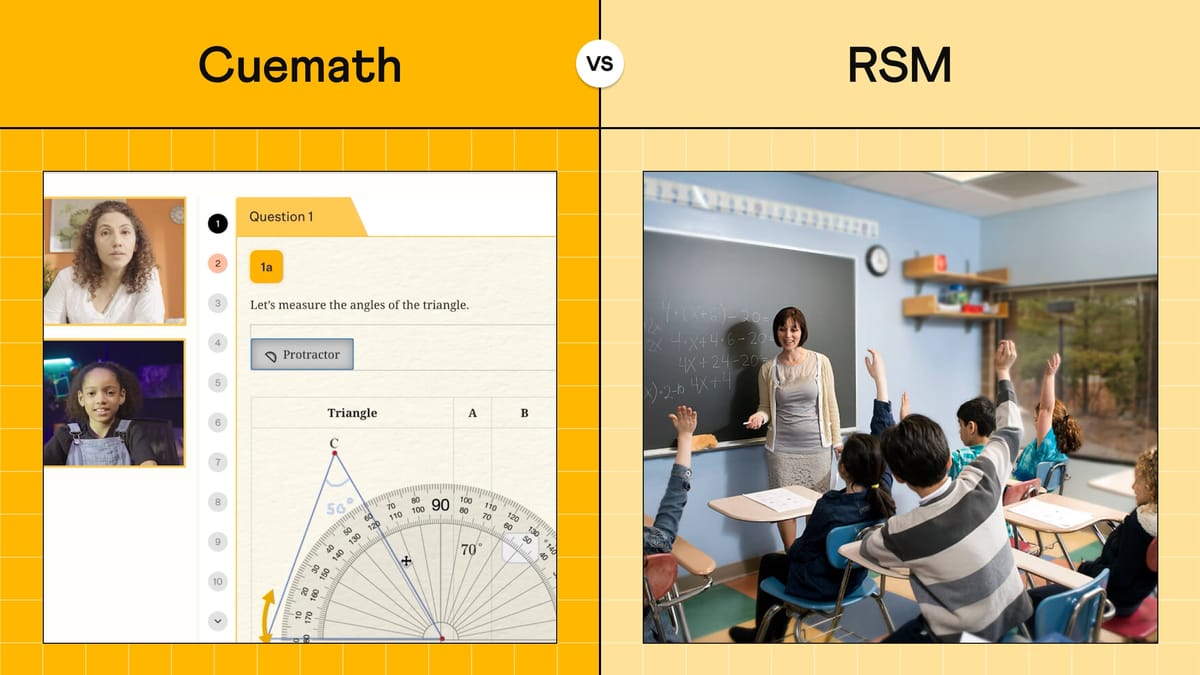
If you're weighing an accelerated, competition-focused program like the Russian School of Mathematics (RSM) against a personalized 1:1 option like Cuemath, you're really asking a harder question underneath: does my child need to go faster, or do they need to understand more deeply first? Just 28% of U.S. 8th graders scored proficient or above in math on the 2024 NAEP Mathematics Assessment, the most recent Nation's Report Card data available.
Two well-known options are Cuemath and the Russian School of Mathematics (RSM). While both aim to strengthen students' mathematical abilities, they take very different approaches.
- RSM is a highly competitive, group-based math class built around an accelerated curriculum and competition prep.
- Cuemath is a personalized, 1:1 online math class designed to build logical thinking and problem-solving skills at your child's own pace.
In this blog, we'll compare Cuemath and RSM across key factors; including teaching methodology, curriculum, class format, personalization, pricing, and student suitability; to help you determine which program may be the better fit for your child's learning style and academic objectives.
Key Takeaways
- The Core Difference: RSM is designed to win competitions. Cuemath is a 1:1 math class designed to build a resilient, logical mind.
- Class Type: Cuemath’s 1:1 model ensures a safe space where your child can ask questions without fear. RSM’s group model (avg. 12 students) feels like a survival of the fittest environment.
- The Price: Cuemath is a massive value at roughly $15/ class, compared to RSM does not publicly list a universal tuition or per-lesson rate; instead, families can request current tuition details for their child's grade and location directly from RSM.
- The End Goal: RSM trains students for on-paper success (SAT/AMC scores). Cuemath trains students for real-world success, covering test prep plus 21st-century skills like financial literacy and data science.
The Key Differentiator: Personalized Guidance vs. The Group Method
One of the key differences between Cuemath and the Russian School of Mathematics (RSM) is how instruction is delivered. While both programs aim to strengthen mathematical skills, they use different teaching formats that may appeal to different types of learners.
Cuemath offers live 1:1 online tutoring, where each student works individually with a dedicated tutor. RSM primarily delivers instruction in small-group classes, allowing students to learn alongside peers in a structured classroom environment.
Cuemath's 1:1 Model: Creating a Safe Space to Think
Cuemath's learning model is centered on one-on-one instruction, enabling tutors to tailor lessons to each student's pace, goals, and areas for improvement. Because the tutor works with a single student during each session, they can adapt explanations, revisit concepts when needed, and adjust the pace based on the student's progress.
Many students benefit from an environment where they can ask questions freely, discuss their thought process, and revisit challenging topics without feeling rushed. Over time, working with the same tutor can also help build familiarity with the student's learning style, strengths, and academic goals, allowing lessons to become increasingly personalized.
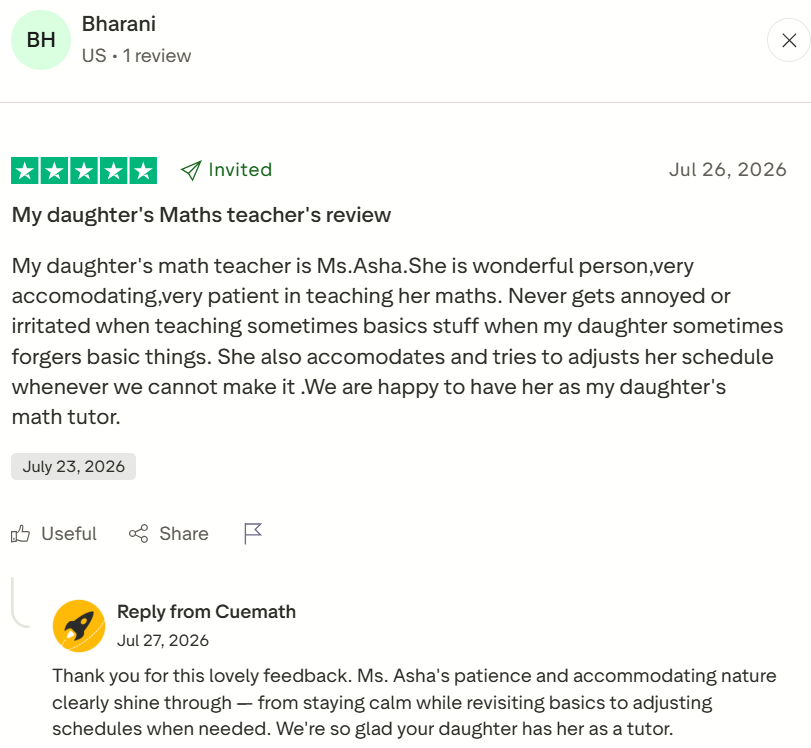
Parents have also shared positive experiences about the continuity of working with a dedicated tutor, noting that consistent guidance can help tutors better understand a student's learning needs over time.
RSM's Group Method: Prioritizing Competitive Advantage
The Russian School of Mathematics (RSM) primarily delivers instruction through small-group classes. According to RSM, this format allows students to learn alongside peers, engage in mathematical discussions, and work through challenging problems in a collaborative classroom environment.
For students who enjoy learning with classmates, participating in group discussions, and progressing through a structured curriculum, this approach can provide an engaging academic experience.
At the same time, a group-based format may offer a different level of personalization than one-on-one tutoring. Since instruction is designed for multiple students, lesson pacing and classroom discussions are generally guided by the group's overall progress. Students who prefer individualized attention or customized lesson plans may wish to consider whether a one-on-one learning model better aligns with their learning preferences and academic goals.
Ultimately, the choice between a group class and personalized tutoring depends on how a student learns best. Some students are motivated by collaborative classroom learning, while others benefit from instruction that is tailored to their individual pace and areas of focus.
One put it perfectly: the program is quite self-selecting for very smart kids and/or kids with very dedicated parents."
Cuemath vs RSM: A Quick Comparative Analysis
The following table provides a data-driven, side-by-side summary of the two platforms.
| Features | Cuemath (Source: cuemath.com) |
Russian School of Math (Source: mathschool.com) |
|---|---|---|
| Learning Model | 1:1 live, interactive classes | Group classes (12 students approx) |
| Class Size | 1 student, 1 tutor | Average of 12 students |
| Tutoring Method | Deep conceptual learning | Regular practice with lots of examples and exercises, a homework-focused approach |
| Personalization | 100% personalized learning. Unique learning plan tailored to your child's pace and academic goals. | Three levels for every grade. Students are placed in a track, not given a unique path. |
| Curriculum Focus | Aligned to Common Core/State Standards. | Based on elite mathematical schools in the former Soviet Union. |
| High School Specialties | SAT, AMC, Olympiads + Math Skills for Life (Financial Literacy, Data Science). | Competition and Test Prep: SAT, AMC, Advanced Algebra & Geometry. |
| Key Platform Features | Interactive smart whiteboard, Talk-o-Meter to measure student participation, and a gamified daily practice app. | A video-conferencing platform for live, interactive group classes. |
| Parental Involvement | Parent dashboard offers complete transparency with real-time progress reports and insights. | Limited parent communication |
| Best Suited For | Everyone and anyone who wants to hone their math skills to become a confident mathematical thinker | Mathematically gifted students who can handle an accelerated pace and rigorous workload |
Note: The information presented in this comparison has been compiled from the official websites. Features, pricing, and offerings may change over time. Please refer to each company's official website for the most up-to-date and accurate information before making a decision.
How They Teach: Is It ‘How to Think’ or Just ‘What to Solve’?
It’s not just about the 1:1 vs. group; it’s about how they actually teach. After all my research, I’m convinced Cuemath is engineered to build a thinker, while RSM is engineered to build a solver.
The Cuemath Way: Building a Mathematical Thinker
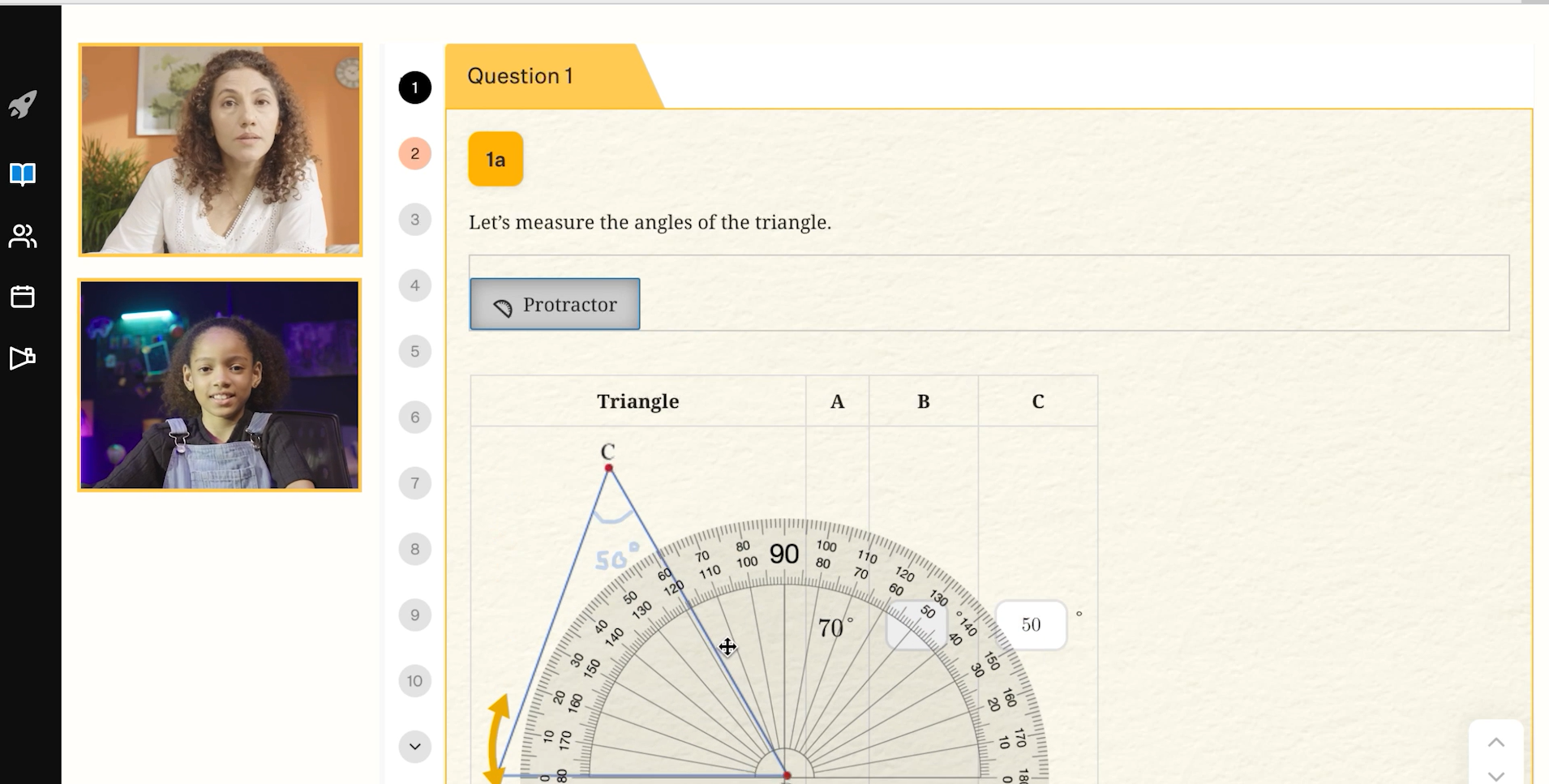
- Cuemath's entire teaching philosophy boils down to one simple, powerful rule: cue, don't tell.
- Cuemath tutors are trained to ask the right questions, guiding your child to discover the why on their own.
- They want your child to think aloud and explain their reasoning.
- Why is this so brilliant? Because logical thinking is the structured articulation of thought. You can't get good at it just inside your own head.
Cuemath is nurturing your child to explain their reasoning out loud. It shifts the goal from just getting the answer to explaining how you got the answer.
And the parent reviews I read, I saw testimonials like:
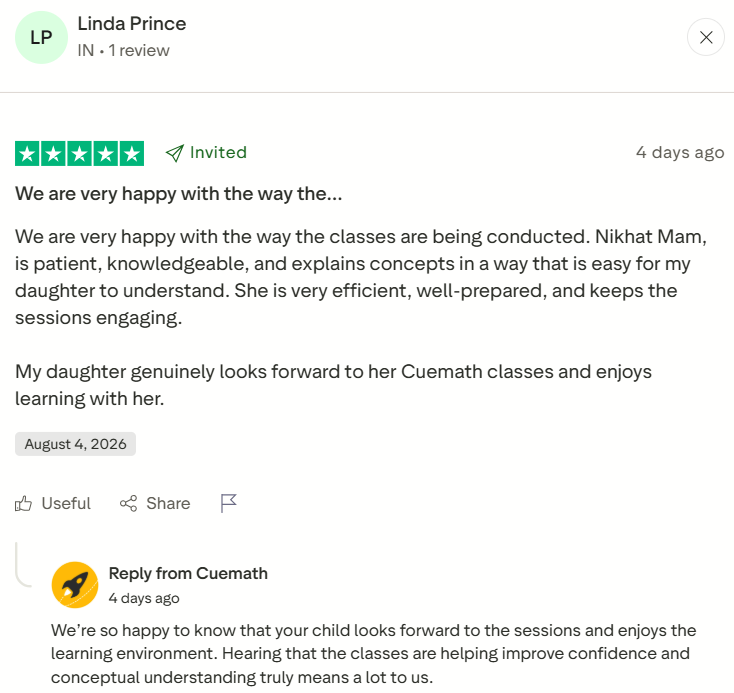
That, to me, is the real goal.
The RSM Method: The Socratic Grind
According to RSM, its teaching approach emphasizes conceptual understanding, logical reasoning, and solving challenging mathematical problems rather than relying solely on memorization. Classroom discussions and guided questioning are used to help students work through increasingly complex concepts.
For students who enjoy rigorous academic challenges and are motivated by advanced problem-solving, this structured approach may provide an engaging learning experience. Many families choose RSM because of its emphasis on mathematical reasoning and its accelerated curriculum.
At the same time, every student has a different learning style. Some students thrive in a structured, fast-paced classroom environment, while others benefit from more individualized instruction and flexible pacing. Parents should consider how their child's learning preferences, academic goals, and need for personalized support align with each program's teaching model.
Ultimately, both RSM and Cuemath focus on developing mathematical thinking, but they deliver instruction in different ways. RSM emphasizes structured group learning, whereas Cuemath's one-on-one model allows tutors to tailor lessons, pacing, and explanations to each student's individual needs.
Cuemath vs RSM: Comparing Cost vs Value
Okay, let's get down to the basics: what's this all going to cost?
- Cuemath is built to be accessible. Their plans are straightforward and, honestly, a steal for what you're getting.
- Classes are priced at roughly $15 per class, depending on the plan you choose.
Let me repeat that: $15 for a private, 1:1, personalized class with a certified tutor.
The best part? You can take a free trial class before committing to any grade-level plan. It is 100% free and risk-free.
Book a Free EvaluationThe Russian School of Mathematics has a location- and program-specific pricing structure. RSM does not publicly list a universal tuition or per-lesson rate; instead, families can request current tuition details for their child's grade and location directly from RSM.
What's the Real Goal? On-paper Success (RSM) vs. Real-World Thinking (Cuemath)
High school is mostly about standardized tests, competition readiness, and getting into a good college.
RSM's Goal: Getting You On-Paper Success
RSM is just competition-focused, and from all the data I've seen, they deliver this promise:
- Advanced math focus: Emphasizes problem-solving, reasoning, and challenging concepts.
- Competition programs: Offers preparation for contests such as AMC and other math competitions.
- Structured curriculum: Follows a rigorous, accelerated learning approach.
- Student outcomes: RSM publishes information about achievements and program results.
Cuemath's 360° Advantage: Making Children MathFit™
- Cuemath is like a 360° math ecosystem. It believes in nurturing ‘Math Skills for Life’.
- This includes real-world, 21st-century concepts like financial literacy, data science, and applied math.
- They also offer test prep for the SATs, AMCs, and Olympiads.
I found this one student success story on their site.
A 7th-grade student named Nayil Ahmad is already working on 9th-grade honors content. He's been with the same Cuemath tutor since 3rd grade. His mom said this long-term mentorship is what helped him thrive and develop "real growth—built over years, not weeks."
 Cuemath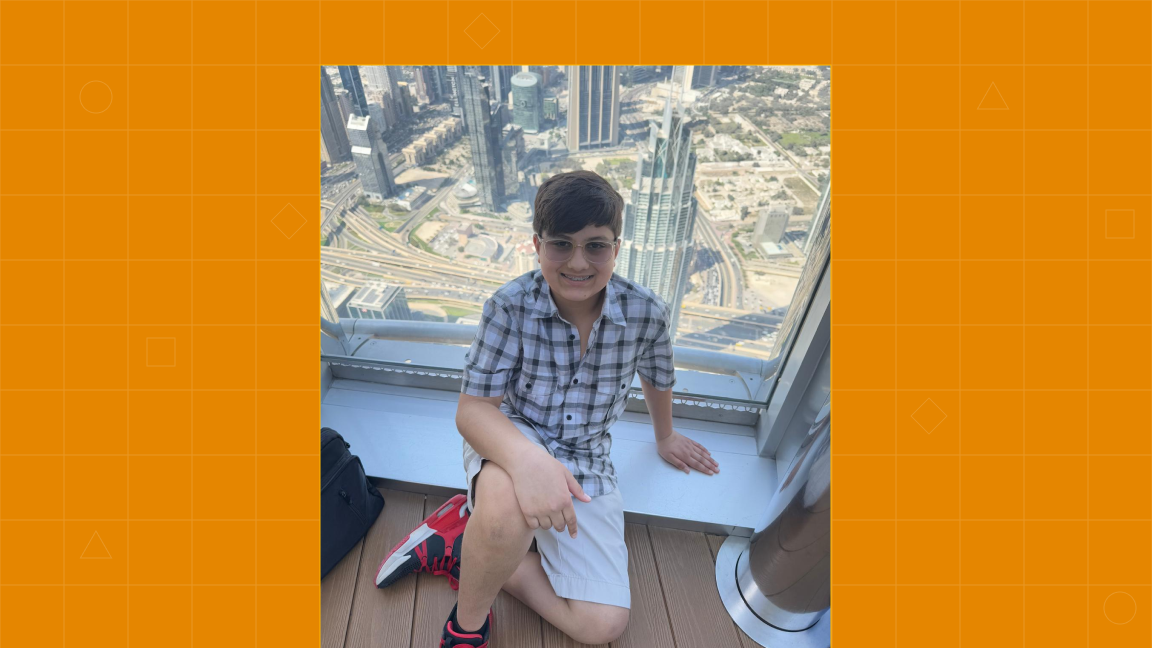
Which Program Fits Your Child Better?
Every family's situation is different. Here's a quick way to map your child's specific need to the program that's likely the better starting point.
| If your child... | Better Fit |
|---|---|
| Needs undivided 1:1 attention or feels anxious asking questions in a group | Cuemath |
| Is already performing above grade level and wants a fast-paced, competitive classroom | RSM |
| Needs help keeping up with current school topics and homework | Cuemath |
| Wants competition math (AMC, Olympiads) as the single main focus, in a group setting | RSM |
| Wants competition prep plus school support, SAT prep, and real-world skills like financial literacy | Cuemath |
| Budget is a primary constraint ($20–$24/class vs. $2,000–$3,500/year) | Cuemath |
| Parents want a monthly, scored progress report they can track over time | Cuemath |
Source: cuemath.com, mathschool.com
Where Hard Work Turns Into Real Results
Give your child the same structured guidance that helped thousands of students succeed. Try a FREE live Cuemath class today.
Book a Free EvaluationFor Students in Grades K to 12 Worldwide
Conclusion: Which Program Helps Kids Truly Understand Math?
Both the Russian School of Mathematics (RSM) and Cuemath aim to help students strengthen their math skills, but they approach learning very differently.
RSM might be a suitable option for students who enjoy a structured, group-based environment, an accelerated curriculum, and challenging problem-solving activities. Students interested in advanced mathematics and competition preparation may find this approach aligned with their goals.
Cuemath offers a 1:1 personalized tutoring model designed to adapt lessons to each student's learning pace, academic needs, and areas of focus. Students who benefit from individualized guidance, flexible pacing, and customized support may find this approach a good fit.
The right choice depends on a student's learning style, goals, and the type of academic support they need. Families should consider factors such as teaching format, curriculum approach, personalization, and overall learning experience when selecting a math program.
Frequently Asked Questions (FAQs)
Is the Russian School of Mathematics worth it?
Whether RSM is worth it depends on your child's learning needs and goals. Students who enjoy a rigorous, accelerated curriculum and group-based instruction may find it a strong fit. Families looking for personalized pacing, one-on-one support, or lessons aligned with school coursework may also wish to consider individualized tutoring options.
Is the Russian School of Mathematics accredited?
Yes, in large part. According to RSM's own announcement, nearly three-quarters of its branches are accredited by the Western Association of Schools and Colleges (WASC), meaning most, but not all, locations have had their program evaluated against state standards. Since accreditation status can vary by branch, parents should confirm the specific status of their local RSM location before enrolling.
Is Cuemath a highly rated online math platform?
Cuemath has received positive ratings on review platforms such as Trustpilot. According to Trustpilot at the time of writing, Cuemath holds a 4.9/5 rating from 11000+ reviews. Ratings may change over time, so readers should verify the latest reviews on the respective platform.
Does Cuemath offer a free evaluation?
Yes, Cuemath offers a free evaluation for every student. The evaluation is done by a specialist, who assess the learning needs and goals. The specialist also conducts a test to check student’s fluency, reasoning, application, and understanding. Based on the results of the evaluation, the student is matched with a tutor, gets a personalized plan and schedule.
Does Cuemath prepare students for math competitions like AMC and Math Olympiad?
Yes. Cuemath offers dedicated test-prep tracks for competitions such as AMC 8, Math Kangaroo, and Math Olympiads, alongside SAT Math preparation, within its regular 1:1 curriculum. Unlike RSM, which is built primarily around competition and accelerated coursework, Cuemath layers competition prep on top of a broader curriculum that also covers school-aligned topics, financial literacy, and data science. Students who want competition-math training without giving up school-curriculum support may find this combination easier to manage.
Can Cuemath help with skills beyond mathematics?
While Cuemath focuses on mathematics, its lessons emphasize logical reasoning, analytical thinking, and problem-solving skills. These abilities can support learning across STEM subjects, including coding and science.
Can Cuemath help with homework and test preparation?
Cuemath tutors encourage students to think through math problems and solve on their own. We do not encourage giving away answers. Cuemath offers complete test prep courses and material for all types of US exams such as SAT, AMC 8, Math Kangaroo, etc.
Sources
- 2024 NAEP Mathematics Assessment — National Center for Education Statistics
- Russian School of Mathematics — official website
- RSM WASC Accreditation — official announcement
- RSM Math Competition Calendar, 2025–2026
- Russian School of Math Cost Guide — Brighterly, verified 2026
- Why Moving Ahead in Math Isn't Always the Right Move — Harvard Graduate School of Education
- Cuemath Trustpilot Reviews — 4.9/5, 9,000+ reviews, verified March 2026
- Cuemath — official website
- Common Core State Standards for Mathematics

I was never the kid who loved math. I was much more interested in books, stories, and writing—and, somewhere along the way, I became even more curious about people. Why do we learn differently? Why does something make sense to one child but not another? And what makes a student feel confident enough to keep trying?
That curiosity led me to study Applied Psychology, where I learned more about how children think, learn, and make sense of the world around them.
My love for writing did the rest. What started as something I simply enjoyed became a career. Over the past five years, I've worked as a freelance writer across edtech, SaaS, B2B, travel, lifestyle, and healthcare, learning how to write for very different audiences without losing the human side of the story.
Today, I'm an SEO Content Writer & Editor at Cuemath, where I get to bring many of these interests together. Working in education—and especially around math—has made me even more curious about what happens behind the screen or textbook: what parents worry about, what students struggle with, and what actually helps them learn.
That's also how I like to research. I don't just look at search results and call it a day. I go where parents and students actually talk—forums, reviews, communities, and conversations with real families. Because sometimes the most useful insight isn't hiding in a keyword; it's in a parent's question, a student's frustration, or a small detail someone shares about their learning experience.
I write because I'm curious. I research because I want to understand. And I love turning what I learn into content that feels genuinely useful to the people reading it.