Do Phone Bans Improve Math Scores? What New Harvard Research on 3.3 Million Students Found
Harvard research on 3.3 million students links strict school phone bans to 1 to 2 extra weeks of learning a year. See what parents should know.

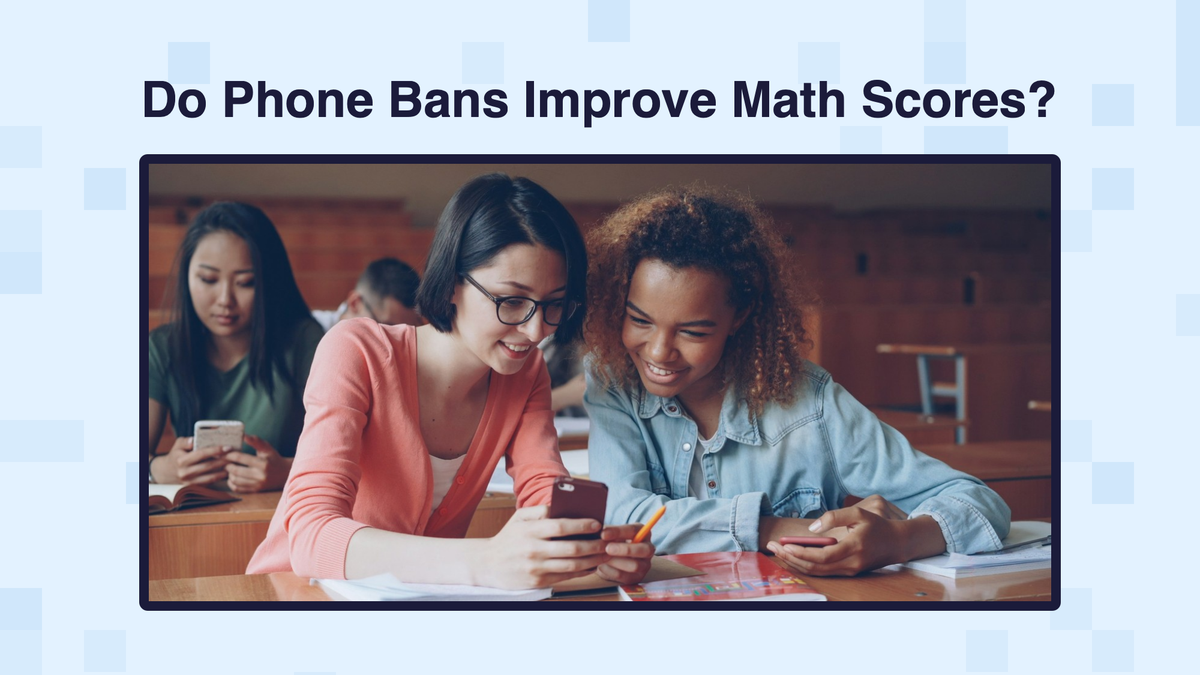
New Harvard research suggests that strict school phone bans may add about one to two weeks of learning a year in math and reading. The report came out on Nov. 17, 2026 (source). The gains are small, and other studies have found less. Here is what the research found and what it means for parents.
What This News Is About
- Who: about 3.3 million students in about 4,600 schools.
- What: researchers compared schools that adopted locked phone pouches with similar schools that did not.
- Why it matters: many states now limit phones in schools, and parents want to know if it helps learning.
- Not yet known: whether the gains last, and whether lockers or leaving phones at home work as well.
What Did the Study Find?
The team used NWEA MAP Growth scores in math and reading from 2021-22 to 2025-26. They focused on schools that bought Yondr pouches, which lock phones away for the whole school day. Those schools gained about 0.01 standard deviations more each year, which the authors put at about one to two weeks of extra learning (source).
Education Week reports the top of that range, about two weeks (source). The authors say student scores have fallen about 0.01 to 0.02 standard deviations a year since 2013, and that strict bans may cover about half of that loss (source).
| Study at a glance | |
|---|---|
| Students | About 3.3 million |
| Schools | About 4,600 |
| Test | NWEA MAP Growth |
| Main result | About 1 to 2 extra weeks of learning a year |
Who Gained, and for How Long?
Gains were similar in elementary, middle and high schools, and in schools with higher and lower poverty. They continued for up to three years after a school adopted pouches (source). Pouches also cut the number of students who fell far behind in reading in a year (source).
What Are the Limits?
This is not a randomized trial, and it has not been peer reviewed (source). It compares pouch schools with matched schools over time. It cannot measure phone use outside school, and few schools have had bans for three or four years (source). Kane, a Harvard economist and a lead author, says the gains are modest but should add up.
Do Other Studies Agree?
Not fully. A May 2026 study by researchers at Stanford, Penn, Duke and Michigan found that bans did not appear to improve achievement in the short run. A Rochester and RAND study found small gains in the second year (source).
What Should Parents Know?
- The effect is small. One study is not proof.
- Ask your school if its rule is all day or only in class.
- Phones at home still matter, and this study cannot measure them.
- Short daily math practice builds focus too. Cuemath is one example.
Key Takeaways
- Strict bans were linked to about one to two extra weeks of learning a year.
- Earlier studies found smaller or no short-term gains.
- Watch for results on lockers and other low-cost rules.
Sources
- News: Harvard Graduate School of Education news (Nov. 17, 2026)
- News: Harvard Gazette (Nov. 17, 2026)
- News: Chalkbeat (Nov. 17, 2026)
- News: OPB/NPR (Nov. 17, 2026)
- News: Education Week (Nov. 18, 2026)

I write because I like understanding things properly, and I've never been able to do that quietly.
Six years in, what still interests me most isn't the writing itself. It's the person on the other side. Who are they, what were they actually worried about when they opened this page, and did they leave with what they came for? Most content fails that last test. It answers the easy question instead of the one that was asked.
At Cuemath, I write for parents and students in India and around the world. That range is the part I enjoy. A parent in Bangalore and a parent in Canada are asking about the same child, but not always in the same words, and that difference matters.
So I research before I write. Not just search results. Forums, reviews, the long comment threads where somebody finally admits what they're really confused about. That's usually where the useful thing is hiding.
I also spend time on how people find this writing at all, since a growing number of them now ask an AI instead of typing into Google. But that only works if the writing is clear to begin with. There's no shortcut around that part.