NAEP 2026 Results: Release Date Set for Early 2027
The 2026 NAEP math and reading results, the closest thing the US has to a national report card, are scheduled for release in early 2027. Here's what was tested, why the release is delayed, and what the 2024 results already show about where things stand.

- When Will the NAEP 2026 Results Be Released?
- What About the NAEP 2027 U.S. History and Civics Results?
- Why Is NAEP Delaying the 2026 Results Until 2027?
- What Did the Last NAEP Math Results (2024) Show?
- Why NAEP Matters More Than a State Test Score
- What This Means for Parents Planning Ahead
- What to Do Before the 2026 Results Come Out
- FAQ
- Sources
We’re getting a clearer picture of how U.S. students are performing in reading, math, and other key academic areas. The National Assessment of Educational Progress (NAEP), widely known as the “Nation’s Report Card,” is set to release its 2026 results in early 2027, offering a closely watched snapshot of student achievement across the country. The findings are expected to provide fresh insight into academic progress and the challenges facing schools while giving educators, parents, policymakers, and researchers a closer look at how student performance has changed since the previous national assessments.
When Will the NAEP 2026 Results Be Released?
Quick answer: Early 2027 for math and reading, summer 2027 for U.S. history and civics—no exact date has been confirmed yet.
NCES tested about 600,000 fourth- and eighth-graders between January 26 and March 20, 2026, across all 50 states, Washington D.C., Puerto Rico, and Department of Defense Education Activity schools. NAEP is the only assessment that puts every state on the same test, scored the same way, at the same time.
| Assessment | Grades | Testing Window | Release |
|---|---|---|---|
| NAEP Math & Reading | 4, 8 | Jan 26 – Mar 20, 2026 | Early 2027 |
| NAEP U.S. History & Civics | 8 | Jan 26 – Mar 20, 2026 | Summer 2027 |
Source: Institute of Education Sciences (IES)
What About the NAEP 2027 U.S. History and Civics Results?
Quick answer: The first "NAEP 2027" results parents will see are U.S. history and civics for grade 8, in summer 2027—about six months after math and reading.
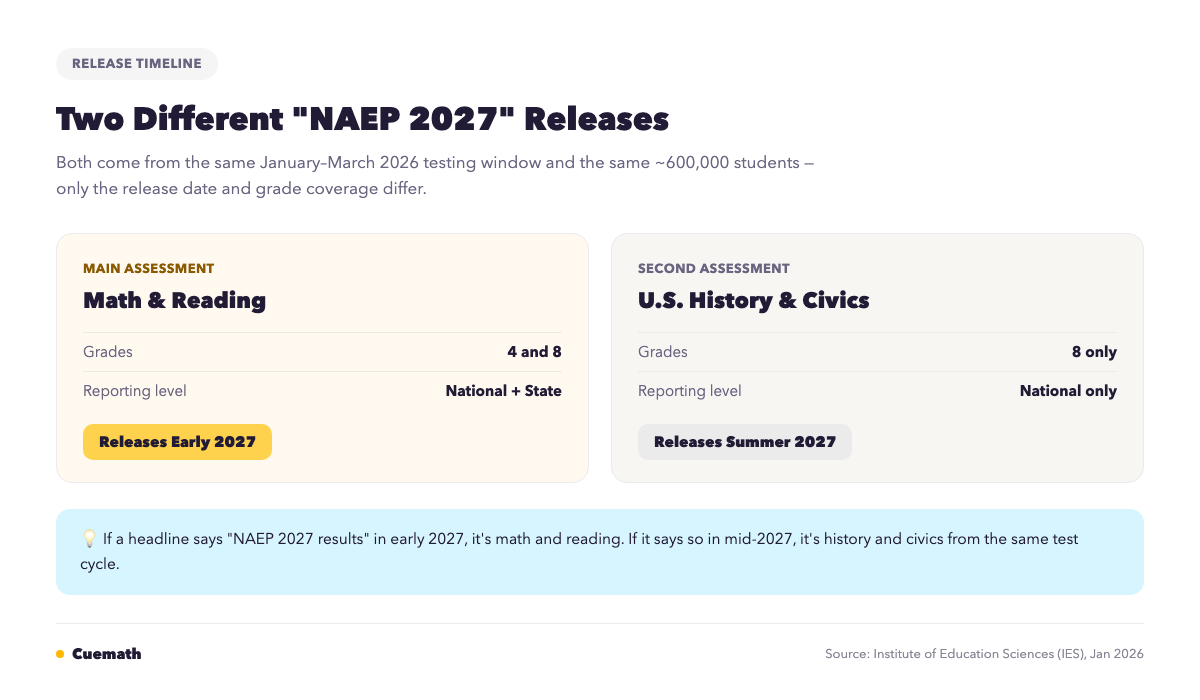
This is a separate assessment from math and reading, and it's easy to mix up—both come from the same 2026 testing window, and both get called "NAEP 2027" once released. A few things set it apart:
- Only grade 8 takes the U.S. history and civics assessments—grade 4 does not.
- Results are national only, not broken out by state, unlike math and reading.
- It follows math and reading by roughly half a year, releasing in summer 2027.
The last time these subjects were tested, in 2022, both fell: civics dropped 2 points from 2018 (back to 1998 levels), and U.S. history dropped 5 points from 2018—its lowest score on record. That's the bar the 2027 results will be measured against, lower than what math and reading cleared by 2024.
Why Is NAEP Delaying the 2026 Results Until 2027?
Quick answer: 2026 is the first year NAEP changed its testing devices and its math and reading frameworks at the same time, so NCES needs extra time to confirm score changes reflect real learning, not the new format.
Three things changed for 2026 that didn't apply to any prior NAEP cycle:
- New frameworks. The 2026 math and reading tests are the first built on updated frameworks—more scenario-based math tasks and reading questions that test science and social studies comprehension, not just literature, for the first time.
- A new device setup. Most schools now use their own devices instead of ones NCES brings on-site—a cost-saving change NCES piloted beforehand.
- Automated scoring for reading, introduced for the 2026 cycle.
Any one of these would justify extra validation. Together, they mean NCES has to run a comparability study confirming a 2026 score change reflects real learning—not a new framework or device. That's why the release moves to early 2027 instead of the usual fall timeline.
Compare that to PISA 2025, where most US coverage jumped straight to state rankings without engaging the OECD's own data-quality caveats. NAEP building that checks in upfront, before headlines get written, is the more careful call—even if it means a longer wait.
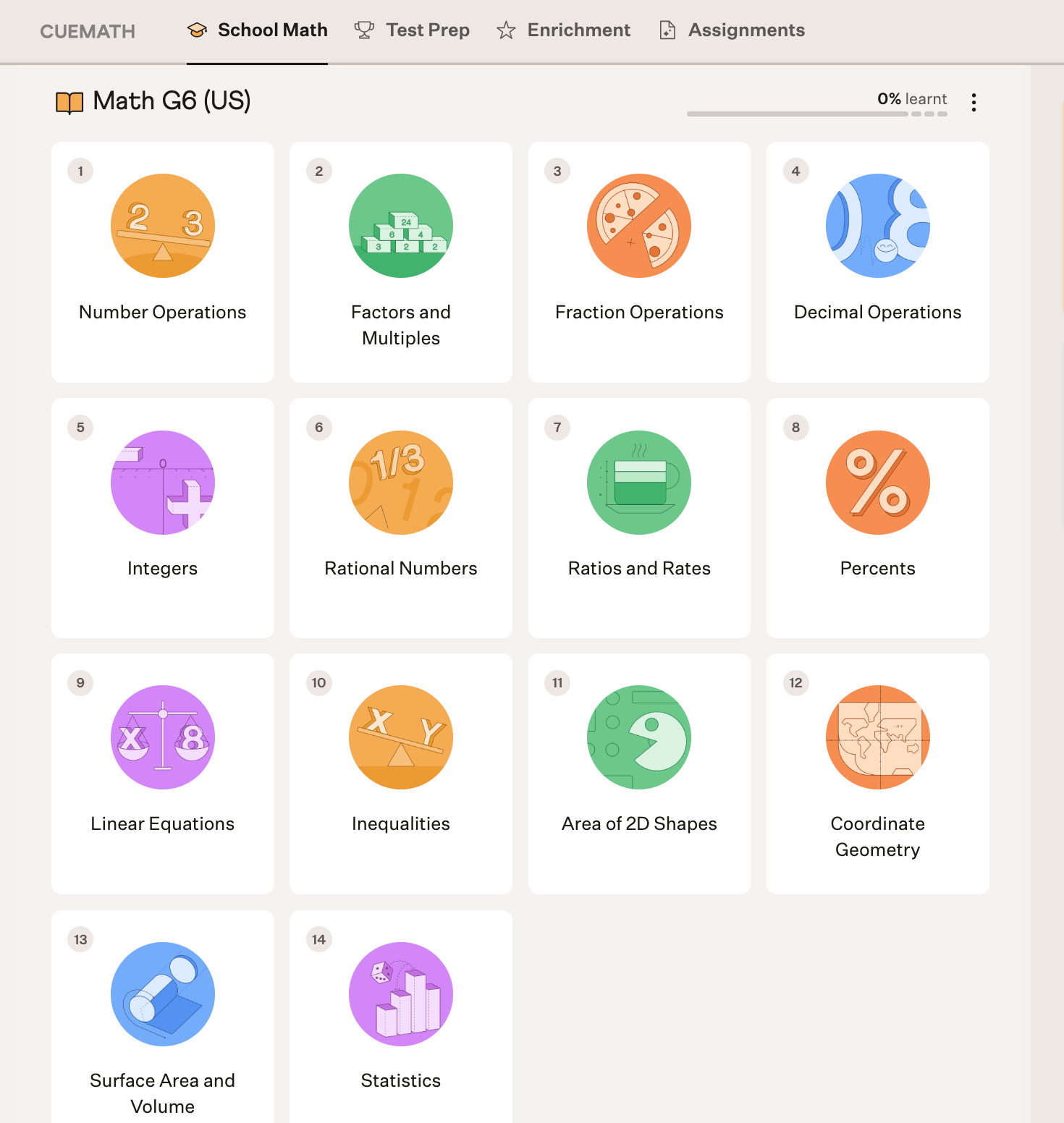
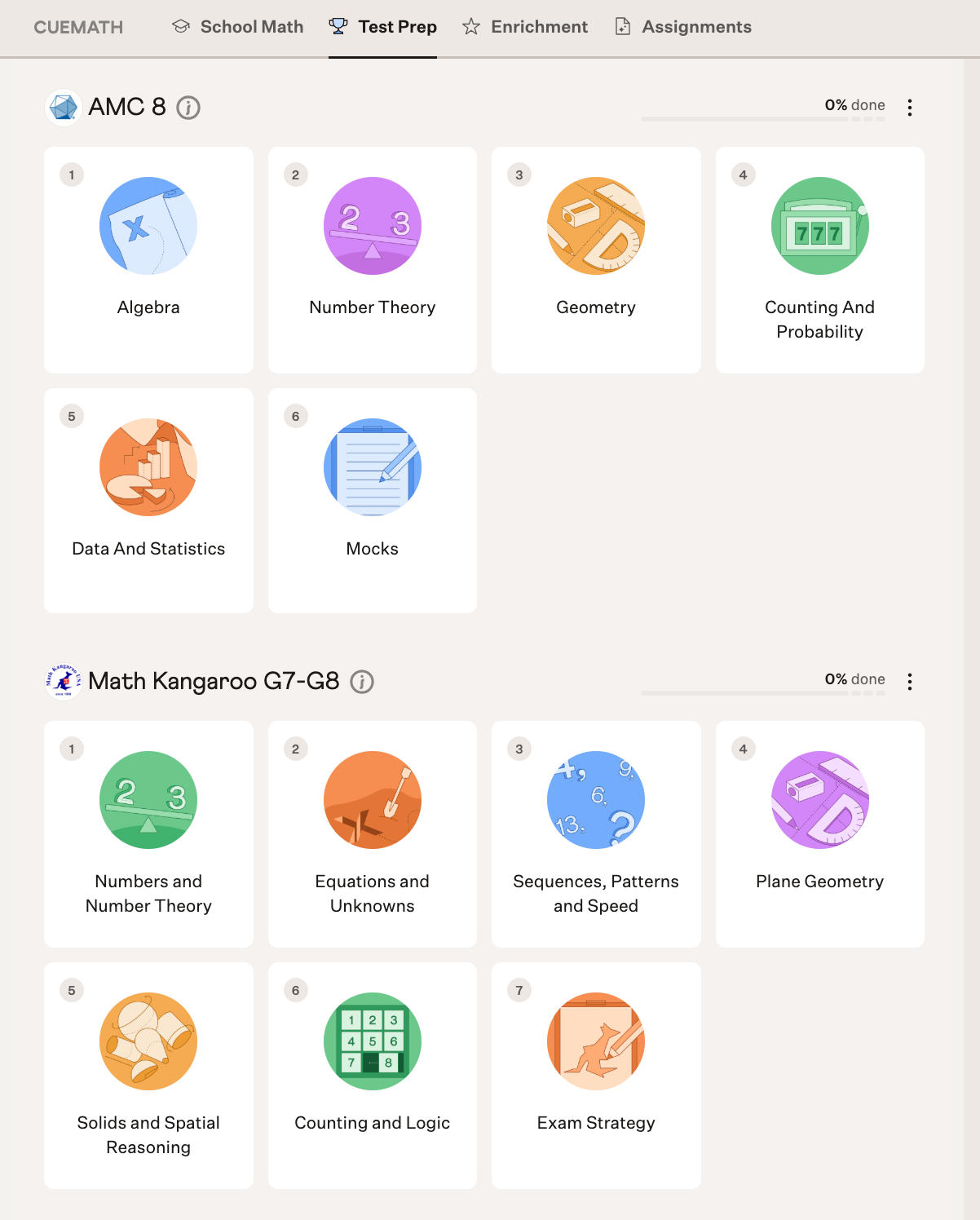
School math + test prep + skills AI can't match, at $0 cost.
Everything your child needs from Grade K to 12, curriculum mastery, test prep, and enrichment math, is now in one free app.
Simple log in with email, nothing else
What Did the Last NAEP Math Results (2024) Show?
Quick answer: Grade 4 math scores rose slightly from 2022 to 2024; grade 8 stayed flat—both remain below pre-pandemic 2019 levels.
The 2026 results will be measured against this baseline. Here's where things stood in 2024:
| Grade | 2024 vs. 2022 | 2024 vs. 2019 | % at/above NAEP Proficient (2024) |
|---|---|---|---|
| Grade 4 | +2 points | −3 points | 39% |
| Grade 8 | No significant change | −8 points | Not significantly different from 2022 |
Source: The Nation's Report Card, 2024 NAEP Mathematics results
For context: in 2022, 36% of fourth-graders scored at or above NAEP Proficient in math, 5 points below 2019. By 2024 that climbed to 39%—a partial recovery. Eighth grade hasn't moved the same way, still flat since 2022 and 8 points below 2019.
That's the pattern the 2026 results will either confirm or break: elementary math clawing back some pandemic-era losses, middle school math stuck.
Why NAEP Matters More Than a State Test Score
Quick answer: NAEP is the only test that scores every state on the same scale, so it's the one number that tells you how a state's own test results compare to the rest of the country.
A state test scores your child against that state's own standard—and standards vary widely in rigor. NAEP doesn't replace a state test; it's the check on it, the closest thing the US has to PISA, except it compares states instead of countries on the same test at the same time.
That's why NAEP results tend to reset the national conversation on "how are kids doing in math" every two years, in a way individual state releases don't.
What This Means for Parents Planning Ahead
The 2026 NAEP results won't tell you anything about your own child—NAEP reports state and national averages, not individual scores. What they will do is shape how every school district and news outlet talks about "how math is going" until the 2028 cycle.
Two things worth keeping in mind once the results are out:
- Read early 2026 comparisons cautiously: this is the first cycle on the new framework and devices, so a state ranking built the same week as release is more likely rushed than the fuller comparability analysis NCES publishes alongside it.
- A national or state average moving a couple of points isn't a signal about your child. The 2024 data above shows real movement can still count as "not significantly different"—averages hide as much as they show.
What to Do Before the 2026 Results Come Out
- Don't wait for the release to check where your child stands. A grade-4 or grade-8 average won't show you their specific gaps.
- If your state test and NAEP have told different stories in past years, expect that gap to repeat. NAEP tends to be the more conservative number.
- Bookmark this page or the NCES release calendar instead of searching "NAEP 2026 results" repeatedly—NCES hasn't narrowed the date yet.
- When the 2026 results come out, check the comparability notes NCES publishes alongside them before comparing 2026 to 2024 directly, given the framework and device changes above.
See Exactly Where Your Child's Math Stands
You don't need to wait for a national report card to check in on your own child's math. The Cuemath app covers school math, enrichment, and competition prep for grades K–12 — no card, no catch.
Try the Free Cuemath AppFor Students in Grades K to 12 Worldwide
Frequently Asked Questions
When will the NAEP 2026 results be released?
The 2026 NAEP math and reading results are scheduled for release in early 2027, according to the National Center for Education Statistics. No exact date has been confirmed yet; the 2026 U.S. history and civics results for grade 8 follow in summer 2027.
What is the exact release date for the 2026 NAEP scores?
There is no exact date yet—NCES has only confirmed "early 2027" for math and reading. NCES typically confirms a specific date a few weeks before release, so a firmer date is likely to appear closer to the window.
Which grades take the NAEP 2026 assessment?
Grades 4 and 8 took the 2026 NAEP math and reading assessments. Eighth-graders also took a separate NAEP U.S. history and civics assessment, which reports on a different timeline.
How many students take the NAEP test?
About 600,000 students took the 2026 NAEP assessments, drawn from all 50 states, Washington, D.C., Puerto Rico, and Department of Defense Education Activity schools between January 26 and March 20, 2026.
Why are the 2026 NAEP results delayed until 2027?
The 2026 results are delayed because NCES changed the testing devices and the math and reading frameworks and introduced automated reading scoring all in the same cycle and needs additional time to confirm that score changes reflect student learning rather than those format changes.
What were the 2024 NAEP math results?
In 2024, fourth-grade math scores rose 2 points from 2022 but stayed 3 points below 2019, with 39% of students at or above NAEP Proficient. Eighth-grade scores were not significantly different from 2022 and remained 8 points below 2019.
Is NAEP the same as my state's standardized test?
No. NAEP is a separate, federal assessment that scores every state on the same scale, while each state's own test is scored against that state's own standards, which vary in rigor from state to state.
Where can I see my state's NAEP scores once they're released?
State- and district-level NAEP results are published on the Nation's Report Card website (nationsreportcard.gov) alongside the national results, typically on the same release date.
Are the NAEP 2027 results the same as the NAEP 2026 results?
Not exactly. The NAEP 2026 math and reading results release in early 2027, while the grade 8 U.S. history and civics results from the same 2026 testing window release later, in summer 2027—both get informally called "NAEP 2027" once they're out, so it's worth checking which subject a headline is actually about.
Sources
- What's on the Horizon for the 2026 Nation's Report Card—Institute of Education Sciences (IES)—confirms the early 2027 release timeline, the Jan 26–Mar 20, 2026 testing window, ~600,000 student participation, and the reason for the delay
- Explore Results for the 2024 NAEP Mathematics Assessment—The Nation's Report Card—2024 vs. 2022 vs. 2019 average score comparisons for grades 4 and 8
- NAEP Mathematics: National Achievement-Level Results—The Nation's Report Card—2022 NAEP Proficient Achievement-Level Data
- 2026 NAEP State Coordinator Guide (PDF) — NCES — official state-level participation and administration details for the 2026 cycle
- NAEP Participating States and Districts—NCES—current list of jurisdictions participating in NAEP assessments
- NAEP Conference — official NAEP program conference and policy updates
- NAEP Civics: Civics Highlights 2022—The Nation's Report Card—2022 grade 8 civics score
- Eighth-Grade Scores Decline in Civics and U.S. History on the Nation's Report Card—NAGB—2022 grade 8 U.S. history score

I was never the kid who loved math. I was much more interested in books, stories, and writing, and, somewhere along the way, I became even more curious about people. Why do we learn differently? Why does something make sense to one child but not another? And what makes a student feel confident enough to keep trying?
That curiosity led me to study Applied Psychology, where I learned more about how children think, learn, and make sense of the world around them.
My love for writing did the rest. What started as something I simply enjoyed became a career. Over the past five years, I've worked as a freelance writer across edtech, SaaS, B2B, travel, lifestyle, and healthcare, learning how to write for very different audiences without losing the human side of the story.
Today, I'm an SEO Content Writer & Editor at Cuemath, where I get to bring many of these interests together. Working in education, and especially around math, has made me even more curious about what happens behind the screen or textbook: what parents worry about, what students struggle with, and what actually helps them learn.
That's also how I like to research. I don't just look at search results and call it a day. I go where parents and students actually talk: forums, reviews, communities, and conversations with real families. Because sometimes the most useful insight isn't hiding in a keyword; it's in a parent's question, a student's frustration, or a small detail someone shares about their learning experience.
I write because I'm curious. I research because I want to understand. And I love turning what I learn into content that feels genuinely useful to the people reading it.