What Is the Commutative Property? Why Kids Learn “Turnaround Facts”
Your child's worksheet calls 3 + 5 and 5 + 3 “turnaround facts.” Here's what the commutative property means, which grades teach it, why it cuts the facts your child has to memorize nearly in half, and three worksheets that check every answer.

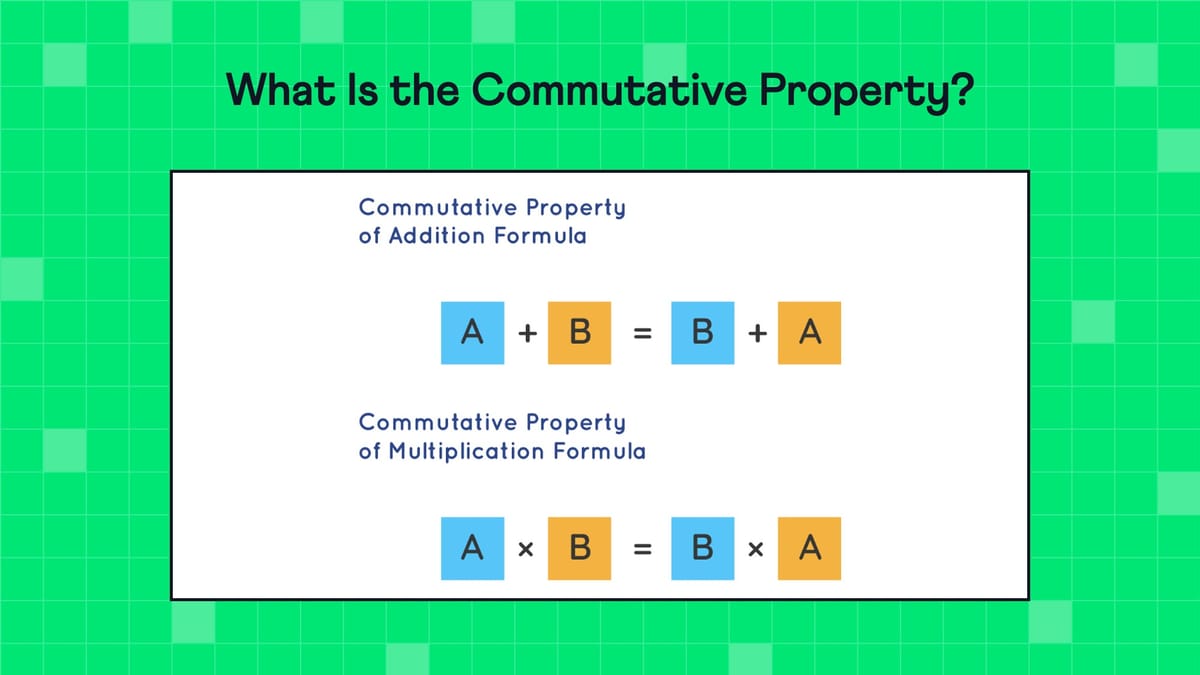
Have you ever seen your child’s homework refer to 3 + 5 and 5 + 3 as “turnaround facts”? It's the same fact written twice, and in a way, it is. The main idea of the commutative property is that when you add or multiply a pair of numbers, the answer will be the same no matter what order you do it in.
Another way to think about it: If a child knows that 8 + 3 = 11, then they already know that 3 + 8 = 11. They don’t have to relearn it. When kids see this, the list of math facts they have to memorize gets almost half as long, and adding and multiplying start to feel a whole lot easier.
In this guide we will cover what the commutative property is, why teachers call it "turnaround facts," where it works (and where it doesn't), and how you can help your child practice at home with simple examples and free worksheets.
- What Is the Commutative Property?
- Why Do Kids Learn Turnaround Facts? (Grade by Grade)
- Commutative Property of Addition (Grade 1)
- Commutative Property of Multiplication (Grade 3)
- How Turnaround Facts Cut 100 Math Facts to 55
- Why Subtraction and Division Don't Turn Around
- 3 Turnaround Mistakes Kids Make (and How to Spot Them)
- Where the Commutative Property Shows Up Next
- Commutative Property Worksheets: 3 Interactive Practice Sets
- Worksheet 1: Grades 1–2 — Addition Turnaround Facts
- Worksheet 2: Grade 3 — Multiplication Turnaround Facts
- Worksheet 3: Grades 2–3 — Does It Turn Around?
- Math Games to Play After the Worksheets
- How Cuemath Tutors Teach Turnaround Facts
- Try It Yourself: 20-Question Commutative Property Worksheet
- FAQs
What Is the Commutative Property?
The commutative property is a math rule that says you can change the order of two numbers when you add or multiply, and the answer stays the same.
For 3 + 5, you get 8. Turn it around to 5 + 3, and you still get 8. The same thing happens with multiplication: 4 × 6 = 24, and 6 × 4 = 24. In symbols, it's written as a + b = b + a and a × b = b × a.
The word comes from “commute,” which means to move around. The numbers move, but the answer doesn't.
Only the order changed. The numbers and the answer stayed the same.
The rule works for addition and multiplication, but not for subtraction or division:
| Operation | Example | Turned around | Same answer? |
|---|---|---|---|
| Addition | 6 + 2 = 8 | 2 + 6 = 8 | Yes |
| Multiplication | 4 × 5 = 20 | 5 × 4 = 20 | Yes |
| Subtraction | 7 − 3 = 4 | 3 − 7 = −4 | No |
| Division | 8 ÷ 2 = 4 | 2 ÷ 8 = 1/4 | No |
A quick way to check any operation: work it out both ways. If the answers match, it turns around.
Why Do Kids Learn Turnaround Facts? (Grade by Grade)
Kids learn turnaround facts because the Common Core State Standards ask for them in Grade 1 for addition and in Grade 3 for multiplication. The same idea comes back in Grade 6, when kids start algebra.
| Grade | Common Core standard | What your child does | Example |
|---|---|---|---|
| Grade 1 | 1.OA.B.3 | Uses turnaround facts to add | 8 + 3 = 3 + 8 |
| Grade 2 | 2.OA.B.2 | Knows all sums of two one-digit numbers from memory | 6 + 9 = 9 + 6 = 15 |
| Grade 2 | 2.OA.C.4 | Counts objects in arrays (rows and columns) | 3 rows of 4 = 12 |
| Grade 3 | 3.OA.B.5 | Uses turnaround facts to multiply | 6 × 4 = 4 × 6 |
| Grade 3 | 3.OA.C.7 | Knows all products of two one-digit numbers from memory | 7 × 8 = 8 × 7 = 56 |
| Grade 6 | 6.EE.A.3 | Uses properties of operations to rewrite expressions | x + 3 = 3 + x |
So why “turnaround facts” instead of “commutative property”? Common Core says young students “need not use formal terms for these properties,” so teachers use a name a 6-year-old can understand. Everyday Mathematics calls it the “turn-around rule” in Grade 1 and Grade 2. You might also see “flip facts” or “switch-around facts.” They all mean the same thing.
State math tests cover these standards too. Grade 3 tests built on them, like Smarter Balanced and NJSLA, include properties of multiplication, so it's worth getting right before testing season in spring.
Our guide to what 1st graders learn in math shows where turnaround facts fit in the school year.
Commutative Property of Addition (Grade 1)
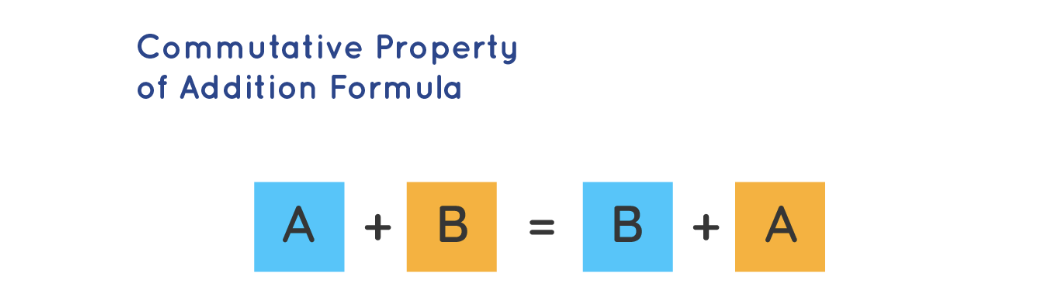
The commutative property of addition says that a + b = b + a. You can add two numbers in either order, and the total stays the same.
Common Core standard 1.OA.B.3 uses this example: “If 8 + 3 = 11 is known, then 3 + 8 = 11 is also known.”
The easiest way to show it at home is with a domino. A domino with 2 dots on one side and 5 on the other shows 2 + 5. Turn it around, and it shows 5 + 2. Nobody added or took away a dot, so the total is still 7.
Turning the domino moves the dots, but it doesn't change how many there are.
Turnaround facts also make counting on faster. For 2 + 9, many first graders start at 2 and count 9 more. That's slow, and it's easy to lose count. A child who knows turnaround facts flips it to 9 + 2 and counts just two: “9… 10, 11.”
Turnaround facts are also half of a fact family. 3 + 5 = 8 and 5 + 3 = 8 are turnarounds. The other two facts in the family, 8 − 3 = 5 and 8 − 5 = 3, are subtraction facts, and they don't turn around.
The two addition facts are turnarounds. The two subtraction facts are not.
Number bonds show the whole family in one picture, and Cuemath's free Grade 1 math curriculum has more addition practice by topic.
Commutative Property of Multiplication (Grade 3)
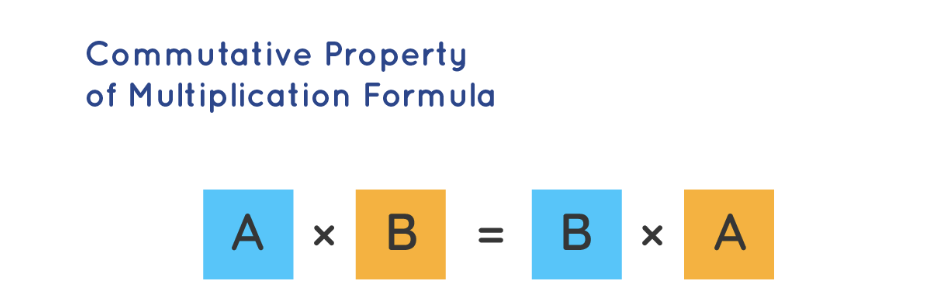
The commutative property of multiplication says that a × b = b × a. You can multiply two numbers in either order, and the product stays the same.
Common Core standard 3.OA.B.5 uses this example: “If 6 × 4 = 24 is known, then 4 × 6 = 24 is also known.”
Kids see this best with an array, which is a set of objects in rows and columns, like eggs in a carton. 3 rows of 5 dots make 15. Turn the picture on its side, and you have 5 rows of 3 dots. It's still 15.
Add 3 rows of 5: 5 + 5 + 5.
Add 5 rows of 3: 3 + 3 + 3 + 3 + 3.
An egg carton works the same way. It's 2 rows of 6 one way and 6 rows of 2 the other way, and it still holds 12 eggs.
This is where the commutative property saves the most work. A child who has learned 9 × 3 = 27 doesn't need to learn 3 × 9 as a new fact. It's the same fact, turned around.
Learn 9 × 3, and 3 × 9 comes free.
Cuemath's commutative property of multiplication page has more worked examples, and our 3rd grade math problems put times tables to work in word problems. For a full lesson list, see the free Grade 3 math curriculum.
Is Your Child Still Counting Out Every Fact?
In a free 1:1 evaluation, a Cuemath tutor checks which addition and multiplication facts your child knows by heart and which ones they still count out, then shows you what to practice next.
Book a Free Evaluation100% free · No credit card · About 30 minutes
How Turnaround Facts Cut 100 Math Facts to 55
Turnaround facts cut the number of facts your child has to memorize almost in half.
A 0–9 addition table has 100 facts (10 rows × 10 columns). But most of them come in pairs: 3 + 5 and 5 + 3, 2 + 9 and 9 + 2, and so on. Only the doubles, like 4 + 4, have no partner.
Learn one fact from each pair, and your child knows both.
The same count works for every fact table your child will see:
| Fact table | Facts in the table | Different facts to learn | Facts saved |
|---|---|---|---|
| Addition, 0–9 (Grades 1–2) | 100 | 55 | 45 |
| Multiplication, 0–9 (Grade 3) | 100 | 55 | 45 |
| Multiplication, 2–9 (after the ×0 and ×1 rules) | 64 | 36 | 28 |
| Multiplication, 1–12 (common times-table chart) | 144 | 78 | 66 |
Grade 3 saves even more. Kids first learn two shortcut rules: any number times 0 is 0, and any number times 1 is itself. That leaves the facts from 2 × 2 to 9 × 9, which is 64 facts. Turnarounds cut those to 36. Common Core expects kids to “know from memory all products of two one-digit numbers” by the end of Grade 3 (3.OA.C.7), and 36 facts is a much smaller job than 100.
For daily practice ideas that don't feel like drills, see our guide to math facts practice.
55 Facts, 5 Minutes a Day in the Cuemath App
The Daily Workout gives your child five short exercises a day, including addition and multiplication fact practice and logic puzzles. Points and streaks keep your child coming back.
100% Free • No Card Needed • A Few Minutes a Day
Why Subtraction and Division Don't Turn Around
Subtraction and division don't turn around. If you swap the numbers, the answer changes.
Try it with counters. 7 − 3 means you have 7 and take away 3, which leaves 4. 3 − 7 means you have 3 and take away 7, which your child can't do yet. (Negative numbers come in Grade 6.)
This one works.
You can't take 7 away from 3 without negative numbers.
Division works the same way. 8 ÷ 2 means sharing 8 cookies between 2 friends, so each gets 4. 2 ÷ 8 means sharing 2 cookies among 8 friends, so each gets only a quarter of a cookie.
A good question to ask your child: “Does 10 − 2 give the same answer as 2 − 10?” A child who says “No, 2 − 10 doesn't work yet” understands where the turnaround rule stops.
3 Turnaround Mistakes Kids Make (and How to Spot Them)
Most turnaround mistakes come from one thing: using the rule where it doesn't belong. Here are the three you'll see most on homework.
Mistake 1: Turning a subtraction around. For 52 − 38, your child looks at the ones column, sees 2 − 8, and writes 6 because “8 − 2 = 6.” The answer comes out as 26 instead of 14. Subtraction always goes top minus bottom, so the ones column needs regrouping (12 − 8), not a turnaround.
The 2 − 8 in the ones column got flipped to 8 − 2.
Borrow 1 ten, so 2 ones become 12 ones.
Mistake 2: Turning a division around. For “12 cookies shared by 3 kids,” your child writes 3 ÷ 12. The numbers are right, but the order isn't. 3 ÷ 12 is a quarter, not 4. Have your child say it in words first: “12 shared by 3.”
3 cookies shared by 12 kids.
12 cookies shared by 3 kids: 4 each.
Mistake 3: Drawing the wrong groups for 3 × 5. Your child draws 5 groups of 3 for 3 × 5. The answer, 15, is right, but some Grade 3 lessons want 3 groups of 5. Common Core standard 3.OA.A.1 reads 5 × 7 as “5 groups of 7,” so in those lessons the first number is the number of groups.
Right answer, but this picture shows 5 × 3.
3 groups of 5: 5 + 5 + 5.
What to tell your child: “Your math is right. In this lesson, the first number tells you how many groups.” Not every textbook reads the order the same way, so if a grade seems unfair, ask the teacher which way the class reads it.
Where the Commutative Property Shows Up Next
The commutative property isn't something kids learn once and forget. Your child uses it to add longer lists of numbers, to multiply in their head, and later in algebra.
Adding three numbers (Grades 1–2). For 3 + 8 + 7, move the 7 next to the 3 so they make 10: 3 + 7 + 8 = 10 + 8 = 18.
Making 10 first is easier than 3 + 8 = 11, then 11 + 7.
Multiplying three numbers (Grade 3). For 2 × 7 × 5, put the 2 and the 5 together: 2 × 5 × 7 = 10 × 7 = 70.
Multiplying by 10 is the easiest step there is.
Algebra (Grade 6 and up). In algebra, kids rewrite x + 3 as 3 + x, or 4 × y as y × 4. It's the same turnaround rule, now with letters.
Moving numbers next to each other like this also uses a partner rule, the associative property, which lets you choose which two numbers to group first. The third property in the set, the distributive property, splits a number to make multiplication easier.
Want to Know Which Facts Your Child Still Finds Tricky?
Before you start the worksheets, a free 1:1 evaluation with a Cuemath tutor shows which turnaround facts your child already knows and which ones need more practice.
Book a Free Evaluation100% free · No credit card · About 30 minutes
Commutative Property Worksheets: 3 Interactive Practice Sets
These three worksheets follow the grade order: Grades 1–2 addition, Grade 3 multiplication, and a mixed Grades 2–3 check on which operations turn around. Your child types each answer (or taps Yes or No) and gets instant feedback. When every question on a worksheet is answered, you'll see your child's score and two free next steps.
For printable sheets, Cuemath also has commutative property of addition worksheets, and the free Smarter Balanced practice curriculum has more Grade 3 practice.
Worksheet 1: Grades 1–2 — Addition Turnaround Facts
Worksheet 2: Grade 3 — Multiplication Turnaround Facts
Worksheet 3: Grades 2–3 — Does It Turn Around?
Math Games to Play After the Worksheets
Finished the worksheets? These 6 Cuemath games start with addition and multiplication facts, then move on to a Grade 3 fraction topic your child meets next. Pick one and play it right here on the page.
Each game opens right here and takes a few seconds to load. On a phone, turn it sideways for the best view.
Want to practice without a screen? These take about five minutes each:
- Domino flip. Pull a domino, say the fact, then turn it around and say the turnaround: “2 + 6 = 8. Turn it: 6 + 2 = 8.”
- Bigger number first. Call out a fact like 3 + 9. Your child flips it and counts on from the bigger number: “9… 10, 11, 12.”
- Egg carton arrays. Put cereal in an egg carton, one per cup. Ask, “How many rows? How many in each row?” Then turn the carton and ask again.
- Turnaround snap. Deal two cards (face cards out). The first player to say both facts (“4 + 7 and 7 + 4 make 11”) keeps the cards.
How Cuemath Tutors Teach Turnaround Facts
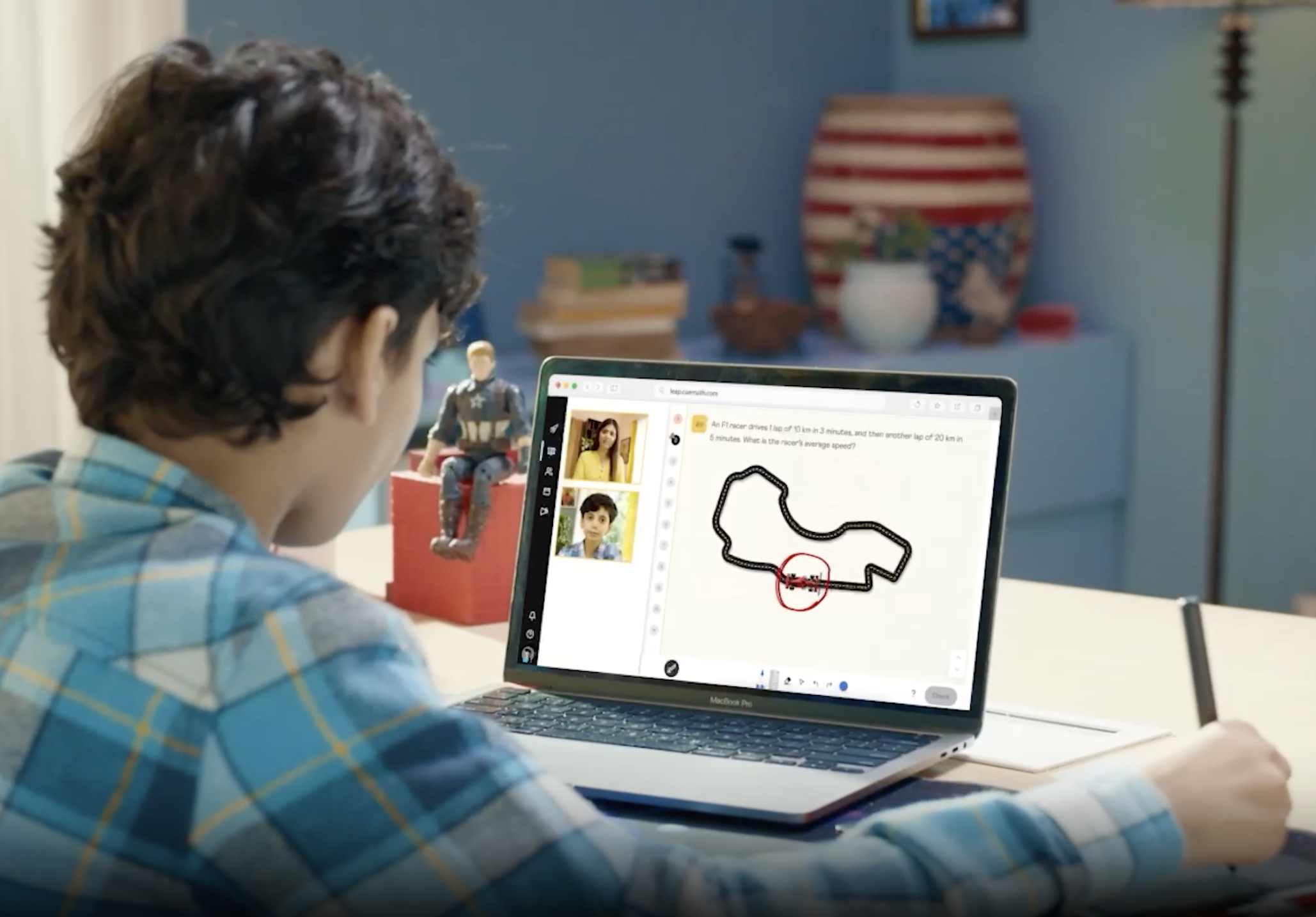
Cuemath tutors teach turnaround facts by having your child build a fact, turn it around, and explain why the total stays the same. A worksheet only shows whether the answer is right. A tutor can see whether your child still counts every fact from scratch.
| How Cuemath helps | What it means for your child |
|---|---|
| How it works | In a 1:1 live class, the tutor builds a fact on the Cueboard (Cuemath's shared digital whiteboard), like a domino for 3 + 5 or an array of 3 rows of 5. Then your child turns it around and explains it back: “It's still 8, because the same dots are there.” Cuemath calls this “cue, don't tell.” The tutor asks questions instead of giving the answer. |
| Who it helps | Grade 1–3 kids who can recite 3 + 5 = 8 but still count every turnaround from scratch, or who turn subtraction around by mistake. A worksheet doesn't catch that. A tutor watching your child work does. |
| What it won't fix by itself | If the only problem is a teacher's “groups of” rule for 3 × 5, a quick word with the teacher will fix it faster than a class. |
| Verdict | For a child who keeps counting every fact from scratch, one-on-one practice shows them how much of the table they already know. Cuemath classes start at $15/class on the 12-month plan. Meet Cuemath's Grade 1, Grade 2 and Grade 3 math tutors, or see how Grade 3 online math classes work. |
Does Your Child Know Their Turnaround Facts?
In a free 1:1 evaluation, a Cuemath tutor checks your child's addition and multiplication facts and shows you exactly what to practice next.
Book a Free Evaluation100% free · No credit card · About 30 minutes
Try It Yourself: 20-Question Commutative Property Worksheet
Ready for a full practice round? This worksheet mixes everything from this guide: addition and multiplication turnarounds, arrays, making 10 first, and the subtraction and division facts that don't turn around. Your child types each answer (or taps Yes or No) and gets instant feedback, with a hint after any miss. When all 20 questions are done, you'll see the score and two free ways to keep practicing.
Free 20-Question Commutative Property Worksheet
Keep Exploring
FAQs
What is the commutative property?
The commutative property is the rule that changing the order of two numbers doesn't change the answer in addition or multiplication. For example, 3 + 5 = 5 + 3 = 8, and 4 × 6 = 6 × 4 = 24. In symbols, a + b = b + a and a × b = b × a.
What is the commutative property of multiplication?
The commutative property of multiplication says that a × b = b × a: swapping the numbers you multiply doesn't change the product. So 6 × 4 = 24 and 4 × 6 = 24. Kids usually learn it in Grade 3 (Common Core 3.OA.B.5), often with arrays.
What is the commutative property of addition?
The commutative property of addition says that a + b = b + a: swapping the numbers you add doesn't change the sum. So 8 + 3 = 11 and 3 + 8 = 11. Kids learn it in Grade 1 (Common Core 1.OA.B.3).
What are turnaround facts in math?
Turnaround facts are pairs of addition or multiplication facts that use the same numbers in the opposite order, like 4 + 7 = 11 and 7 + 4 = 11. They are the commutative property under a kid-friendly name. Everyday Mathematics calls it the “turn-around rule.”
What grade learns the commutative property?
Kids learn the commutative property of addition in Grade 1 and the commutative property of multiplication in Grade 3, under Common Core standards 1.OA.B.3 and 3.OA.B.5. Common Core says students “need not use formal terms,” so younger kids often learn it as “turnaround facts.” The property comes back in Grade 6, when students use properties to write equivalent expressions (6.EE.A.3).
Does the commutative property work for subtraction or division?
No, the commutative property doesn't work for subtraction or division. 7 − 3 = 4, but 3 − 7 = −4, and 8 ÷ 2 = 4, but 2 ÷ 8 = 1/4. Only addition and multiplication have turnaround facts.
What is the difference between the commutative and associative property?
The commutative property is about order, and the associative property is about grouping. Commutative: 2 + 7 = 7 + 2. Associative: (2 + 7) + 3 = 2 + (7 + 3). Both work for addition and multiplication only.
What property is 9 × 7 = 7 × 9?
9 × 7 = 7 × 9 is the commutative property of multiplication. Both sides equal 63, because swapping the factors doesn't change the product.
Why did my child's teacher mark 3 × 5 wrong if it equals 5 × 3?
The product was right, but the lesson was likely checking what the numbers mean. Many Grade 3 lessons follow Common Core 3.OA.A.1, which reads 5 × 7 as “5 groups of 7,” so 3 × 5 means 3 groups of 5. Ask the teacher which way the class reads the order.
How can I help my child practice turnaround facts at home?
Help your child practice turnaround facts with short, hands-on games: flip dominoes, count on from the bigger number, turn an egg carton array, or play turnaround snap with playing cards. Five minutes a day is enough. The free Cuemath app has daily math fact practice, and the interactive worksheets above check answers instantly.
Sources
- Common Core State Standards Initiative, Grade 1 Operations & Algebraic Thinking: 1.OA.B.3 commutative property of addition; footnote “Students need not use formal terms”
- Common Core State Standards Initiative, Grade 2 Operations & Algebraic Thinking: 2.OA.B.2 sums from memory; 2.OA.C.4 arrays
- Common Core State Standards Initiative, Grade 3 Operations & Algebraic Thinking: 3.OA.A.1 groups of; 3.OA.B.5 commutative property of multiplication; 3.OA.C.7 products from memory
- Common Core State Standards Initiative, Grade 6 Expressions & Equations: 6.EE.A.3 properties of operations in algebra
- Everyday Mathematics (UChicago STEM Education), Grade 1 vocabulary: Turn-around rule: the “turn-around rule” name
- Everyday Mathematics (UChicago STEM Education), Grade 2 vocabulary: Turn-around rule for addition: the “turn-around rule” name in Grade 2
- Trustpilot, Cuemath reviews: parent reviews and 4.9/5 rating
- Fact counts (100 → 55, 64 → 36, 144 → 78): Cuemath’s own count, method shown above

I was never the kid who loved math. I was much more interested in books, stories, and writing, and, somewhere along the way, I became even more curious about people. Why do we learn differently? Why does something make sense to one child but not another? And what makes a student feel confident enough to keep trying?
That curiosity led me to study Applied Psychology, where I learned more about how children think, learn, and make sense of the world around them.
My love for writing did the rest. What started as something I simply enjoyed became a career. Over the past five years, I've worked as a freelance writer across edtech, SaaS, B2B, travel, lifestyle, and healthcare, learning how to write for very different audiences without losing the human side of the story.
Today, I'm an SEO Content Writer & Editor at Cuemath, where I get to bring many of these interests together. Working in education, and especially around math, has made me even more curious about what happens behind the screen or textbook: what parents worry about, what students struggle with, and what actually helps them learn.
That's also how I like to research. I don't just look at search results and call it a day. I go where parents and students actually talk: forums, reviews, communities, and conversations with real families. Because sometimes the most useful insight isn't hiding in a keyword; it's in a parent's question, a student's frustration, or a small detail someone shares about their learning experience.
I write because I'm curious. I research because I want to understand. And I love turning what I learn into content that feels genuinely useful to the people reading it.