Partial Products: The Multiplication Method That Comes Before Carrying
Partial products multiplication breaks big multiplication problems into small, place-value pieces before adding them up. This guide walks through worked examples for every problem type a 4th grader sees, and shows how each part turns into the standard algorithm taught next.


Six times seven is a fact. Your child either knows it or doesn't—there's no strategy involved, just memory.
Thirty-eight times twenty-six is not a fact. Nobody memorizes that. It has to be worked out.
Partial products multiplication is the strategy schools teach for working it out: break each number into its parts, multiply the parts, then add them back together. 38 = 30 + 8. 26 = 20 + 6. Four small multiplications instead of one hard one.
If your child's homework says "solve using partial products" instead of the stacked problem you grew up doing, this is why. It isn't a shortcut, and it isn't a new invention – it's the standard algorithm's own math, just written out in full before any of it gets folded into a carried digit.
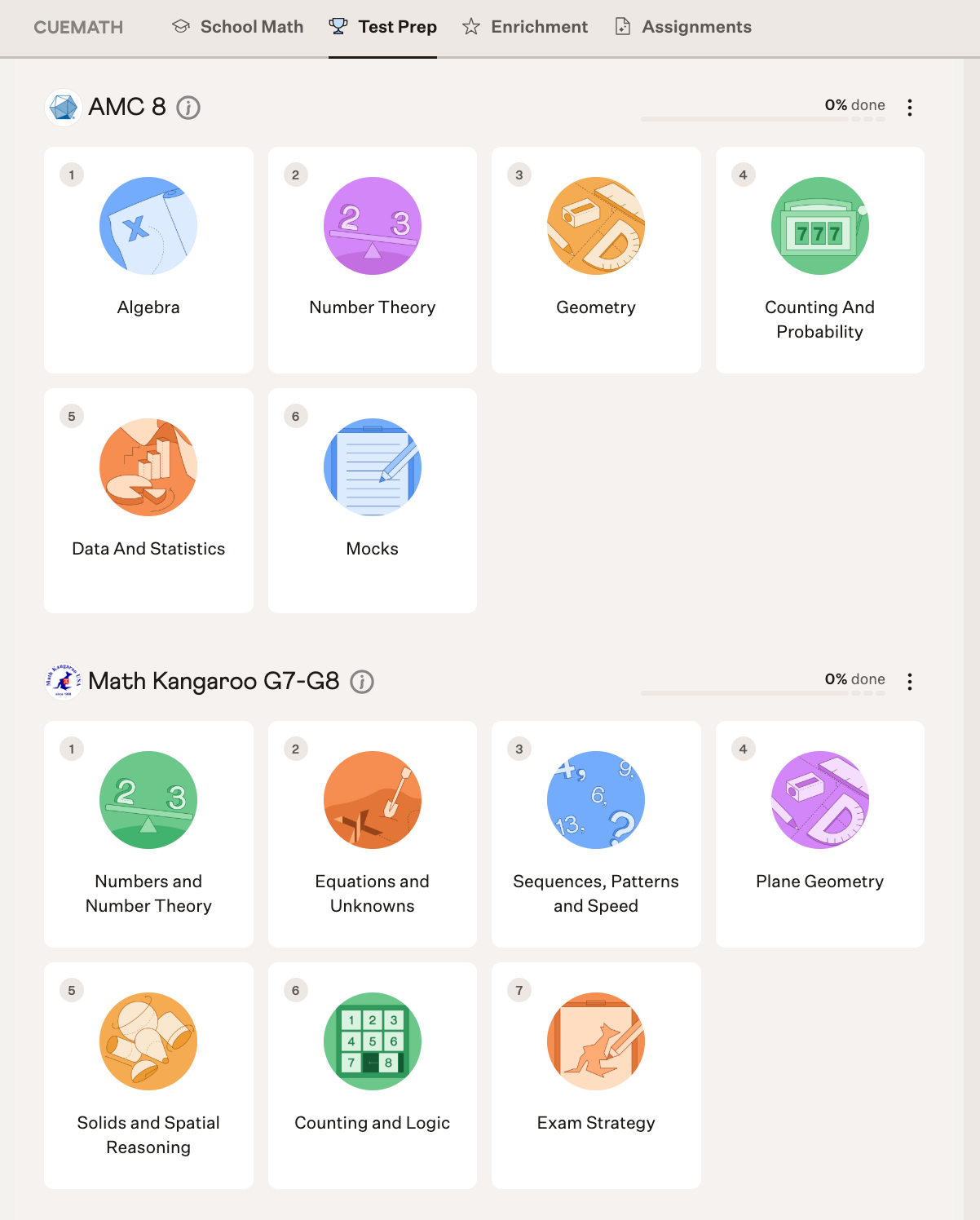
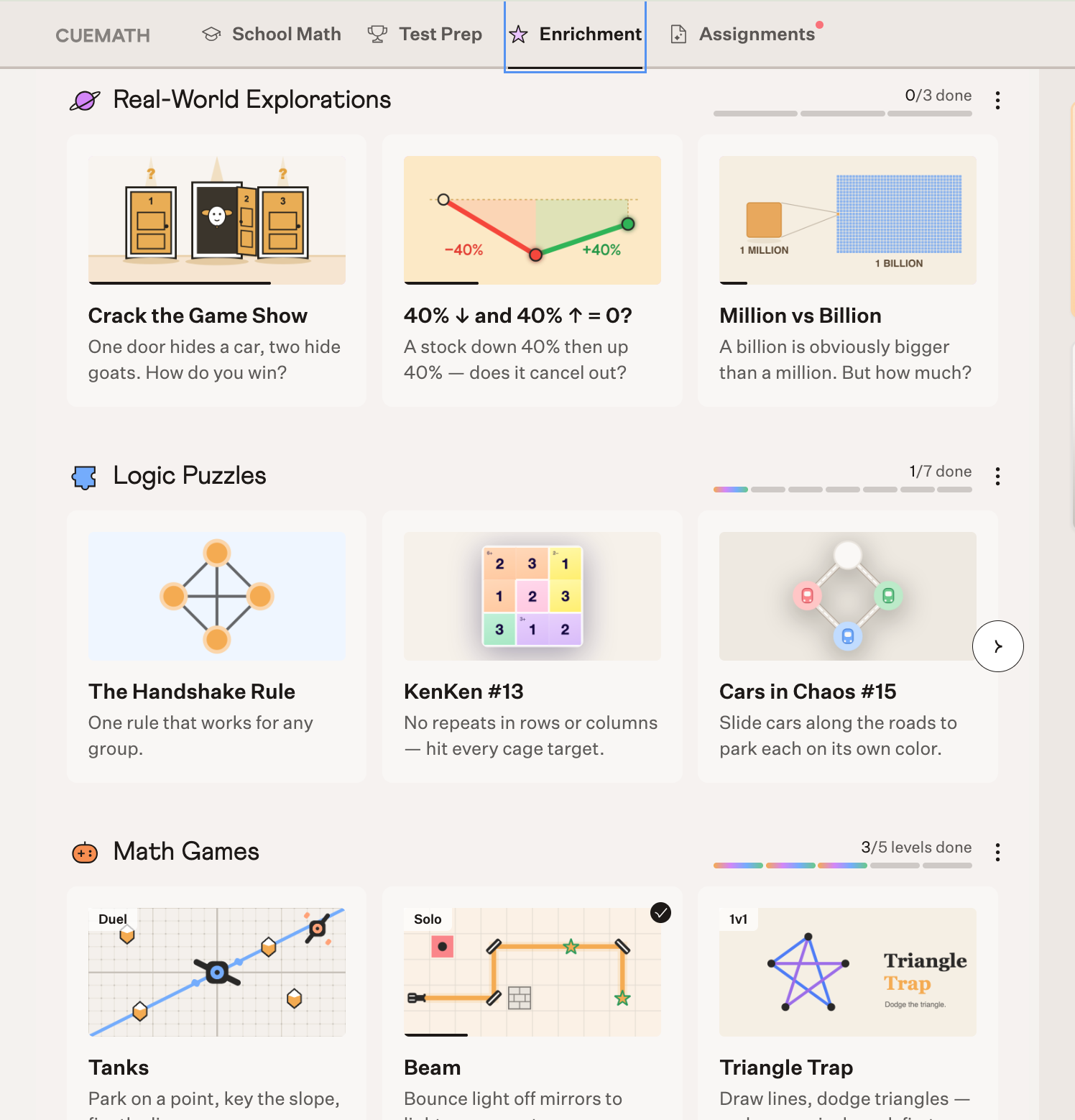
School math + test prep + skills AI can't match, at $0 cost.
Everything your child needs from Grade K to 12, curriculum mastery, test prep, and enrichment math, is now in one free app.

Simple log in with email, nothing else
| # | Key Takeaway |
|---|---|
| 1 | Partial products multiplication breaks each factor into place values, multiplies every part separately, then adds all the parts for the final answer |
| 2 | It's the written, list-style version of the same math the box method shows as a grid — same place value logic, different layout |
| 3 | Every "carry" in the standard algorithm is really two partial products added early — writing the answer digit by digit just skips writing each partial product out in full |
| 4 | A 4-digit by 1-digit problem needs four partial products; a 2-digit by 2-digit problem needs four as well, just arranged differently |
| 5 | Most partial products errors come from misplaced place value (writing "3" instead of "30"), not from the multiplication facts themselves |
- What Is Partial Products Multiplication?
- Partial Products by Digit Combination: A Worked Example for Each Size
- Partial Products vs. the Box Method: Same Math, Different Layout
- How Partial Products Turns Into the Standard Algorithm
- The Top Reason Kids Get Partial Products Wrong
- Partial Products vs. Standard Algorithm vs. Box Method: Which One?
- What a Cuemath Tutor Checks When Your Child Uses Partial Products
- A 5-Minute Partial Products Drill for Home Practice
- FAQs
What Is Partial Products Multiplication?
Partial products multiplication multiplies two numbers by breaking each one into place values, multiplying every part of one number by every part of the other, then adding all those smaller answers, the "partial products"—together for the final total.
It's built on the distributive property: 27 × 13 becomes (20 + 7) × (10 + 3), which splits into four smaller, easier multiplications instead of one hard one.
The same three steps every time, no matter how big the numbers get.
Worked example—27 × 13:
27 × 13 split into four easy pieces — nothing hidden, nothing carried.
Common Core has schools teaching this as one of the required strategies for 4th grade multi-digit multiplication, specifically asking students to multiply using "strategies based on place value and the properties of operations" before moving to the standard algorithm in 5th grade.
Partial Products by Digit Combination: A Worked Example for Each Size
The method doesn't change as the numbers get bigger; there are just more parts to multiply and add. Here's one full worked example for each size a 4th grader typically sees.
2-digit × 1-digit—56 × 4
2-digit × 2-digit—38 × 26
3-digit × 1-digit—326 × 4
3-digit × 2-digit—213 × 34 (a 5th grade stretch problem)
4-digit × 1-digit—3,142 × 6 (the largest size 4th grade)
Try It Yourself: five problems to check your understanding before moving on.
Partial Products vs. the Box Method: Same Math, Different Layout
Partial products and the box method are the same underlying math, place value decomposition plus the distributive property, written two different ways.
- Partial products writes each part as its own line and adds them at the bottom, like a list.
- Box method puts the same numbers into a grid, one box per multiplication.
| 30 | 8 | |
| 20 | 600 | 160 |
| 6 | 180 | 48 |
Same four numbers — 600, 180, 160, 48 — for 38 × 26. Partial products lists them; the box method arranges them in a grid.
How Partial Products Turn Into the Standard Algorithm
This is the part most worksheets skip: the "carrying." Your child will learn right after this isn't a new trick; it's partial products with the writing shortened.
Take 26 × 4.
Both parts written out in full, then added.
The carried 2 is the tens digit of 24 — folded in early instead of written out.
The "2" your child carries isn't a magic rule; it's the tens digit of 24 (the 6 × 4 partial product), moved into the next column's total before it gets written down. Partial products writes 24 out in full and adds it later; the standard algorithm folds that same 24 into the next step early, so it never appears as its own number.
Once a child can see that every carried digit is really an unwritten partial product, carrying stops looking like a separate rule and starts looking like a shortcut for math they already understand.
The Top Reason Kids Get Partial Products Wrong
It's rarely the multiplication facts that trip a child up; it's losing track of place value.
- Dropping a zero: Writing "3 × 4 = 12" instead of "30 × 4 = 120" when a part represents tens, not ones, the single most common mistake.
- Forgetting a part: A 2-digit × 2-digit problem needs four partial products before adding; skipping one is easy to miss since nothing visually "counts" the parts the way a grid does.
- Adding before finishing: Some kids add the first two partial products together and stop, missing the rest.
Partial Products vs. Standard Algorithm vs. Box Method: Which One?
| Method | Best For | Not For |
|---|---|---|
| Partial Products | Seeing every part in numbers before adding; a natural bridge from mental math into the standard algorithm | Larger problems where a visual grid helps more |
| Box Method | Visual learners; seeing place value as a grid | Fast written practice; kids who find grids cluttered |
| Standard Algorithm | Speed once place value is solid; timed tests | A child who doesn't yet understand why carrying works |
Not Sure Your Child Has the Place-Value Foundation Partial Products Needs?
A free Cuemath evaluation checks exactly where your child's place-value understanding stands — the same skill every partial products problem depends on.
Book a Free Evaluation100% Free · No Credit Card Needed · Takes About 15 Minutes
What a Cuemath Tutor Checks When Your Child Uses Partial Products
A Cuemath tutor doesn't just check whether the final total is right. They ask questions like, "Which part is this number worth: tens or ones?" or "Can you show me which two parts you just 'added?'" The same "cue, don't tell" approach is used across every Cuemath 1:1 session, part of the MathFit framework's focus on real understanding over correct-answer guessing.
Some of the parents' testimonials:
A 5-Minute Partial Products Drill for Home Practice
You don't need worksheets to practice this: a pencil, paper, and five minutes at the kitchen table work fine. Start with a 2-digit by 1-digit problem, then work up.
Before your child adds the parts together, have them say each part's place value out loud first ("this is 30 times 4, not 3 times 4"); it catches most mistakes before they happen.
FAQs
What are partial products in multiplication?
Partial products in multiplication is a strategy that breaks each number in a multiplication problem into its place values, multiplies every part separately, and adds all those smaller answers together for the final total.
How do you do partial product multiplication?
You do partial product multiplication by expanding both numbers into their place values, multiplying every part of one number by every part of the other, and then adding all the resulting partial products together. For 27 × 13, that's 200 + 60 + 70 + 21, which adds up to 351.
What is the partial product of 35 x 7?
The partial products of 35 × 7 are 210 and 35, from splitting 35 into 30 + 5, multiplying 30 × 7 = 210 and 5 × 7 = 35, then adding them for a total of 245.
What are the partial products of 42 times 5?
The partial products of 42 × 5 are 200 and 10, from splitting 42 into 40 + 2, multiplying 40 × 5 = 200 and 2 × 5 = 10, then adding them for a total of 210.
Can you explain partial products to kids?
Yes, partial products means splitting a big multiplication problem into smaller, easier ones based on place value, solving each small piece, then adding all the pieces back together to get the final answer, the same way you'd split a big task into smaller steps.
How do you use partial products to multiply 48 by 71?
You use partial products to multiply 48 by 71 by splitting 48 into 40 + 8 and 71 into 70 + 1, then multiplying each part: 40 × 70 = 2,800, 40 × 1 = 40, 8 × 70 = 560, and 8 × 1 = 8. Adding 2,800 + 40 + 560 + 8 gives 3,408.
What grade is partial product multiplication taught in?
Partial product multiplication is taught mainly in 4th grade, and it's used again in 5th grade for larger numbers before students move fully to the standard algorithm.
Are partial products the same as the box method?
Partial products and the box method use the exact same math, place value decomposition, and the distributive property, but partial products writes each part as a line in a list, while the box method arranges the same parts in a grid.
How do partial products connect to the standard algorithm?
Partial products connect to the standard algorithm because every digit a child "carries" in the standard algorithm is really the tens part of a partial product, moved into the next column's total before it gets written down instead of being written out as its own number.
What are common mistakes with partial product multiplication?
The most common mistakes with partial product multiplication are dropping a placeholder zero (writing "3" instead of "30"), forgetting one of the required parts before adding, and adding the parts together before all of them are found.

I was never the kid who loved math. I was much more interested in books, stories, and writing—and, somewhere along the way, I became even more curious about people. Why do we learn differently? Why does something make sense to one child but not another? And what makes a student feel confident enough to keep trying?
That curiosity led me to study Applied Psychology, where I learned more about how children think, learn, and make sense of the world around them.
My love for writing did the rest. What started as something I simply enjoyed became a career. Over the past five years, I've worked as a freelance writer across edtech, SaaS, B2B, travel, lifestyle, and healthcare, learning how to write for very different audiences without losing the human side of the story.
Today, I'm an SEO Content Writer & Editor at Cuemath, where I get to bring many of these interests together. Working in education—and especially around math—has made me even more curious about what happens behind the screen or textbook: what parents worry about, what students struggle with, and what actually helps them learn.
That's also how I like to research. I don't just look at search results and call it a day. I go where parents and students actually talk—forums, reviews, communities, and conversations with real families. Because sometimes the most useful insight isn't hiding in a keyword; it's in a parent's question, a student's frustration, or a small detail someone shares about their learning experience.
I write because I'm curious. I research because I want to understand. And I love turning what I learn into content that feels genuinely useful to the people reading it.