Year 1 Maths Changes: Fractions, Number Facts & Money Added to the Australian Curriculum
Education ministers have approved changes to Foundation to Year 2 maths. Year 1 now includes fractions and addition and subtraction facts to 10, with money skills added. Here is what changes and what parents should know.

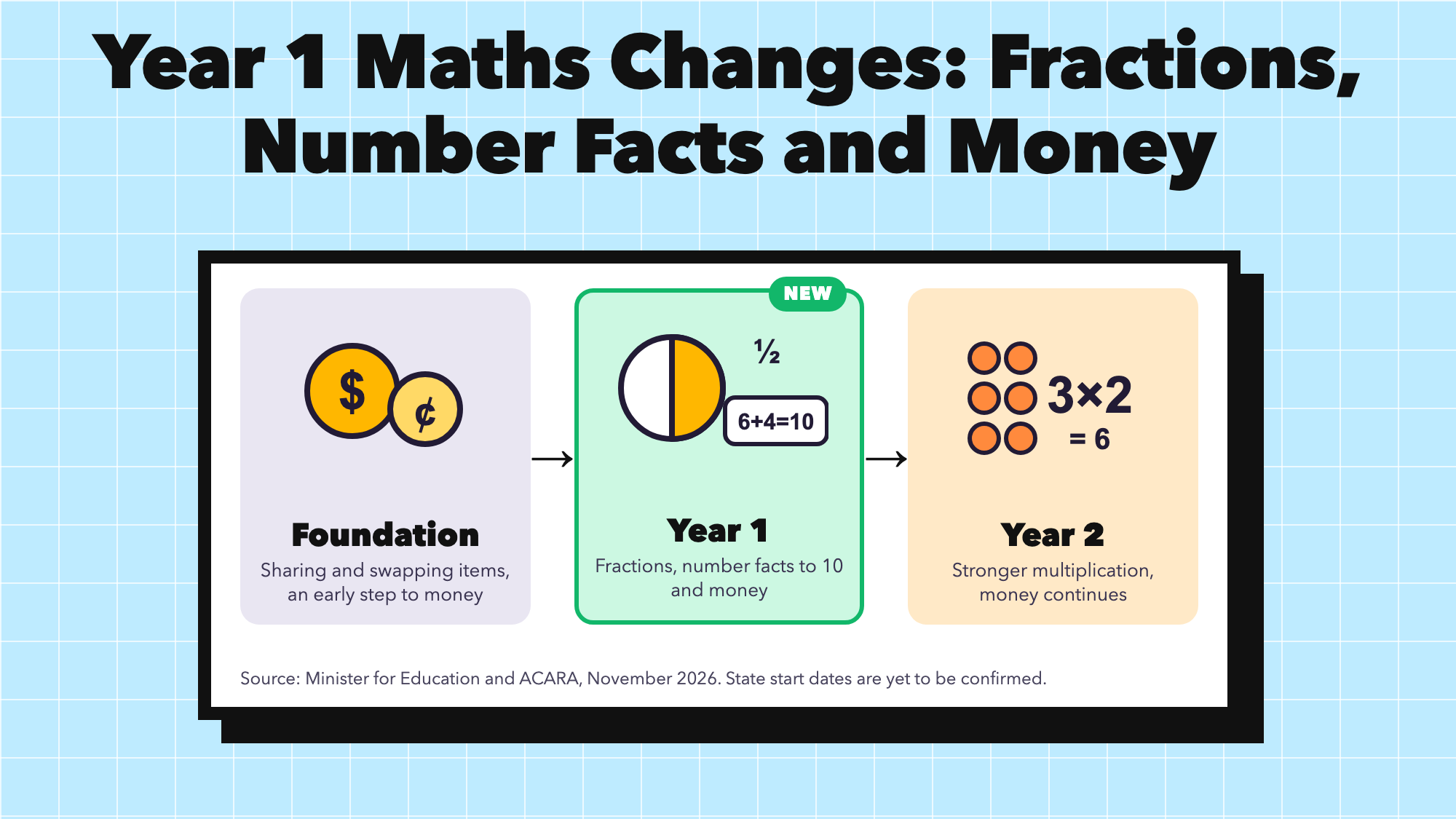
Education ministers have approved changes to the Foundation to Year 2 maths curriculum. Year 1 maths will now include fractions and recall of addition and subtraction facts to 10. The Education Minister says the new Australian curriculum maths content rolls out from next year.
What has changed in Year 1 maths?
ACARA says the review made the content simpler and clearer. It also put ideas in a better order and raised expectations. The key changes are below.
| Year level | What changes |
|---|---|
| Foundation | Children explore sharing and exchanging items, an early step towards money. |
| Year 1 | Fractions start in Year 1, not Year 2. Children recall addition and subtraction facts to 10. They learn about money and simple transactions. |
| Year 2 | Multiplication content is stronger. Money and simple transactions continue. |
Recalling a fact means knowing that 6 + 4 = 10 without counting. Maths builds step by step, so this speed helps later learning.
Why did ministers make these changes?
Education Minister Jason Clare said maths is sequential. Children must learn some things before others. In the Minister's release, ministers asked ACARA to make the first three years simpler and clearer.
ACARA says it consulted state and territory authorities, school sectors, teachers and curriculum experts. This included focus groups with teachers. The Australian Association of Mathematics Teachers welcomed the changes in ACARA's media release.
The Sydney Morning Herald reports the change comes as Australia's international numeracy standings slide.
When will the new Foundation maths start?
- ACARA will publish the revised curriculum on the Australian Curriculum website before the end of November 2026.
- The Minister says the changes roll out from next year.
- ACARA will then work with states, territories and school sectors on implementation. No state start dates are confirmed yet.
Ask your child's school how and when it will apply the changes.
What should parents know about early years maths?
Money is now part of early maths. Children will use ideas such as sharing, exchanging and simple purchases. ACARA says this builds an age-appropriate understanding of consumer financial literacy.
Parents can support the new Year 1 maths at home:
- Cut food into equal parts and talk about the pieces.
- Ask quick questions such as "What goes with 7 to make 10?"
- Use coins in play shopping to practise simple money sums.
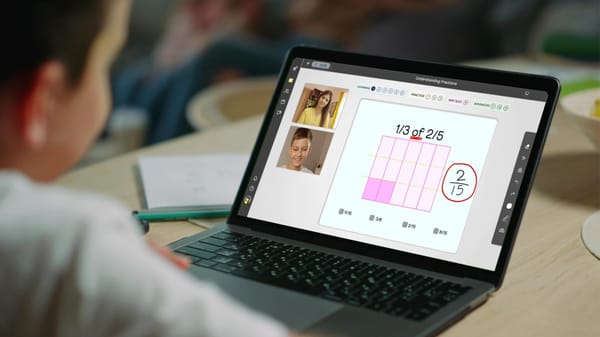
Hands-on, visual practice suits these topics. Cuemath uses this approach in its early years maths lessons. Our earlier explainer, Is the Australian maths curriculum about to change?, covers the background.
Key takeaways and what happens next
- Year 1 maths now includes fractions, moved from Year 2.
- Year 1 children will recall addition and subtraction facts to 10.
- Year 2 multiplication is strengthened, and money skills are added across Foundation to Year 2.
- The revised curriculum is due online before the end of November 2026.
- ACARA will now review Years 3 to 6 maths, with a stronger focus on financial literacy.
- The same 5 November release also covers a digital detox in schools and a return to pen and paper for Year 5 NAPLAN writing.
Also Read - NAPLAN Year 5 Writing Test Returns to Pen and Paper in 2025!
Sources
- Minister for Education Jason Clare, media release, 5 November 2026: maths changes from next year, Years 3 to 6 review
- ACARA media release, 6 November 2026 (Medianet repost): Foundation to Year 2 changes, consultation, AAMT response
- Sydney Morning Herald, 5 November 2026: numeracy standings context

I write because I like understanding things properly, and I've never been able to do that quietly.
Six years in, what still interests me most isn't the writing itself. It's the person on the other side. Who are they, what were they actually worried about when they opened this page, and did they leave with what they came for? Most content fails that last test. It answers the easy question instead of the one that was asked.
At Cuemath, I write for parents and students in India and around the world. That range is the part I enjoy. A parent in Bangalore and a parent in Canada are asking about the same child, but not always in the same words, and that difference matters.
So I research before I write. Not just search results. Forums, reviews, the long comment threads where somebody finally admits what they're really confused about. That's usually where the useful thing is hiding.
I also spend time on how people find this writing at all, since a growing number of them now ask an AI instead of typing into Google. But that only works if the writing is clear to begin with. There's no shortcut around that part.