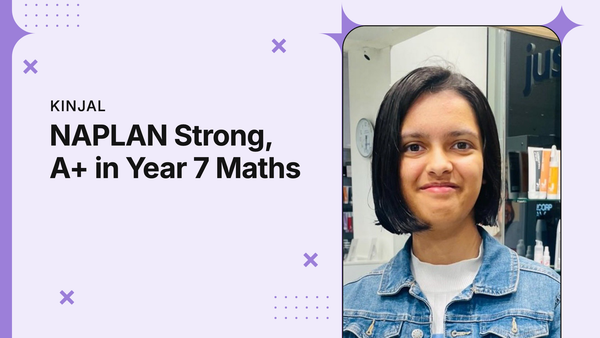
Kids Who Did Fine in Class Still Struggled With NAPLAN Maths. Cuemath Has Figured Out Why.
A good grade in school maths doesn't necessarily mean a child will do well on NAPLAN. Parents have been turning to tutors to understand why, and for most of them, Cuemath's tutors found that answer.

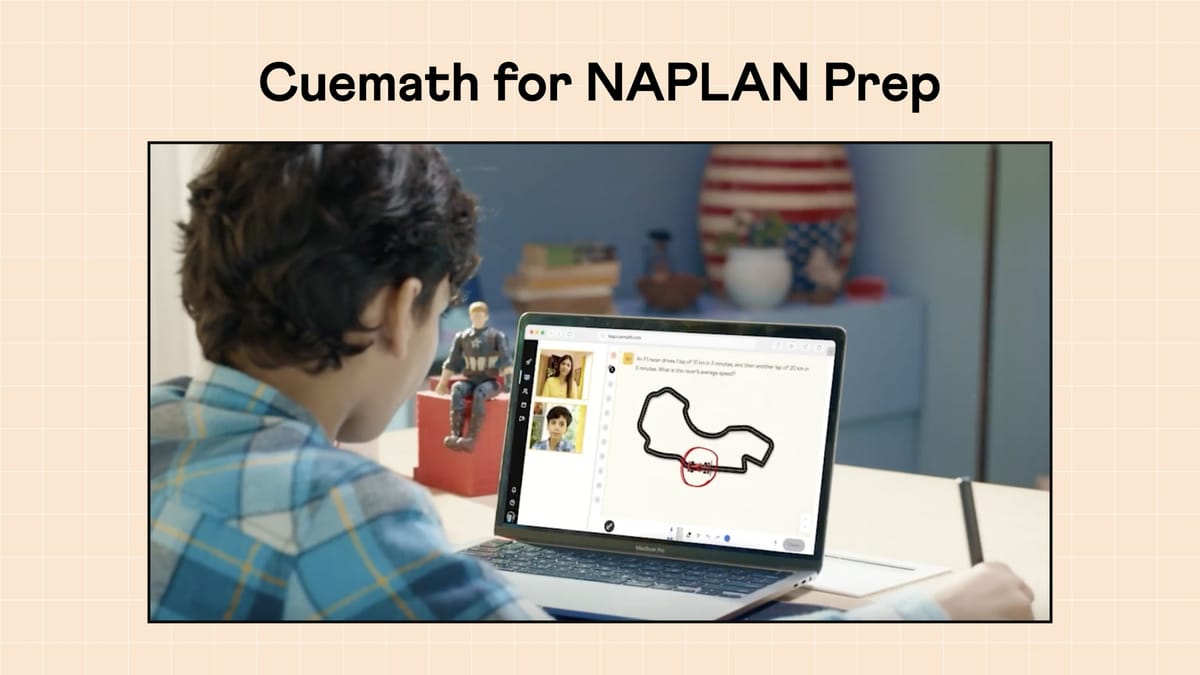
Your child gets good grades in maths. The teacher says they are doing fine. Yet, one-third of students fail to meet NAPLAN numeracy expectations.
This gap does not mean your child lacks effort. It does not mean the school is failing. NAPLAN is a national benchmark test, it has questions framed in unfamiliar contexts, which require deep conceptual clarity and reasoning skills. Most daily maths practice skips this skill entirely.
We share real stories of students who faced this exact issue. We show how Cuemath teaches the skills NAPLAN actually tests—without overwhelming your child or pulling them out of sync with school.
Even if you are just looking for great maths tutoring, these stories help. You will see how kids who once feared maths built confidence and truly succeeded.
- One-Third of Students Fail to Meet NAPLAN's Numeracy Expectations
- Why General Maths Practice Skip This?
- How is Cuemath Different from the Rest?
- Two Students, Two Different Starting Points, Both Aced NAPLAN
- Cuemath is Built for Every Starting Point, Not Just NAPLAN
- What to Expect from a Free Cuemath Class?
- Quick Preview of Cuemath
- Frequently Asked Questions
One-Third of Students Fail to Meet NAPLAN's Numeracy Expectations
A recent ABC news, Australia, article published a cover on NAPLAN results. (source).
According to reports, one-third of students in Australia fail to meet literacy and numeracy expectations. The experts are calling it 'stagnant underperformance'.
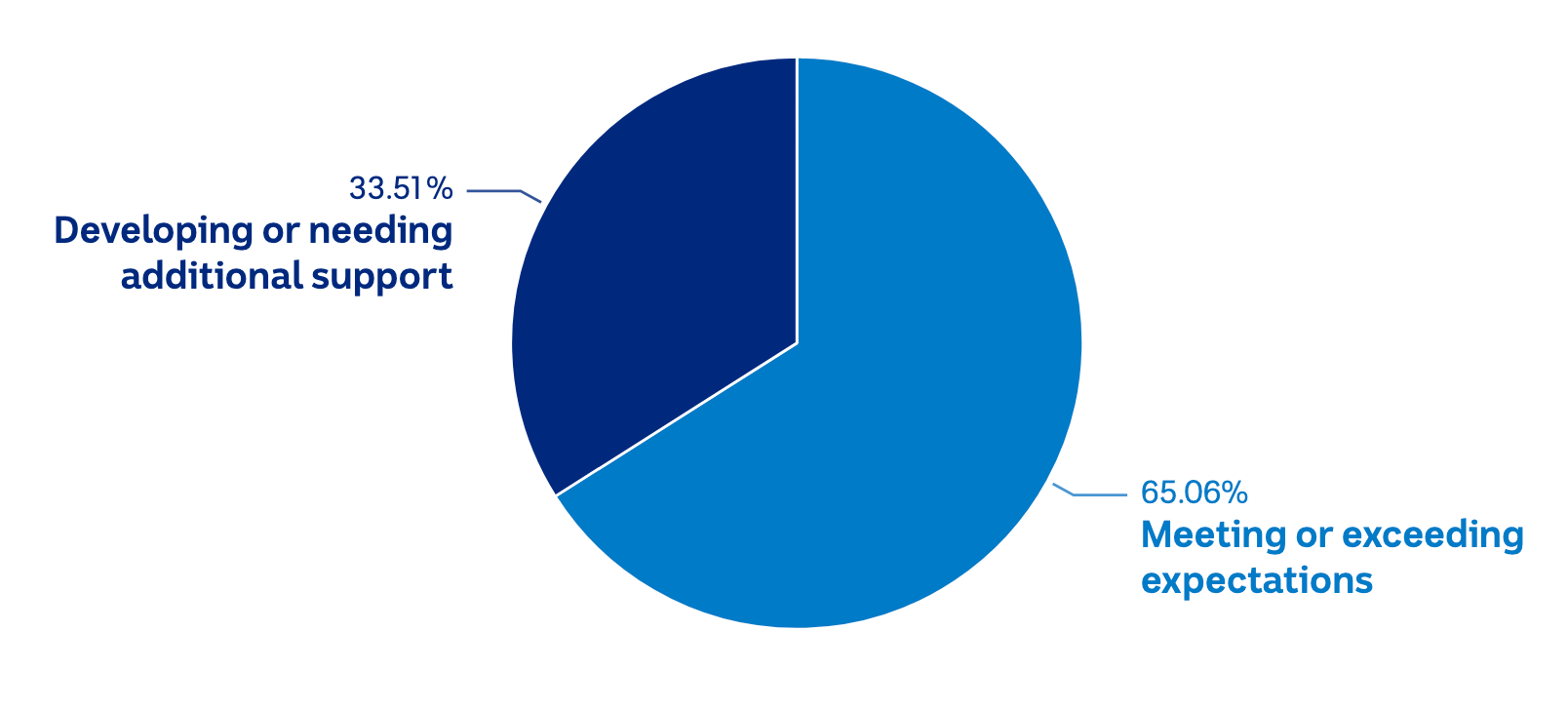
The value of NAPLAN is debated every year, with some expert unions calling for the NAPLAN test to be scrapped, questioning its relevance. However, the Australian Curriculum, Assessment and Reporting Authority (ACARA) said it was important as the only national assessment that was comparable for all students across the country.
NAPLAN tests the basic skills needed for later learning. Those skills are so crucial for later life. All your learning is based on those foundations of numeracy.
Why General Maths Practice Skip This?
- Most popular after-school math practice programs, unfortunately focus on just a single skill: building fluency (which, in this case, simply means calculation speed).
- Other learning formats similarly focus on either basic understanding or reasoning alone.
- Cuemath’s goal, however, is to make every child 'MathFit.' This means they learn math holistically—developing true fluency (mastering concepts so thoroughly that basic operations like 2+4 are done mentally rather than on paper), deep understanding, logical reasoning, and real-world application.
How is Cuemath Different from the Rest?
Here is how a student’s progress compares when learning through traditional methods versus the Cuemath way:
A student learns a concept, completes endless worksheets on that topic, and moves on simply because they arrived at the correct answers. Their school grades look strong because tests mirror those routine worksheets. However, on standardized tests like NAPLAN, they struggle to reach the "Exceeding" band because they encounter unfamiliar question formats that test deeper adaptability.
A student grasps underlying concepts so deeply that they can solve a problem no matter how it is framed. Through spaced repetition, they build fluency, retention, and practical application. This ensures they truly understand the material, allowing them to approach both routine school tests and unfamiliar NAPLAN questions with complete confidence.
Wondering If Your Child Has This Same Gap?
A free trial class is a full diagnostic that shows whether your child understands a concept or just remembers the steps, not a quick preview.
Book a Free Trial Class100% Free · No Credit Card Needed
Two Students, Two Different Starting Points, Both Aced NAPLAN
A fairly new Cuemath student, Amyraa didn't need much help to catch up. She needed reasoning practice built around the exam itself.
Amyraa's tutor, Neha Bhasin, built a customised prep strategy centred on the structure of NAPLAN itself. She scored in the Exceeding band, placing her numeracy results well above her school's average. (Read More About Amyraa's Journey With Cuemath)
Year 7 Student, Arnav, has been a Cuemath student since Year 2, Arnav was initially was shy about admitting where he struggled.
Instead of overwhelming him with direct questions, his tutor, Pooja Gupta, adapted the lessons to his pace and used interactive simulations, letting him change variables and see the results in real time. Practice sheets were calibrated to his actual skill level, not his grade level, so he could master a concept without being forced to guess. Once he felt comfortable, his curiosity took over, and he also reached the top of the Exceeding band. (Read More About Arnav's Journey with Cuemath)
💡 Neither would have gotten there from the same worksheet handed to every student in a class.
Cuemath is Built for Every Starting Point, Not Just NAPLAN
The same reasoning-first approach shows up differently depending on what a child actually needs.
Year 9 student, Shambhavi, started Cuemath in Year 3 on basic division. Because she picked up concepts quickly, her tutor, Meghna, didn't hold her back to match the standard curriculum pace. By Year 9, Shambhavi was already working through trigonometry and logarithms, which led her school to move her into advanced maths. (Read More About Shambhavi's Journey With Cuemath)
Year 9 student, Rhea, has been with Cuemath since 2021. Her tutor, Narjis Fatima, noticed Rhea's interest in art and used pattern-making on the Cueboard, Cuemath's interactive whiteboard, to teach structural concepts through geometric designs like rangolis. That focus on flexible, creative logic led to top-tier finishes across the Australian Mathematics Competition, Kangourou des Mathématiques, and the APSMO Maths Olympiads. (Read More About Rhea's Journey With Cuemath)
A fairly new Cuemath student, Paavni, barely spoke in her first few classes. Her tutor, also Neha Bhasin, didn't push her to answer faster. She gave Paavni time and worked through practice sheets steadily, week after week, until confidence followed the practice. In June, Paavni's school gave her its Excellence in Effort Award, certifying A-level achievement in maths alongside English, science, and HASS. (Read More About Paavni's Journey With Cuemath)
💡 The through-line across all five students isn't a single outcome. It's that the tutor adapted the teaching to the child, not the other way around.
Suggested Reading
What to Expect from a Free Cuemath Class?
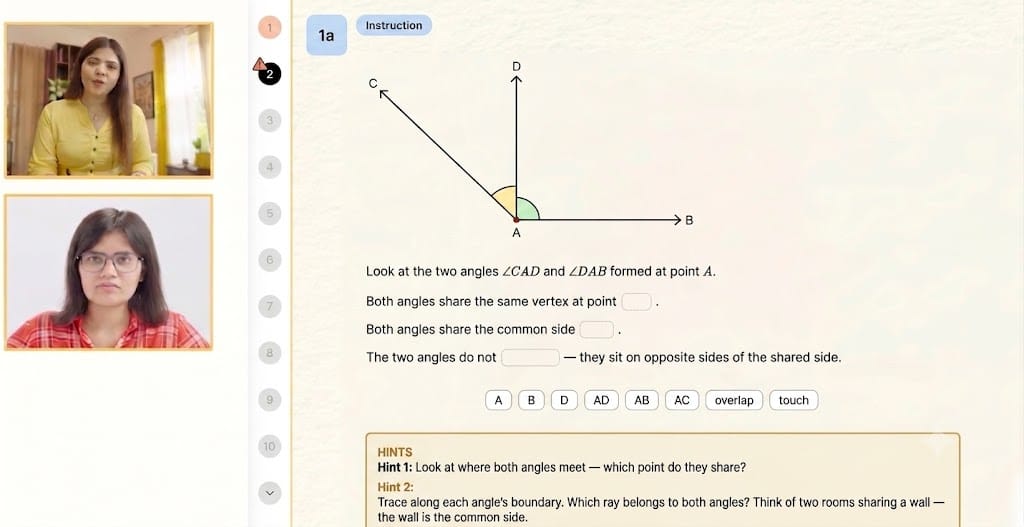
- Both parent and student can experience Cuemath with a free trial class. The trial class will help parents understand whether their child actually understands the concept, or are they relying on procedural memorisation?
- The free Cuemath class is a full, interactive class, not a short preview. Your child gets a complete one-on-one class with a trained tutor matched to their needs.
- You sit with them to get a detailed profile of how your child actually thinks through a maths problem, plus a learning plan built around it.
- The pricing starts at $17 per class, which includes unlimited access to practice worksheets, curriculum chapters, test prep material, and interactive resources. That's a fraction of what private tutors or local coaching centres typically charge in Australia, broken down in full here.
- Cuemath also has a no-questions-asked refund policy: you can cancel any time and get a full refund on unused classes.
Quick Preview of Cuemath
Does it follow Australian standards?
Yes, aligned to the Australian Curriculum (ACARA) and your state's syllabus: NSW (NESA), Victoria (VCAA), Queensland (QCAA), Western Australia (SCSA), and South Australia.
Are the Classes 100% Online?
Yes, entirely online on Cuemath's own Leap platform: live, one-on-one, with a shared digital whiteboard and interactive simulations. Not a plain video call, and never AI or recordings.
Pricing and plans?
Starts at $17 per class, including unlimited access to practice worksheets, curriculum chapters, and test prep material.
Same tutor, every session?
Yes, one dedicated tutor every session, not a rotating pool, so the tutor genuinely knows how the child thinks and where they need support.
What if the student doesn't like the tutor?
Raise a ticket with the helpdesk. Cuemath diagnoses the issue and finds a different tutor that fits better. A no-questions-asked refund also applies: cancel any time for a full refund on unused classes.
What apart from school maths?
The same tutor also covers NAPLAN, OC (Opportunity Class), and Selective School test prep, plus competition prep for AMC, ICAS, and Kangaroo, all within one program, no separate signup.
Is it worth it? Does it actually work?
Yes, backed by a Stanford-led study showing a 24% increase in mathematical reasoning among Cuemath students, and 97.2% of parents report their child improved.
Are the tutors actually qualified?
Yes, only the top 1% of applicants are selected, then trained specifically in the Cuemath method and the Australian Curriculum, which is why they're called coaches, not just tutors.
Does it fit homeschooling?
Yes, a dedicated tutor 2 to 3 times a week takes maths off the parent's plate, at the child's pace, with regular progress updates so parents stay fully in the loop.
Is the plan actually personalised, or one-size-fits-all?
Personalised. The tutor tailors each class to what the child needs: closing gaps in earlier foundations, homework help, test prep, or moving ahead to above-year work.
How often and how long are classes?
Usually 2 to 3 times a week; 40 minutes for younger children, up to 55 minutes for older ones, scheduled around the family's routine.
What devices are needed?
A desktop or laptop that supports video calling. A writing tablet is recommended for the best experience.
See the Gap Before NAPLAN Does
Book a free trial class and get a clear diagnostic of how your child reasons through maths, plus a plan built around it, at no cost and no obligation.
Book a Free Trial ClassFor Students from Kindergarten to Year 10
Frequently Asked Questions
Why is my child good at maths in class but still behind on NAPLAN?
Your child is likely strong on fluency (getting the right answer to a familiar type of question) but hasn't had much practice with reasoning (working through a question they haven't seen before). NAPLAN specifically tests reasoning, not just fluency, so a child can do well in regular schoolwork and still score lower than expected on NAPLAN. Cuemath builds reasoning practice into every session, not just fluency drills.
What does NAPLAN actually test in maths?
NAPLAN tests whether a child can reason through an unfamiliar maths problem, not how fast they can calculate a familiar one. It sits inside the Australian Curriculum's four proficiency strands (understanding, fluency, application, and reasoning), and reasoning is graded as its own skill, separate from computational speed. Cuemath's NAPLAN Test Prep module uses mock papers built in this exact format.
Is worksheet-based tutoring good NAPLAN preparation?
Worksheet drilling builds fluency and speed at repeating one method, which is useful but only covers one of NAPLAN's four tested skills. It doesn't give a child practice at applying a method to a new, unfamiliar problem, which is what most NAPLAN questions actually look like. Cuemath keeps the fluency practice and adds reasoning-based questions on top of it.
How is Cuemath different from other maths tutoring options in Australia?
Cuemath runs live, one-on-one sessions with the same tutor every time, built around the Australian Curriculum and your state's syllabus, and focused on reasoning rather than repetition. It isn't a group class, a worksheet program, or a drop-in centre. The same tutor also handles NAPLAN, OC, and Selective School preparation within the regular program, with no separate signup.
Does Cuemath actually prepare students for NAPLAN specifically?
Yes. Cuemath includes a dedicated NAPLAN Test Prep module with mock papers built in the same format as real NAPLAN questions, taught by the same tutor who covers regular schoolwork. Two students in this piece, Amyraa and Arnav, both reached the Exceeding band in NAPLAN through this approach.
What happens in Cuemath's free trial class?
The free trial class is a full, interactive one-on-one session with a trained tutor, not a short preview. It's a diagnostic that shows whether your child understands a concept or is relying on memorised steps, and you get a written learning plan afterward with no obligation to continue.
Is Cuemath aligned with the Australian Curriculum?
Yes. Cuemath's program is aligned to the Australian Curriculum set by ACARA and to state syllabuses across New South Wales, Victoria, Queensland, Western Australia, and South Australia, so sessions connect directly to what your child is learning at school each term.
How much does Cuemath cost in Australia?
Cuemath's Australia pricing starts at $17 per class, which includes unlimited access to practice worksheets, curriculum chapters, test prep material, and interactive resources. The first class is a free trial with no credit card required.
Sources
- ACER: Expert Q&A on Australia's TIMSS 2023 performance — backs the reasoning-vs-computation finding (Nicole Wernert, ACER)
- ACER: PISA 2022 Australian performance stabilises — backs Australia's international standing and flat-not-declining trend
- Engineers Australia: NAPLAN results a wake-up call on maths — backs the "1 in 3 students" and Year 3 numeracy statistics (Katherine Richards AM CSC)
- Stanford-led study on Cuemath and mathematical reasoning (ERIC) — backs the 24% reasoning increase claim
- Australian Curriculum (ACARA) — backs the four proficiency strands (understanding, fluency, application, reasoning)
- Trustpilot: Cuemath reviews — backs the Trustpilot rating referenced in the trial-class section

I grew up a science kid. Math was not my best subject. Class moved fast, I was too shy to ask for help, and I somehow ended up more curious about how people learn than about the subjects themselves.
That's what pulled me into education, not to teach, but to understand how tutoring programs actually work and what students genuinely need from them.
My love for writing did the rest. I had too many observations and nowhere to put them, so I started writing, and haven't stopped. Over the last five years I've written about edtech, student life, and college programs. For the past year, my focus has been math tutoring specifically.
I work at Cuemath now, so factor that in. I research by going where parents actually talk: forums, reviews, and direct conversations with students and families. Last reviewed: August 2026.