15 Famous Mathematicians and Their Contributions
Meet 15 famous mathematicians and the ideas that made them legendary. Each comes with quick trivia and a challenge to test what you remember.

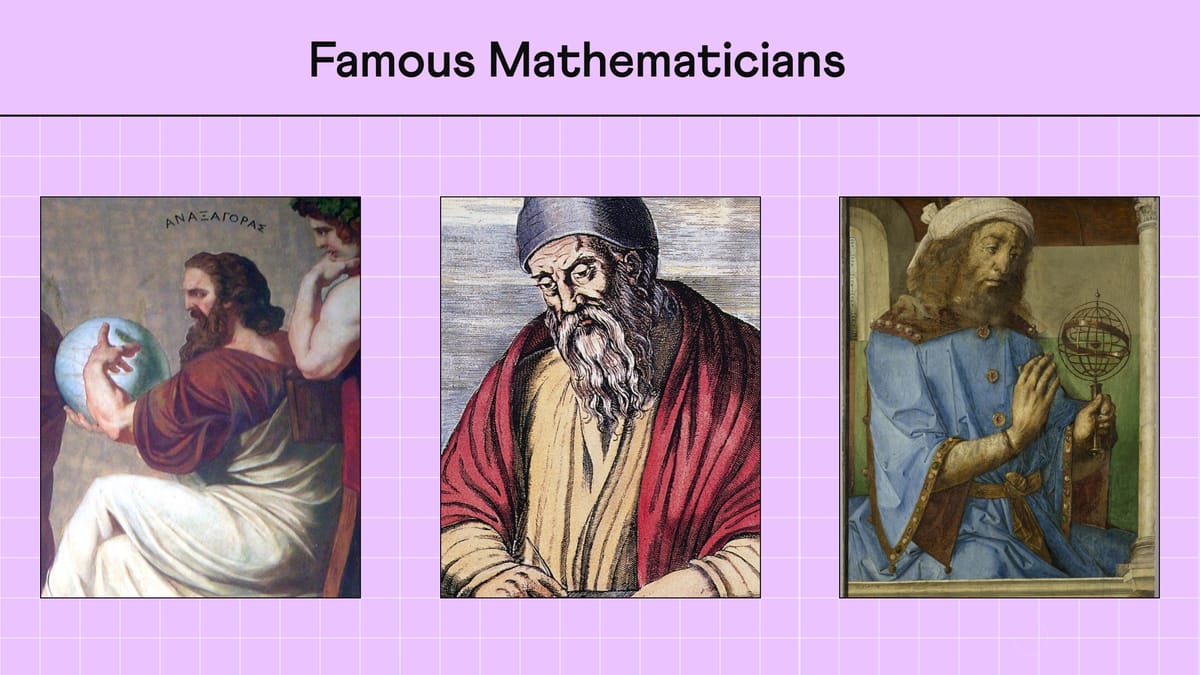
Being a great mathematician is rare. Across thousands of years, only a handful of thinkers reshaped how we count, measure, and reason about the world. Here are 15 famous mathematicians and the ideas that made them legendary. After each one you get two things to try: a Quick Trivia question to jog your memory, and a harder Challenge or hands-on Try It Yourself task. Tap Reveal answer to check yourself, and keep a tally as you go. If you like this format, our free math games and math puzzles keep the same challenge going any time.
School math + test prep + skills AI can't match, at $0 cost.
Everything your child needs from Grade K to 12, curriculum mastery, test prep, and enrichment math, is now in one free app.


Simple log in with email, nothing else
1. Euclid
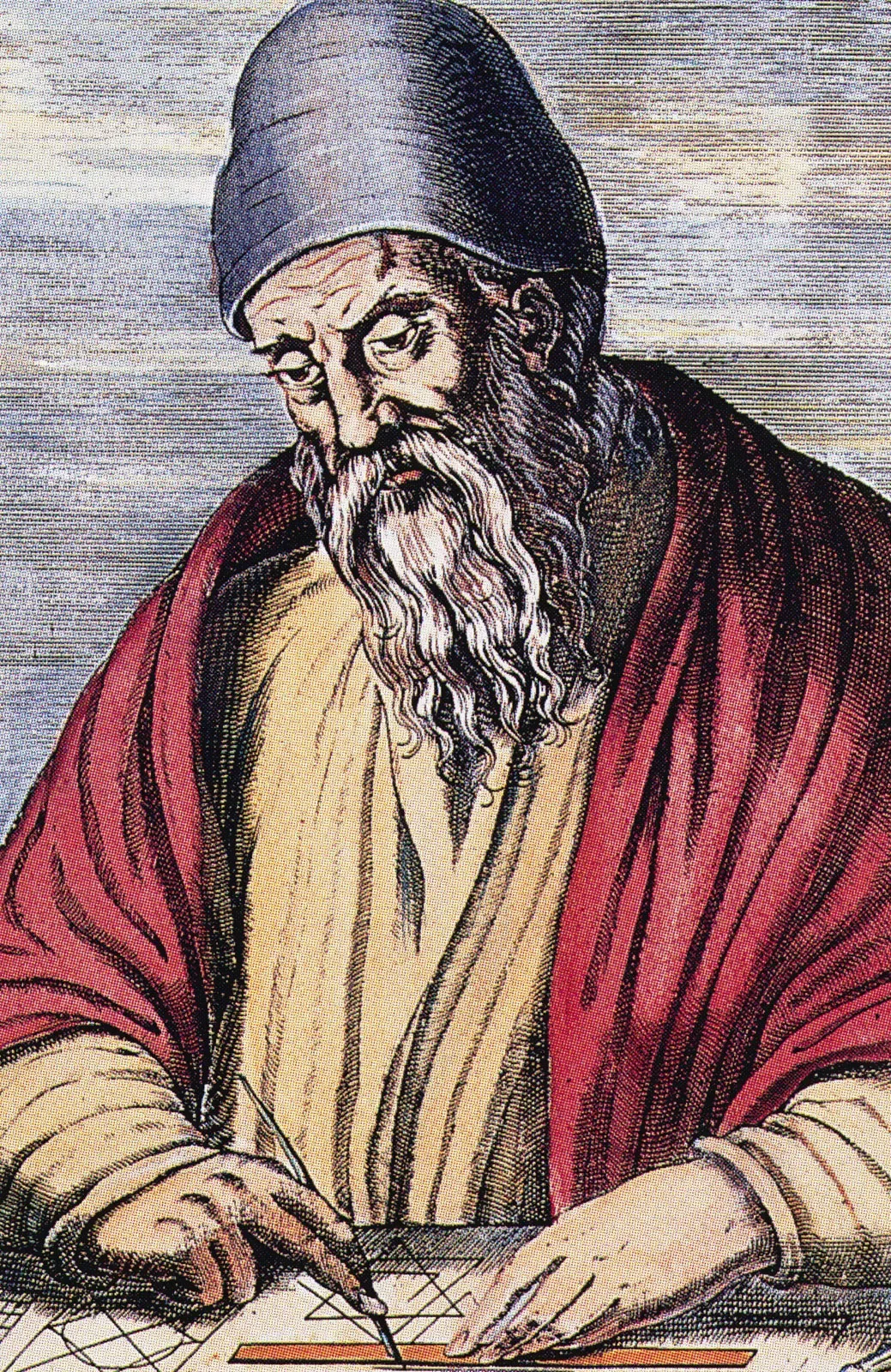
Often called the “Father of Geometry,” Euclid taught in Alexandria around 300 BCE. His thirteen-book work, the Elements, organised geometry into definitions, postulates, and proofs, and it is still the backbone of the geometry taught in schools today.
Euclid built all of his geometry on how many basic postulates?
Reveal answer
Answer: Five.
Euclid proved primes never run out. Multiply the first three primes (2 × 3 × 5) and add 1 to get 31. Is 31 a prime number?
Reveal answer
Answer: Yes — 31 is prime. That “multiply and add 1” trick is exactly how Euclid proved there is no largest prime.
2. Pythagoras
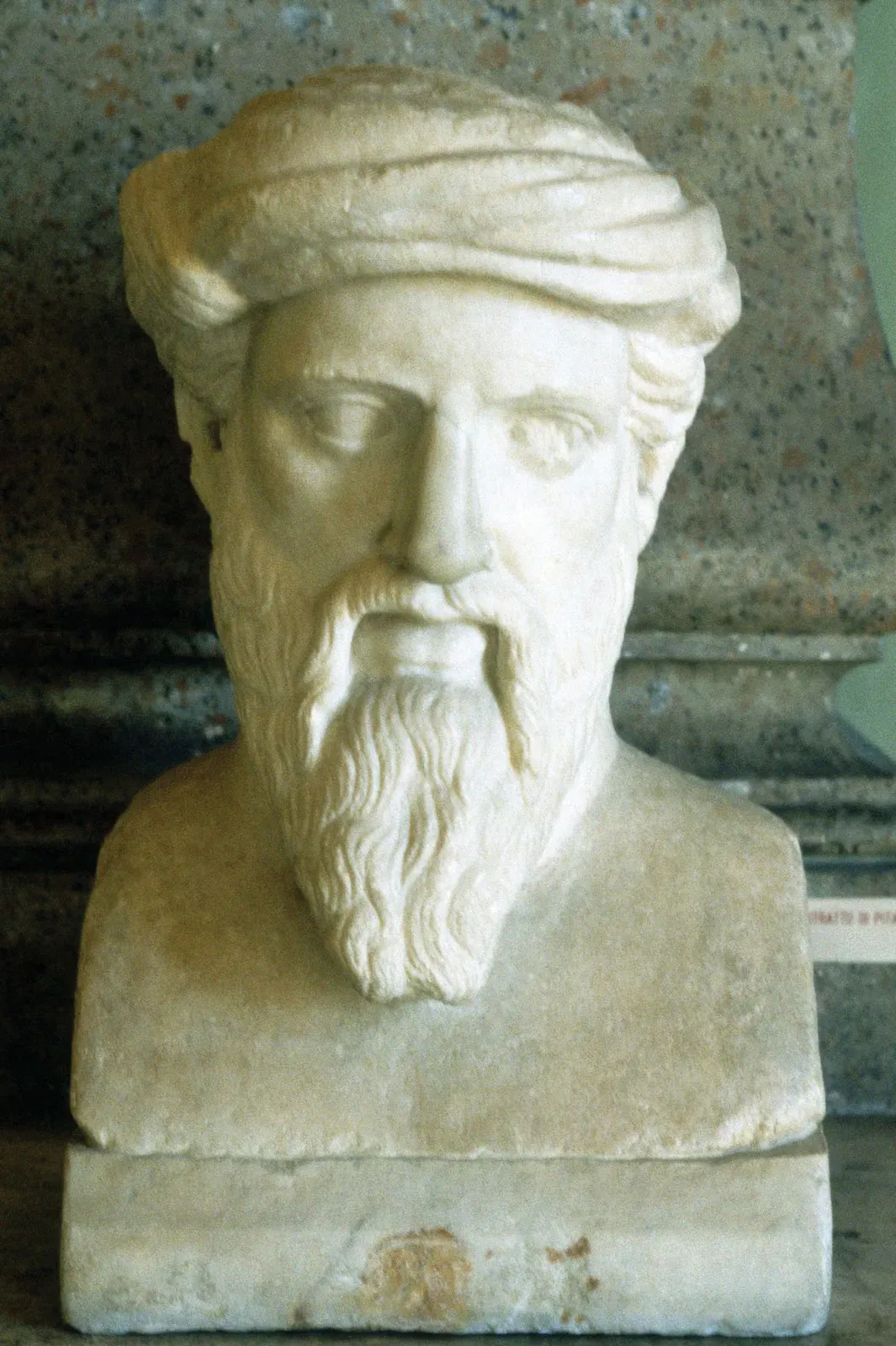
Pythagoras founded a school of mathematicians in ancient Greece and gave us the theorem that carries his name: in a right triangle, the square of the hypotenuse equals the sum of the squares of the other two sides.
A right triangle has legs of length 3 and 4. How long is the hypotenuse?
Reveal answer
Answer: 5, because 3² + 4² = 9 + 16 = 25, and √25 = 5.
A ladder leans against a wall. Its base is 6 ft from the wall and it reaches 8 ft up. How long is the ladder?
Reveal answer
Answer: 10 ft, because 6² + 8² = 36 + 64 = 100, and √100 = 10.
3. Archimedes
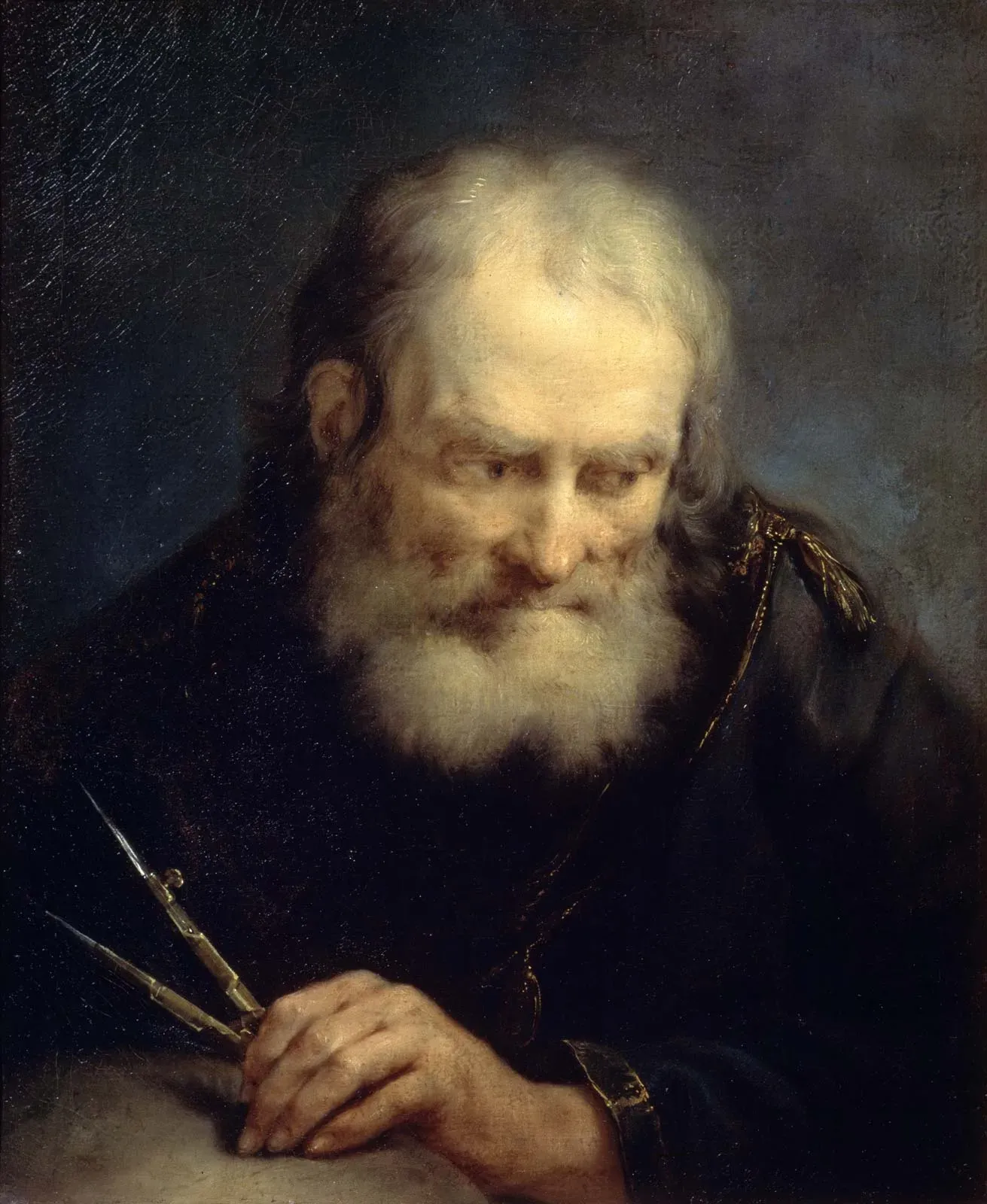
Archimedes of Syracuse was a mathematician, physicist, and inventor. He estimated the value of pi, worked out the areas and volumes of curved shapes, and designed machines including the water-lifting Archimedes’ screw.
Archimedes proved the volume of a sphere is what fraction of the cylinder that fits exactly around it?
Reveal answer
Answer: Two-thirds (2/3).
Archimedes showed pi is a little more than 3 1/7. Written as a decimal to two places, what is 3 1/7?
Reveal answer
Answer: 3.14 (3 + 1/7 ≈ 3.142) — astonishingly close to pi’s true value of 3.14159…
4. Thales of Miletus
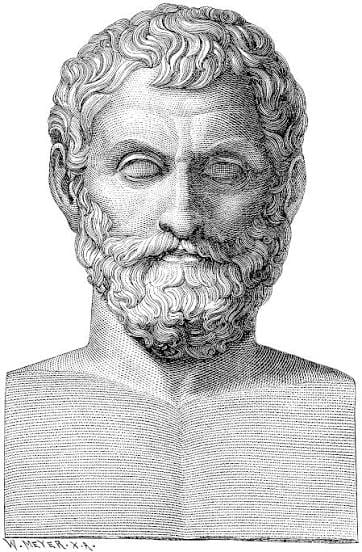
Thales is often named the first Greek mathematician. He used geometry to measure the height of the pyramids from their shadows and is remembered for Thales’ theorem about angles in a semicircle.
By Thales’ theorem, an angle drawn in a semicircle is always what?
Reveal answer
Answer: A right angle (90°).
Draw a circle. Mark the two ends of a diameter, then pick any third point on the circle and join all three into a triangle. Measure the angle at that third point — what do you always get?
Reveal answer
Answer: 90°, every single time. That is Thales’ theorem in action.
5. Aristotle
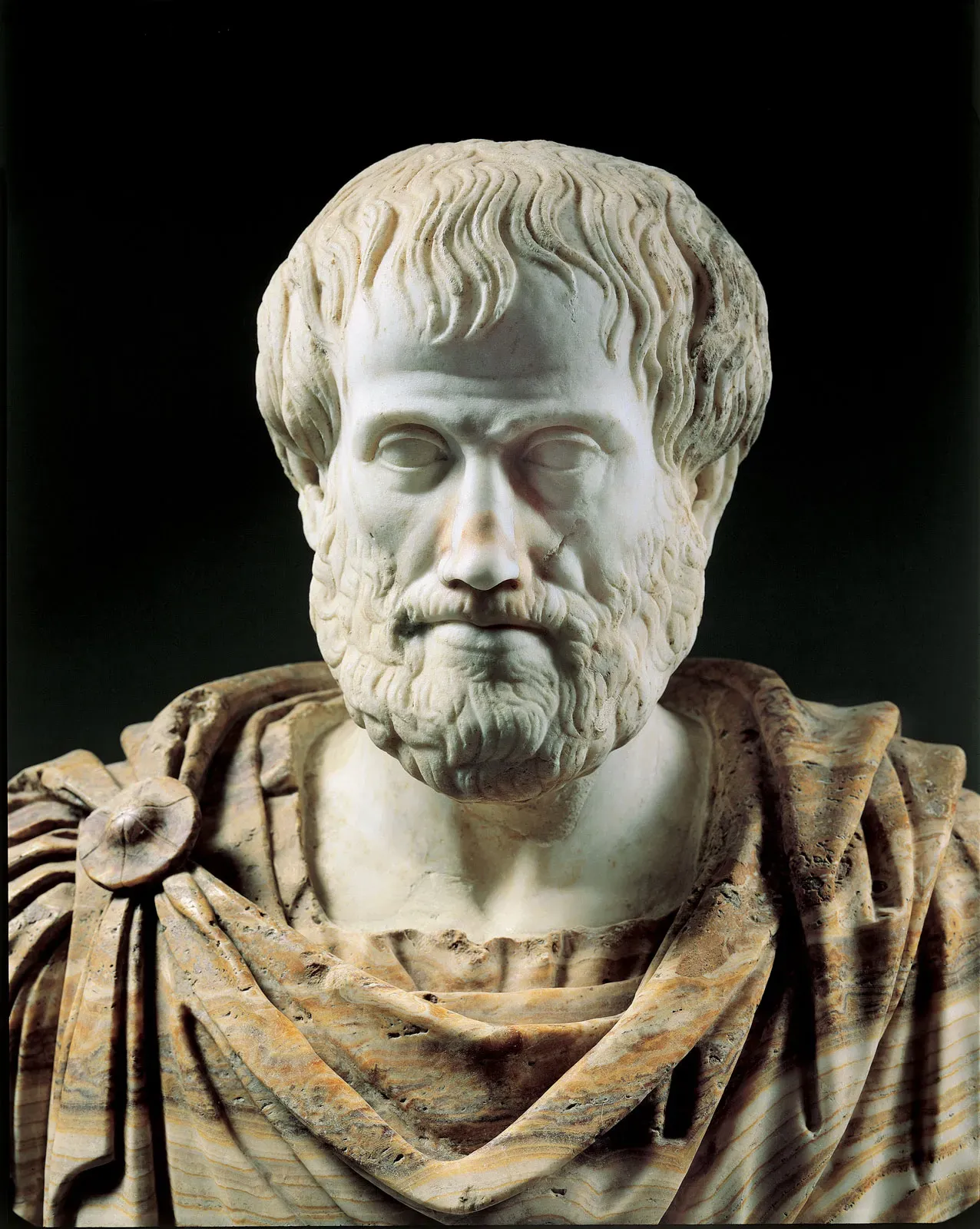
Aristotle was a philosopher whose lasting gift to mathematics was logic. His rules for valid reasoning, called syllogisms, shaped the way mathematicians build proofs.
Complete the syllogism: All humans are mortal. Socrates is human. Therefore…?
Reveal answer
Answer: Socrates is mortal.
Spot the flaw: “All squares are rectangles. This shape is a rectangle. Therefore it is a square.” Is that conclusion valid?
Reveal answer
Answer: No. A rectangle need not be a square, so the conclusion does not follow. It looks logical but the reasoning is broken.
6. Diophantus
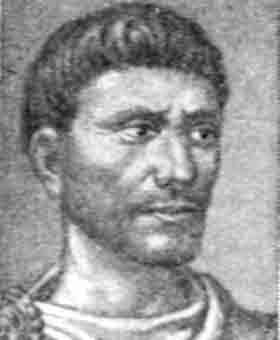
Known as the “Father of Algebra,” Diophantus wrote Arithmetica, a collection of problems solved with equations. Equations that ask only for whole-number solutions are still called Diophantine equations in his honour.
A Diophantine equation only accepts what kind of solutions?
Reveal answer
Answer: Whole numbers (integers).
Find whole numbers x and y so that x + y = 10 and x − y = 4.
Reveal answer
Answer: x = 7 and y = 3. (7 + 3 = 10 and 7 − 3 = 4.)
7. Eratosthenes
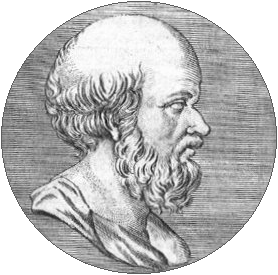
Eratosthenes measured the circumference of the Earth with remarkable accuracy using shadows and geometry. He also gave us the Sieve of Eratosthenes, a simple method for finding prime numbers.
The Sieve of Eratosthenes is a quick way to find which numbers?
Reveal answer
Answer: Prime numbers.
Write the numbers 2 to 20. Cross out every multiple of 2 (after 2), then every multiple of 3 (after 3). Which numbers survive?
Reveal answer
Answer: 2, 3, 5, 7, 11, 13, 17, 19 — all the primes up to 20. You just ran the Sieve of Eratosthenes.
8. Hipparchus
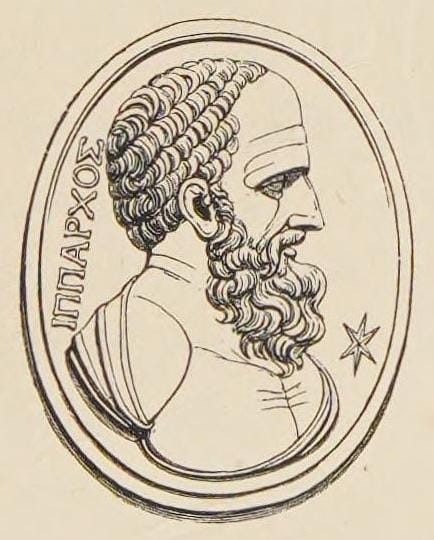
Hipparchus is regarded as the founder of trigonometry. He built the first known table of chords, the ancestor of the sine table, and used it to study the motion of the Sun and Moon.
In a right triangle, the sine of an angle equals the opposite side divided by what?
Reveal answer
Answer: The hypotenuse.
In a right triangle the side opposite an angle is 3 and the hypotenuse is 5. What is the sine of that angle?
Reveal answer
Answer: 3/5 = 0.6.
9. Hero of Alexandria
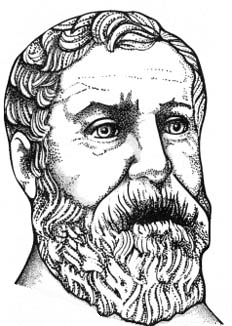
Hero of Alexandria gave us Heron’s formula, which finds the area of a triangle from the lengths of its three sides alone. He also described a step-by-step method for approximating square roots that survives, in modified form, in computers today.
Heron’s formula lets you find a triangle’s area using only its three what?
Reveal answer
Answer: Side lengths.
A triangle has sides 3, 4, and 5, so its half-perimeter s = 6. Heron’s formula: area = √(s(s−a)(s−b)(s−c)). What is the area?
Reveal answer
Answer: 6, because √(6 × 3 × 2 × 1) = √36 = 6.
10. Ptolemy
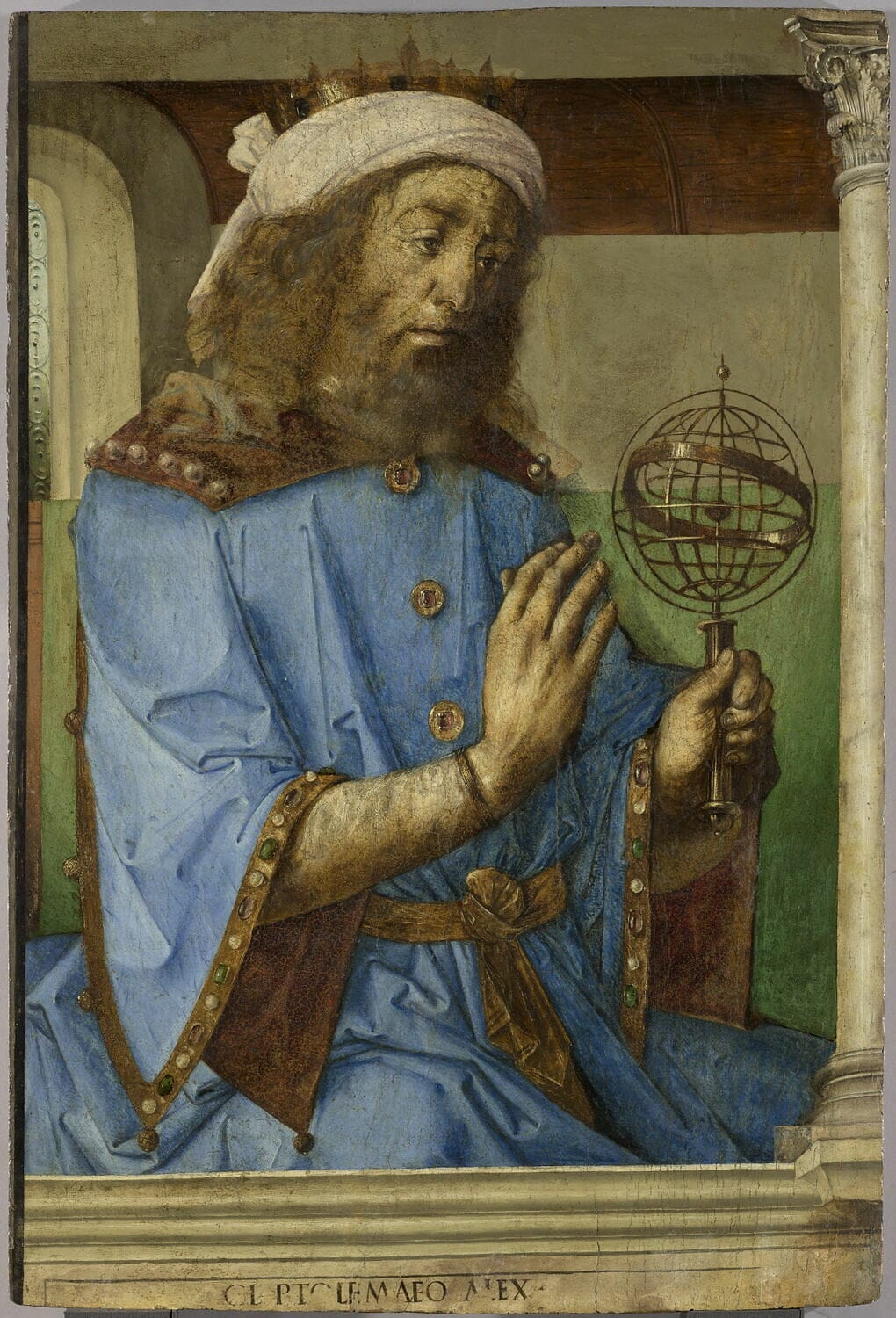
Ptolemy was an astronomer and mathematician whose great treatise, the Almagest, contained a detailed table of chords. Ptolemy’s theorem, about the sides and diagonals of a four-sided shape inscribed in a circle, is named after him.
Ptolemy’s theorem describes a four-sided shape whose corners all lie on a circle. What is such a shape called?
Reveal answer
Answer: A cyclic quadrilateral.
A rectangle (a cyclic quadrilateral) has sides 3 and 4. Both diagonals are equal — how long is each one?
Reveal answer
Answer: 5, because a diagonal splits it into a 3-4-5 right triangle (√(3² + 4²) = 5).
11. Xenocrates
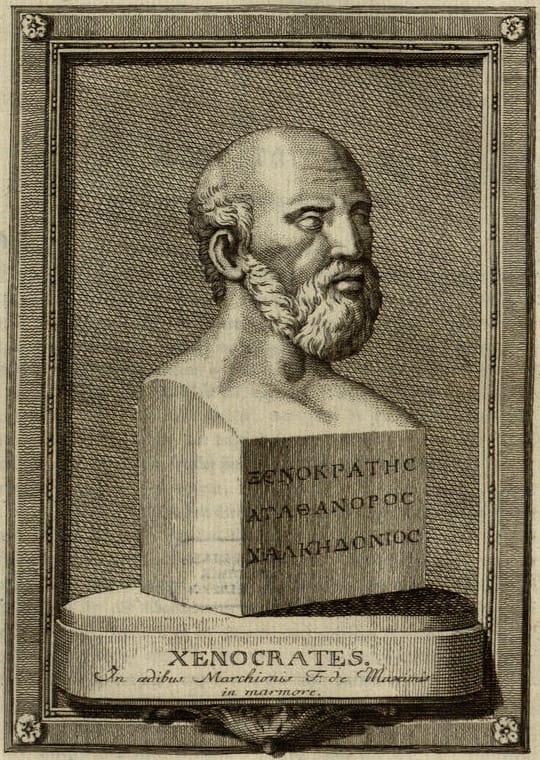
Xenocrates led Plato’s Academy and wrote widely on number and geometry. He is remembered for an early counting problem: he tried to work out how many syllables could be formed from the letters of the alphabet, an early brush with combinatorics.
How many different two-letter combinations can you make from a 3-letter alphabet if letters may repeat?
Reveal answer
Answer: 9, because 3 × 3 = 9.
Now how many different three-letter “words” can you build from a 2-letter alphabet (A, B), with repeats allowed?
Reveal answer
Answer: 8, because 2 × 2 × 2 = 8.
12. Anaxagoras
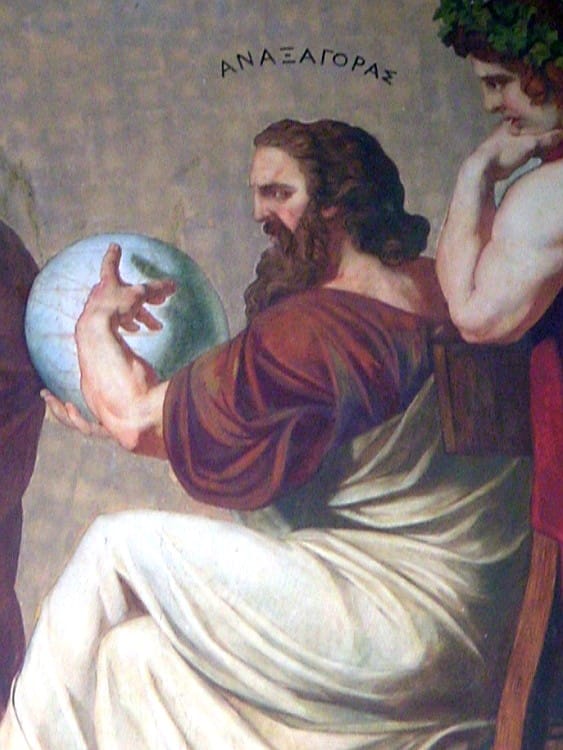
Anaxagoras was a mathematician and astronomer who correctly explained that eclipses happen when one body blocks the light of another. While imprisoned, he worked on the famous problem of “squaring the circle.”
“Squaring the circle” means building a square with the same what as a given circle?
Reveal answer
Answer: Area.
A square must match the area of a circle with radius 2 (area = 4π ≈ 12.57). About how long is the square’s side?
Reveal answer
Answer: About 3.5, because √12.57 ≈ 3.55.
13. Hypatia
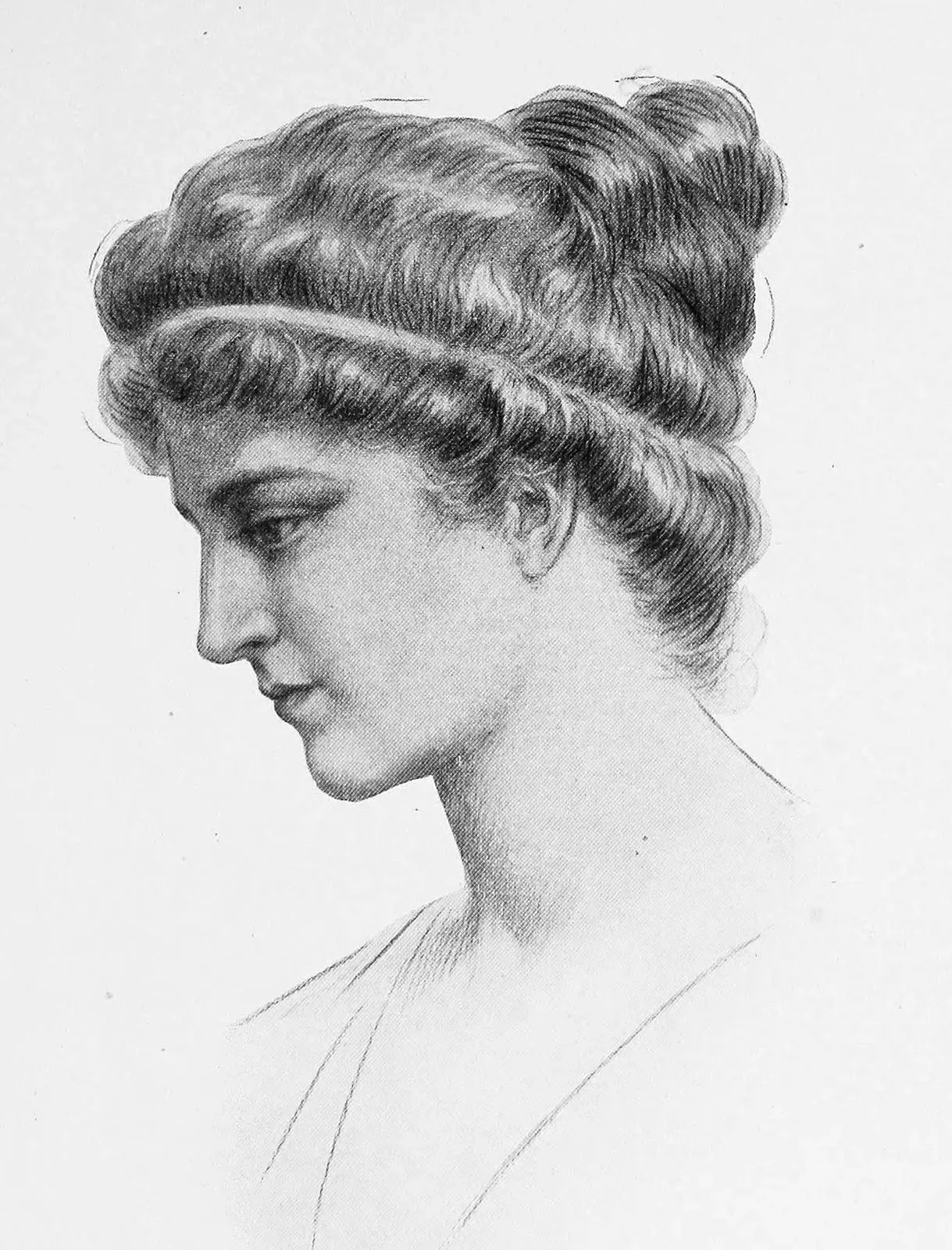
Hypatia is the first woman mathematician whose work and life are well documented. Teaching in Alexandria, she wrote commentaries on algebra and on conic sections and became a lasting symbol for women in mathematics and science.
Slicing a cone with a flat plane produces curves such as the ellipse, parabola, and hyperbola. What are these curves called as a group?
Reveal answer
Answer: Conic sections.
Which conic section do you get when you slice a cone straight across, parallel to its base?
Reveal answer
Answer: A circle.
14. Antiphon
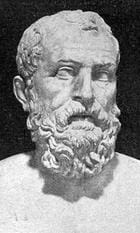
Antiphon was among the first to estimate the area of a circle by drawing polygons inside and outside it, then adding more and more sides. This idea foreshadowed the method of exhaustion and, much later, integral calculus.
To close in on a circle’s area, Antiphon kept increasing the number of what on his polygons?
Reveal answer
Answer: Sides.
A regular polygon drawn inside a circle, with more and more sides, gets closer and closer to what shape?
Reveal answer
Answer: The circle itself — the seed of the idea behind calculus.
15. Diocles
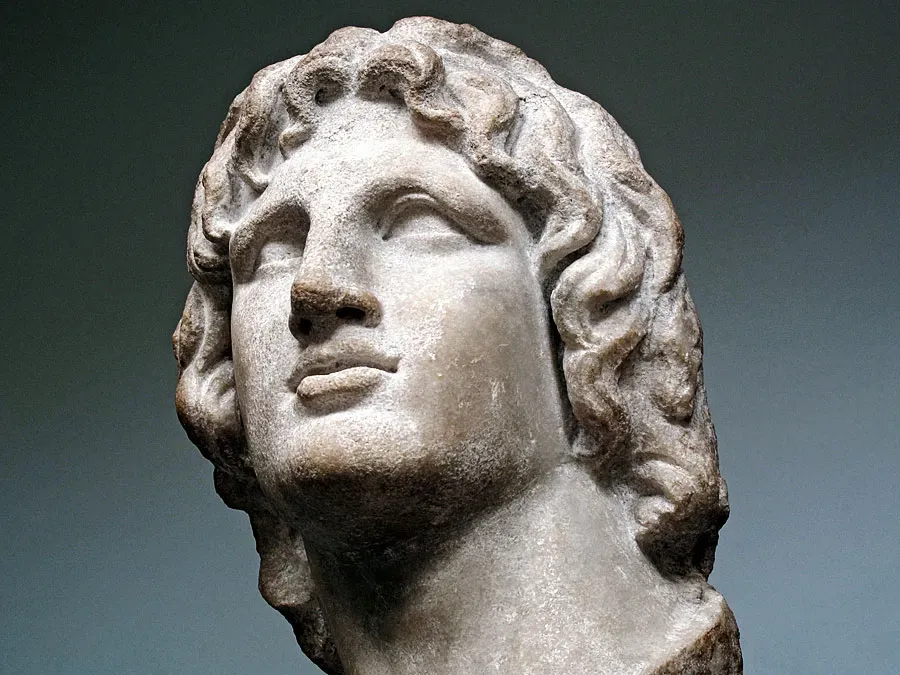
Diocles was a gifted geometer who discovered a curve now called the Cissoid of Diocles. He used it to attack the ancient challenge of “doubling the cube.”
“Doubling the cube” asks you to build a new cube with double the original’s what?
Reveal answer
Answer: Volume.
A cube of side 2 has volume 8. To “double the cube” you need volume 16. Does a cube of side 4 work?
Reveal answer
Answer: No — side 4 gives volume 64. You actually need side = ∛16 ≈ 2.52, which is why this puzzle stumped the Greeks.
Add up how many of the 30 questions above you got right:
- 25–30: You would have held your own in Plato’s Academy.
- 18–24: Sharp — a few more puzzles and you’re there.
- 10–17: Solid start. The games below will push your score up fast.
- Under 10: Perfect — that means there is a lot of fun still ahead.
What about famous Indian mathematicians?
These fifteen thinkers, mostly from ancient Greece, laid the foundations that every later mathematician built on. But the story is far bigger than Greece. India produced some of the most influential mathematicians in history — here are four worth knowing, with a trivia question for each. Prefer to keep practising hands-on? Cuemath’s free worksheets and the Cuemath app’s daily brain-boosters are open to everyone, no sign-up needed.
Aryabhata (476–550 CE)
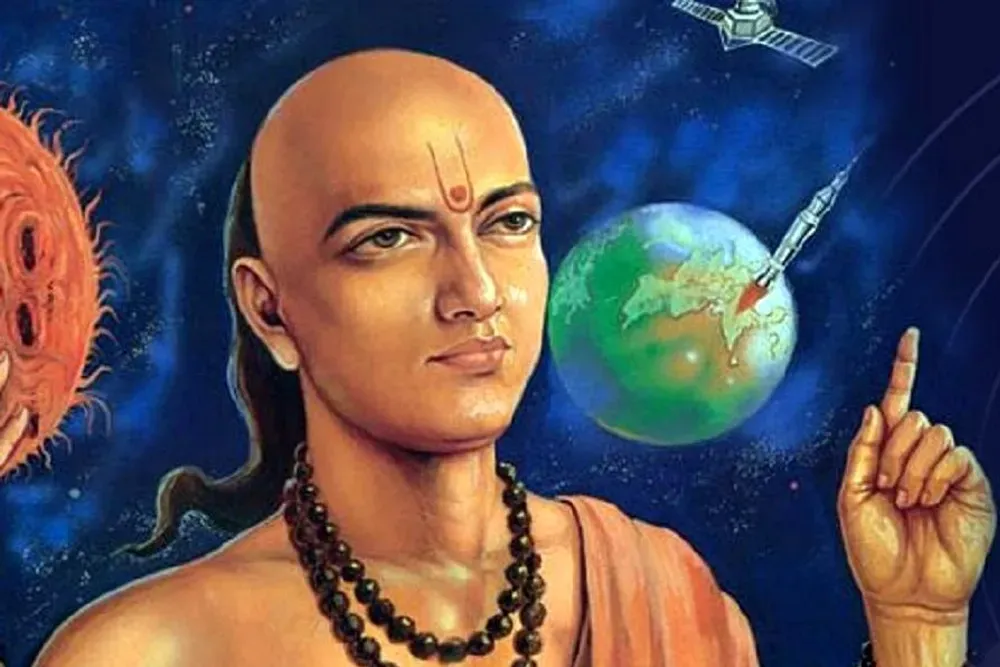
Aryabhata gave the world an early place-value system and a symbol for nothing, and he approximated pi as 3.1416 more than a thousand years ago.
Aryabhata’s work helped popularise a number that acts as a placeholder and made our whole number system possible. What is it?
Reveal answer
Answer: Zero (and place value).
Brahmagupta (598–668 CE)
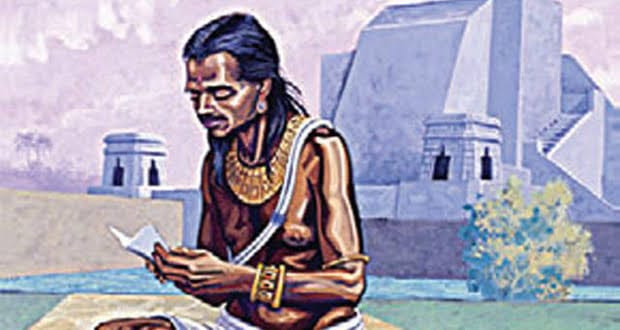
Brahmagupta wrote the first clear rules for working with zero and with negative numbers, and gave a formula for the area of a cyclic quadrilateral.
Brahmagupta wrote the first clear arithmetic rules for which numbers, the ones that sit to the left of zero on a number line?
Reveal answer
Answer: Negative numbers.
Srinivasa Ramanujan (1887–1920)
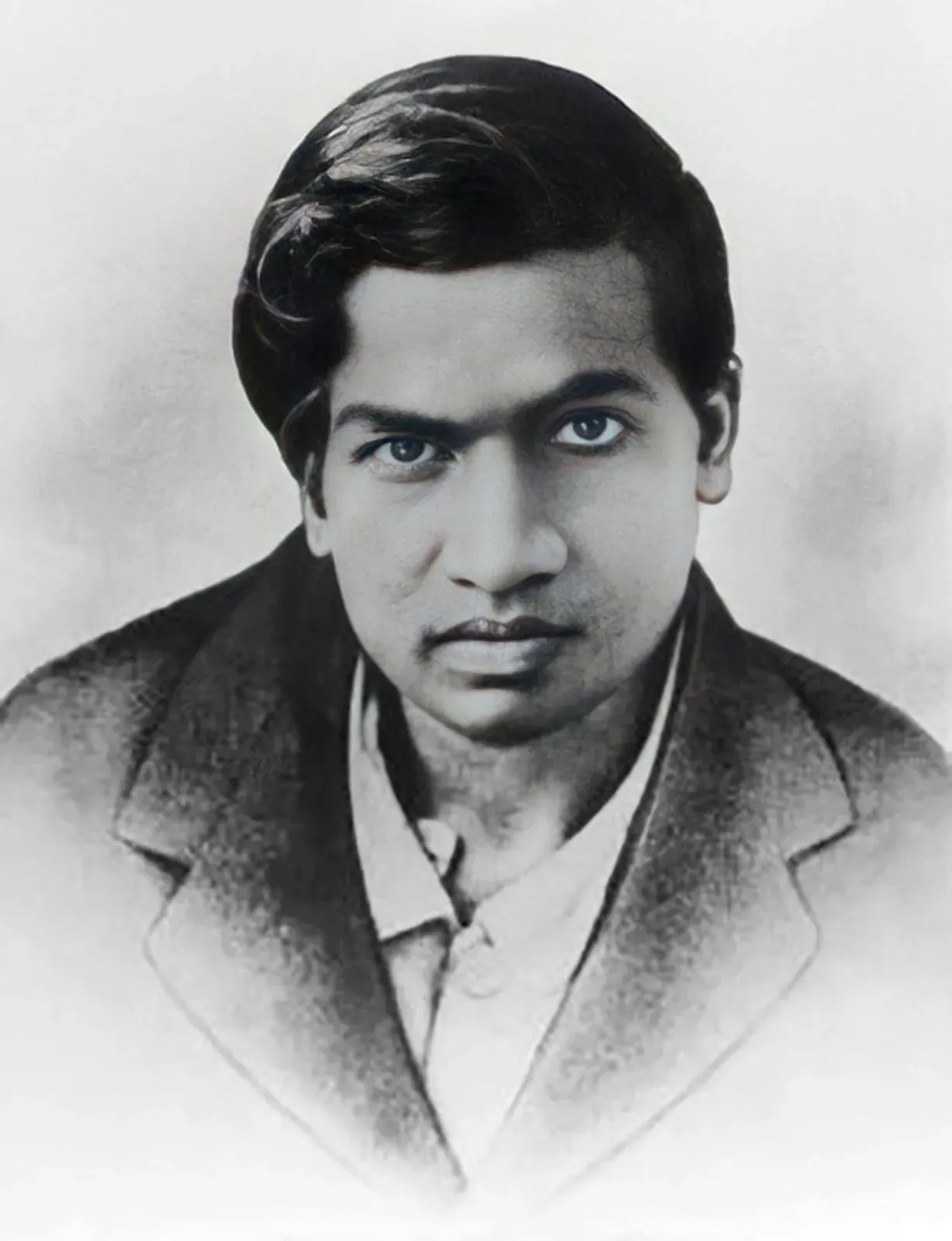
A largely self-taught genius, Ramanujan produced thousands of results in number theory, infinite series, and partitions in a very short life.
1729 is the “Ramanujan number”: the smallest number that is a sum of two cubes in two ways. 1729 = 1³ + 12³ = ? + ?
Reveal answer
Answer: 9³ + 10³, because 729 + 1000 = 1729.
Shakuntala Devi (1929–2013)

Known as the “human computer,” Shakuntala Devi performed astonishing mental calculations, once multiplying two 13-digit numbers in 28 seconds.
Shakuntala Devi could out-calculate machines in her head. Her famous nickname was the “human ___”?
Reveal answer
Answer: Computer.
Every one of these mathematicians, from Euclid to Ramanujan, began exactly where your child is now: curious about a single idea, and lucky enough to have someone help it make sense. To find a tutor who can do that for your child, compare the best online math tutoring platforms.