Student Success Tool (SST) Replaces STAAR from 2027: What's Different?
Texas is retiring the STAAR test after Spring 2027. Here's what House Bill 8's Student Success Tool changes for grades 3-8, when it starts, and how to help your child through the shift.


Last Updated: September 2026
If you have a child in grades 3 through 8, you may also have seen headlines about “HB 8” or the “Student Success Tool” without a clear explanation of what actually changes, when those changes begin, or whether your child’s spring testing routine is even affected this year.
The good news? Texas is making some big changes.
Beginning in the 2027–28 school year, the STAAR test for Grades 3–8 will be replaced with a new assessment system called the Student Success Tool (SST). Instead of relying on one high-stakes test at the end of the year, students will take shorter assessments throughout the school year, giving teachers and parents a better picture of how learning is progressing.
So, what does this mean for your family? Will your child still take state tests? Will testing become easier? And how will these changes help students succeed?
In this guide, we'll explain what's changing, why Texas is making the switch, and what parents should know to help their children feel confident and prepared.
- Spring 2027 is the final STAAR test for grades 3–8. After that, STAAR is retired for those grades.
- Texas House Bill 8, passed in September 2025, replaces STAAR with a new system called the Student Success Tool (SST), starting the 2027–28 school year.
- Instead of one high-stakes spring exam, SST uses three shorter, adaptive tests per year — Beginning-of-Year, Middle-of-Year, and End-of-Year.
- High school End-of-Course exams are changing too — the last STAAR EOC administration is December 2027, and the English II EOC is being removed, cutting required EOC exams from five to four.
- What students need to learn isn't changing — only how and when they're tested.
- What Is "Spring 2027" and Why Does It Matter?
- Why Is Texas Getting Rid of the STAAR Test?
- A Quick History of Texas State Testing (1980–2027)
- What Happens During the Spring 2027 STAAR Test
- What Replaces STAAR: The Student Success Tool (SST)
- STAAR vs. SST: What's Actually Different
- Full Timeline: STAAR to SST, Year by Year
- TEA's August 2026 HB 8 Update: New Resources and What's Coming
- What This Means for High School EOC Exams
- Benefits of the New Testing Model
- How to Help Your Child Through This Transition
- Frequently Asked Questions
What Is "Spring 2027" and Why Does It Matter?
In the context of Texas education, Spring 2027 refers to the spring testing season during the 2026–2027 school year — typically occurring between March and May 2027, when statewide assessments are administered. That part isn't new; Texas has run a spring testing window for years.
What makes this particular spring different is House Bill 8 (HB 8), passed by the 89th Texas Legislature during its 2nd Called Session in September 2025.
HB 8 introduces significant changes to the Texas Assessment Program starting with the 2027–28 school year, replacing STAAR with a new instructionally supportive assessment program for grades 3–8, expected to be called the Student Success Tool (SST).
Spring 2027 is the last checkpoint before that changeover — the final year grades 3–8 students sit for the STAAR exam as it currently exists.
Why Is Texas Getting Rid of the STAAR Test?
STAAR has served as Texas' primary standardized testing program since 2012, used to measure academic achievement and hold schools accountable. But over more than a decade, educators, parents, and policymakers have raised recurring concerns about the format itself, not just the content it tests.
Common concerns cited in the lead-up to HB 8 include:
- Heavy emphasis on a single annual test
- Limited instructional feedback during the school year
- Delayed reporting of assessment results — often weeks or months later
- Increased testing anxiety tied to one high-pressure day
- Limited opportunities for teachers to adjust instruction based on assessment data before the year ends
HB 8 is Texas' answer to those concerns: a system built around continuous, through-year feedback rather than a single end-of-year snapshot.
A Quick History of Texas State Testing (1980–2027)
Texas has redesigned its statewide accountability test several times over the past four decades — Spring 2027 is simply the next entry in that pattern, not a one-off disruption.
| Test | Introduced | What It Was |
|---|---|---|
| TABS | 1980 | The first statewide basic skills assessment |
| TEAMS | Mid-1980s | Required students to pass in order to graduate |
| TAAS | 1990 | Replaced TEAMS with a broader assessment |
| TAKS | 2003 | Measured curriculum understanding; added end-of-course exams |
| STAAR | 2012 | Current test for grades 3–8 and high school EOC exams — final grades 3–8 use in Spring 2027 |
| SST | 2027–28 | New adaptive, through-year model — BOY, MOY, EOY assessments |
Source: Texas Education Agency
What Happens During the Spring 2027 STAAR Test
For families with a child currently in, or about to enter, grades 3 through 8, Spring 2027 works exactly like previous STAAR administrations. Students will take the STAAR exam during the standard spring testing window, and the 2026–2027 school year continues under the current STAAR system in full.
The only thing that's different is what comes next: after the Spring 2027 administration, STAAR will no longer be used for grades 3–8. There's no need to prepare your child differently for this specific test — the format, content, and expectations remain the same as previous years.
What Replaces STAAR: The Student Success Tool (SST)
The Student Success Tool (SST) is Texas' new statewide assessment system for students in grades 3 through 8. Instead of one end-of-year exam, SST uses multiple adaptive assessments spread across the school year, designed to measure progress over time rather than performance on a single testing day.
The law directs the state to build an instructionally supportive statewide assessment program that provides for progress monitoring, is balanced, innovative, and streamlined, and is based on the essential knowledge and skills adopted by the State Board of Education. In practice, that means three testing windows instead of one:
- Beginning-of-Year (BOY) — establishes a baseline, identifies learning gaps carried over from the previous year, and helps teachers plan instruction from day one.
- Middle-of-Year (MOY) — measures progress mid-year, evaluates how well instruction is working, and flags students who need extra support before the year ends.
- End-of-Year (EOY) — measures mastery of grade-level standards and feeds into statewide accountability, but is only one part of the year's overall assessment picture, not the entire picture.
All three assessments are computer-adaptive: questions get harder when a student answers correctly and easier when they need more support, which generally means shorter testing sessions and a more accurate read on where a student actually stands.
STAAR vs. SST: What's Actually Different
| STAAR (current, through Spring 2027) | SST (starting 2027–28) | |
|---|---|---|
| Tests per year | 1 | 3 (BOY, MOY, EOY) |
| Format | Fixed-form, single sitting | Computer-adaptive |
| Result turnaround | Weeks to months | Faster, more frequent reporting |
| Main purpose | Primarily accountability | Accountability + ongoing instructional support |
| Pressure on students | Concentrated on one high-stakes day | Spread across three shorter checkpoints |
Full Timeline: STAAR to SST, Year by Year
| School Year | What Happens |
|---|---|
| 2025–2026 | STAAR continues as normal. TEA develops the SST; district planning and pilot activities continue. |
| 2026–2027 | STAAR continues for grades 3–8. Spring 2027 is the final STAAR administration for grades 3–8. Preparation for statewide SST implementation continues. |
| 2027–2028 | The Student Success Tool officially replaces STAAR for grades 3–8. BOY, MOY, and EOY assessments begin. The final STAAR End-of-Course exam is given in December 2027. Updated accountability measures take effect. |
TEA's August 2026 HB 8 Update: New Resources and What's Coming
TEA's most recent HB 8 communication, sent to Texas school systems on August 20, 2026, builds on the timeline above with three practical updates: new planning resources for teachers, a note for districts that use a non-TEA BOY/MOY test, and the first required field test students will sit before SST officially launches.
New SST Planning Resources
TEA has posted several new materials on the House Bill 8 webpage, all aligned to the Texas Essential Knowledge and Skills (TEKS):
- Assessment Blueprints — finalized documents showing how SST questions are distributed across standards, to support curriculum and instructional planning.
- Scoring Rubrics — for select item types, showing how student responses will be evaluated.
- Reporting Prototype Examples — sample BOY and MOY score reports showing how a student's results may look to teachers. TEA is collecting stakeholder feedback on these before finalizing the format.
- Range Performance Level Descriptors (RPLDs) — arriving winter 2027, these break each tested standard into a skill-by-skill progression across performance levels (TEA's published examples cover a Grade 6 math standard and a Grade 8 science standard). RPLDs will appear directly inside SST score reports, along with suggested next steps based on a student's estimated ability level.
If Your District Uses a Different BOY/MOY Test
February 2027 SST Stand-Alone Field Test
Before SST becomes Texas's official statewide assessment in 2027–28, TEA is running a required field test to gather data for building the real thing. It's scheduled for February 1–5, 2027, administered online, at select campuses only.
| Subject | Grades / Courses Covered |
|---|---|
| Mathematics | Grades 3–8, Algebra I |
| Reading Language Arts (RLA) | Grades 3–8, Spanish (grades 3–5), English I |
| Science | Elementary and middle school science, Biology |
| Social Studies | Grade 8 social studies, U.S. History |
Source: Texas Education Agency — HB 8 Update and Resources (August 2026)
Only campuses selected by TEA take part, and results are used solely to help build future SST questions — they aren't scored or reported as a student's grade. If your child's school is chosen, this is a test-development exercise, not a graded exam.
What This Means for High School EOC Exams
The transition also affects high school assessments, though on a different schedule than grades 3–8. According to the Texas Education Agency, December 2027 is scheduled to be the final administration of STAAR End-of-Course assessments for applicable subjects under the transition plan.
HB 8 also removes the English II EOC assessment beginning with the 2027–28 school year, reducing the number of required high school EOC exams from five to four. The remaining EOC assessments continue to play a role in graduation requirements and accountability, subject to further TEA implementation guidance.
Benefits of the New Testing Model
The Student Success Tool is designed to create a more balanced assessment experience for everyone involved — not just a policy change on paper.
| For | Potential Benefit |
|---|---|
| Students | Less pressure from one high-stakes day; multiple chances to show learning; earlier academic support |
| Teachers | Better instructional data; progress monitoring all year; earlier intervention opportunities |
| Parents | More frequent updates on progress; easier to spot learning gaps; clearer view of academic growth |
| School Districts | Continuous academic data; improved intervention planning; better alignment with classroom instruction |
Testing Changes. The Fundamentals Don't.
Whatever the assessment is called, students still need strong math fundamentals to succeed on it. Try a FREE Cuemath evaluation today.
Try a Free 1-on-1 Cuemath Evaluation200,000+ students • 11,000 Trustpilot reviews • 4.9+ rating • 80+ countries
How to Help Your Child Through This Transition
None of these changes affect what your child needs to learn — Texas curriculum standards remain the same. What's changing is the testing calendar and format, not the underlying math skills your child is expected to build. That means the best way to prepare is the same as it's always been: steady, year-round support, not last-minute cramming before any one test.
A few practical steps for families navigating this transition:
- Ask your child's school when and how it plans to roll out BOY, MOY, and EOY testing for the 2027–28 year.
- Don't change anything about how you're preparing for the Spring 2027 STAAR test itself — it runs exactly like prior years.
- Treat the first BOY assessment in 2027–28 as a fresh diagnostic, not a repeat of an old score.
- Keep building fundamentals at home year-round, regardless of what the assessment is called.
Interestingly, the philosophy behind the SST — frequent, adaptive checkpoints instead of one big annual score — is close to how Cuemath already tracks progress. Cuemath's MathFit Assessments generate a monthly MathFit Score on a 3–10 scale, broken down by section, so parents can see growth over time instead of waiting for one test date. It's one of a few resources worth having in place before any state testing transition:
Top Resources for Grades 3–8 Math Support
- Cuemath — 1-on-1 live tutoring focused on conceptual understanding, not just test-format drilling.
- Khan Academy — free, self-paced practice aligned to grade-level standards; good for independent review.
Why Parents Use Cuemath for This?
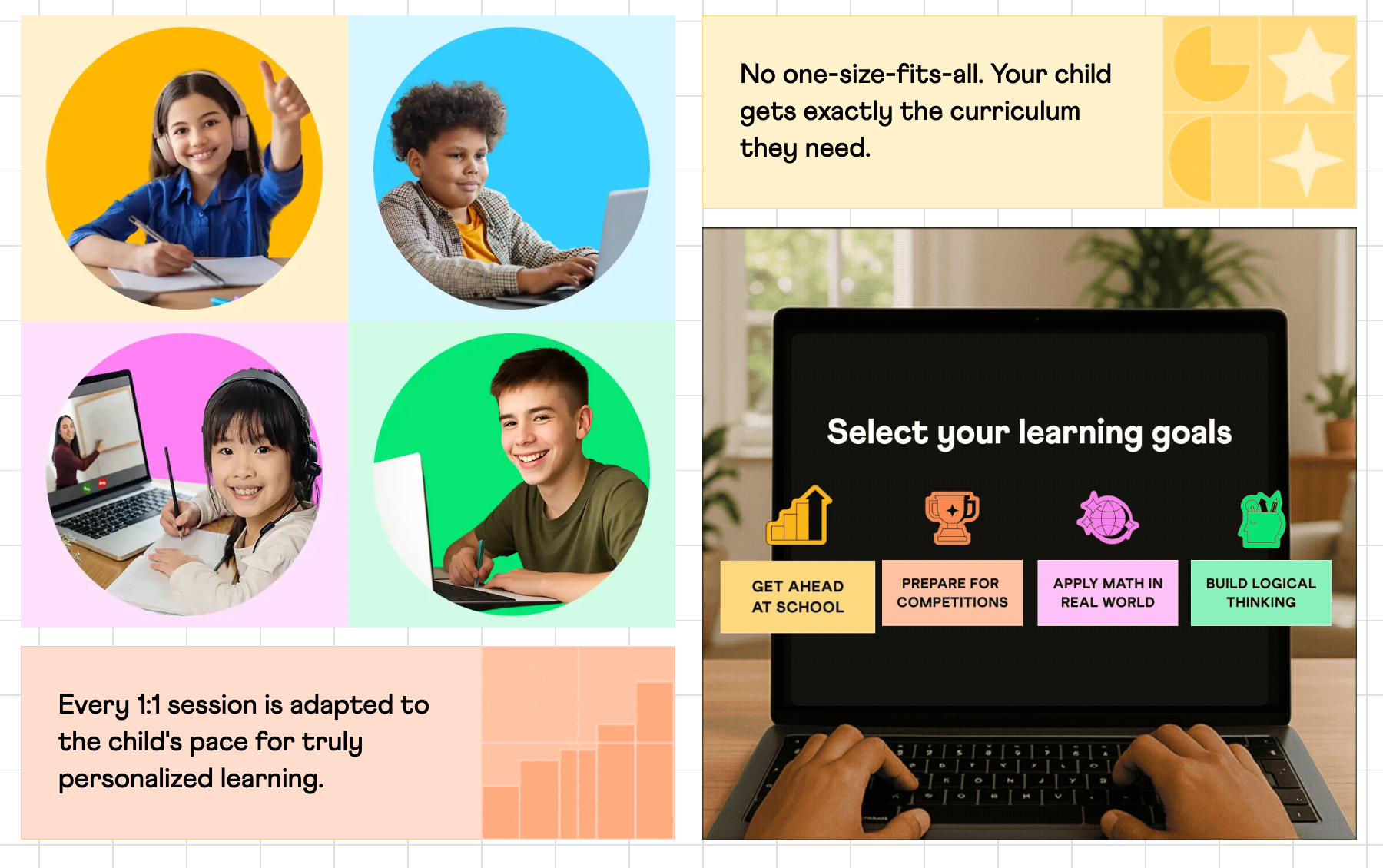
Cuemath pairs each student with a handpicked, certified tutor for live, 1-on-1 sessions built around that child's pace and gaps; not a fixed group curriculum. Lessons are aligned with Common Core and state standards, so the same instruction that closes a gap in class also builds the fundamentals any test, old or new, is trying to measure.
- Top 1% Global Tutors: The top 1% of teachers worldwide are background-checked and certified, and they consistently deliver quality instruction.
- 100% Personalized Classes: Lessons are customized to meet the goals, learning preferences, and speed of each kid.
- Concept-First Learning: This approach prioritizes comprehension and problem-solving above memorization.
- Curriculum-aligned: Supports state and Common Core requirements, helping with assignments and tests.
- Beyond Better Grades: Develops self-assurance, logical thinking, and practical math abilities for long-term success.
- Advanced Exam Prep: This helps students get ready for tests like Olympiads, AMC, SAT Math, and Math Kangaroo.
- Interactive learning Platform: A live Smart Whiteboard, gamified practice, and interesting exercises.
- Flexible Scheduling: This includes a risk-free trial, parent progress tracking, and simple class scheduling and rescheduling.
- Ongoing Parent Updates: Parents are kept up to speed on their child's educational path through regular progress reports.
Give Your Child a Head Start Before the SST Rollout
Build real math confidence now, so any assessment — STAAR, SST, or whatever comes next — is just a formality. Try a FREE Cuemath evaluation today.
Try a Free 1-on-1 Cuemath EvaluationFor Students in Grades K to 12 Worldwide
Frequently Asked Questions
What is Spring 2027 in Texas testing?
Spring 2027 is the spring testing season of the 2026–2027 Texas school year, typically running between March and May 2027, when statewide assessments are administered. It's significant because it marks the final year grades 3–8 students take the STAAR test before it's replaced by the Student Success Tool.
Is Spring 2027 the last STAAR test?
Spring 2027 is the last STAAR test for grades 3–8, but not for high school. Grades 3–8 STAAR ends after this administration, while the final STAAR End-of-Course exam for high school subjects is scheduled for December 2027.
What is the Student Success Tool (SST) in Texas?
The Student Success Tool (SST) is Texas' new statewide assessment system for grades 3–8, replacing STAAR starting in the 2027–28 school year. Instead of one annual exam, it uses three shorter, computer-adaptive assessments — Beginning-of-Year, Middle-of-Year, and End-of-Year — to track student progress throughout the year.
Why is Texas replacing the STAAR test?
Texas is replacing the STAAR test because of long-standing concerns about its reliance on a single high-stakes exam, slow score turnaround, and limited use for adjusting instruction during the school year. House Bill 8 redesigns the system around continuous, through-year feedback instead of one annual snapshot.
When does the Student Success Tool start in Texas?
The Student Success Tool starts in the 2027–28 school year, immediately after the final grades 3–8 STAAR administration in Spring 2027. Beginning-of-Year, Middle-of-Year, and End-of-Year assessments will roll out that year as STAAR is phased out for those grades.
What grades does the STAAR to SST transition affect?
The STAAR to SST transition primarily affects students in grades 3 through 8, since the Student Success Tool is designed for that grade range. High school students are affected differently, through changes to End-of-Course exams rather than a full switch to SST.
Will STAAR still be used for high school students after Spring 2027?
STAAR will still be used for high school End-of-Course exams after Spring 2027, but only through December 2027, which is the final scheduled STAAR EOC administration. After that, the number of required EOC exams drops from five to four, since the English II EOC is being removed.
What happens to STAAR End-of-Course (EOC) exams?
STAAR End-of-Course exams continue on their own timeline through December 2027, which is the last scheduled EOC administration. Starting with the 2027–28 school year, the English II EOC is eliminated, reducing the required high school EOC exams from five to four, while the remaining exams still count toward graduation and accountability requirements.
How is the SST different from the STAAR test?
The SST is different from the STAAR test in three main ways: it replaces one annual exam with three shorter assessments per year, it's computer-adaptive rather than a fixed-form test, and it's designed to provide faster, more frequent feedback rather than one delayed year-end score.
Is the SST test adaptive?
Yes, the SST test is computer-adaptive, meaning the difficulty of questions adjusts based on how a student answers in real time. Students who answer correctly receive more challenging questions, while students needing more support receive questions matched to their current skill level, which generally shortens testing time and improves accuracy.
How many assessments will students take under the SST model?
Students will take three assessments under the SST model each school year: Beginning-of-Year (BOY), Middle-of-Year (MOY), and End-of-Year (EOY). This replaces the single annual STAAR exam that grades 3–8 students currently take each spring.
What is House Bill 8 in Texas?
House Bill 8 (HB 8) is legislation passed by the 89th Texas Legislature during its 2nd Called Session in September 2025 that redesigns the Texas Assessment Program. It replaces STAAR with the Student Success Tool for grades 3–8 starting in the 2027–28 school year and changes the structure of high school End-of-Course exams.
Do parents need to prepare differently for Spring 2027?
Parents do not need to prepare differently for Spring 2027 itself — the STAAR test runs the same way it has in recent years. What's worth preparing for is the following school year, 2027–28, when the Student Success Tool begins and testing shifts to three shorter checkpoints. Building steady, year-round math fundamentals — through school, practice, or a program like Cuemath — matters more than last-minute prep either way.
Where can parents find official updates about the STAAR to SST transition?
Parents can find official updates about the STAAR to SST transition directly from the Texas Education Agency, which publishes HB 8 assessment updates and FAQ documents as implementation details are finalized. Checking with your child's school district is also a reliable way to get timeline updates specific to your area.
Sources
- Texas Education Agency — Spring 2026 HB 8 Assessment Updates
- Texas Education Agency — HB 8 Update and Resources (August 2026)
- Texas Education Agency — HB 8 FAQs (Updated)
- Texas Education Agency — HB 8 Assessment Transition Explainer Video
- Texas Education Agency — Official Site
- Cuemath Reviews on Trustpilot

I was never the kid who loved math. I was much more interested in books, stories, and writing—and, somewhere along the way, I became even more curious about people. Why do we learn differently? Why does something make sense to one child but not another? And what makes a student feel confident enough to keep trying?
That curiosity led me to study Applied Psychology, where I learned more about how children think, learn, and make sense of the world around them.
My love for writing did the rest. What started as something I simply enjoyed became a career. Over the past five years, I've worked as a freelance writer across edtech, SaaS, B2B, travel, lifestyle, and healthcare, learning how to write for very different audiences without losing the human side of the story.
Today, I'm an SEO Content Writer & Editor at Cuemath, where I get to bring many of these interests together. Working in education—and especially around math—has made me even more curious about what happens behind the screen or textbook: what parents worry about, what students struggle with, and what actually helps them learn.
That's also how I like to research. I don't just look at search results and call it a day. I go where parents and students actually talk—forums, reviews, communities, and conversations with real families. Because sometimes the most useful insight isn't hiding in a keyword; it's in a parent's question, a student's frustration, or a small detail someone shares about their learning experience.
I write because I'm curious. I research because I want to understand. And I love turning what I learn into content that feels genuinely useful to the people reading it.