
In short
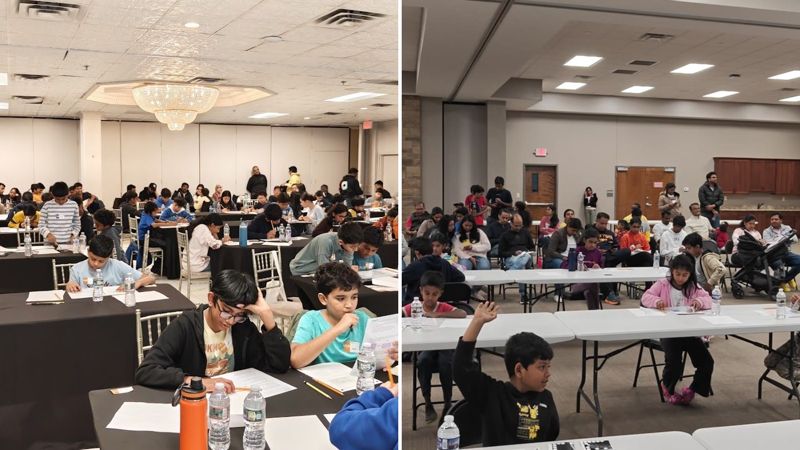
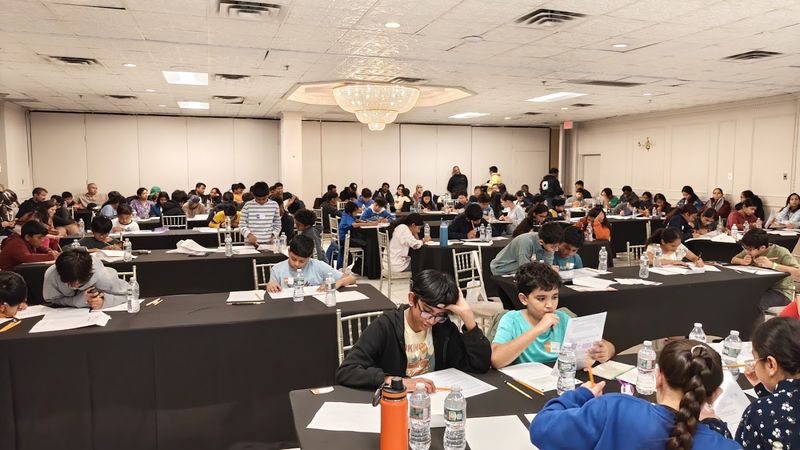
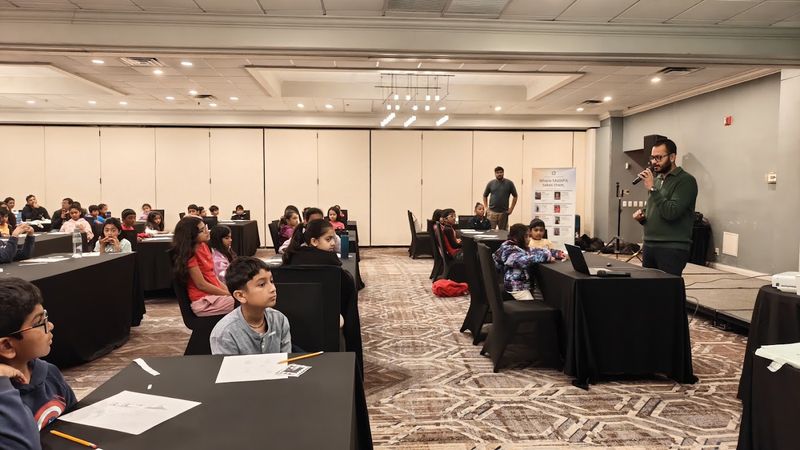
On Saturday, November 21, 2026, the MathFit Open came to Georgia for the first time, at the Cumming Event Center in Forsyth County. In the morning, 35 children in grades K-5 played the Junior. In the afternoon, 28 teams of middle schoolers played in pairs.
- 35K-5 children in the Junior
- 28teams of two in grades 6-8
- 56families played the parents' quiz
- 2ties settled live on stage
Junior gold went to Lux C. (K-1), Ayansh B. (grades 2-3, perfect score) and Yuvaan A. (grades 4-5). The grades 6-8 champions were Radioactive, VCMS and Gems of BayCreek.
Arrival and check-in
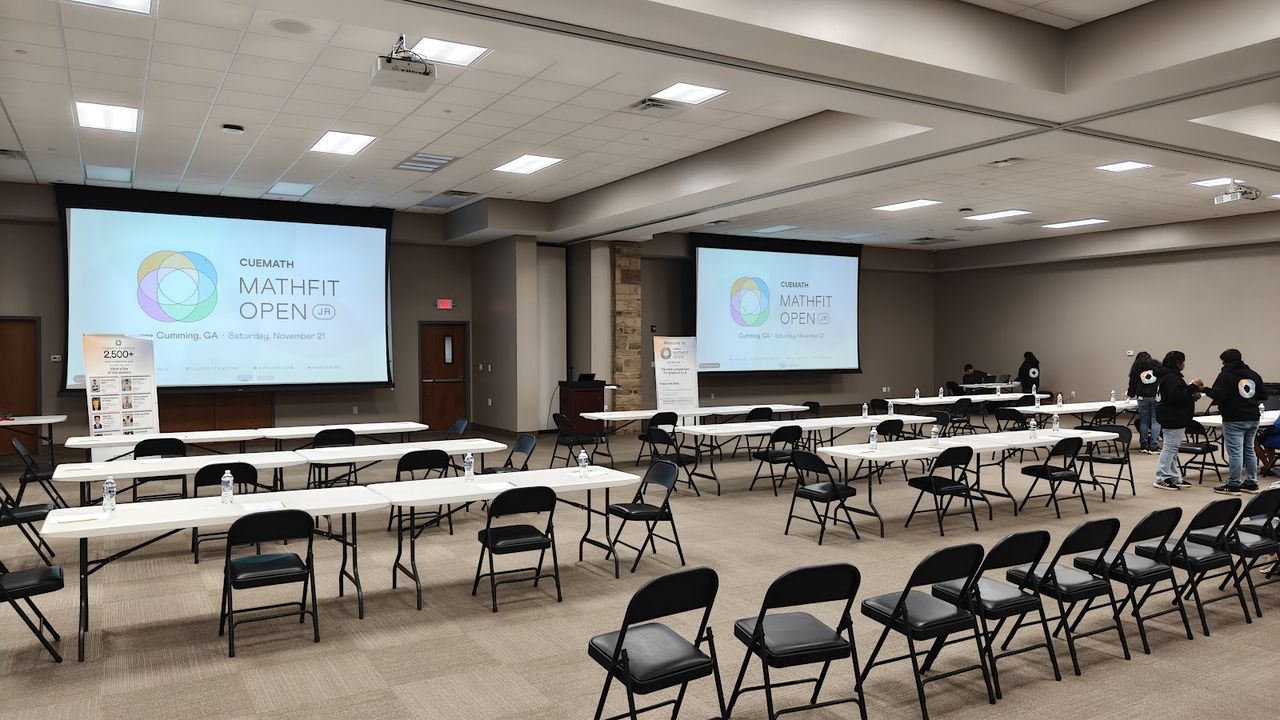
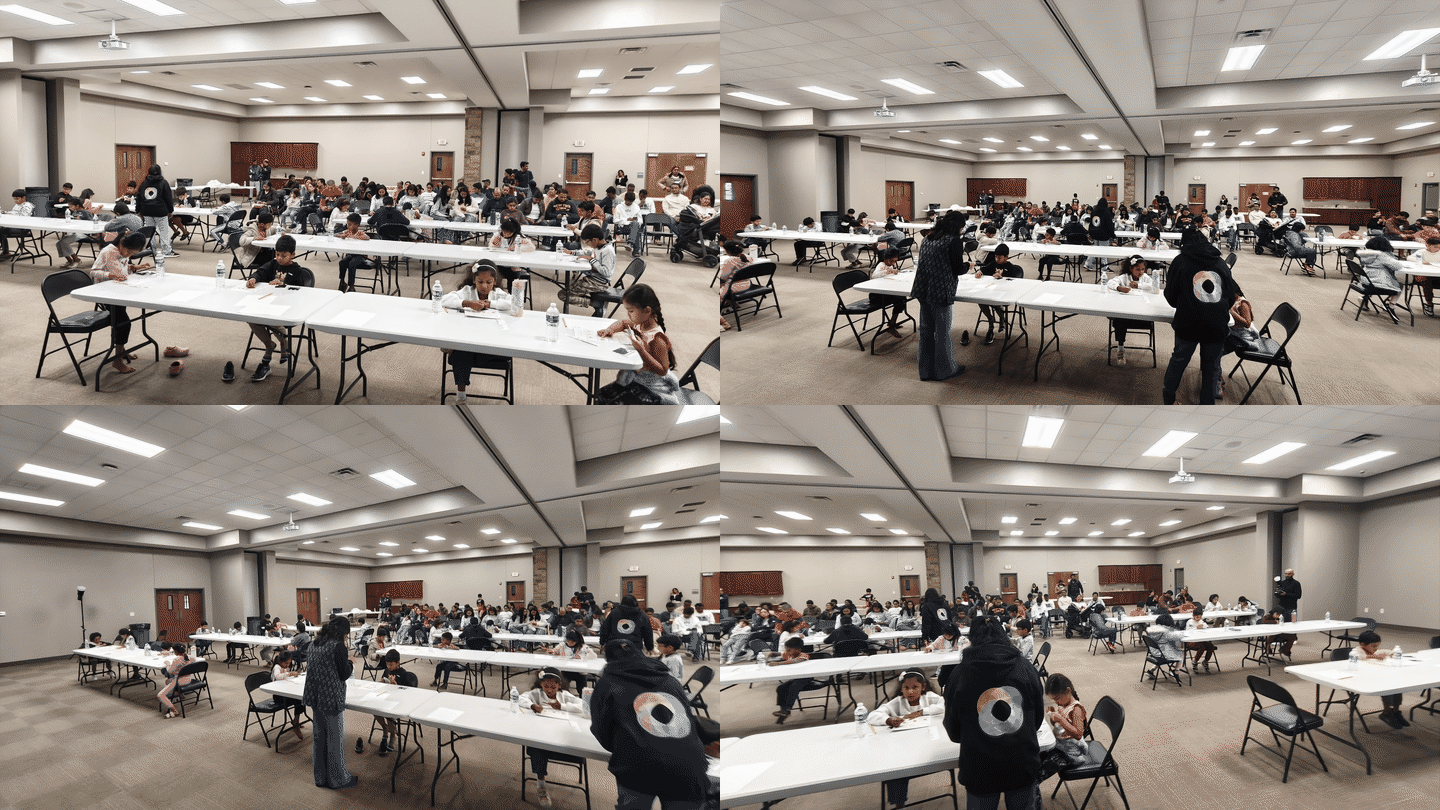
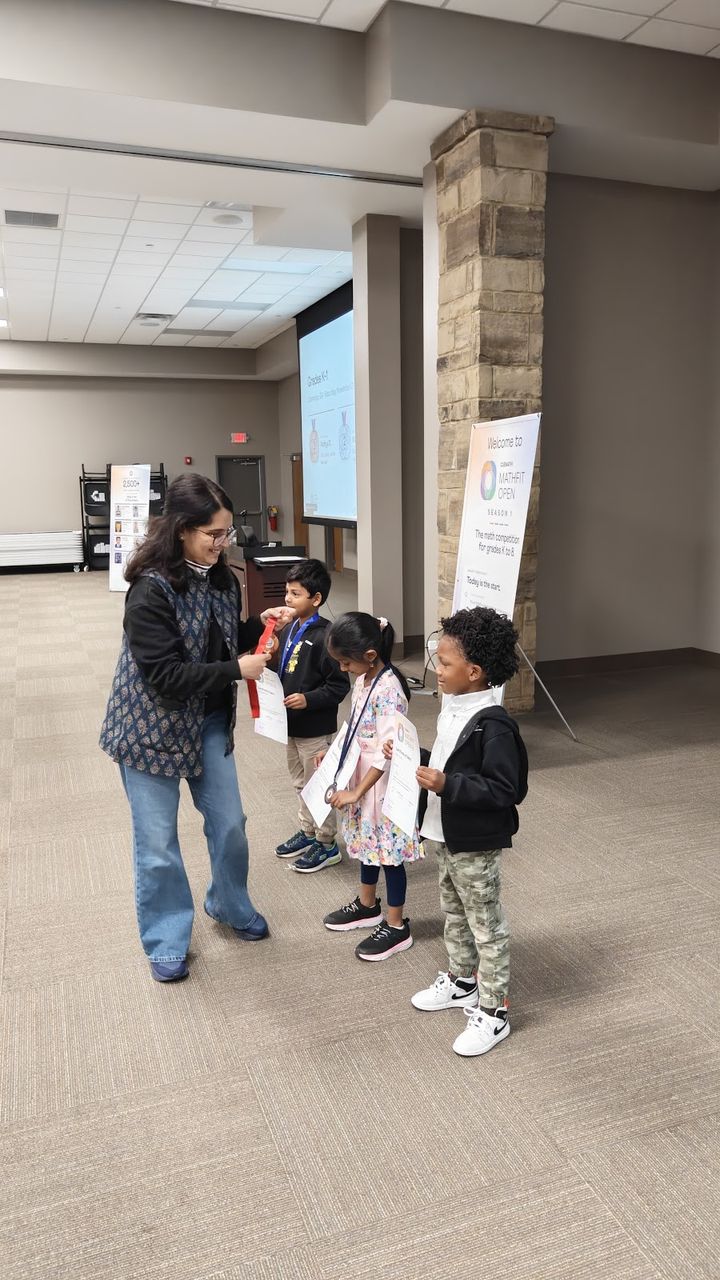
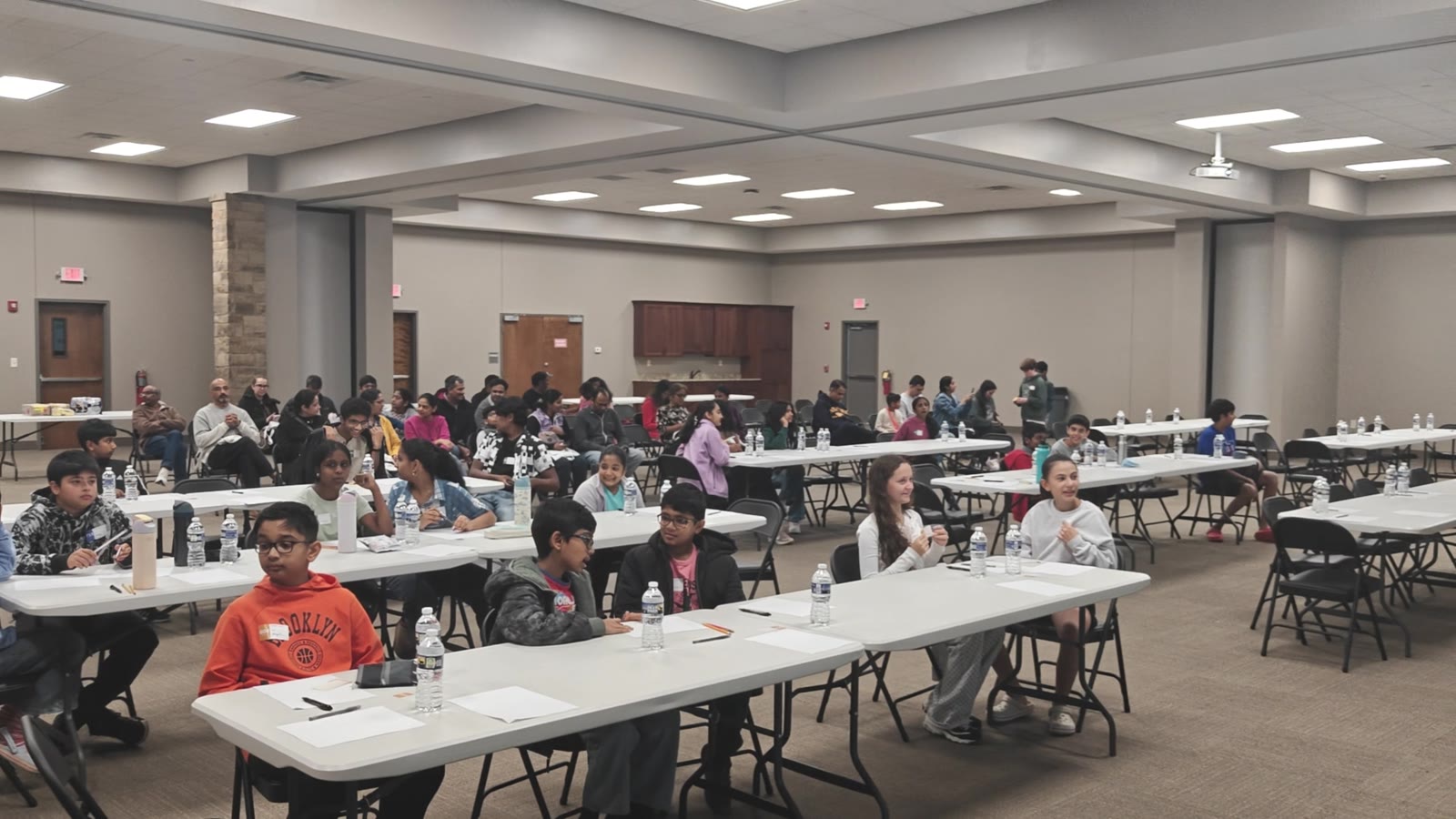
A week after New Jersey, this was the first MathFit Open room in Georgia. Families checked in at the door of the hall, where long white tables faced a big screen and a "Welcome to MathFit Open" banner stood at the front.
The Junior, round by round
Each child plays alone, ranked only against children in the same grades. Every question has three answers, and the child marks one with a black dot sticker.
- 1 · Number NinjaFluency · 50 points
Ten quick questions on number facts.
Room average 81%The best-scored round of the morning.
- 2 · Why WizardUnderstanding · 80 points
Eight questions on why an answer is right.
Room average 74%A step harder, steady across the three grade groups.
- 3 · Daily DetectiveApplication · 120 points
Six questions on math in real life.
Room average 68%Grades 2-3 did best here.
- 4 · Logic LegendReasoning · 150 points
Six puzzles and patterns, worth the most.
Room average 52%The hardest round, at about half marks. Lux C. in K-1 and Ayansh B. in grades 2-3 got all six.
Try one from each round
Four sample questions in the style of each round. Tap an answer.
What is 25 × 16?
25 is a quarter of 100, and 16 is four 4s. So 25 × 16 = 100 × 4 = 400.
Which is bigger: 3/4 or 4/5?
Both are one piece short of a whole, but a fifth is a smaller piece than a quarter. So 4/5 is closer to 1.
A 12-inch pizza costs $12. An 8-inch pizza costs $6. Which gives you more pizza for your money?
Pizza is an area, not a length. The 12-inch has 2.25 times the pizza of the 8-inch for only twice the price.
Five friends meet, and every friend shakes hands once with every other friend. How many handshakes?
Each of the 5 shakes 4 hands, which looks like 20. But every handshake was counted twice, once for each person: 10.
The tie-breaks on stage
A tie on points goes first to whoever did better in the last round, then the round before, and so on. Twice in Cumming, that wasn't enough.
- Grades K-1, silver and bronzeThree children finished on 345. Logic Legend separated one of them. Mokshith K. and Aadhya D. were level on every round, so they came to the front.
- Grades 4-5, silver and bronzeAadhya M. and Reiyaa S. finished on 355, level on every round, and came to the front.
On stage it was best of three questions. Hands go up after "Go", and the first hand answers. When both get a question right, it doesn't count and a new one goes up. Mokshith K. and Aadhya M. won silver; Aadhya D. and Reiyaa S. took bronze. Nobody's points changed, only the order.
What the room saw on the big screen
The Junior podium
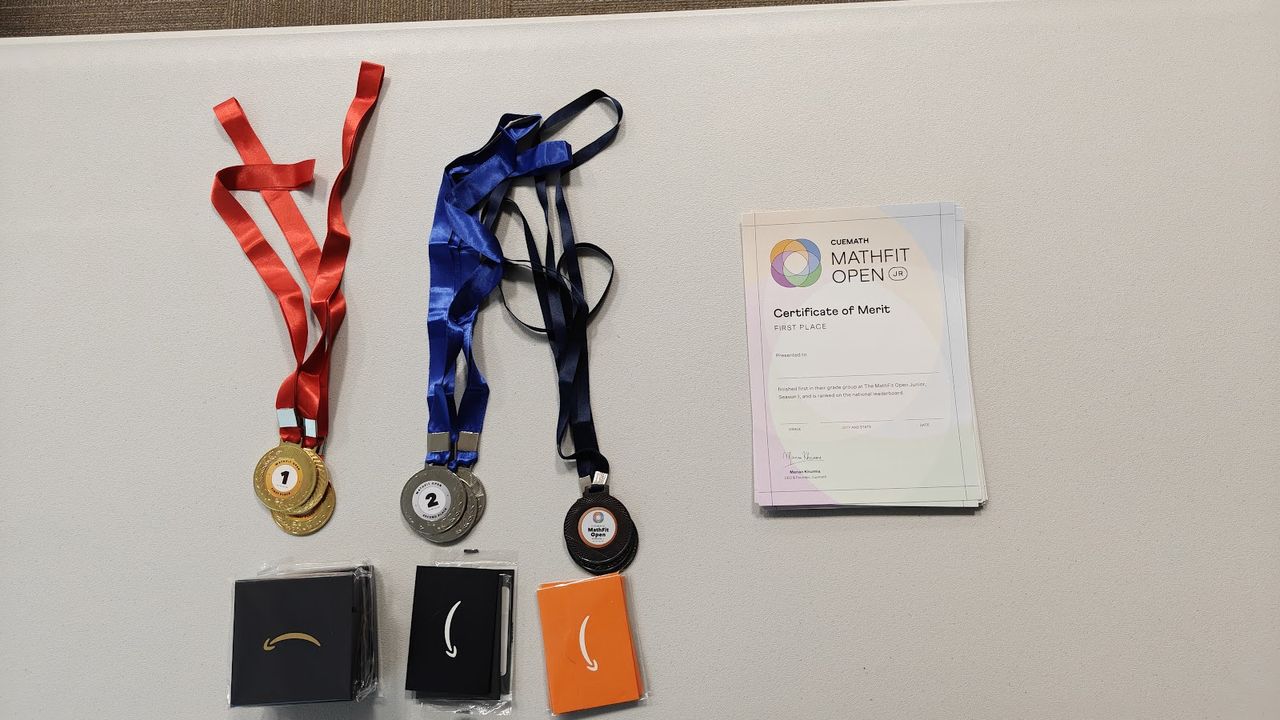
Ayansh B., in grades 2-3, got every question right in every round: 400 of 400. Lux C. won K-1 on 380 and Yuvaan A. won grades 4-5 on 370. The top three in each group got medals, and every child got a certificate.
Grades 6-8, round by round
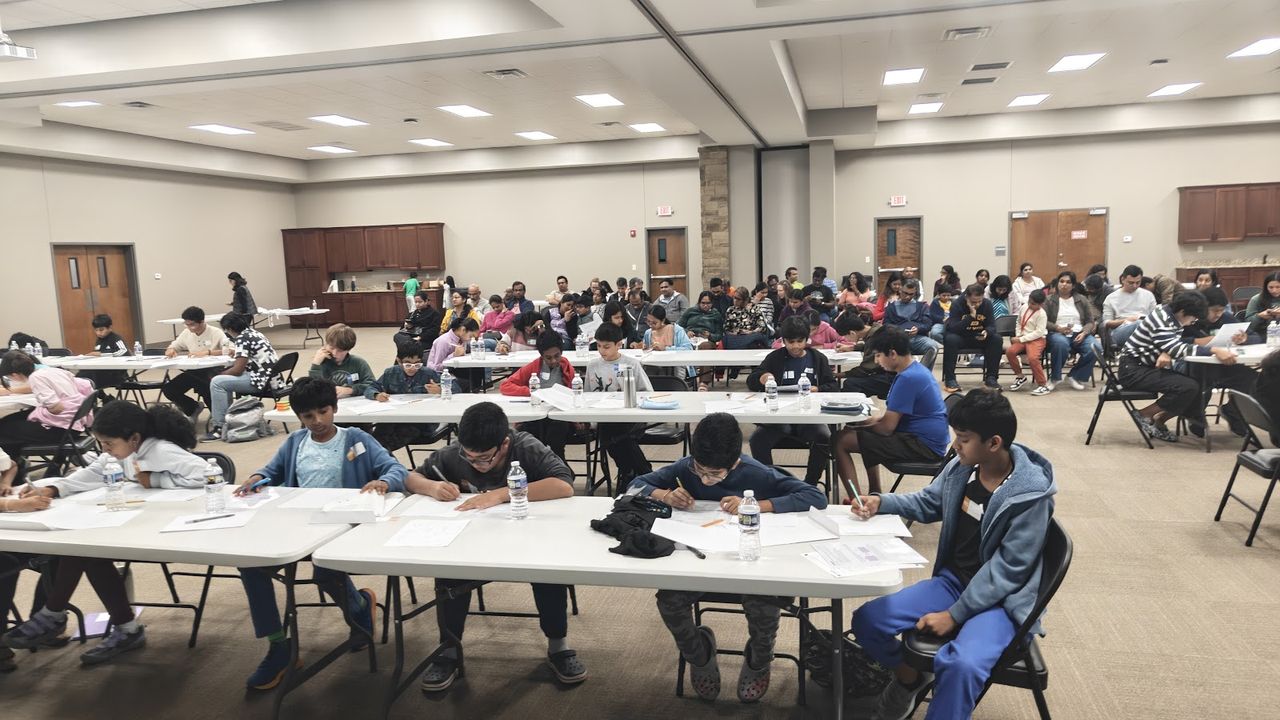
The afternoon was the middle school math competition: 28 teams of two, 10 in grade 6, 11 in grade 7 and 7 in grade 8.
- 1 · SprintFluency · 80 points
Sixteen calculations, split eight and eight between partners.
Room average 49%Radioactive and Team 601 in grade 6 both scored 80 of 80.
- 2 · JuryUnderstanding · 120 points
Twelve items: the answer is given, and the team picks the reason it is true.
Room average 59%The best-scored round of the afternoon. Team 708 in grade 7 got all twelve.
- 3 · CaseProblem solving · 160 points
Ten questions on real information, using evidence cards.
Room average 43%VCMS and Team 702, both in grade 7, got every Case question right.
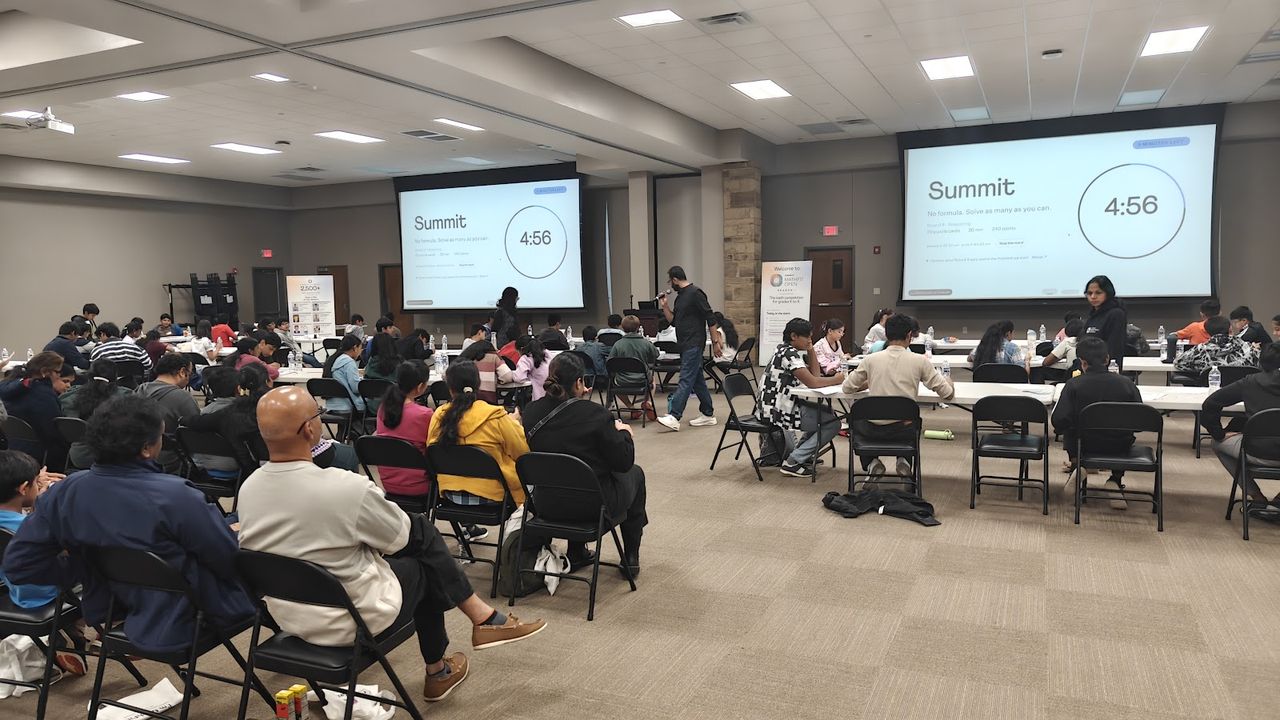
- 4 · SummitReasoning · 240 points
Twenty puzzle cards, no formula needed.
Room average 29%The hardest round. Radioactive scored 235 of 240 on it and won grade 6.
Scoring and the awards
Every answer is a number or a letter, so the sheets go through a scanner and are scored against the key. Staff check any handwriting it can't read. After each round, that round's stars go up on the big screen; the running total stays hidden. At the end, the host revealed the final board grade by grade, with medals for the top three teams and a certificate for everyone.
In grade 8, Keshav M. played without a teammate and took bronze for "Yengars!", a team of one.
What parents did during the rounds
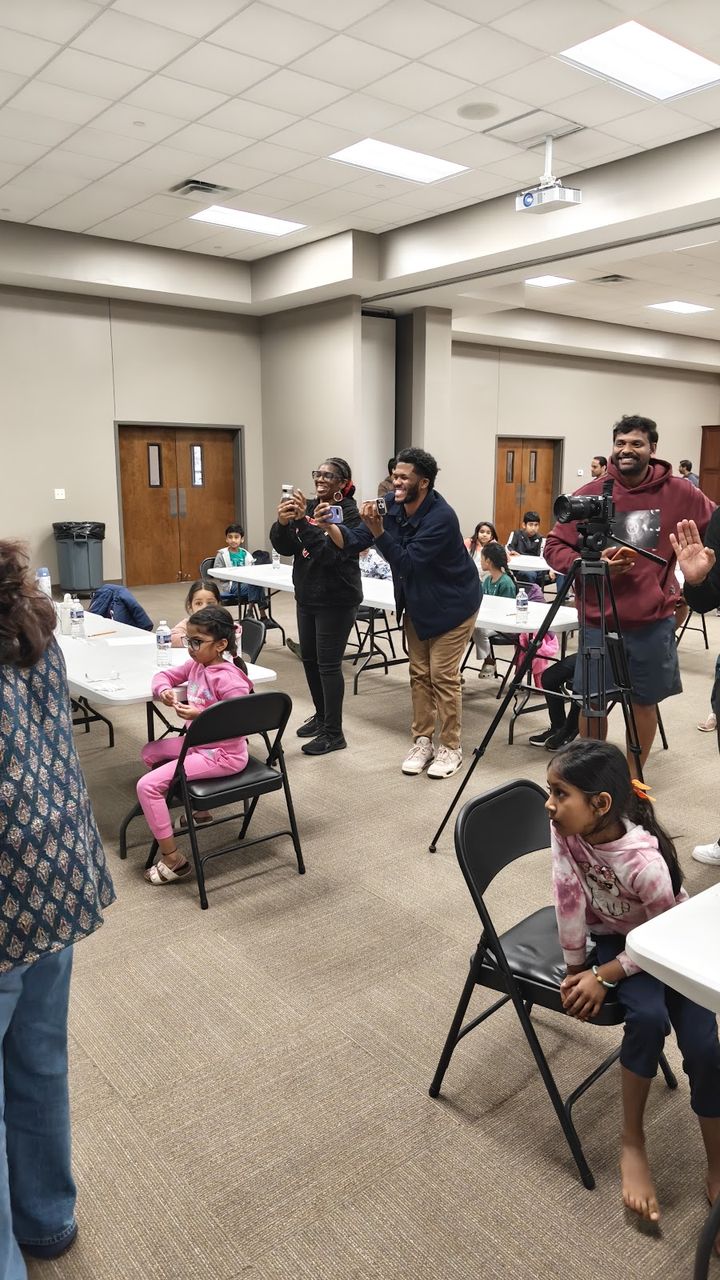
Parents played a quiz on their phones while their children played. A short set opened when the host started each round and closed at pencils down. Between rounds, the screen showed the room what the parents said.
What parents told us
56 families in Cumming played the parents' quiz across the two rooms. These are their answers, as a share of the parents who answered each question.
- 95%say puzzles and brain teasers build real thinking
- 52%put enrichment first, ahead of test prep
- 1 in 10children compete in math regularly
Which kind of math matters most for your child right now?
It's a busy weeknight. The math help that would actually work for your family is…
- A coach on a laptop at home19%
- A center nearby3%
- A small group with friends19%
- An app, any time40%
- Me, at the kitchen table19%
How does your child find math at school?
- Just right64%
- Too easy32%
- Not sure4%
- Too hard0%
If you could change one thing about your child's math right now, it would be…
- More of a challenge36%
- More confidence34%
- Nothing21%
- Better grades8%
- Less homework stress0%
Has your child been in a math competition before?
- Never: this was the first51%
- Once or twice23%
- A few times15%
- Regularly10%
After today, what would you most like to know about your child's math?
- Their strengths and gaps64%
- How to help them improve23%
- What challenge to try next8%
- How they did in each round5%
The day at a glance
- 10:45 amJunior families check in with the QR code on their ticket.
- 11:00 amThe Junior starts: K-1, grades 2-3 and grades 4-5, four rounds in one room.
- By 1:00 pmTwo ties settled on stage, then the Junior podium, medals and certificates.
- 1:30 pmGrades 6-8 teams check in.
- 2:00 pmFour rounds. After each, that round's stars go up on the big screen.
- 3:40 pmThe final board is revealed, grade by grade. Medals and certificates.
- 4:00 pmDone. Every score is on the public leaderboard.
Every Cumming podium
Names as the public leaderboards show them: first name and last initial, with the team name.
The Junior, K-5 (out of 400)
Grades K-1
9 children- 1Lux C.Full marks on Logic Legend.380of 400
- 2Mokshith K.Won the tie-break on stage.345of 400
- 3Aadhya D.Level with Mokshith K. on every round.345of 400
Grades 2-3
11 children- 1Ayansh B.A perfect score.400of 400
- 2Ruhan D.360of 400
- 3Raghuram K.345of 400
Grades 4-5
15 children- 1Yuvaan A.370of 400
- 2Aadhya M.Won the tie-break on stage.355of 400
- 3Reiyaa S.Level with Aadhya M. on every round.355of 400
Grades 6-8 (out of 600)
Grade 6
10 teams- 1RadioactiveAditya B. & Rohin M.235 of 240 on Summit.511of 600
- 2Team 601Athul N. & Karthik M.391of 600
- 3Radical MindsPranav R. & Litesh Abinav T.376of 600
Grade 7
11 teams- 1VCMSAvyukth R. & Sujay K.Full marks on Case. Top score of the day.517of 600
- 2Team 702Manav S. & Adhvik R.417of 600
- 3Team 712Viaan D. & Andrew Ryan M.349of 600
Grade 8
7 teams- 1Gems of BayCreekIshanth Kumar C. & Jishnu C.332of 600
- 2Team 807Jiya Vibana T. & Sanvitha G.220of 600
- 3Yengars!Keshav M., playing solo210of 600
What's next
The Junior plays Alpharetta on November 22 and Johns Creek on December 20. More clips from Cumming are in the albums: the Junior room and grades 6-8. Every score is on the leaderboards: Junior, K-5 and grades 6-8.
Questions parents ask
Who won the MathFit Open in Cumming, GA?
In the Junior: Lux C. in K-1 (380 of 400), Ayansh B. in grades 2-3 with a perfect 400, and Yuvaan A. in grades 4-5 (370). In grades 6-8: Radioactive in grade 6 (511 of 600), VCMS in grade 7 (517) and Gems of BayCreek in grade 8 (332).
How many children took part in Cumming?
35 children played the Junior (9 in K-1, 11 in grades 2-3 and 15 in grades 4-5), and 28 teams played grades 6-8 (10 in grade 6, 11 in grade 7 and 7 in grade 8).
What happens if two children tie at a MathFit Open?
First the last round decides it, then the round before, and so on. If two children are still level on every round and a medal is at stake, they come up to the front for a quick-fire tie-break: best of three questions, hands up after Go. Their points never change; only the order does.
Is there a math competition for kids near Atlanta?
Yes. After Cumming, the MathFit Open Junior, for grades K-5, plays Alpharetta on November 22, 2026 and Johns Creek on December 20, 2026. The events page lists every city, for grades 6-8 and for the Junior.
What is the MathFit Open?
The MathFit Open is Cuemath's in-person math competition, held in cities across the US. Grades 6, 7 and 8 play in teams of two over four rounds: Sprint (speed), Jury (understanding), Case (problem solving) and Summit (reasoning puzzles), 600 points in all. The MathFit Open Junior is the K-5 level: each child plays alone, in K-1, 2-3 or 4-5, over Number Ninja, Why Wizard, Daily Detective and Logic Legend, 400 points in all. Every score joins a national leaderboard.
When is the next MathFit Open near me?
The season runs from November 2026 to March 2027 in cities across the US, with a National Final in spring 2027 for the top teams. The events page lists every city with open places, for grades 6-8 and for the Junior, K-5.
Play the next one
The MathFit Open comes to cities across the US through March 2027. Middle schoolers enter as a team of two; K-5 children play the Junior on their own.