ASAT 2026 Is 20 Days Away and Registration Has No Fixed Deadline!
The Australian Scholastic Achievement Test (ASAT) — a major practice exam for NSW's Selective High School Placement Test — is on 18 October 2026. Registration has no set deadline; it just closes whenever spots run out.

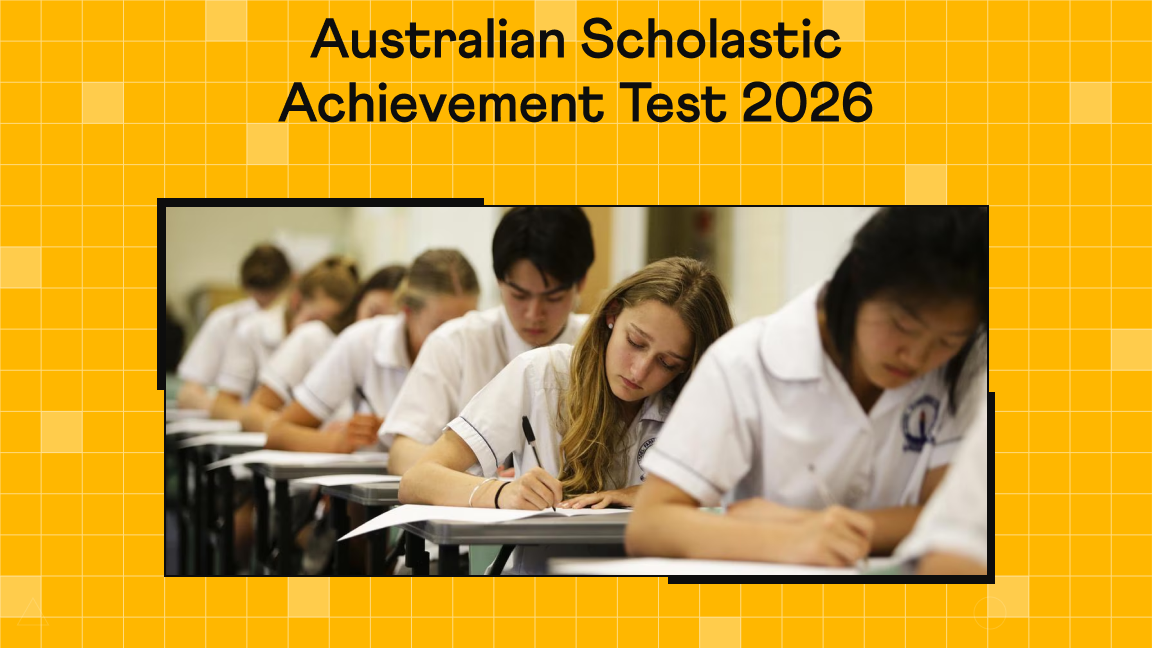
The Australian Scholastic Achievement Test (ASAT) is a major practice exam for students preparing for the NSW Selective High School Placement Test. It is scheduled for Sunday, 18 October 2026, just 20 days from now. Unlike most school tests, ASAT registration doesn’t have a cut-off date. It stays open until all spots are filled, then closes immediately — which could happen well before the test itself.
Run by Pre-Uni New College, a Sydney-based coaching provider, ASAT is not an official government exam, but it’s widely used by NSW families preparing Year 5 students for Selective School entry.
What Is ASAT, and Who Is It For?
The ASAT test is a practice exam for Australian students.
- It’s open to Year 5 students planning to sit the 2027 NSW Selective High School Placement Test
- The package includes one supervised, on-site test plus two additional online mock tests done from home
- It mirrors the real Selective test’s timing, structure and computer-based format
- Students get a detailed report afterwards, including section-by-section results and rankings
When and Where Is the 2026 ASAT?
The test runs on one day, across two possible sessions.
- Date: Sunday, 18 October 2026
- Sessions: 8:20am–12:00pm or 1:30pm–5:10pm, depending on the test centre
- Locations: Strathfield, Sydney Olympic Park, and Rydalmere (Western Sydney University’s Parramatta campus) — all in Sydney
- Students bring their own laptop (BYOD); a limited number of rental laptops are available for a $50 flat fee
- Test date: Sunday, 18 October 2026
- Who: Year 5 students sitting the 2027 NSW Selective Test
- Fee: $110 (or $100 with an eligible Pre-Uni New College course)
- Format: 4 sections, BYOD laptop
- Results: emailed by 1 November 2026
How Much Does It Cost, and How Do I Register?
There’s no fixed closing date — which makes this easy to put off longer than it’s safe to.
- The registration fee is $110 per student, covering the on-site test plus both online mock tests
- A discounted $100 fee applies to students already enrolled in an eligible full-term Pre-Uni New College course
- The fee is non-refundable and non-transferable if a student cancels
- Spots are allocated first-come, first-served, and registration can close the moment they run out — with no advance warning
What’s Actually Tested?
The test runs about two and a half hours across four sections.
- Reading: 45 minutes, 17 questions
- Mathematical Reasoning: 40 minutes, 35 questions
- Thinking Skills: 40 minutes, 40 questions
- Writing: 30 minutes, 1 question
Beyond One Practice Test
A single mock exam is a useful checkpoint, but it’s a snapshot, not a study plan.
- ASAT can show a student where they stand right now — it doesn’t build the reasoning skills the real test checks
- Our guide to the Australian Curriculum breaks down what NSW students are actually expected to know at each year level, including the maths reasoning skills Selective-style tests draw on
- Programs like Cuemath’s 1-on-1 online maths tutoring include NAPLAN and Selective/OC test-prep support as part of the regular program, built around a child’s specific gaps rather than a single test day
What Parents Should Do Next
The clock on this one is real, not marketing.
- If a Year 5 child is sitting the 2027 Selective Test, registering for the ASAT test sooner rather than later avoids missing out entirely
- Test Centre Advice Letters go out from 13 October 2026, confirming exact venue and session time
- Full outcome reports are emailed to parents by 1 November 2026
- Got a younger child too? NAPLAN 2027 dates are already confirmed — worth locking into the calendar at the same time
Taking you to pick a time for the evaluation…

I write because I like understanding things properly, and I've never been able to do that quietly.
Six years in, what still interests me most isn't the writing itself. It's the person on the other side. Who are they, what were they actually worried about when they opened this page, and did they leave with what they came for? Most content fails that last test. It answers the easy question instead of the one that was asked.
At Cuemath, I write for parents and students in India and around the world. That range is the part I enjoy. A parent in Bangalore and a parent in Canada are asking about the same child, but not always in the same words, and that difference matters.
So I research before I write. Not just search results. Forums, reviews, the long comment threads where somebody finally admits what they're really confused about. That's usually where the useful thing is hiding.
I also spend time on how people find this writing at all, since a growing number of them now ask an AI instead of typing into Google. But that only works if the writing is clear to begin with. There's no shortcut around that part.