8 Fun Math Activities for 1st Grade Students (2026)
7 out of 8 of these games use things you already own: dice, blocks, a ruler. Each one targets a specific skill 1st graders are learning right now, and most parents get the order wrong.

This guide covers 8 math activities for 1st grade students. Each one targets a specific skill 1st graders are learning right now: place value, addition and subtraction, telling time, skip counting, measurement, shapes, and simple graphing.
Most 1st grade math activities you'll find online focus on addition and subtraction. Those matter, but they are usually not where kids get stuck. The real wall is place value: a child who can add 6 and 7 in their head can still look at 2 tens-blocks and 2 ones and say "40" instead of 22.
There are 2 different reasons a parent ends up searching for 1st grade math activities. Either a child is behind and needs support at home, or a child is ahead of the class and bored. This guide has activities and adjustments for both.
Every activity below uses things you likely already have: dice, blocks, paper, a ruler. None of them need a screen, though we cover when a screen-based tool actually helps, later in this guide.
- Why Place Value Is the Real 1st Grade Math Problem
- 8 Fun Math Activities for 1st Grade Students You Can Start Today
- Easy Math Activities for 1st Grade Students With No Prep
- Is Your Child Bored or Behind?
- Do These Activities Need to Be Screen-Free?
- When Home Activities Aren't Enough on Their Own
- Frequently Asked Questions
School math + test prep + skills AI can't match, at $0 cost.
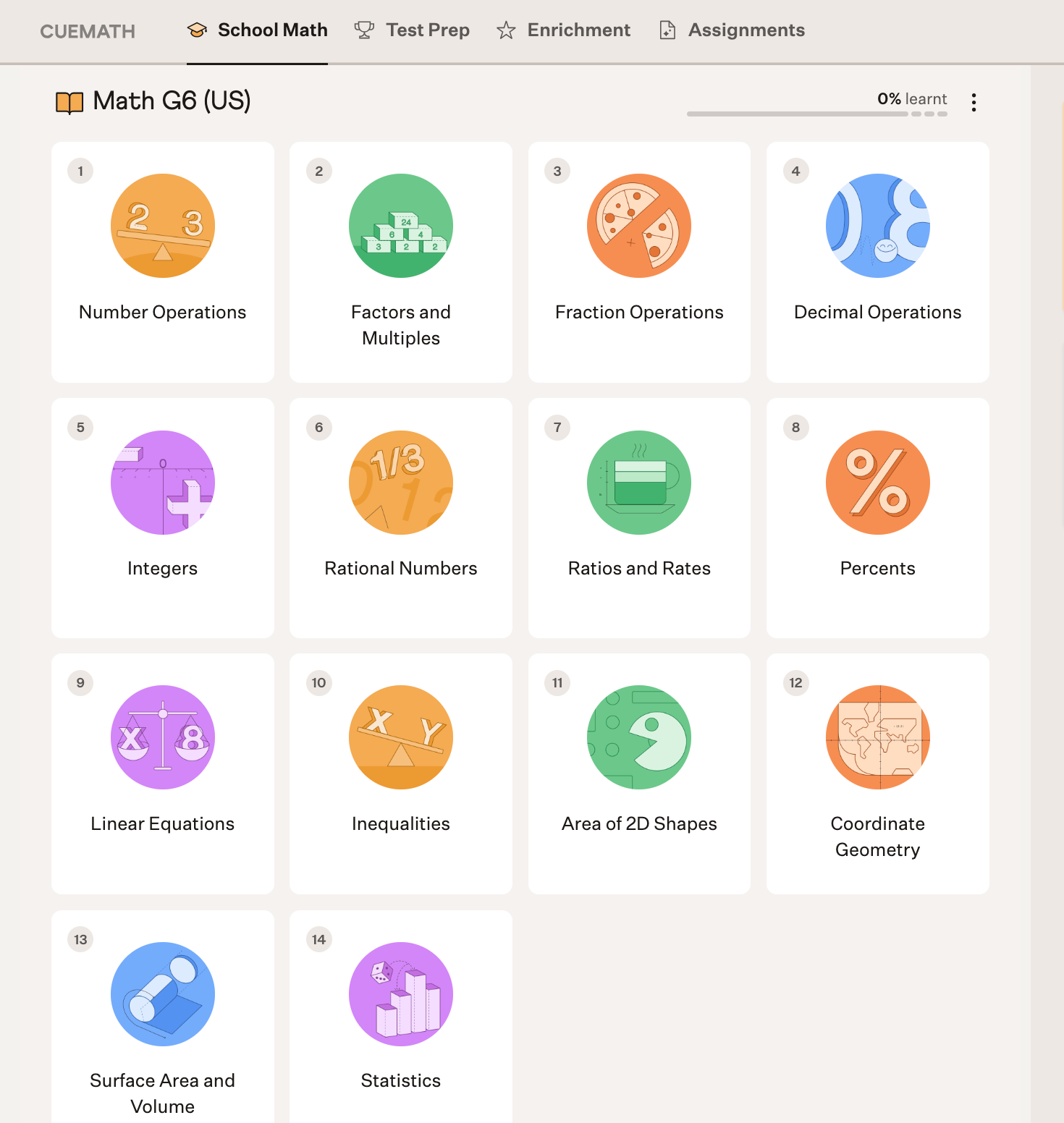
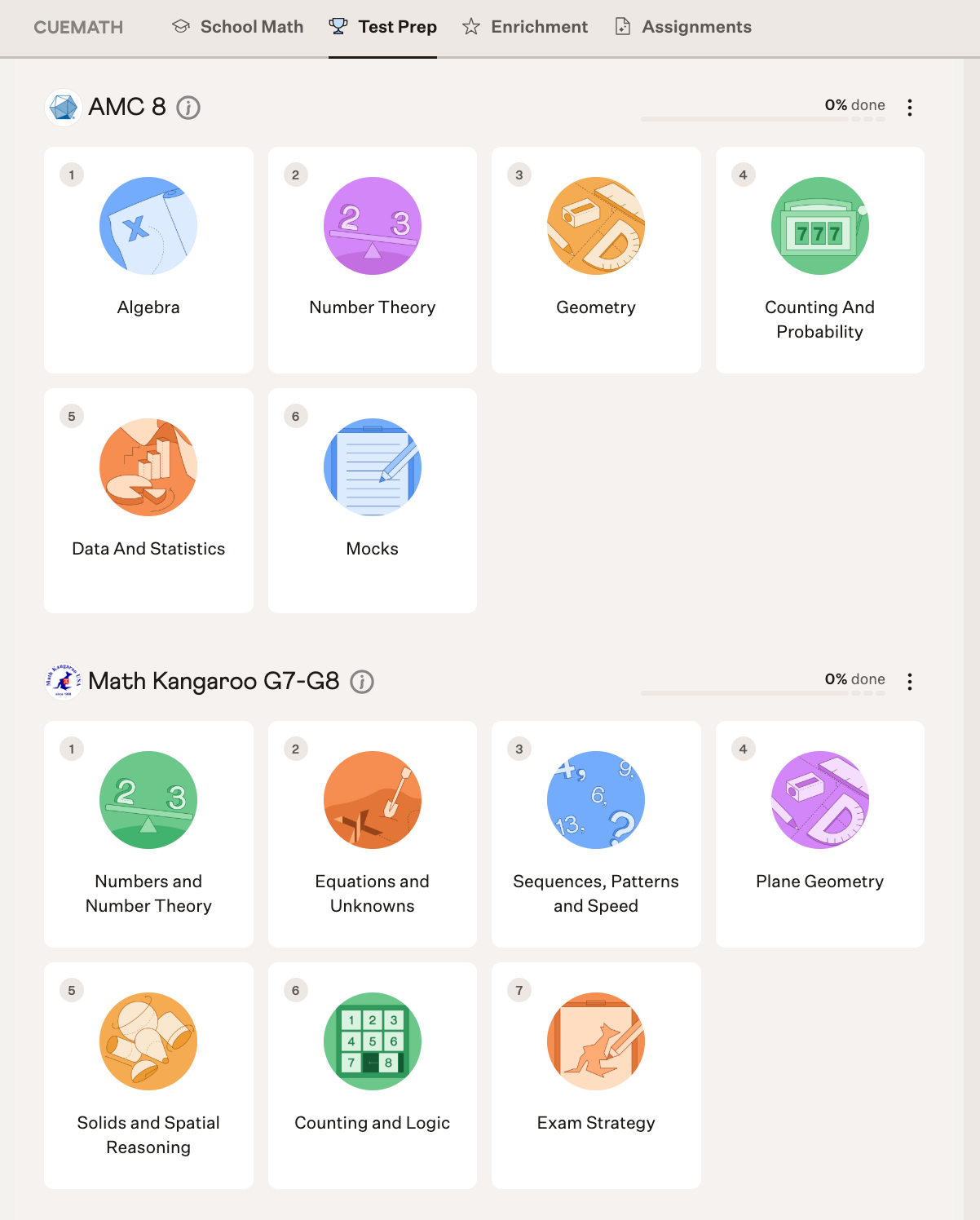
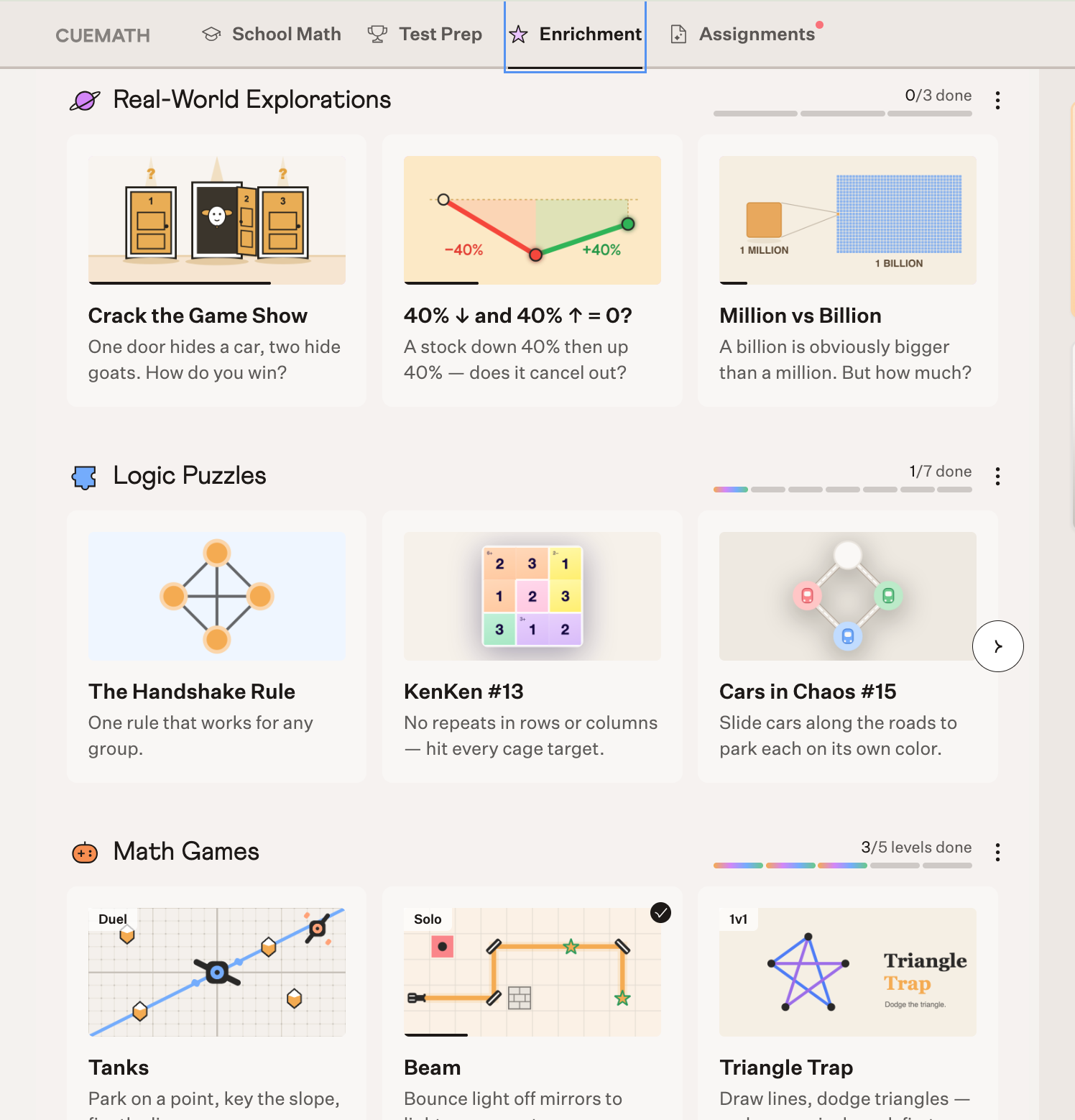
Everything your child needs from Grade K to 12, curriculum mastery, test prep, and enrichment math, is now in one free app.
Simple log in with email, nothing else
Why Place Value Is the Real 1st Grade Math Problem
By 1st grade, most kids can add small numbers without much trouble. The place they get stuck is place value: understanding that a 2 in the tens place means 20, not 2.
Parents describe the exact same moment over and over in online parent forums. A child sees 2 tens-blocks and 2 ones, and instead of saying 22, says 40. One parent's daughter did this for weeks before it clicked.
This is why activities that make tens and ones physical, not just numbers on a page, work better than worksheets for this specific problem.
8 Fun Math Activities for 1st Grade Students You Can Start Today
Each activity below names the skill it builds and why it works. Pick 1 or 2 to start, not all 8 at once.
1. Number Line Hopscotch
Skill: addition and subtraction within 20. Tape or chalk a number line on the floor. Call out a problem like "3 + 4." Your child hops from 3, forward 4 spaces, and lands on 7. Why it works: the child feels the answer, instead of only reading it.
2. Tens and Ones Building Blocks
Skill: place value. Build a 2-digit number with blocks: group 10 into a "tens rod," leave the rest as loose "ones." Building 24 as 2 rods of ten plus 4 singles makes place value visible. Why it works: this is the activity that fixes the "22 becomes 40" mistake, because the child builds the number instead of just reading it.
3. Dice Addition War
Skill: addition fluency. Each player rolls 2 dice and adds them. Higher sum keeps both dice. Why it works: it repeats addition facts without feeling like a worksheet. Swap to subtraction (bigger roll minus smaller) to reuse the same game for weeks.
4. Telling Time Match
Skill: reading a clock. Make 2 sets of cards: one with clock faces, one with digital times. Play memory match. Why it works: matching "3:00" twice teaches the clock better than labeling clock faces on a worksheet.
5. Skip Counting Scavenger Hunt
Skill: skip counting by 2s, 5s, and 10s. Hide number cards labeled with multiples around a room. Your child collects them in order. Why it works: skip counting is what multiplication is built on in 2nd and 3rd grade.
6. Measurement Scavenger Hunt
Skill: measurement and comparison. Give your child a ruler and a notepad. They measure 5 household objects: a book, a spoon, a shoe. Why it works: comparing the results ("which was longest?") teaches measurement and comparison in one activity.
7. Marshmallow Shape Building
Skill: shapes and geometry. Connect mini marshmallows with toothpicks to build 2D shapes (triangle, square) and 3D shapes (cube, pyramid). Why it works: building a shape by hand teaches what makes a triangle a triangle, not just naming it from a picture.
8. Simple Bar Graph Survey
Skill: data and graphing. Ask family members a question like "what's your favorite fruit?" Your child tallies the answers, then colors in a bar graph. Why it works: this is a 1st grader's first real introduction to data, and asking "which answer won, and by how much" builds early data interpretation.
Easy Math Activities for 1st Grade Students With No Prep
If you only have 5 minutes and nothing set up, 3 of the activities above need zero materials: Dice Addition War (just 2 dice), Number Line Hopscotch (chalk, tape, or just clear floor space), and the Measurement Scavenger Hunt (a ruler you already own). These are the easy math activities for 1st grade students worth keeping on hand for a tired weeknight.
Is Your Child Bored or Behind? Why That Changes Which Activities to Pick
Parents look for 1st grade math activities for 2 very different reasons. Knowing which one you're in changes what to pick.
If your child is behind
Start with Tens and Ones Building Blocks and Number Line Hopscotch. Repeat the same 1-2 games daily for 2 weeks before adding new ones. Repetition, not variety, is what closes a gap.
If your child is bored
Add a harder version of each game: bigger numbers in Dice War, a longer number line for hopscotch, a real coin-based bar graph. Watch for disengagement even when scores look fine; a bored kid who stops trying looks the same as a struggling one, from the outside.
Do These Activities Need to Be Screen-Free?
No, but for kids this age, hands-on activities usually work better than an app, and many parents say so directly.
That said, no parent in our research rejected screens completely. A few digital tools got real praise, specifically ones that adjust to what the child already knows instead of repeating the same level. Tools that stayed at a fixed pace, without adjusting, got the opposite reaction.
The pattern: use a screen as backup, not as the main activity, for a 1st grader. Manipulatives you can hold work better for building number sense; a Bridgewater State University study on one-on-one math intervention found manipulatives helped students succeed at a noticeably higher rate than instruction without them.
When Home Activities Aren't Enough on Their Own
Games and manipulatives fix a lot. But 2 situations come up often enough that they're worth naming directly.
First: if your child is behind, and you've tried 2-3 of the activities above consistently for a few weeks with no real movement, that's usually a sign the gap needs a person, not just a game. One parent said it plainly in a Reddit thread about a child with focus issues: "I got him a tutor for some 1-on-1 focused time in math." Her son's problem wasn't topic knowledge; it was focus, and a game alone doesn't fix that.
Second: if your child is bored, repeating grade-level activities won't fix that. Boredom needs a program that moves at the child's actual pace, not the class average.
This is exactly where Cuemath fits, as a next step, not a replacement for these games. Every Cuemath class is live, 1:1, with the same tutor over time. Before the first class, a student takes a free skills evaluation that finds exactly where understanding breaks down, whether that's place value, regrouping, or something else, and builds a plan around it.
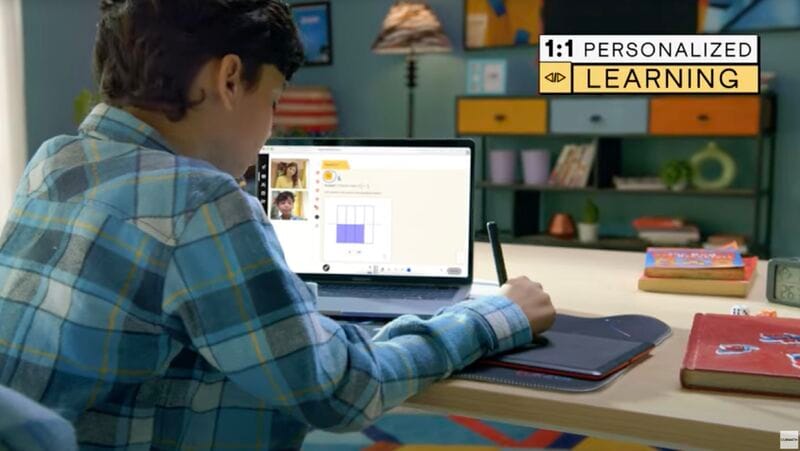
Cuemath classes start at $15/class, and if your child wants to learn on their own they can start with the free Cuemath app.
 Nikita Joshi
Frequently Asked Questions
What are the best math activities for 1st grade students?
The best math activities for 1st grade students cover the core topics of the year: addition and subtraction within 20, place value, telling time, skip counting, measurement, shapes, and simple data and graphing. The 8 activities in this guide use things you already have at home, like dice, blocks, and a ruler. Pick 1 or 2 to start and repeat them for a couple weeks before adding more.
What are some fun math activities for 1st grade students?
Fun math activities for 1st grade students turn a math skill into a game instead of a worksheet. Dice Addition War, Number Line Hopscotch, and the Telling Time memory match are 3 of the most popular, because they feel like play, not practice. All 3 are covered in detail above.
What are easy math activities for 1st grade students to start with?
Easy math activities for 1st grade students are ones that need no setup and materials you already own. Dice Addition War (2 dice), Number Line Hopscotch (chalk, tape, or clear floor space), and the Measurement Scavenger Hunt (a ruler) are the 3 easiest to start today.
Why does my 1st grader mix up numbers like 22 and 40?
This usually means place value hasn't clicked yet, not that your child is behind overall. A child who sees 2 tens-blocks and 2 ones and says "40" is treating each block as "10" instead of understanding that 2 groups of ten make 20. The Tens and Ones Building Blocks activity above is built specifically to fix this.
My 1st grader hates worksheets and I don't want more screen time. What can I do?
All 8 activities in this guide are screen-free and use things like dice, blocks, and paper. Parents researching this exact question said the same thing: they wanted hands-on options, not another app, for a child this age. Start with Number Line Hopscotch or Dice Addition War since both need almost no setup.
My 1st grader is bored with school math. What should I do?
Add a harder version of the activities above instead of jumping straight to 2nd grade content: bigger numbers in Dice War, more objects in the Measurement Hunt, more categories in the Bar Graph Survey. If boredom continues after that, a program like Cuemath that moves at your child's actual pace, rather than the class average, is worth considering.
My 1st grader is behind in math. Where should I start?
Start with the Tens and Ones Building Blocks and Number Line Hopscotch activities, and repeat them daily for 2 weeks before adding anything new; repetition closes a gap faster than variety. If there's no real movement after a few consistent weeks, that's usually a sign the gap needs a tutor, not just another game. Cuemath's free skills evaluation is built to find exactly where the gap is before building a plan around it.
How much time should 1st grade math practice take at home each day?
10 to 15 minutes a day is enough for a 1st grader. A short session done consistently beats a longer session once a week. Pick 1 activity, play it for that time, and stop before it turns into a fight.
When should I consider a math tutor instead of just doing activities at home?
Consider a tutor when a specific concept, most often place value, isn't moving after a few consistent weeks of practice, or when your child needs more challenge than home activities can give. Cuemath starts every student with a free skills evaluation and a live 1:1 tutor, so the plan is built around the actual gap or the actual pace, not a guess.
Sources
- Common Core State Standards — Grade 1 Mathematics — backs the grade-1 topic list (addition/subtraction, place value, measurement, geometry)
- Bridgewater State University — The Effectiveness of Mathematical Manipulatives in One-on-One Intervention — backs why hands-on manipulatives help students grasp math (study covers grades 3-4)
- NCTM — National Council of Teachers of Mathematics — backs conceptual, hands-on teaching approaches over drill worksheets
- Trustpilot — Cuemath Reviews — backs the parent testimonial used in this blog
- r/homeschool — "1st/2nd Grade Math" — backs the place value quote and the "not computer based" quote
- r/Parenting — "Educational Computer/Video Games for Young Children" — backs the "low stimulation preferable" quote

I grew up a science kid. Math was not my best subject. Class moved fast, I was too shy to ask for help, and I somehow ended up more curious about how people learn than about the subjects themselves.
That's what pulled me into education, not to teach, but to understand how colleges and tutoring programs actually work and what students genuinely need from them.
My love for writing did the rest. I had too many observations and nowhere to put them, so I started writing, and haven't stopped. Over the last five years I've written about edtech, student life, and college programs. For the past year, my focus has been math tutoring specifically.
I work at Cuemath now, so factor that in. I research by going where parents actually talk: forums, reviews, and direct conversations with students and families. I'm writing for the kid who's too scared to raise their hand in class. I was that kid.