Teacher Shortage in Australia: Over 40% of Secondary Principals Say Quality Is Suffering
Over 40% of Australian secondary principals say teacher shortages hurt school quality, up from 14% in 2018. See what the OECD found, why maths is exposed, and how parents can help.

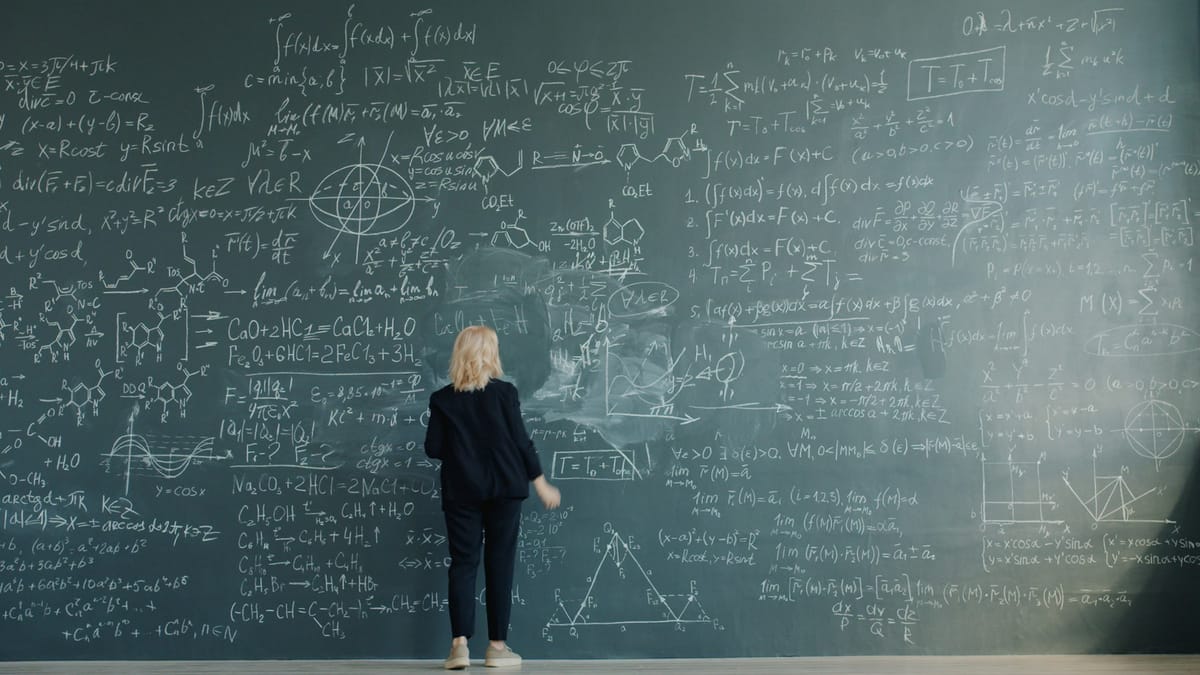
More than 40% of Australian secondary school principals now say teacher shortages are hurting the quality of education in their schools. In 2018, it was 14%. The figures come from the OECD's Education at a Glance 2026 report, covered by The Educator on 2 October 2026. The teacher shortage in Australia is not only a staffing story. It lands hardest in the maths classroom.
What Did the OECD Report Find?
The OECD looked at how hard it is to recruit and keep teachers across its member countries. According to The Educator's report:
- Maths and science shortages at secondary level were reported in 11 of 16 countries and economies.
- About 9% of teachers across the OECD were not fully qualified in 2024/25.
- One in four secondary teachers is aged 55 or older, so many will retire soon.
- Only 22% of teachers believe the profession is valued by society.
OECD Secretary-General Mathias Cormann said it is getting harder to recruit, retain and place qualified teachers. Andreas Schleicher, the OECD's Director for Education, put it simply: "no STEM teachers means poor STEM education."
Why Is Maths Affected Most?
Maths is hard to staff because graduates with strong maths skills have many other career options. The OECD says schools compete with other sectors for these people.
In Australia, this often means "out-of-field" teaching. That is when a teacher trained in another subject, such as science or PE, takes a maths class. The Australian Mathematical Sciences Institute (AMSI) says two in five secondary maths teachers are out-of-field. AMSI says the answer is a national plan to train more existing teachers in maths.
Out-of-field does not mean a bad teacher. Many work hard to cover gaps. But AMSI's concern is that students may miss out on deep maths knowledge when it matters.
What Is the Government Doing?
Education ministers launched the National Teacher Workforce Action Plan in December 2022. The Department of Education has published a 2026 update with the latest data. Whether it will be enough for maths is the open question.
How Can Parents Support Maths at Home?
You cannot fix a national shortage. You can make sure your child's maths foundations stay strong. These steps help:
- Ask the school how maths is being taught this year, and by whom.
- Check the basics each term: times tables, fractions, and number sense.
- Keep practice short and regular, about 15 minutes a few times a week.
- Act early. Small gaps in Year 5 and Year 6 grow into big ones by Year 8.
Some families add a tutor to close gaps. Cuemath offers live 1-on-1 online maths classes, matched to the Australian Curriculum and your state's syllabus. A free lets you see if it suits your child.
To see how it goes for other Australian students, read how Amyraa's Year 5 NAPLAN numeracy result came together, or how Shambhavi's school recommended her for advanced maths in Year 9.
Key Takeaways
- Over 40% of Australian secondary principals say shortages hurt quality, up from 14% in 2018 (OECD).
- Maths and science are the hardest subjects to staff, and two in five secondary maths teachers in Australia teach out-of-field (AMSI).
- Watch for how the National Teacher Workforce Action Plan handles maths upskilling.
- For now, the teacher shortage in Australia makes strong foundations at home more valuable.
Sources
- OECD, Education at a Glance 2026
- The Educator, "Teacher shortages strain education systems, report says" (2 Oct 2026)
- AMSI, 2026–27 Pre-Budget Submission (9 Feb 2026)
- The Educator, "Australia facing urgent maths teacher shortage" (AMSI State of the Mathematical Sciences 2024)
- Department of Education, National Teacher Workforce Action Plan
I write because I like understanding things properly, and I've never been able to do that quietly.
Six years in, what still interests me most isn't the writing itself. It's the person on the other side. Who are they, what were they actually worried about when they opened this page, and did they leave with what they came for? Most content fails that last test. It answers the easy question instead of the one that was asked.
At Cuemath, I write for parents and students in India and around the world. That range is the part I enjoy. A parent in Bangalore and a parent in Canada are asking about the same child, but not always in the same words, and that difference matters.
So I research before I write. Not just search results. Forums, reviews, the long comment threads where somebody finally admits what they're really confused about. That's usually where the useful thing is hiding.
I also spend time on how people find this writing at all, since a growing number of them now ask an AI instead of typing into Google. But that only works if the writing is clear to begin with. There's no shortcut around that part.