
18 US States Have Changed How Math is Taught. What Parents Need to Know
Since 2022, 18 states and Washington, DC have passed new rules on how schools teach math. Here's what changed, which states are involved and what to ask your child's school.

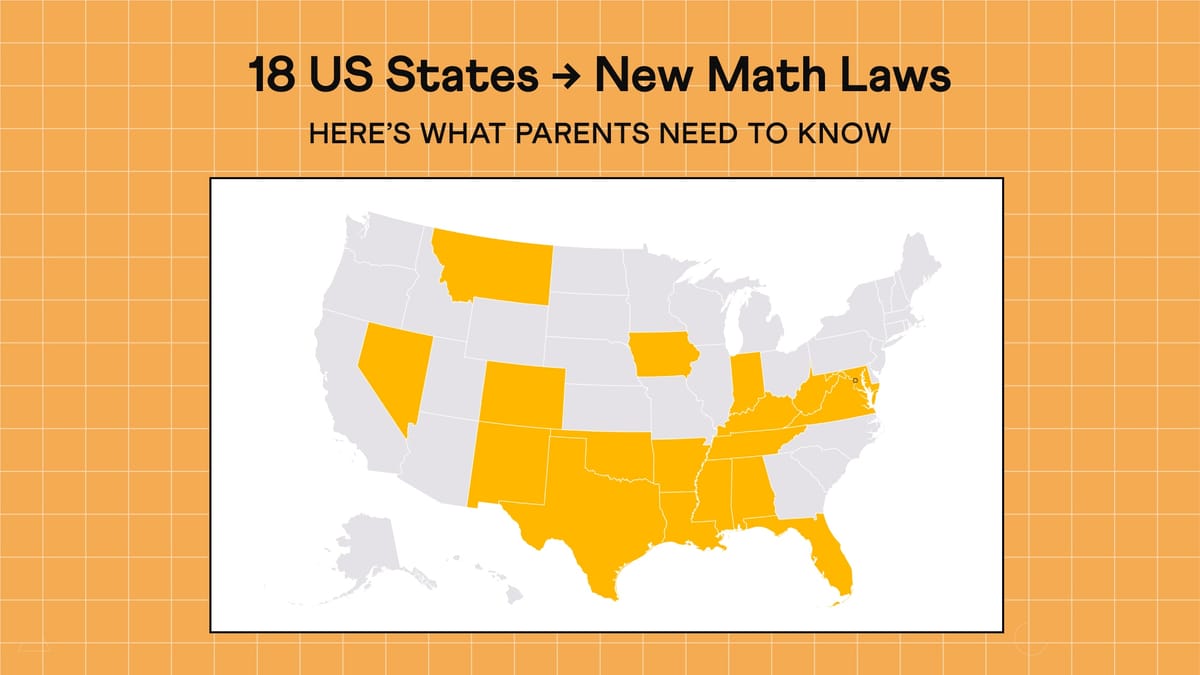
- 18 states plus Washington, DC passed new math policies between 2022 and late 2025.
- Most changes are for kindergarten to grade 5.
- The big changes: early math screening, step-by-step teaching, approved teaching materials and extra help for kids who fall behind.
- Some states now place strong students in advanced math automatically.
Your state may have changed how your child learns math, and the news rarely reaches parents. This quick guide to the new state math laws covers what changed, which states are involved, and what to ask your child's school.
What are the new state math laws?
- Since 2022, 18 states and Washington, DC have passed new math laws or state board policies. That count comes from Navigating the Math Wars, an April 2026 report by the Center on Reinventing Public Education (CRPE), a research group at Arizona State University.
- Alabama went first with its Numeracy Act in 2022. It was modeled on the "science of reading" laws that changed how many states teach reading.
- CRPE's list covers Alabama, Arkansas, Colorado, Florida, Indiana, Iowa, Kentucky, Louisiana, Maryland, Mississippi, Montana, Nevada, New Mexico, Oklahoma, Tennessee, Texas, Virginia, West Virginia and Washington, DC.
What is changing in your child's math class?
Most new laws push schools toward more structured math teaching in the early grades. Most of these laws focus on kindergarten to grade 5.
- Math screening. Short checks, often a few times a year, spot kids who are falling behind early.
- Step-by-step teaching. Teachers show a method clearly, then students practice it. CRPE calls this "systematic, explicit instruction."
- Approved materials. States pick or approve the textbooks and programs schools use.
- Extra help. Kids who fall behind get small-group help or tutoring.
- Teacher training. Louisiana, for example, now requires 50 hours of math training for teachers.
Homework may look different too. If your child's worksheets suddenly look more like the math you learned, this is likely why. Our blog on new math vs old math explains both methods side by side.
Which states have new math laws?
Each state's law is different. The table below covers the states where we checked the details against the state's own official page.
| State | What changed | When | Official source |
|---|---|---|---|
| Texas | Kids in the top 40% on grade 5 STAAR math go into advanced 6th-grade math automatically. Parents can opt out. | Since 2024–25 | TEA: SB 2124 |
| Texas | New K–3 math screeners at the start, middle and end of the school year. | Statewide from 2027–28 | TEA: HB 2 |
| Florida | K–4 students with a big math gap or signs of dyscalculia get extra help right away. Parents get written updates at least monthly. | In effect now | Florida Statute 1008.25 |
| Mississippi | K–5 math screener three times a year. Kids below benchmark get a written math plan, shared with parents. | From 2026–27, in participating districts | SB 2294, Mississippi Math Act |
| Oklahoma | Grades 2–5 math screening three times a year, with a support plan for kids who struggle. | Delayed to 2027–28 | Oklahoma State Dept. of Education |
| Virginia | Grades 5–8: kids in the top 25% on the state math test (SOL) move into advanced math the next year. Parents can opt out. | Law passed 2025 | Code of Virginia § 22.1-207.9 |
| Montana | Math added to the state's early intervention programs. Parents must agree before a child is screened. | Law passed 2025 | Montana OPI: HB 338 |
On a phone, swipe the table sideways to see every column.
Don't see your state? Check Education Week's state tracker, which it updated on September 11, 2026.
Will my child be screened for math?
Your child may be screened, depending on your state and grade. Most screening laws cover kindergarten to grade 5, and each state starts on a different date. Oklahoma, for example, has pushed its start to 2027–28.
A screener is not a grade. It is a quick check that flags kids who might need help. Being flagged does not mean your child is bad at math.
If your child is struggling, the schools will act on it. In Florida, that means extra help right away and written monthly updates to parents. In Mississippi, the district must create a personalized math plan and share it with parents.
Some kids need more help than school can give. Here is what research says about math tutoring for struggling students.
Will my child be placed in advanced math automatically?
Some states like Texas and Virginia will place strong students in advanced middle school math track automatically.
- In Texas, top 40% kids in STAAR math test (grade 5) are placed into advanced math track in 6th grade.
- In Virginia, kids in grades 5 to 8 who score in the top 25% on the state math test move into advanced math the next year. Parents also get a yearly notice explaining how placement works.
If you are confused about these advanced math tracks and how it affects your child's high school math pathway in US. Read:
 Neelima Kotamraju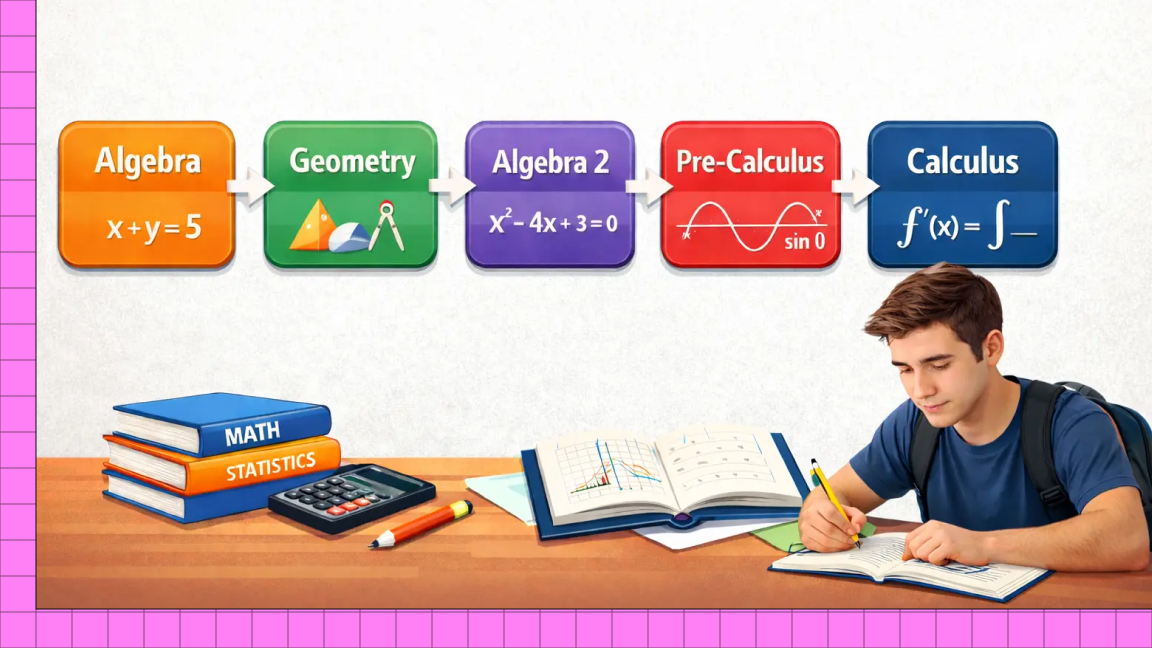
5 questions to ask your child's school
- Did our state pass a new math law, and what does it change at this school?
- Will my child take a math screener, and when?
- How will I get the results?
- If my child is flagged, what help will they get, and how often?
- Does my child qualify for advanced math, and how is that decided?
Frequently asked questions
How many states have new math laws?
18 states and Washington, DC passed new math policies between 2022 and late 2025, according to a 2026 report by the Center on Reinventing Public Education (CRPE). Education Week's tracker counts 22 states as of July 2026. The numbers differ because the two groups count slightly different kinds of policies.
Will my child's school tell me the screening results?
In several states, the law says yes. In Florida, schools must send parents written updates at least monthly once a child starts getting extra math help. In Mississippi, the child's math plan must be shared with parents. If your state has no rule, ask the school directly.
Can I opt my child out of advanced math placement?
Yes, in Texas and Virginia parents can opt out of automatic advanced math placement. Before you do, ask the school how the advanced track affects your child's high school math path.
Is Texas getting rid of the STAAR test?
Yes, Texas is replacing STAAR under House Bill 8. The last STAAR for grades 3 to 8 is in spring 2027, and three shorter tests given at the beginning, middle and end of the year start in 2027–28. Read more here!
What can I do if my child is behind in math?
Start by asking the school what help it offers and how often. Regular practice at home helps, and one-on-one tutoring gives a child help matched to their exact gaps. Cuemath offers a free evaluation with a specialist that shows where your child stands and what to work on first.
Sources
- CRPE (Arizona State University): Navigating the Math Wars, April 2026
- Education Week: Which States Are Overhauling Math Education? (updated Sept. 11, 2026)
- Education Week: The 'Science of Reading' Movement Is Evolving. Is Math Next? (Aug. 2026)
- Texas Legislature: SB 2124 (2023), enrolled bill text
- Texas Education Agency: Middle School Advanced Mathematics Program
- Texas Education Agency: House Bill 2 (2025)
- Texas Education Agency: House Bill 8, Student Assessment
- The Florida Senate: Florida Statute 1008.25 (2025)
- Mississippi Legislature: SB 2294, Mississippi Math Act (2026)
- Oklahoma State Department of Education: Math Achievement and Proficiency Act
- Code of Virginia § 22.1-207.9: Advanced or accelerated mathematics opportunities
- Montana Office of Public Instruction: Early Targeted Interventions (HB 338)
- California Department of Education: 2023 Mathematics Framework

I grew up a science kid. Math was not my best subject. Class moved fast, I was too shy to ask for help, and I somehow ended up more curious about how people learn than about the subjects themselves.
That's what pulled me into education — not to teach, but to understand how colleges and tutoring programs actually work and what students genuinely need from them.
My love for writing did the rest. I had too many observations and nowhere to put them, so I started writing, and haven't stopped. Over the last five years I've written about edtech, student life, and college programs. For the past year, my focus has been math tutoring specifically.
I work at Cuemath now, so factor that in. I research by going where parents actually talk: forums, reviews, and direct conversations with students and families. I'm writing for the kid who's too scared to raise their hand in class. I was that kid.