6th Grade Math Activities: 10 Fun Ideas for Home (2026)
Easy at-home ideas for practicing ratios, negative numbers, expressions, geometry, and data. Each activity has a basic version and a Challenge for students who are ready for more.

These 6th grade math activities turn cooking, shopping, and simple games into practice for the skills students meet in Grade 6: ratios, percentages, negative numbers, expressions, geometry, and data. Each one uses things you already have at home, like paper, dice, or empty boxes.
Sixth grade is when students move from basic arithmetic to ratios, negative numbers, and algebra, which Grade 7 and 8 math builds on. Try one or two activities a week alongside schoolwork.
Key Takeaways
- The 10 activities cover the main 6th grade math skills: ratios and rates, percentages, negative numbers, expressions, area and volume, data, and the coordinate plane. Each one lists the Common Core standards it practices.
- Every activity uses things you already have at home, like paper, dice, a coin, number cards, graph paper, measuring cups, or empty boxes.
- Each activity ends with 3 “Try it yourself” questions. Your child types an answer and sees right away if it is correct, and the hardest question shows the steps.
- 5 free online games on this page practice comparing and ordering integers, positive and negative numbers, ratios, and plotting points in all four quadrants.
- Start with 1 or 2 activities a week. Once the basic version feels easy, try the Challenge at the end of each activity.
- Why Are 6th Grade Math Activities Important?
- 10 Fun 6th Grade Math Activities to Try at Home
- 1. Make a Recipe Together to Practice Fractions and Ratios
- 2. Go Shopping to Practice Decimals, Percentages, and Unit Rates
- 3. Play an Integer Number-Line Game
- 4. Create a Mystery Number Game to Practice Algebraic Expressions
- 5. Design a Dream Room to Practice Area, Perimeter, and Geometry
- 6. Make a Family Survey to Practice Data Handling and Averages
- 7. Build a Coordinate-Plane Treasure Map to Practice Ordered Pairs
- 8. Run a Mini Sale to Practice Percentages
- 9. Build 3D Shapes With Boxes to Practice Surface Area and Volume
- 10. Play Math Bingo to Review 6th Grade Math Concepts
- 5 Free 6th Grade Math Games Kids Can Play Right Here
- Final Thoughts
- Frequently Asked Questions
Why Are 6th Grade Math Activities Important?
Sixth grade introduces students to several concepts that form the foundation for middle school math. These include fractions and decimals, ratios and rates, integers, expressions and equations, geometry, and data analysis. For the full list of topics, see Cuemath’s 6th grade math curriculum.
Hands-on activities give students an opportunity to apply these concepts in familiar situations. For example, comparing prices can help students understand percentages and unit rates, while cooking can give them a practical way to work with fractions.
The goal is not just to make math more enjoyable. These activities can help students revise concepts, practice calculations, explain their reasoning, and connect math to everyday situations.
10 Fun 6th Grade Math Activities to Try at Home
1. Make a Recipe Together to Practice Fractions and Ratios
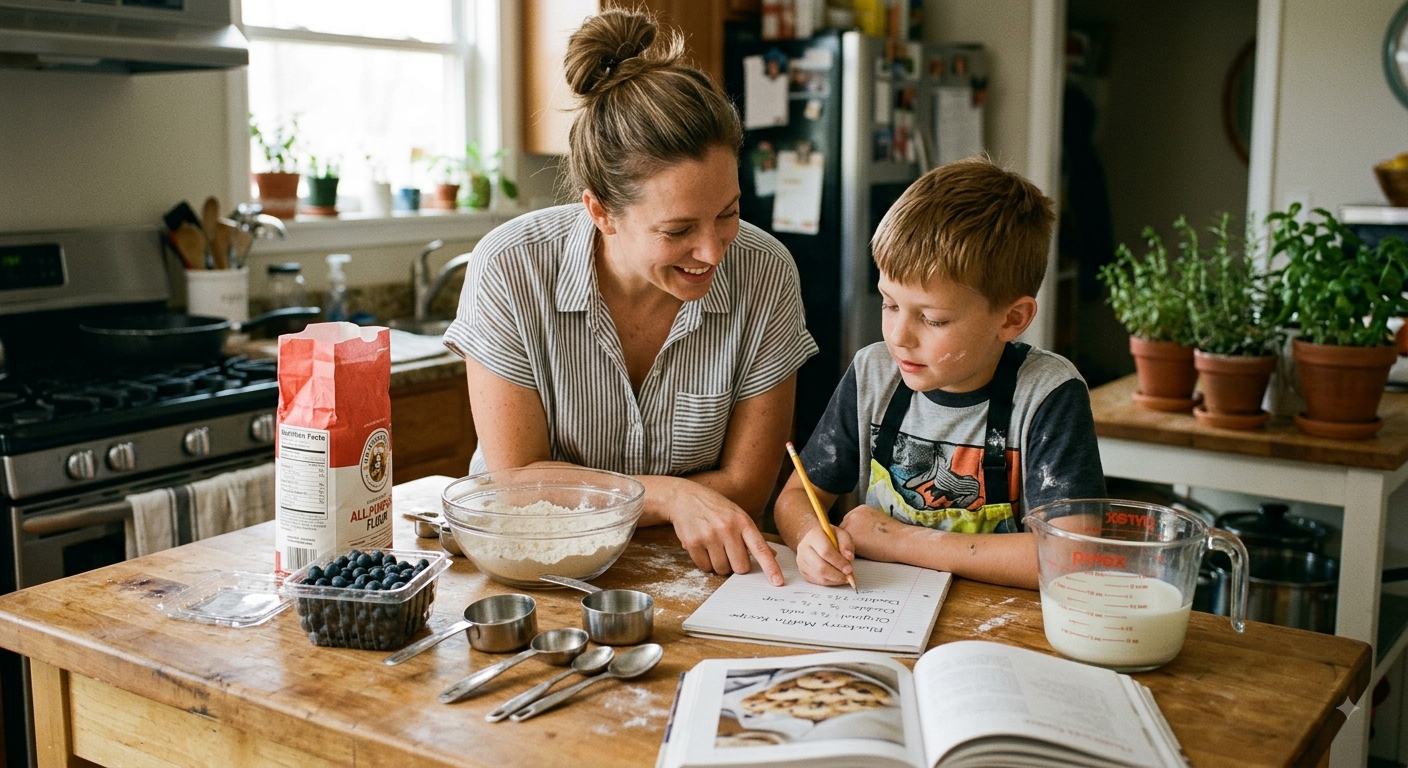
What you'll need: A simple recipe, measuring cups and spoons, paper, and a pencil.
Choose a recipe that uses fractions, such as ½ cup of flour or ¾ cup of milk. Ask your student to double or halve the recipe before you start cooking.
For example, if a recipe requires ¾ cup of flour and you want to make twice as much, ask:
How much flour will we need?
Students can also write the ratio of different ingredients and compare the quantities.
What it teaches: Adding and multiplying fractions, ratios, and real-world problem-solving. Common Core: 6.RP.A.1, 6.RP.A.3.
Challenge: Ask students to adjust the recipe for three times the original number of servings.
Try it yourself:
2. Go Shopping to Practice Decimals, Percentages, and Unit Rates
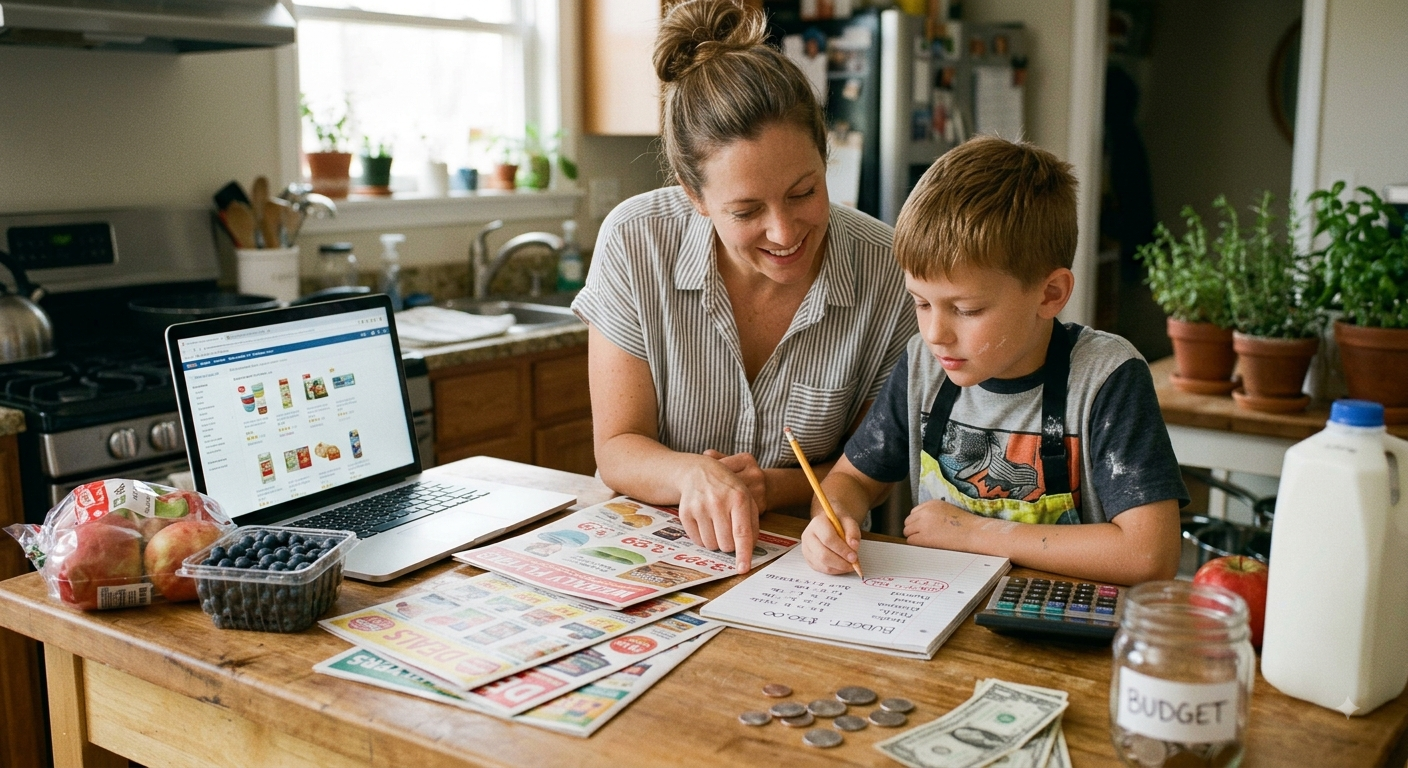
What you'll need: Grocery-store flyers, online product listings, or a pretend shopping list.
Give your student a fixed budget, such as $50, and ask them to choose several items without going over the limit.
Then introduce questions such as the following:
- Which product has the lower price per unit?
- What is the total cost?
- How much would a 20% discount save?
- How much money would be left from the budget?
This turns a simple shopping exercise into practical math practice.
What it teaches: Decimal operations, percentages, unit rates, estimation, and money math. Common Core: 6.RP.A.3.b (unit pricing), 6.RP.A.3.c (percent), 6.NS.B.3 (decimals).
Challenge: Ask students to find the best deal between two products sold in different quantities.
Try it yourself:
3. Play an Integer Number-Line Game to Practice Positive and Negative Numbers
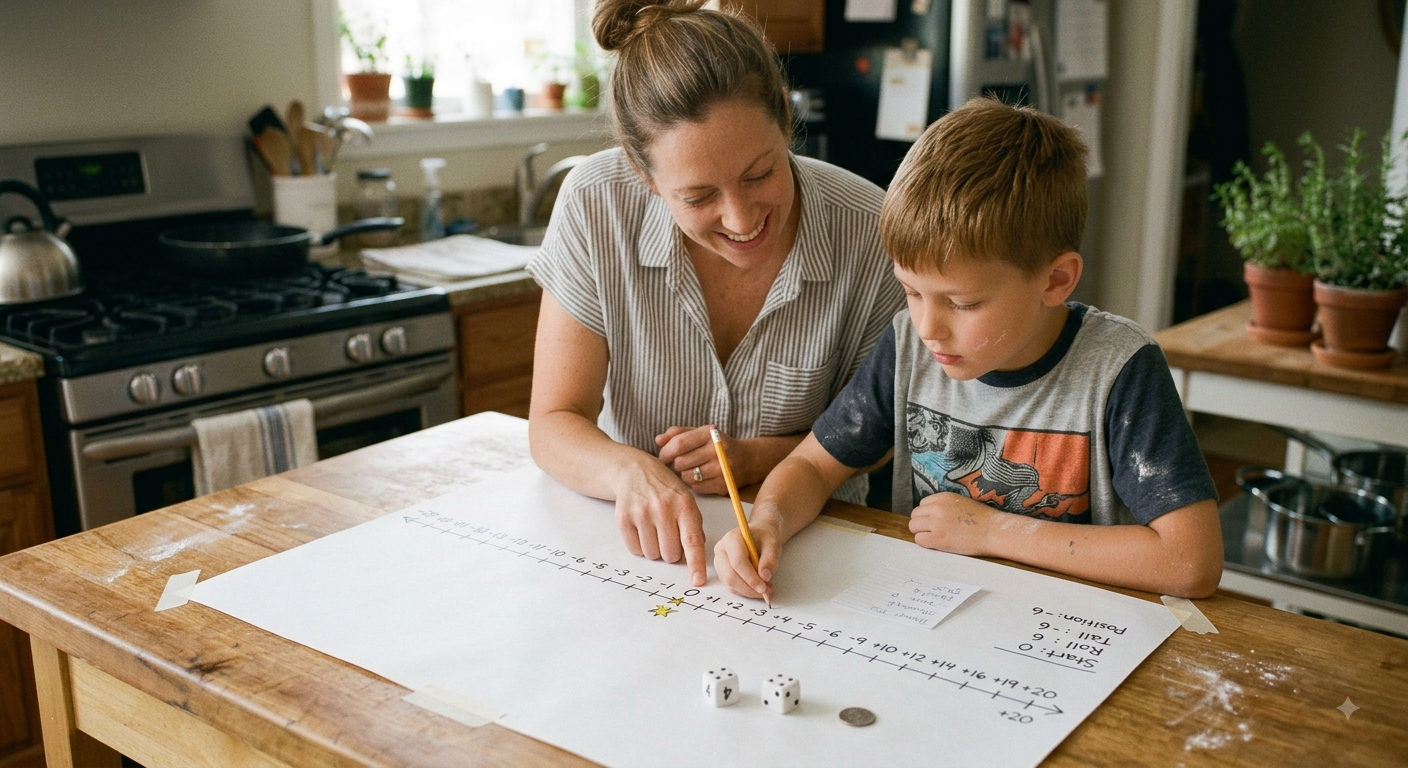
What you'll need: Paper, a pencil, a coin, and two dice.
Draw a number line from -20 to +20. Start the student at 0. Roll the dice and flip the coin.
- Heads: Move forward.
- Tails: Move backward.
- The number on the dice tells you how many spaces to move.
For example, if the dice show 6 and the student gets tails, they move from 0 to -6.
Continue playing and ask students to record their position after every turn.
What it teaches: Positive and negative integers, number lines, addition, subtraction, and comparing integers. Common Core: 6.NS.C.5, 6.NS.C.6, 6.NS.C.7. Moving along the line to add and subtract is a Grade 7 skill (7.NS.A.1), and so is the multiplication Challenge (7.NS.A.2).
Challenge: Introduce multiplication. For example, “Move 3 × -4 spaces. Where do you land?”
Try it yourself:
4. Create a Mystery Number Game to Practice Algebraic Expressions
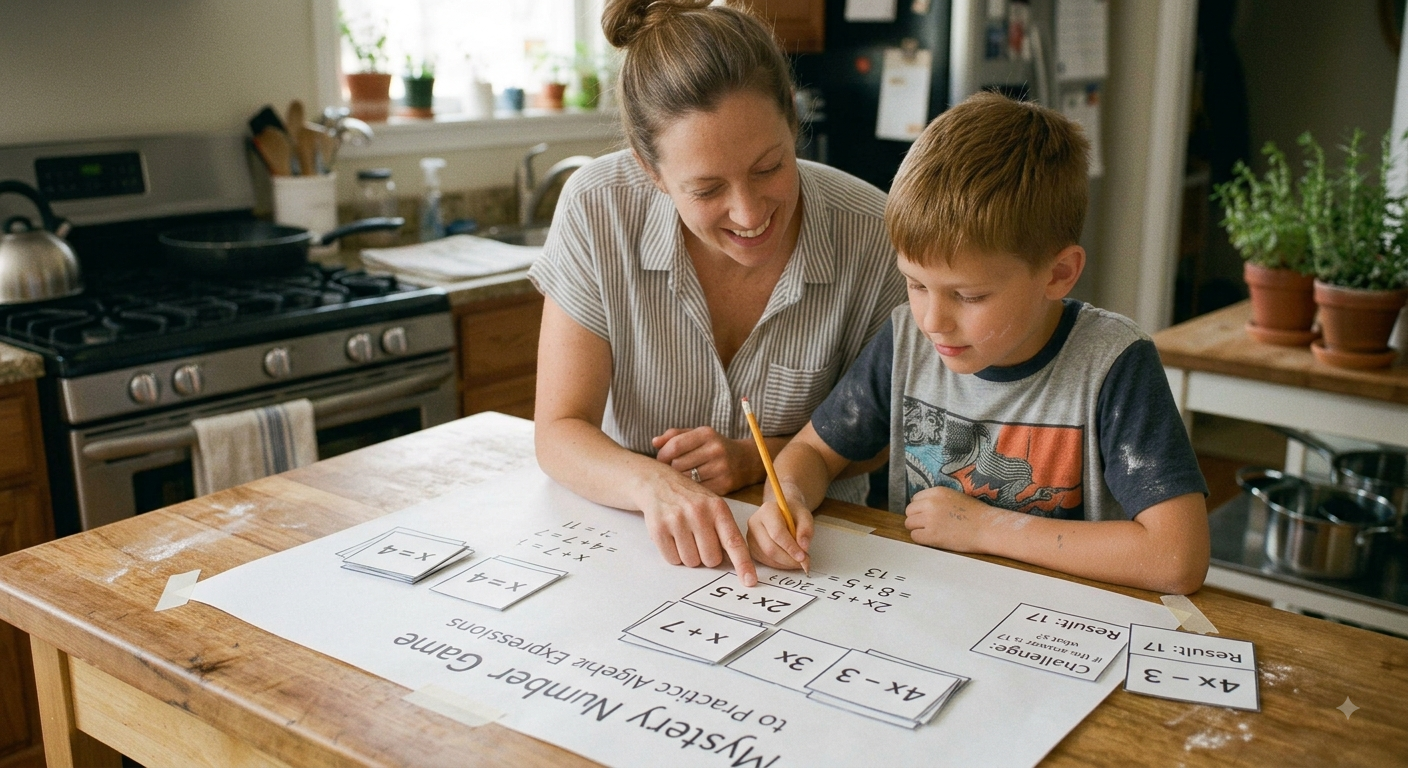
What you'll need: Paper and a set of number cards.
Write simple expressions such as the following:
- x + 7
- 3x
- 2x + 5
- 4x - 3
Give the student a value for x and ask them to evaluate the expression.
For example:
If x = 4, what is the value of 2x + 5?
Students can then create their own expressions for a parent or sibling to solve.
What it teaches: Variables, expressions, substitution, and basic algebraic thinking. Common Core: 6.EE.A.2.c, and 6.EE.B.7 for the Challenge.
Challenge: Give students the answer and ask them to work backward to find the value of x.
Try it yourself:
5. Design a Dream Room to Practice Area, Perimeter, and Geometry
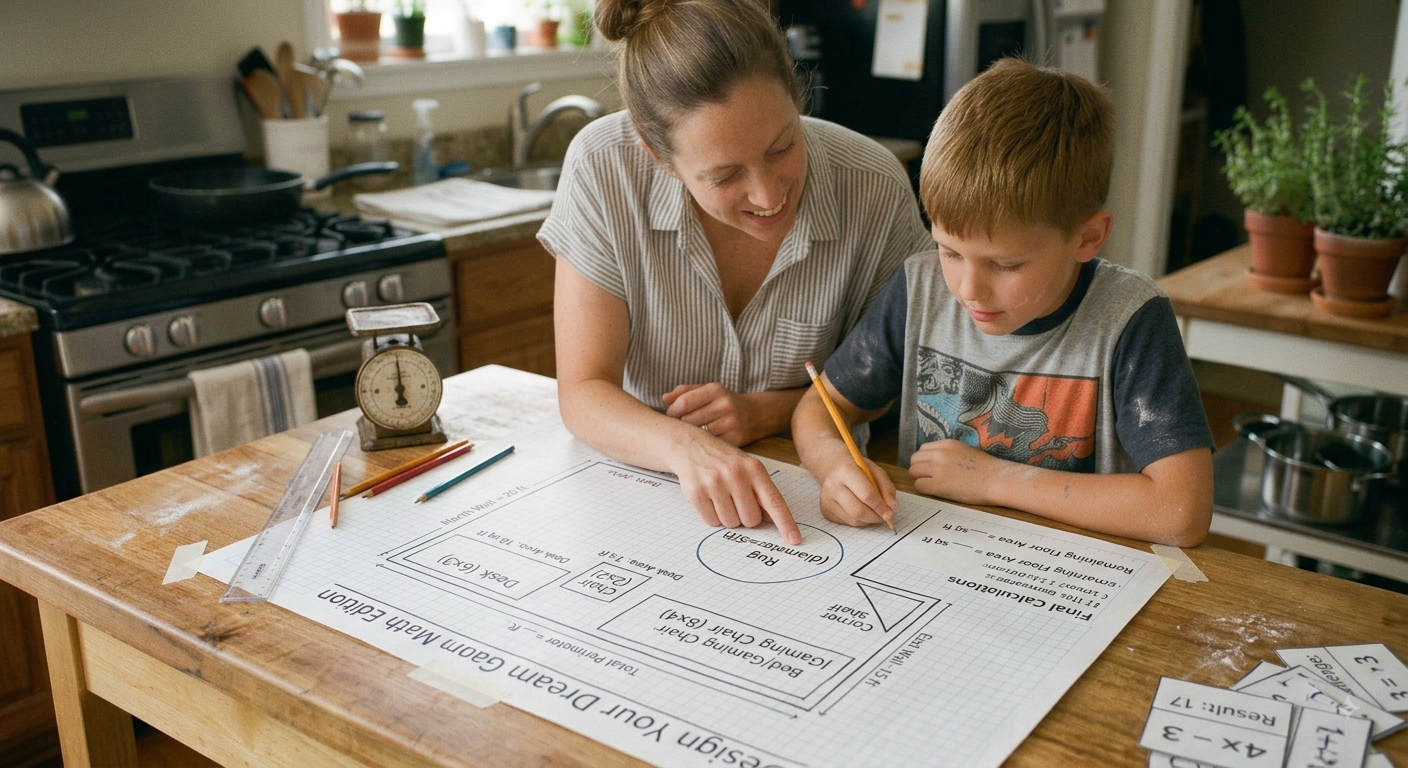
What you'll need: Graph paper, a ruler, and a pencil.
Ask students to design a bedroom, classroom, or gaming room on graph paper. They can decide where to place a bed, desk, bookshelf, or other furniture.
Once the design is complete, ask them to calculate the following:
- The perimeter of the room
- The area of the room
- The area occupied by each piece of furniture
- The remaining floor area
What it teaches: Area, perimeter, measurement, scale, and geometric reasoning. Common Core: 6.G.A.1.
Challenge: Give students a fixed room size and ask them to design the layout while keeping a specific amount of open floor space.
Try it yourself:
Are Ratios or Negative Numbers Where Your 6th Grader Gets Stuck?
A free 1:1 evaluation with a Cuemath tutor checks ratios, negative numbers, and expressions, and shows you exactly what to practice next.
6. Make a Family Survey to Practice Data Handling and Averages
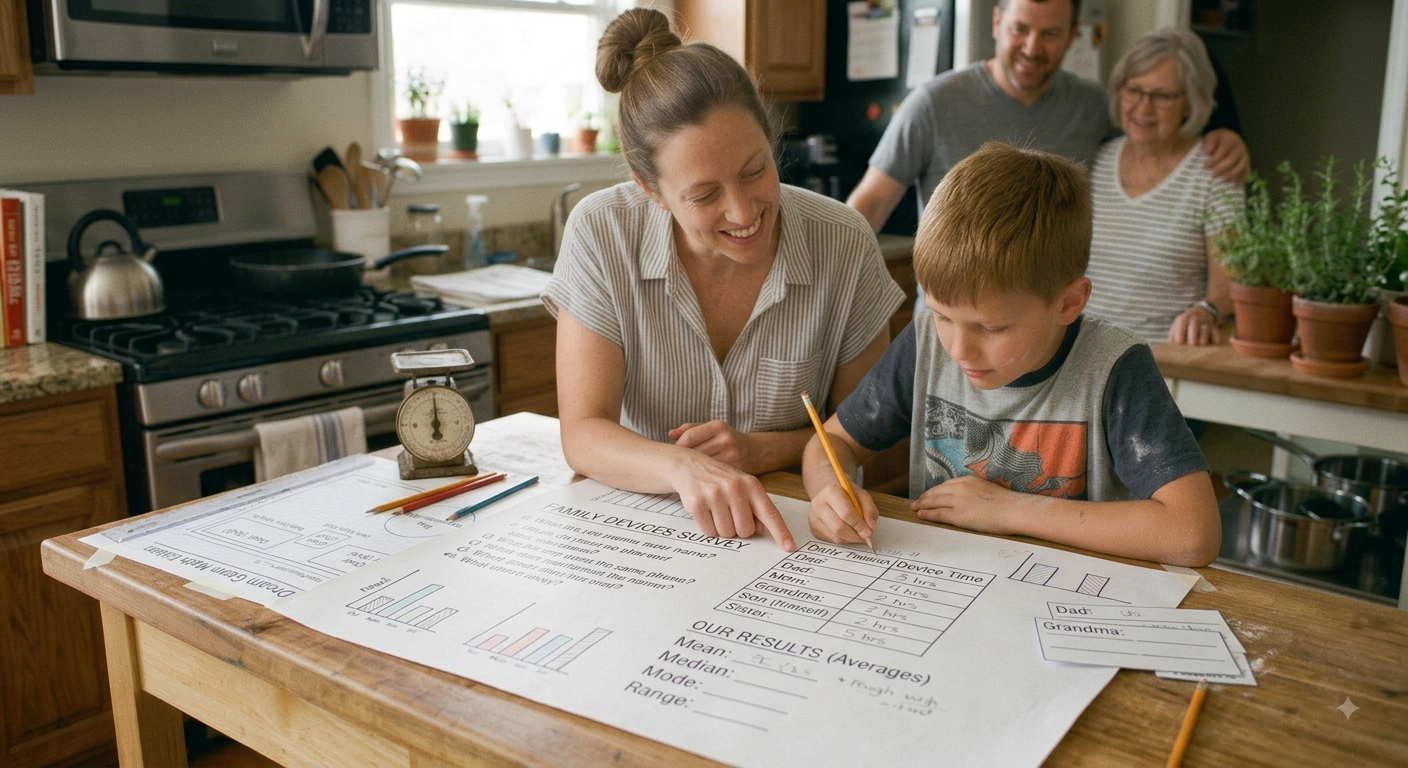
What you'll need: Paper, pencil, and family members willing to participate.
Ask family members a simple question, such as:
How many hours do you spend watching TV or using a device each day?
Record everyone's answers. Then ask the student to organize the data and calculate the following:
- Mean
- Median
- Mode
- Range
Students can also create a bar graph or line plot to represent the results.
What it teaches: Data collection, averages, range, graphs, and data interpretation. Common Core: 6.SP.B.5.c.
Challenge: Ask, “Which measure of central tendency best represents our data? Why?”
Try it yourself:
7. Build a Coordinate-Plane Treasure Map to Practice Ordered Pairs
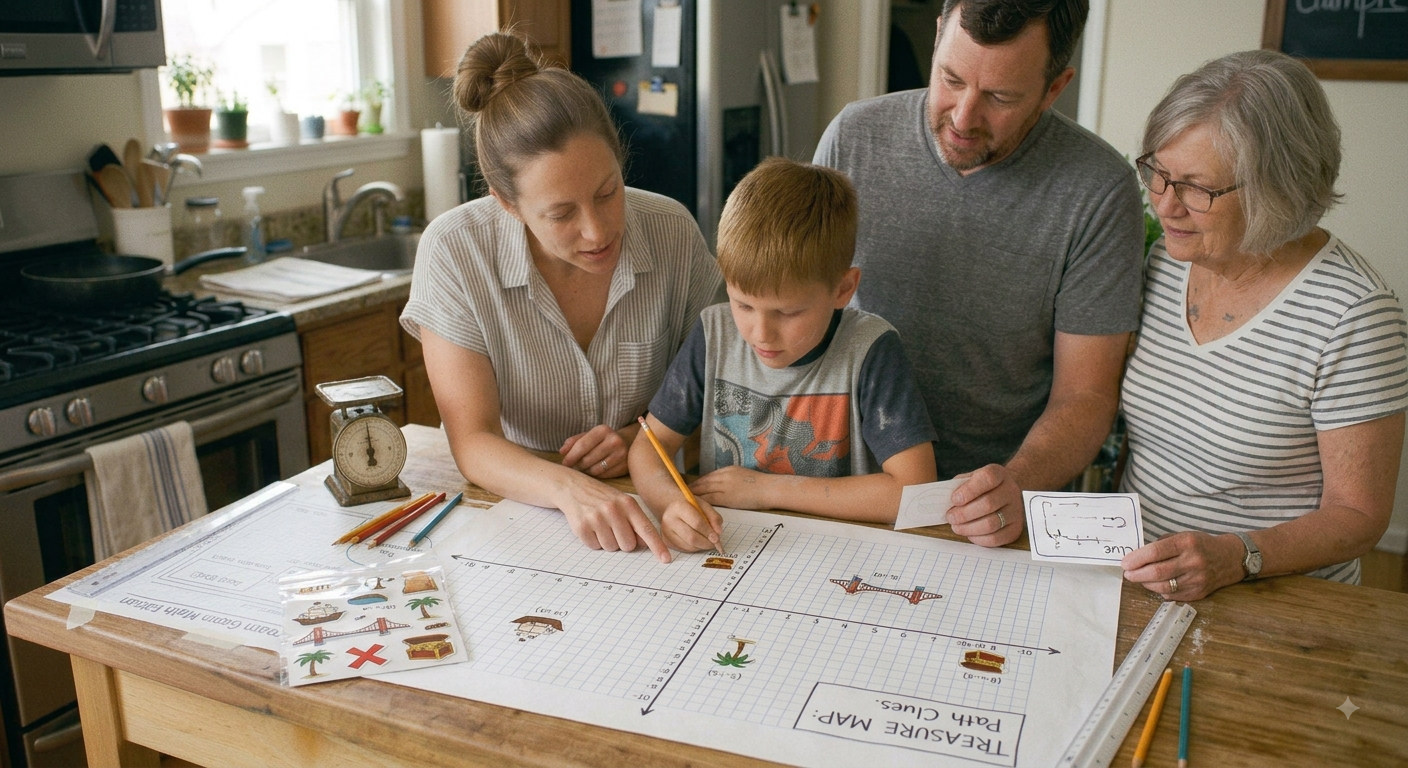
What you'll need: Graph paper, a pencil, and small objects or stickers.
Draw a coordinate plane and mark several locations. One point can represent a treasure, while others can represent obstacles, a house, a bridge, or a starting point.
Give students clues such as the following:
“Start at (2, 3). Move to (5, 3). Where are you now?”
Students can also create their own treasure maps and write coordinate-based clues for someone else to follow.
What it teaches: Ordered pairs, coordinate planes, horizontal and vertical movement, and spatial reasoning. Common Core: 6.NS.C.6.b, 6.NS.C.8, 6.G.A.3.
Challenge: Ask students to plot points in different quadrants.
Try it yourself:
8. Run a Mini Sale to Practice Percentages
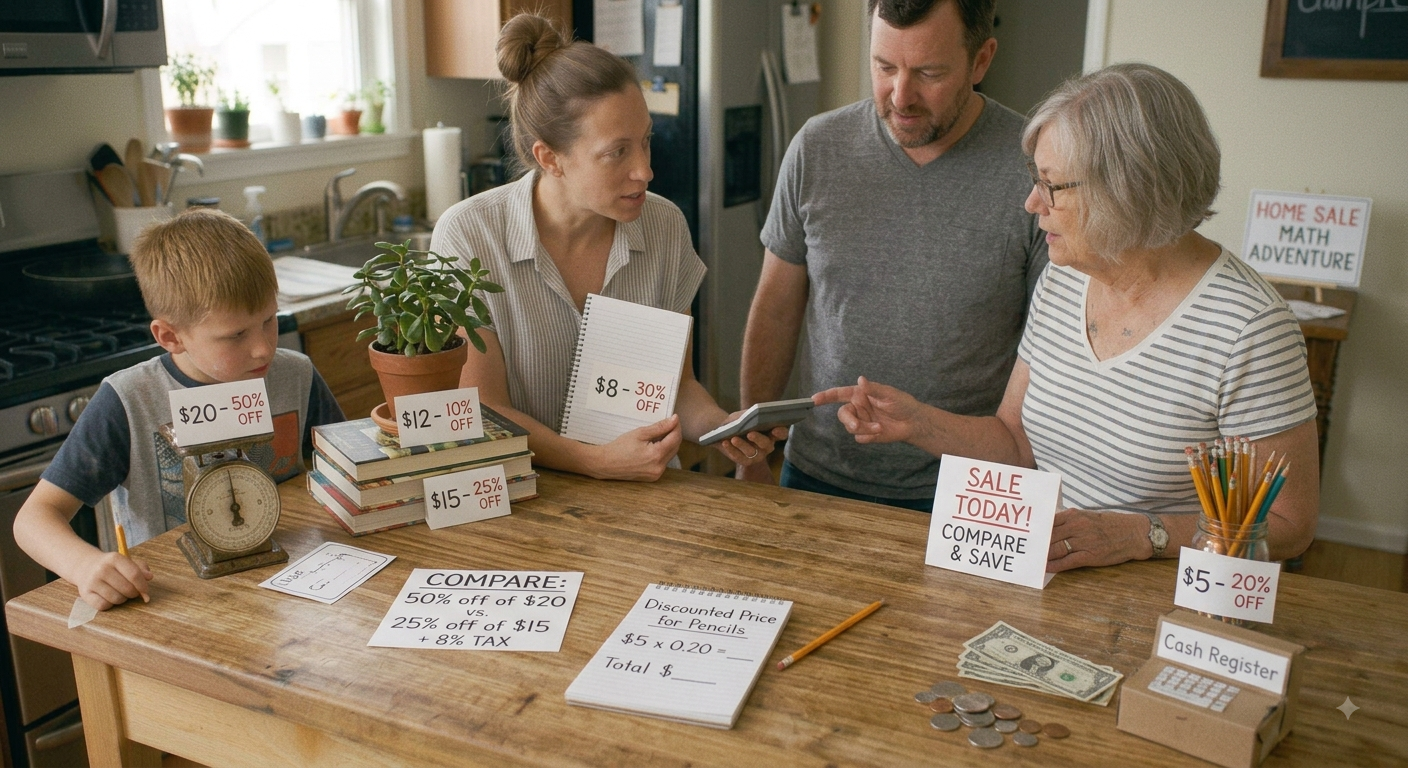
What you'll need: Household objects, price tags, paper, and a calculator if needed.
Set up a pretend store at home. Give each object a price and announce discounts such as 10%, 25%, or 50%.
For example:
A notebook costs $12. It is 25% off. What is the discount? What is the sale price?
Let students take turns being the customer and shopkeeper.
What it teaches: Percentages, decimal multiplication, mental math, and financial reasoning. Common Core: 6.RP.A.3.c.
Challenge: Add sales tax or ask students to compare two different discounts.
Try it yourself:
9. Build 3D Shapes With Boxes to Practice Surface Area and Volume
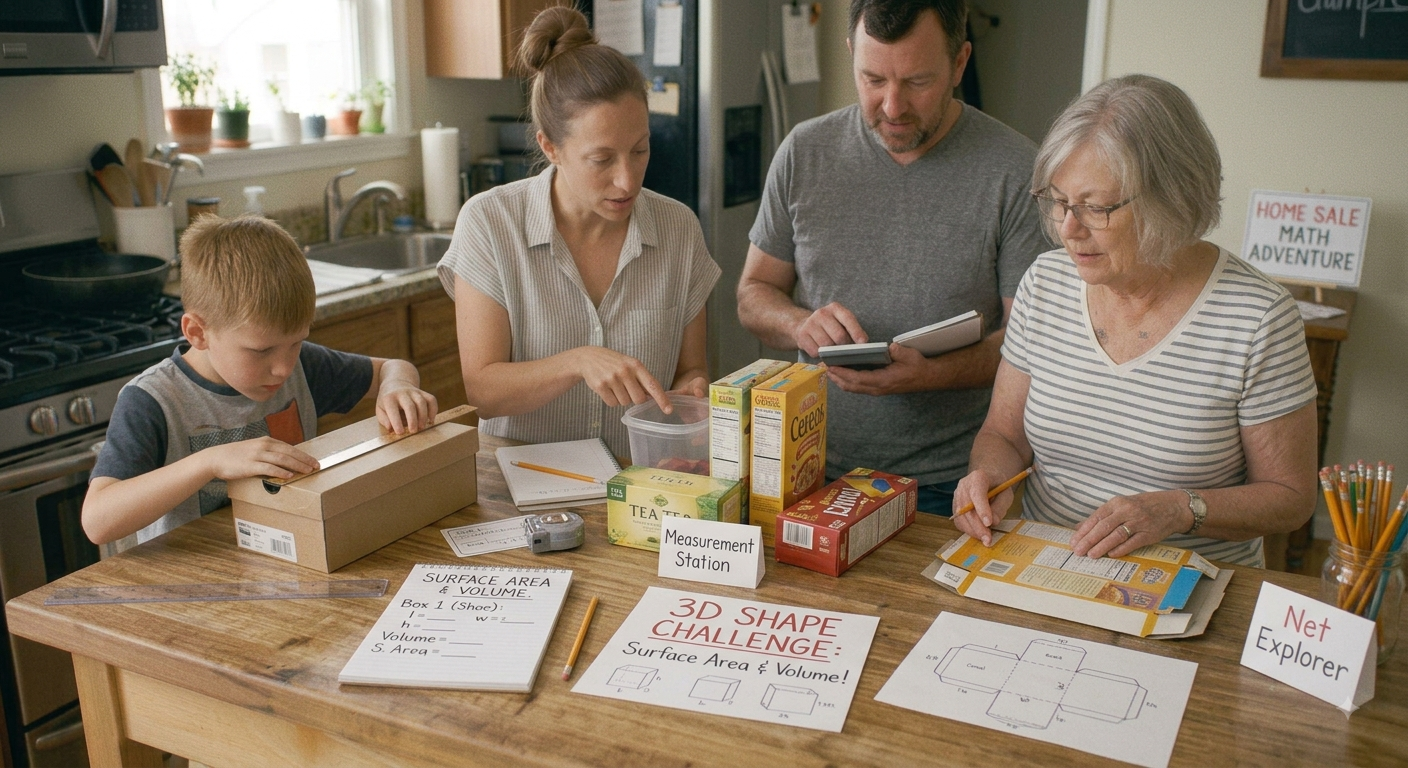
What you'll need: Empty boxes, a ruler, paper, and a pencil.
Collect a few rectangular boxes from around the house. Ask students to measure their length, width, and height.
Then calculate:
- The volume of each box
- The surface area
- Which box has the greatest volume
- Which box would require the most paper to cover
Students can also unfold a box to examine its net.
What it teaches: Volume, surface area, measurement, and three-dimensional geometry. Common Core: 6.G.A.2, 6.G.A.4.
Challenge: Give students a target volume and ask them to design a box that meets it.
Try it yourself:
10. Play Math Bingo to Review 6th Grade Math Concepts
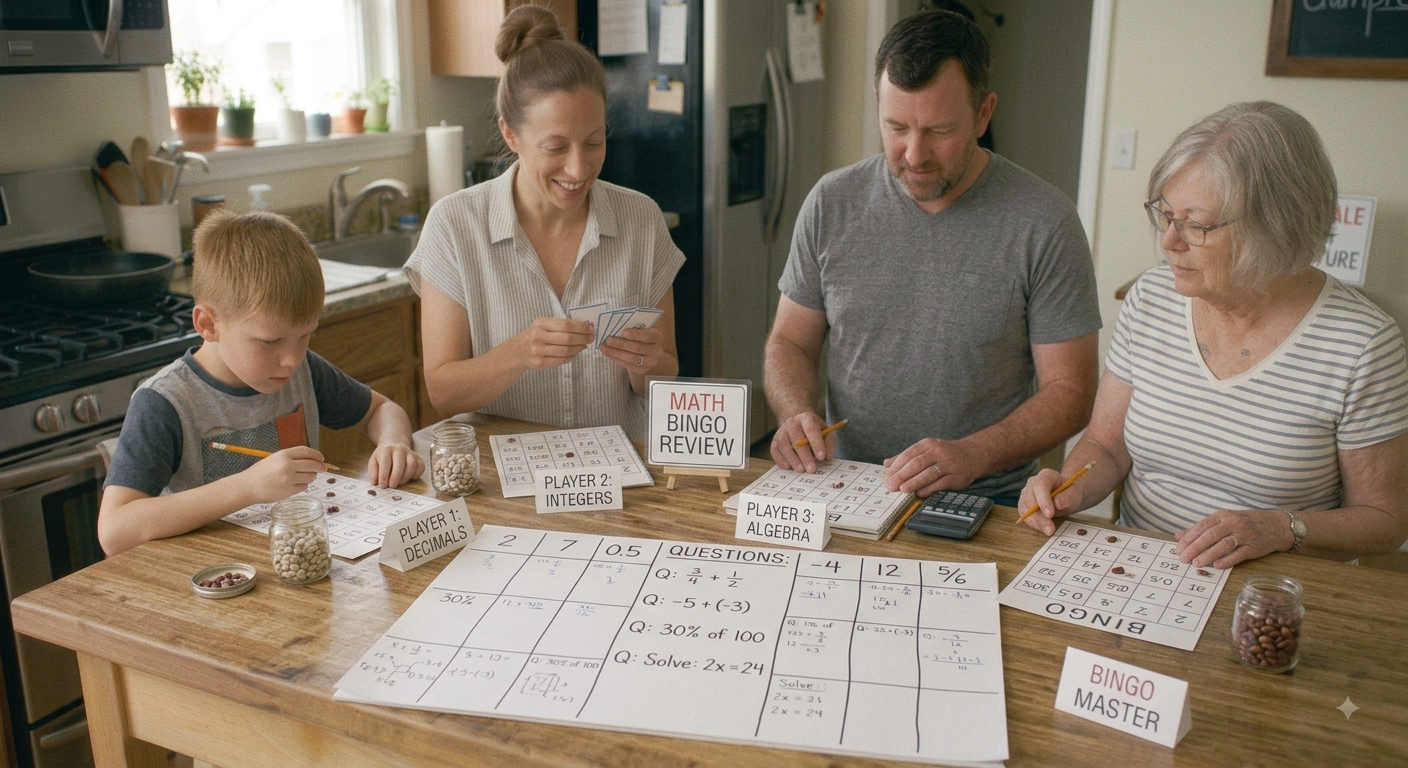
What you'll need: Paper, pencils, and a set of prepared math questions.
Create a simple bingo board containing numbers or answers. Instead of calling out numbers, give students math problems.
For example:
“What is ¾ + ½?”
Students solve the problem and mark the corresponding answer on their board.
You can include questions involving fractions, decimals, integers, percentages, factors, and simple algebraic expressions.
What it teaches: Calculation fluency, mental math, fractions, decimals, integers, and algebra. Common Core: mixed review, including 6.NS.A.1, 6.NS.B.4, and 6.EE.A.2.c.
Challenge: Increase the difficulty by adding multi-step problems.
Try it yourself:
5 Free 6th Grade Math Games Kids Can Play Right Here
These five games come from the Cuemath app, and each one practices a 6th grade standard: comparing and ordering integers, positive and negative numbers, ratios, and the coordinate plane. Pick a game, play a round, and press Done ✓ when you finish. Some games take up to 30 seconds to load.
Each game opens right here and takes a few seconds to load. On a phone, turn it sideways for the best view.
Want more? Go back a year with these 5th grade math activities, or practice the ratio and percent skills behind activities 1, 2, and 8 with the questions above. For 20 more games sorted by skill, see our full list of 6th grade math games.
More 6th Grade Math Practice in the Cuemath App
The School Math tab follows your child’s grade, so a 6th grader practices ratios, negative numbers, expressions, and geometry, a few minutes a day. Points and streaks keep the habit going.
100% Free • No Card Needed • A Few Minutes a Day
Final Thoughts
The best 6th-grade math activities do more than keep students occupied. They give students opportunities to practice concepts, make connections, solve problems, and explain their mathematical thinking.
Whether you're cooking with fractions, comparing prices, designing a room, or plotting a treasure map, everyday situations can become opportunities to strengthen 6th-grade math skills. To see how these activities fit the whole year, browse the Grade 6 math curriculum. If one topic keeps causing trouble, a 6th grade math tutor can work through it with your child 1:1.
See How Your 6th Grader Thinks Through a Problem
In a free 1:1 evaluation, a Cuemath tutor works through a few 6th grade problems with your child and shows you which topics are solid and which need work.
Frequently Asked Questions
What are some good 6th grade math activities to do at home?
Some useful activities include cooking with fractions, shopping with a fixed budget, playing integer games, designing a room to calculate area and perimeter, creating family surveys, and using treasure maps to practice coordinates. These activities allow students to apply classroom concepts to everyday situations.
What math should a 6th grader practice?
A 6th grader can practice fractions, decimals, ratios, percentages, integers, factors and multiples, algebraic expressions, geometry, measurement, and data handling. The exact topics can vary depending on the curriculum.
How can parents make 6th grade math practice more engaging?
Parents can connect math to everyday activities instead of relying only on worksheets. Cooking, shopping, measuring objects, collecting family data, and playing math games can give students opportunities to use math in practical situations.
How often should a 6th grader practice math at home?
Short, regular practice sessions are often more useful than occasional long sessions. Parents can choose one activity or a few problems for a focused practice session and adjust the difficulty based on the student's comfort with the concept.
What are some fun math games for a 6th grader?
Five free Cuemath games on this page practice 6th grade skills: comparing and ordering integers, positive and negative numbers on an elevator, ratios, and plotting points in all four quadrants. For offline play, the integer number-line game, the mystery number game, and math bingo above need only paper and a pencil plus dice, a coin, or number cards.
What are some good math projects for 6th grade?
Good 6th grade math projects use real data or real measurements. Designing a dream room practices area and perimeter, a family survey practices averages and data, a mini sale practices percentages, and building shapes from boxes practices surface area and volume.
Which math topics are new in 6th grade?
Four big topics are new in 6th grade: ratios and rates, dividing a fraction by a fraction, negative numbers, and writing and solving one-variable equations. These come from the Common Core Grade 6 standards, and the recipe, number-line, and mystery number activities above practice them.
Can 6th grade math activities help with state tests?
Yes, for the skills. Many state Grade 6 math tests, such as Smarter Balanced, are built on the same Common Core standards these activities practice. For test-style questions, use Cuemath's free Smarter Balanced practice curriculum or see the math test prep options.
What if my 6th grader finds these activities too hard?
Use the base version of the activity and skip the Challenge until the basic version feels easy. If one topic keeps causing trouble, such as ratios or negative numbers, a tutor can find the exact gap in Cuemath's 1:1 online math classes for Grade 6.
Suggested Reading

I was never the kid who loved math. I was much more interested in books, stories, and writing—and, somewhere along the way, I became even more curious about people. Why do we learn differently? Why does something make sense to one child but not another? And what makes a student feel confident enough to keep trying?
That curiosity led me to study Applied Psychology, where I learned more about how children think, learn, and make sense of the world around them.
My love for writing did the rest. What started as something I simply enjoyed became a career. Over the past five years, I've worked as a freelance writer across edtech, SaaS, B2B, travel, lifestyle, and healthcare, learning how to write for very different audiences without losing the human side of the story.
Today, I'm an SEO Content Writer & Editor at Cuemath, where I get to bring many of these interests together. Working in education—and especially around math—has made me even more curious about what happens behind the screen or textbook: what parents worry about, what students struggle with, and what actually helps them learn.
That's also how I like to research. I don't just look at search results and call it a day. I go where parents and students actually talk—forums, reviews, communities, and conversations with real families. Because sometimes the most useful insight isn't hiding in a keyword; it's in a parent's question, a student's frustration, or a small detail someone shares about their learning experience.
I write because I'm curious. I research because I want to understand. And I love turning what I learn into content that feels genuinely useful to the people reading it.