10 Fun Math Activities to Help 5th Grade Students Practice Key Concepts at Home
These 5th grade math activities are simple enough to set up in minutes, but they're built to do more than entertain. Each one helps students actually practice concepts like fractions, decimals, and geometry, right at home.

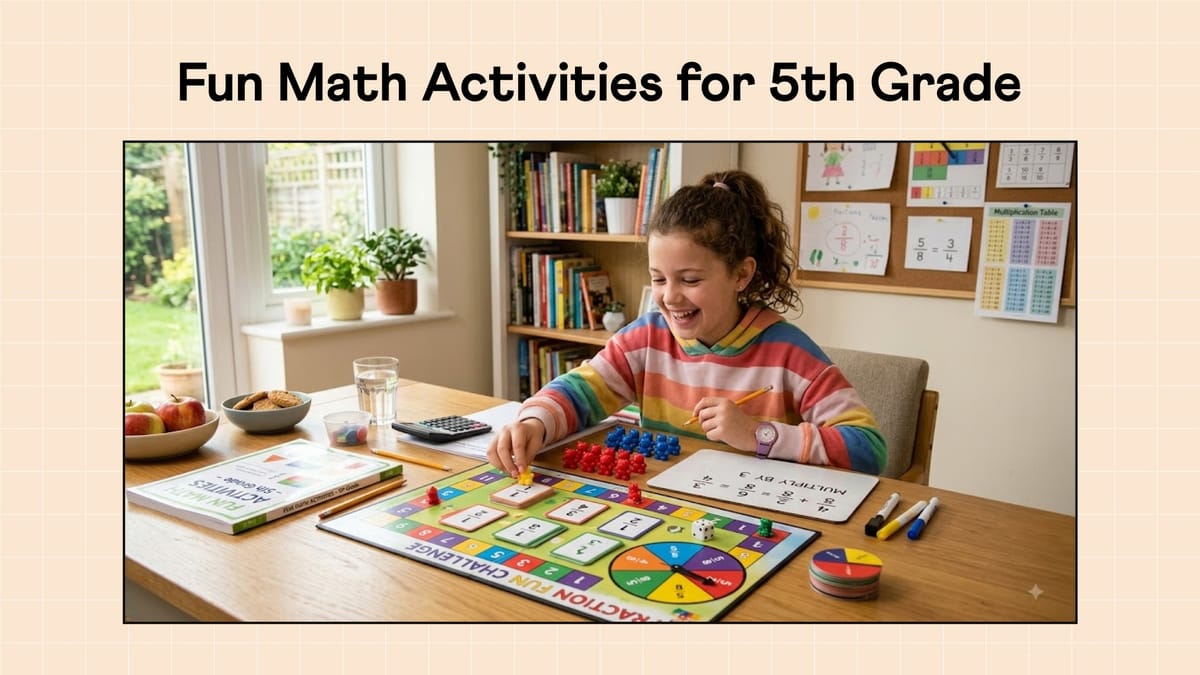
Math doesn't have to feel like a stack of worksheets and endless calculations. For fifth graders, the best learning happens when students play, explore, build, measure, and solve real-world problems.
At this age, students are ready to work with more complex concepts such as fractions, decimals, geometry, multiplication, division, measurement, and data. Turning these concepts into games and hands-on challenges makes math more meaningful, and gives students real practice with what they're already learning in school.
In this blog, we've put together math activities for 5th grade that parents can use at home to help their child practice these concepts, not just have fun with them.
Key Takeaways
| The 10 activities below cover the core 5th grade math skills: fractions, decimals, multiplication, division, geometry, measurement, and data. |
| Most 5th grade math activities online focus on worksheets and drills. This set uses games, real objects, and everyday scenarios like shopping and room design to build number sense instead. |
| Each activity states which math skill it builds, so a parent can match the activity to what their child specifically needs practice with. |
| Every activity uses things already at home, such as paper, dice, playing cards, or graph paper. No special kits or screens are required. |
| For screen time that still counts, the post also has 6 free Cuemath math games your child can play right on this page. |
| Start with 1 or 2 activities a week and repeat them before increasing the difficulty. Repeated practice builds fluency and confidence. |
- Why are Math Activities Important for 5th Graders?
- 10 Fun Math Activities for 5th Grade To Try At Home
- 1. Make a Pizza Together to Practice Fractions
- 2. Play Store to Practice Decimals and Money
- 3. Hide Clues Around the House to Practice Multiplication and Division
- 4. Draw a Number Line to Compare Fractions
- 5. Design a Dream Room to Practice Area and Perimeter
- 6. Play Cards to Practice Multiplication
- 7. Guess the Mystery Number to Practice Factors
- 8. Survey Family and Friends to Practice Data and Graphs
- 9. Roll Dice to Practice Multiplication
- 10. Measure Objects Around the House to Practice Perimeter
- 6 Free 5th Grade Math Games Kids Can Play Right Here
- Frequently Asked Questions
Why are Math Activities Important for 5th Graders?
Fifth grade is an important stage in a child’s mathematical development. Students begin connecting the basic skills they have learned in earlier grades with more advanced mathematical thinking.
- Build stronger number sense
- Practice mathematical operations
- Understand fractions and decimals visually
- Develop logical and critical-thinking skills
- Improve problem-solving abilities
- Apply math to everyday situations
- Become more confident when working with numbers
- Learn through trial, error, and exploration
The goal isn’t simply to make math entertaining. Well-designed activities allow children to understand why mathematical concepts work, rather than simply memorize rules.
10 Fun Math Activities for 5th Grade To Try At Home
Here are some engaging and fun math activities for 5th grade that turn everyday math practice into an exciting challenge.
1. Make a Pizza Together to Practice Fractions
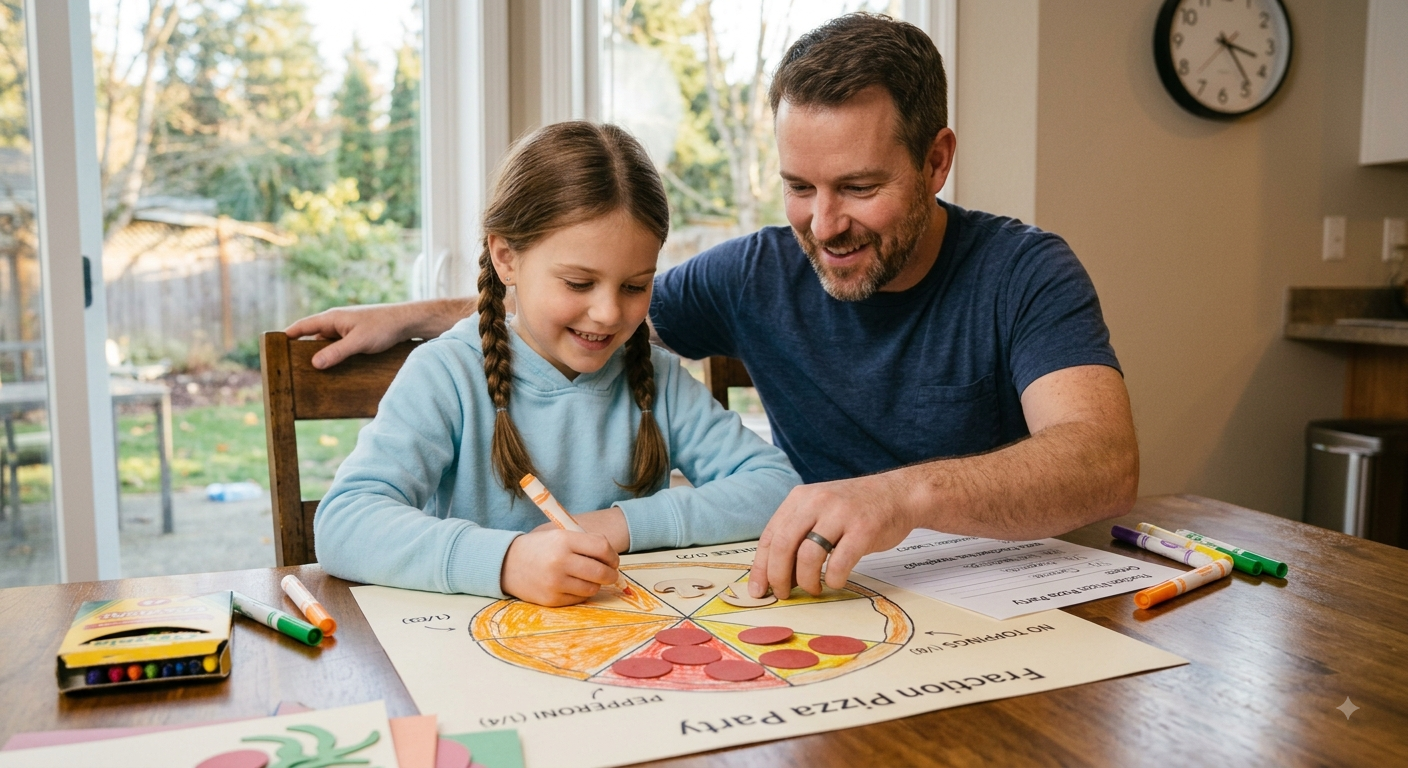
Fractions become much easier to understand when students can see and manipulate them.
For this activity, draw a large circle on a piece of paper to represent a pizza. Divide it into equal sections. Then give your child different “orders,” such as:
- Make a pizza with 1/2 cheese
- Add 1/4 pepperoni
- Leave 1/8 without toppings
- What fraction of the pizza has toppings?
- What fraction is left?
You can make the activity more challenging by asking students to add or subtract fractions with unlike denominators.
Math skills: Fractions, equivalent fractions, addition, subtraction
2. Play Store to Practice Decimals and Money
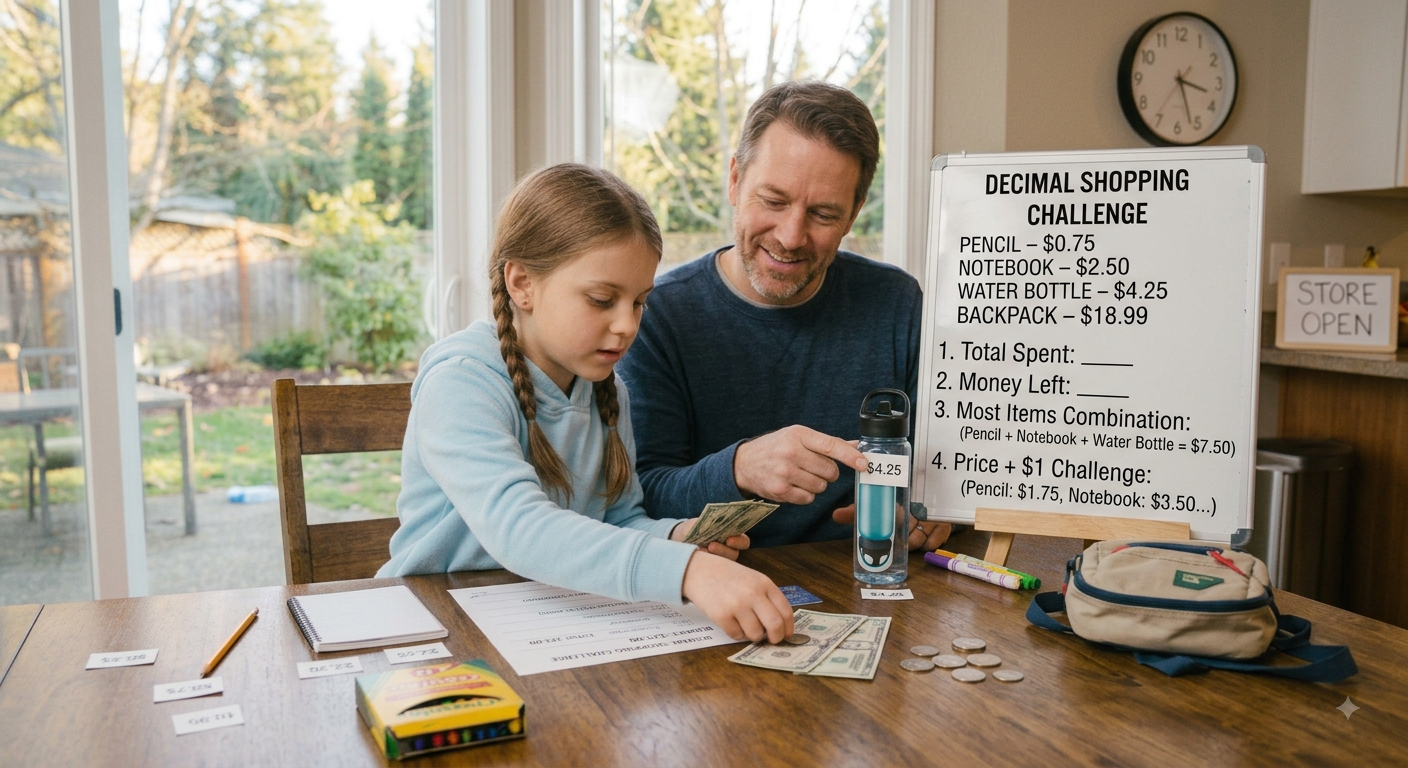
Turn your living room into a pretend store.
Assign prices to everyday objects, such as:
- Pencil — $0.75
- Notebook — $2.50
- Water bottle — $4.25
- Backpack — $18.99
Give your child a pretend budget, such as $25, and ask them to choose several items without going over budget.
Then ask:
- How much did you spend?
- How much money is left?
- Which combination gives you the greatest number of items?
- What happens if the prices increase by $1?
This is one of the most practical 5th grade math activities because it connects decimals and addition with a situation children may encounter in real life.
Math skills: Decimals, addition, subtraction, estimation, money
3. Hide Clues Around the House to Practice Multiplication and Division
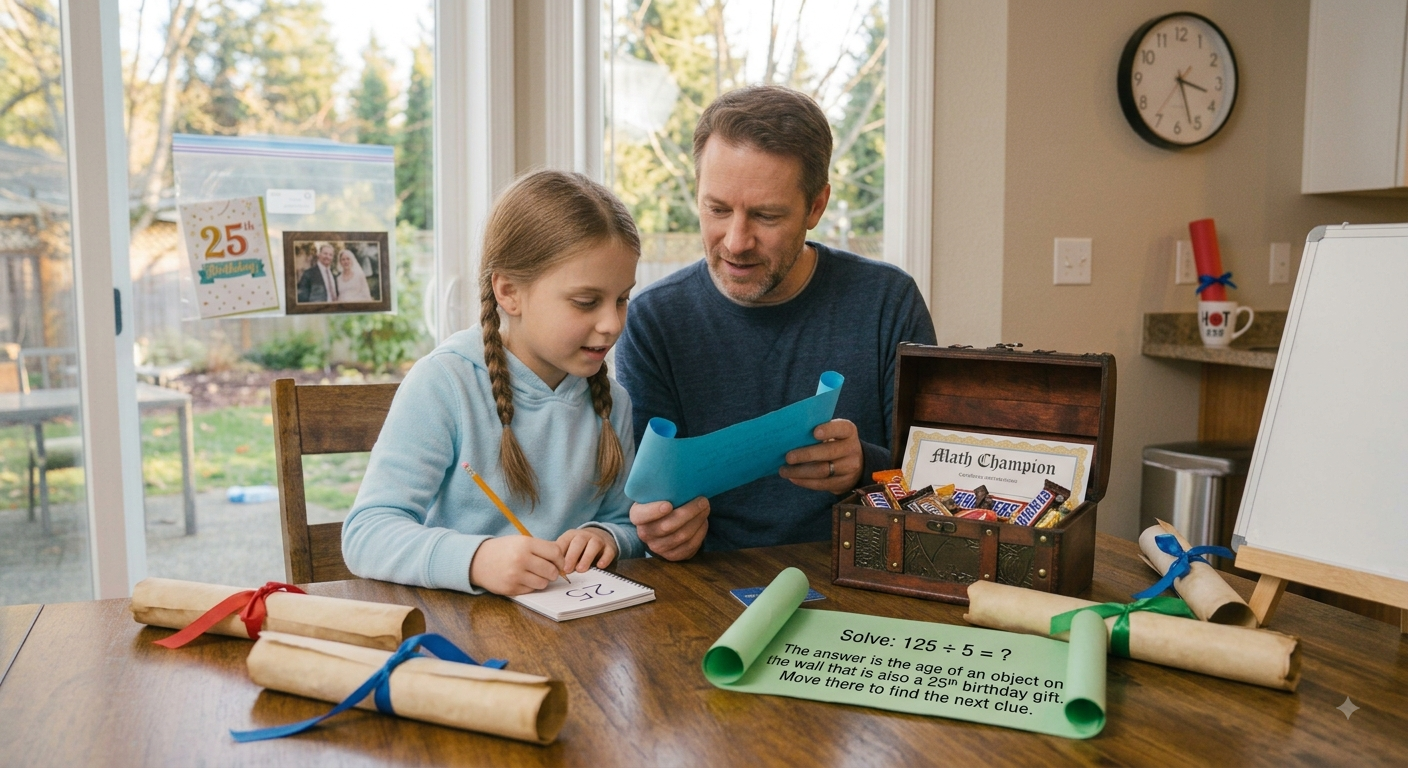
Create a treasure hunt using mathematical clues.
Hide clues around the house or classroom. Each clue should contain a math problem. The answer tells students where to find the next clue.
For example:
Solve: 125 ÷ 5 = ?
If the answer is 25, the next clue could be hidden near an object associated with the number 25.
For an added challenge, use multi-step word problems instead of straightforward calculations.
At the end, the final clue can lead to a small prize or simply a “Math Champion” certificate.
Math skills: Multiplication, division, problem-solving, mental math
4. Draw a Number Line to Compare Fractions
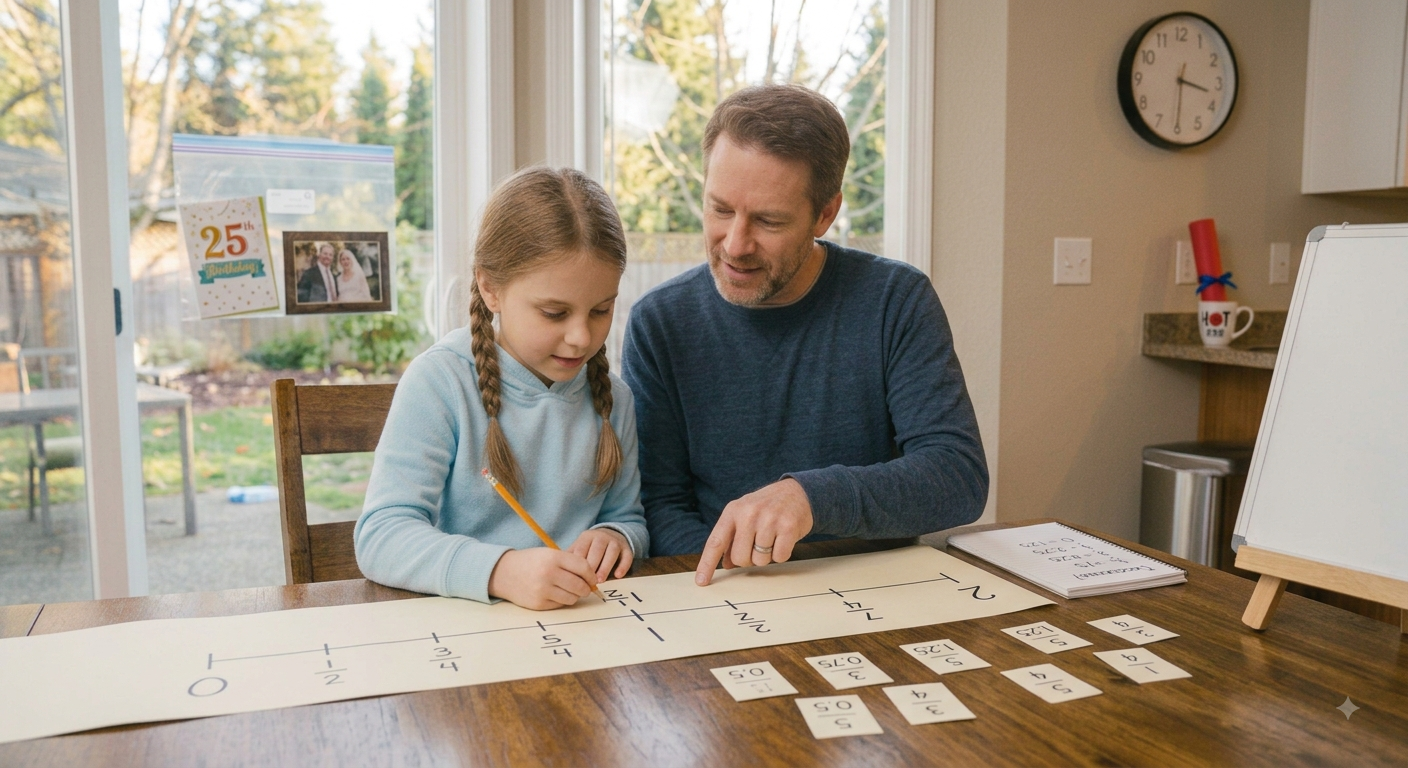
Give students a strip of paper and ask them to create a number line from 0 to 2.
Have them mark fractions such as:
- 1/2
- 3/4
- 5/4
- 3/2
- 7/4
- 2
Then ask questions such as:
- Which fraction is closest to 1?
- Which is greater: 3/4 or 5/4?
- Where would 1 1/2 go?
- Can you convert the fractions to decimals?
This visual activity helps children understand that fractions are numbers with positions on a number line—not just numbers written above and below a line.
Math skills: Fractions, mixed numbers, decimals, comparison
5. Design a Dream Room to Practice Area and Perimeter
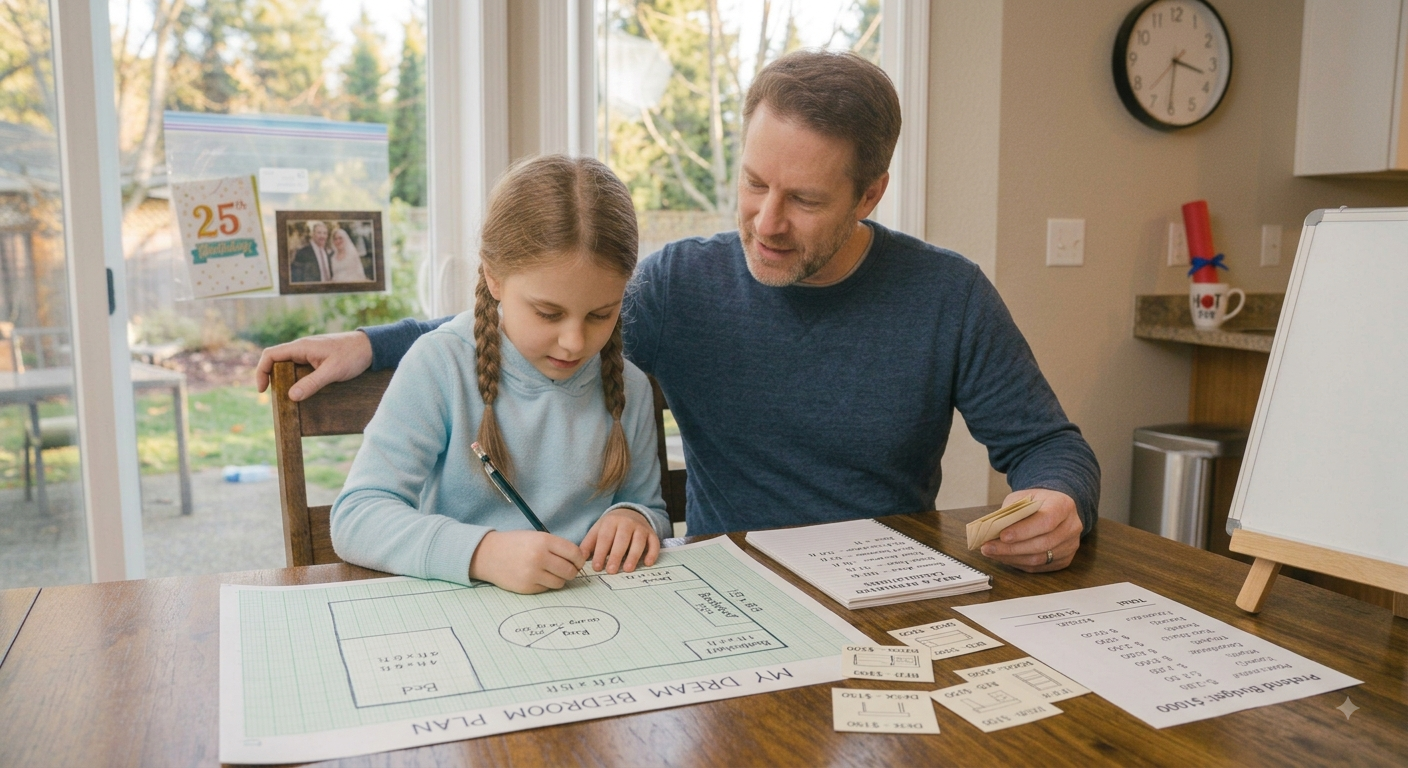
Give your child a sheet of graph paper and ask them to design a dream bedroom.
Set a few rules:
- The room must be rectangular.
- Include a bed, desk, rug, and bookshelf.
- Every object must have dimensions.
- Calculate the area and perimeter of the room.
- Calculate the area occupied by each object.
You can also give them a pretend budget for furniture and ask them to calculate the total cost.
This activity combines creativity with practical mathematics.
Math skills: Area, perimeter, multiplication, measurement, decimals
Are Fractions Where Your 5th Grader Gets Stuck?
A free 1:1 evaluation with a Cuemath tutor checks fractions, decimals and multiplication, and shows you exactly what to practice next.
6. Play Cards to Practice Multiplication
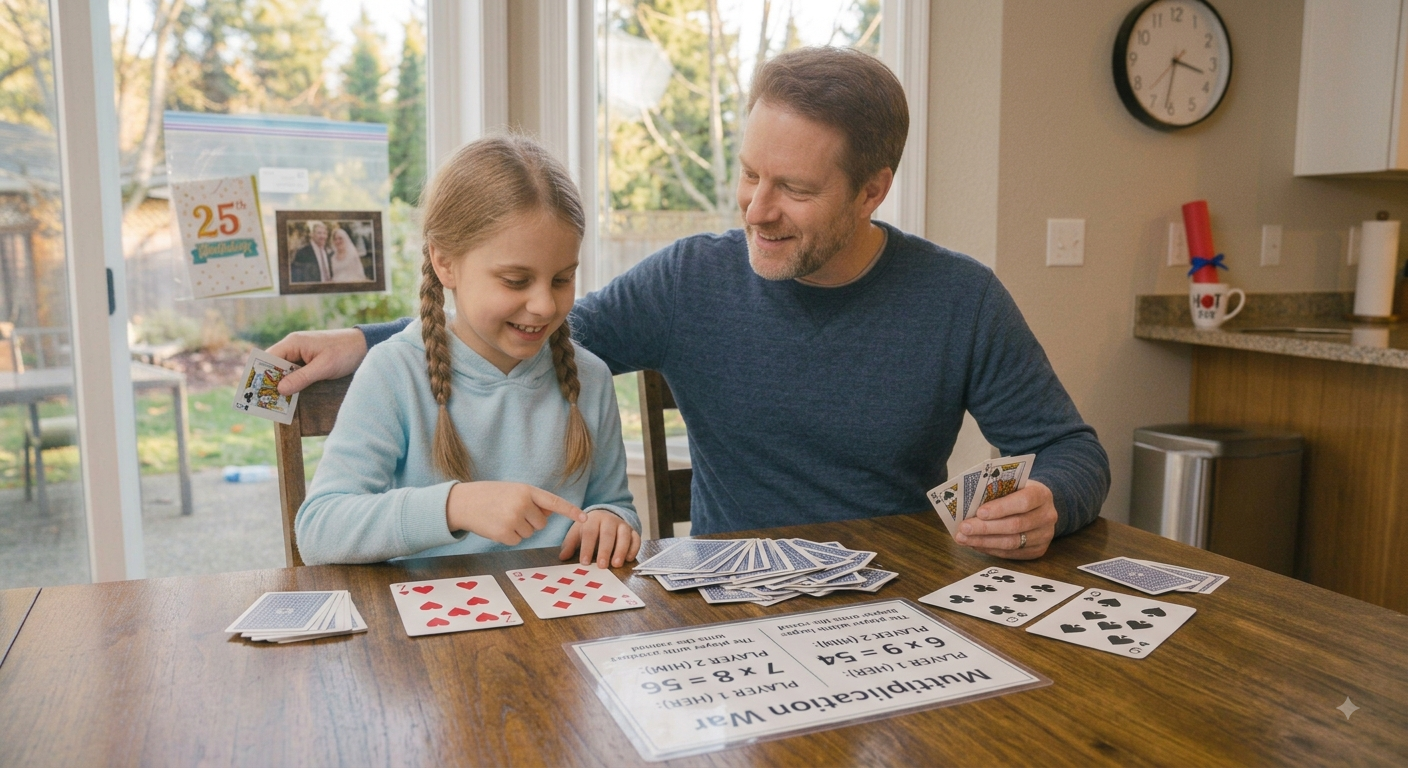
This is a mathematical version of the classic card game “War.”
Use a deck of cards and divide it between two players. Each player turns over two cards and multiplies the numbers.
For example:
Player 1: 7 × 8 = 56
Player 2: 6 × 9 = 54
The player with the larger product wins the round.
To make the game more challenging, use three cards and create larger multiplication problems.
Math skills: Multiplication facts, mental math, comparison
7. Guess the Mystery Number to Practice Factors
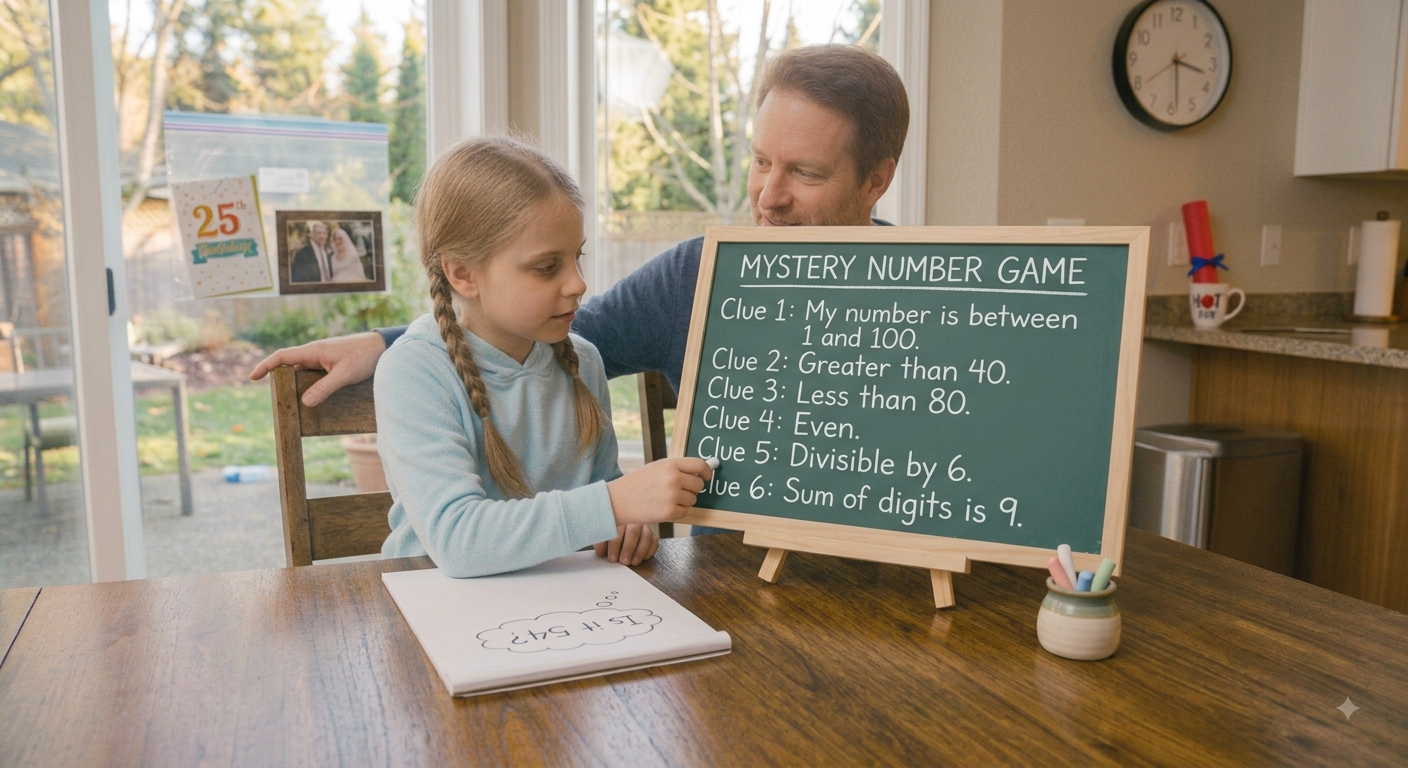
Think of a number between 1 and 100.
Give students clues such as:
- My number is greater than 40.
- It is less than 80.
- It is even.
- It is divisible by 6.
- The sum of its digits is 9.
- Its tens digit is 5 or less.
Can they identify the number?
Once students understand the game, let them create their own mystery numbers and clues for someone else to solve.
This activity encourages children to think logically rather than simply calculate.
Math skills: Factors, multiples, divisibility, number sense, reasoning
8. Survey Family and Friends to Practice Data and Graphs
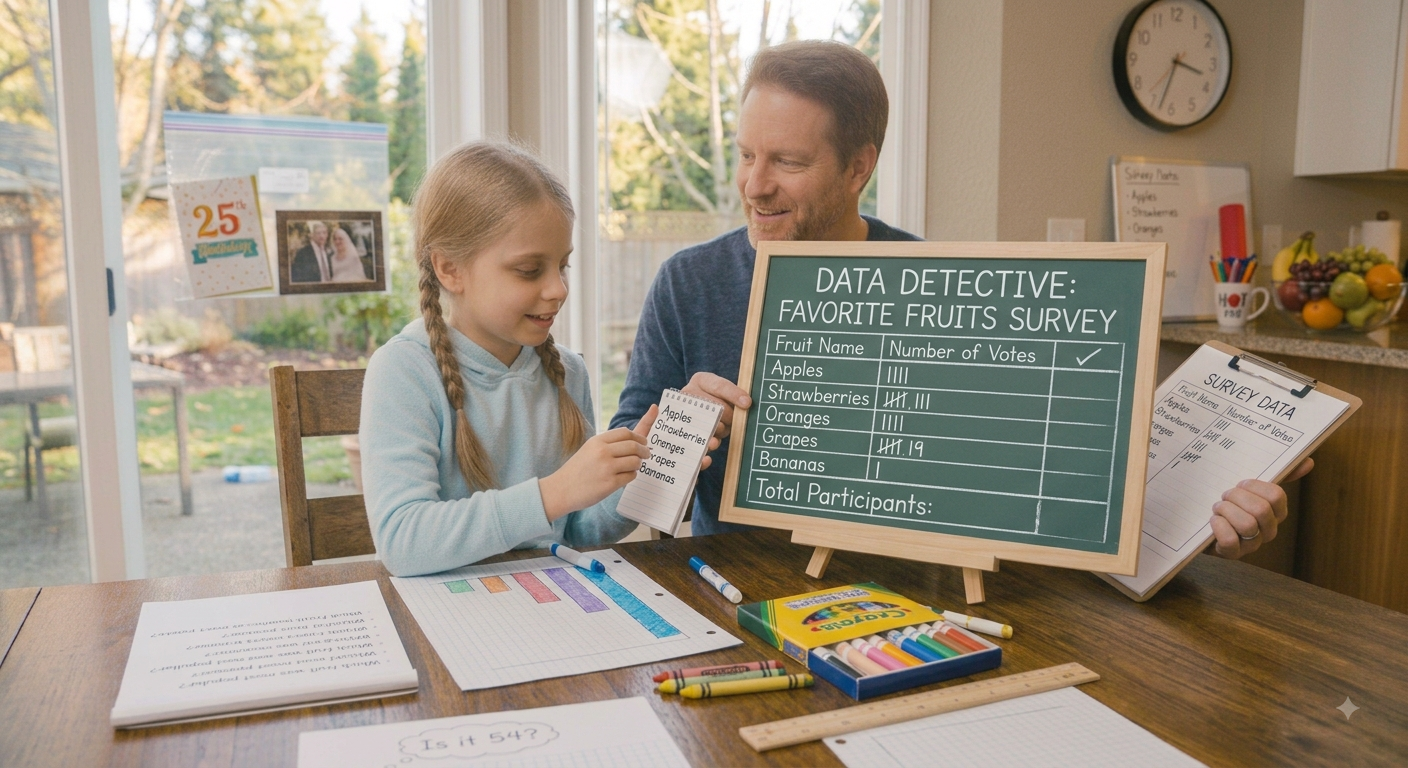
Ask your child to collect some simple data.
For example, they could survey family members or classmates about their favorite fruits.
Create a table such as:
| Fruit | Number of Votes |
|---|---|
| Apples | 6 |
| Bananas | 4 |
| Oranges | 3 |
| Strawberries | 7 |
Now ask students to turn the information into a bar graph.
Follow it with questions:
- Which fruit was most popular?
- Which was least popular?
- How many people participated?
- How many more people chose strawberries than oranges?
- What fraction of the participants chose apples?
Math skills: Data collection, tables, graphs, fractions, comparison
9. Roll Dice to Practice Multiplication
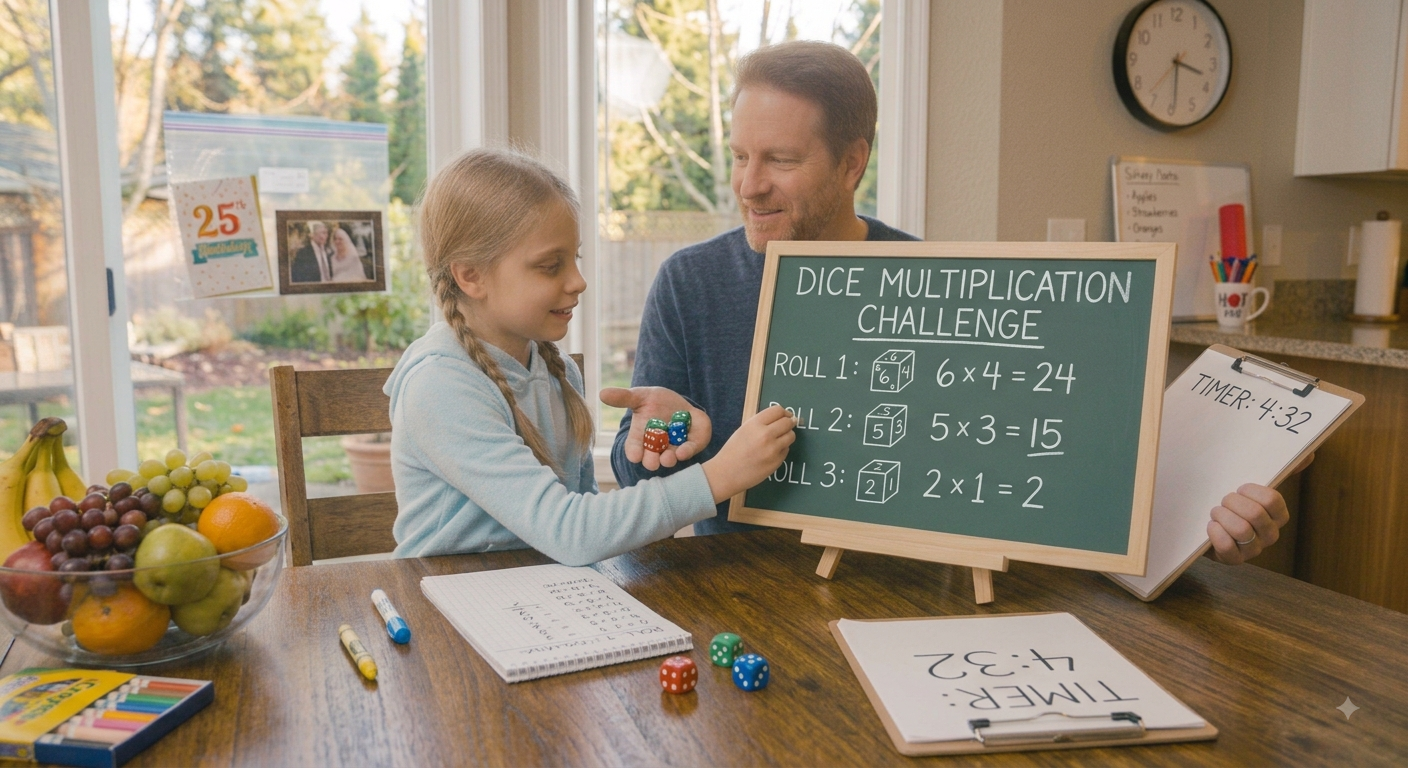
All you need are two dice and paper.
Roll the dice and use the numbers to create a multiplication problem.
For example, rolling 6 and 4 gives:
6 × 4 = 24
For an advanced version, roll three or four times and create a multi-digit multiplication problem.
You can turn it into a competition by giving students five minutes to solve as many problems as they can correctly.
Math skills: Multiplication, place value, mental math, calculation speed
10. Measure Objects Around the House to Practice Perimeter
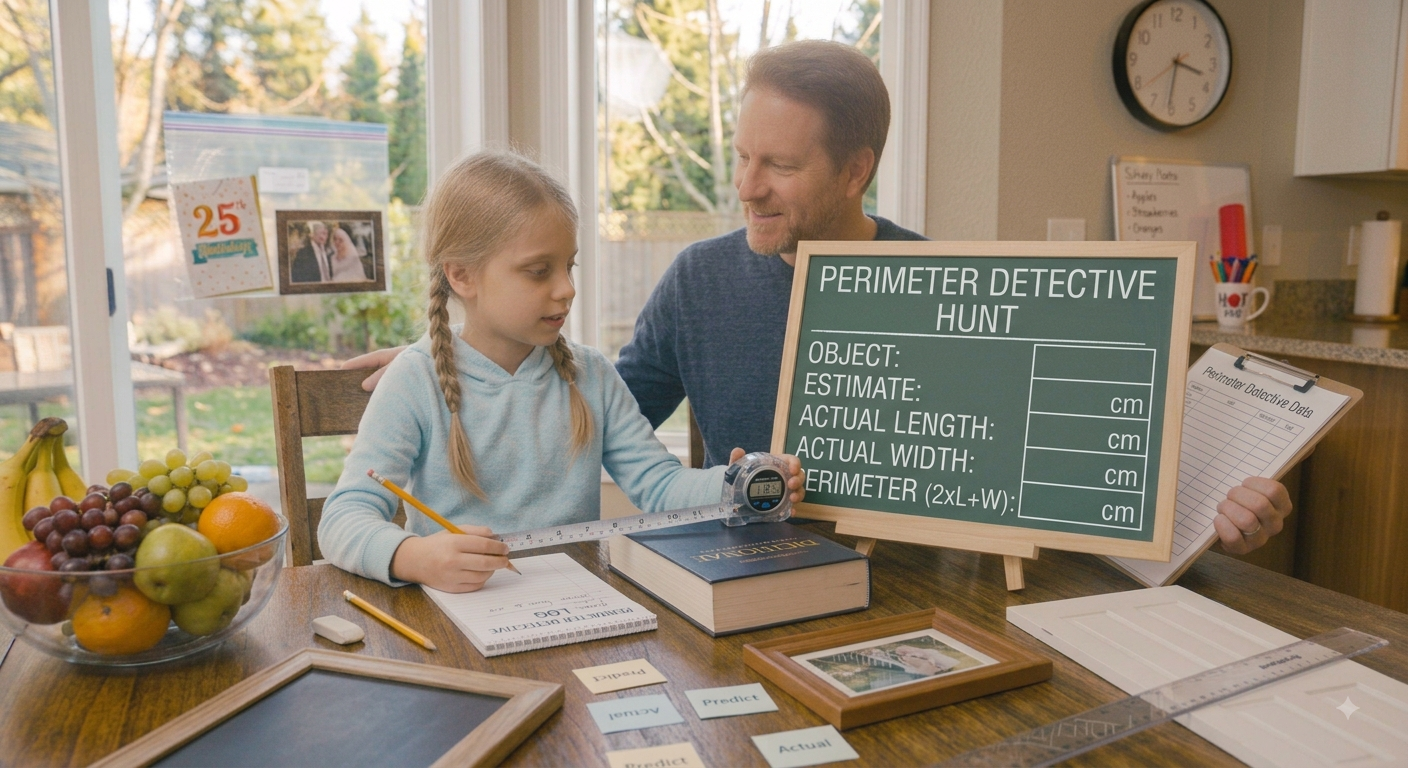
Take your child on a perimeter hunt around the house or classroom.
Ask them to find rectangular objects such as:
- A table
- A book
- A window
- A door
- A picture frame
Measure the length and width of each object and calculate its perimeter.
For example:
A rectangular table is 120 cm long and 60 cm wide.
Perimeter = 2 × (120 + 60) = 360 cm
Ask students to predict the perimeter before measuring. Then compare their estimates with the actual answers.
Math skills: Measurement, perimeter, addition, multiplication, estimation
6 Free 5th Grade Math Games Kids Can Play Right Here
These six games come from the Cuemath app. One practices a 5th grade standard, finding a fraction of a set. The other five are quick warm-ups of the multiplication and fraction skills that 5th grade math builds on: adding fractions with unlike denominators, for example, starts with equivalent fractions. Pick a game, play a round, and press Done ✓ when you finish to unlock the next one.
Each game opens right here and takes a few seconds to load. On a phone, turn it sideways for the best view.
Want more games? See all 9 free grade 5 math games built by Cuemath. For written practice, try these 50+ 5th grade math problems with answers. And for multi-digit multiplication, see the lattice method and the area model. Ready for next year? Try these 6th grade math activities.
More Math Games for Your 5th Grader in the Cuemath App
The Games & Puzzles tab has more games like the six above, plus logic puzzles and 1v1 math battles. A short daily workout covers 5th grade fractions, decimals and multiplication, with points and streaks to keep it going.
100% Free • No Card Needed • A Few Minutes a Day
See How Your 5th Grader Thinks Through a Problem
In a free 1:1 evaluation, a Cuemath tutor works through a few 5th grade problems with your child and shows you which topics are solid and which need work.
Frequently Asked Questions
What are some fun math activities for 5th grade?
Some engaging options include fraction pizza, decimal shopping challenges, math treasure hunts, mystery numbers, data detective activities, multiplication games, room-design challenges, and math board games.
How can I make 5th grade math fun at home?
Use everyday situations such as cooking, shopping, measuring furniture, playing card games, or collecting family data. Short challenges can be just as effective as longer activities.
What should a fifth grader learn in math?
Depending on the curriculum, fifth graders commonly work with fractions, decimals, multi-digit multiplication and division, measurement, geometry, data, and mathematical problem-solving.
How often should children practice math activities?
Short, consistent practice is often more manageable than occasional long sessions. Even 10–15 minutes of meaningful mathematical exploration can provide useful practice when done regularly.
Are games effective for teaching fifth grade math?
Yes. Math games can provide repeated practice while encouraging reasoning, strategy, and problem-solving. The strongest activities connect the game to a clear mathematical objective.
What are good math games for 5th graders?
Good math games for 5th graders practice fractions, decimals and multi-digit multiplication. The six free Cuemath games above cover fractions of a set, plus warm-ups on multiplication facts, equivalent fractions, improper fractions and adding fractions, and card and dice games like Multiplication War work well offline.
What is the hardest math for 5th graders?
For most children, adding and subtracting fractions with unlike denominators, and multiplying and dividing fractions. These need equivalent fractions first, which is why the number line game above is a good warm-up.
Does my 5th grader take a state math test?
Most US 5th graders take a state math test in spring, such as the STAAR in Texas, the SBAC in California and other states, or the NJSLA in New Jersey. The activities and games here practice the same skills, and Cuemath’s test prep programs cover each test in depth.
Suggested Reading

I was never the kid who loved math. I was much more interested in books, stories, and writing—and, somewhere along the way, I became even more curious about people. Why do we learn differently? Why does something make sense to one child but not another? And what makes a student feel confident enough to keep trying?
That curiosity led me to study Applied Psychology, where I learned more about how children think, learn, and make sense of the world around them.
My love for writing did the rest. What started as something I simply enjoyed became a career. Over the past five years, I've worked as a freelance writer across edtech, SaaS, B2B, travel, lifestyle, and healthcare, learning how to write for very different audiences without losing the human side of the story.
Today, I'm an SEO Content Writer & Editor at Cuemath, where I get to bring many of these interests together. Working in education—and especially around math—has made me even more curious about what happens behind the screen or textbook: what parents worry about, what students struggle with, and what actually helps them learn.
That's also how I like to research. I don't just look at search results and call it a day. I go where parents and students actually talk—forums, reviews, communities, and conversations with real families. Because sometimes the most useful insight isn't hiding in a keyword; it's in a parent's question, a student's frustration, or a small detail someone shares about their learning experience.
I write because I'm curious. I research because I want to understand. And I love turning what I learn into content that feels genuinely useful to the people reading it.