5th Grade Math
Cuemath's 5th grade math curriculum builds fluency with fractions, decimals, and multi-digit numbers, and introduces volume and the coordinate plane — with a dedicated tutor guiding every step.


Explore This Page
Jump straight to any section below.
5th Grade Math
What is 5th grade math? In the U.S., it's the year students finish building fluency with whole numbers and take on fractions and decimals in earnest. The 5th grade math standards most states follow (the Common Core) group the year into five strands: operations and algebraic thinking, numbers in base ten, fractions, measurement and data, and geometry — which is what math is taught in 5th grade nationwide, whatever your school calls the course. These are the last 5th grade math topics before middle school, so the year is as much about closing gaps as it is about new ideas.

Operations and Algebraic Thinking
Students write and evaluate numerical expressions with parentheses, brackets, and braces, apply the order of operations, and analyze number patterns and the relationship between two rules — an early look at how algebra works.

Numbers and Operations in Base Ten
Place value stretches in both directions, from millions down to thousandths, and students use powers of ten and exponents to explain it. They multiply multi-digit whole numbers with the standard algorithm, divide by two-digit divisors, and add, subtract, multiply, and divide decimals to the hundredths place.

Fractions
This is the year of fraction operations: adding and subtracting fractions and mixed numbers with unlike denominators, multiplying fractions and mixed numbers, and dividing unit fractions and whole numbers by one another — mostly through word problems.

Measurement and Data
Students convert between units within the same measurement system (metric and U.S. customary), display fractional measurements on line plots, and meet volume for the first time, first by counting unit cubes and then with the formulas V = l × w × h and V = B × h.

Geometry
Fifth graders plot and interpret points in the first quadrant of the coordinate plane, and classify triangles and quadrilaterals into a hierarchy based on their sides and angles (every square is a rectangle, but not every rectangle is a square).
Fractions and decimals carry most of the weight this year, and a step missed here (like unlike denominators or decimal place value) tends to resurface in 6th grade ratios and pre-algebra. Cuemath's 5th grade math curriculum below follows these five strands chapter by chapter, with 5th grade math lessons, 5th grade math worksheets, and practice problems linked for every chapter.
5th Grade Math Chapters and Worksheets
Every chapter this year, grouped by unit — tap into any chapter to see its lessons, and tap the worksheet for free practice. Our 5th grade math worksheets are created by math experts and follow the same curriculum taught in Common Core classrooms, so each one doubles as ready-made practice at home. Work through them chapter by chapter and they add up to a complete, free, printable workbook, whether you're reviewing a single topic or the whole year.
5th Grade Math Worksheets
5th Grade Math Curriculum
These are the 5th grade math topics and skills that close out elementary math — full fluency with multi-digit whole numbers, all four operations with fractions and decimals, and a first look at volume and the coordinate plane — the same six 5th grade math topics covered in Cuemath's own 5th grade math curriculum above, each paired with free printable worksheets and 5th grade math questions for hands-on practice.
| Topic | Key Concepts Covered |
|---|---|
| Place Value & Whole Number Operations |
|
| Expressions & Order of Operations |
|
| Fractions |
|
| Decimals |
|
| Geometry & the Coordinate Plane |
|
| Measurement, Volume & Data |
|
Sample 5th Grade Math Problems
Want to see what 5th grade math problems actually look like? Here are six sample 5th grade math questions, one from each strand, with the answer shown underneath so you can check your child's work (or your own).
Place Value
What is the value of the digit 7 in 4.372?
Answer: 7 hundredths, or 0.07.
Order of Operations
Evaluate: 4 × (6 + 3) − 10
Answer: 26 (parentheses first: 4 × 9 = 36, then 36 − 10).
Fractions
Add: 2/3 + 1/4
Answer: 11/12 (rewrite with a common denominator: 8/12 + 3/12).
Decimals
Multiply: 3.6 × 0.5
Answer: 1.8 (36 × 5 = 180, then place the decimal two places in).
Volume
A rectangular prism is 5 cm long, 4 cm wide, and 3 cm high. What is its volume?
Answer: 60 cm³ (V = l × w × h = 5 × 4 × 3).
Coordinate Plane
Point A is at (2, 5). Point B is 4 units to the right of A. What are the coordinates of B?
Answer: (6, 5) — moving right changes only the x-coordinate.
5th Grade Math

Same Tutor, Every Session
Your child works with one dedicated 5th grade math tutor long-term, not a rotating roster, building the kind of trust that makes it easy to ask questions without hesitation.

Personalized to Their Pace
Every lesson adapts to your child's current level and the pace they need, whether that means revisiting 4th grade fractions or moving ahead to 6th grade ratios.

Built on 5th Grade Math Standards
Our 5th grade math curriculum follows the Common Core and state 5th grade math standards, covering all five strands from place value to the coordinate plane.

Practice That Feels Like Play
Visual, step-by-step 5th grade math worksheets that add up to a full 5th grade math workbook, interactive games for fractions and decimals, and a gamified platform keep 5th grade math practice from turning into a chore.
5th Grade Math Tutors
Expert math tutors who bring years of teaching experience to every 5th grade math lesson.

Sabirah Kar
10+ Years Teaching Experience
Master of Science in Physics
“I love seeing students start from scratch and grow to visualize math and relate it to their day-to-day life.”

Neha Koti
11+ Years Teaching Experience
Bachelor of Education in Mathematics and English
“Math, in my belief, stimulates curiosity and creativity in students, fueling an enduring passion for learning.”

Pooja Behl
6+ Years Teaching Experience
Master of Education · Bachelor of Arts in Mathematics
“It is exciting to see a child discover that math is all about logic and reasoning, and how it builds self-confidence.”

Aparna Ranjith
8+ Years Teaching Experience
Master of Science in Mathematics
“When a concept is understood, kids enjoy the subject. Math makes classes interesting because of the challenges it gives the brain.”

Bharti Agarwal
10+ Years Teaching Experience
Master of Science in Mathematics
“Math is crucial, as it teaches kids critical thinking and problem-solving, skills vital in everyday life.”
5th Grade Math
With Cuemath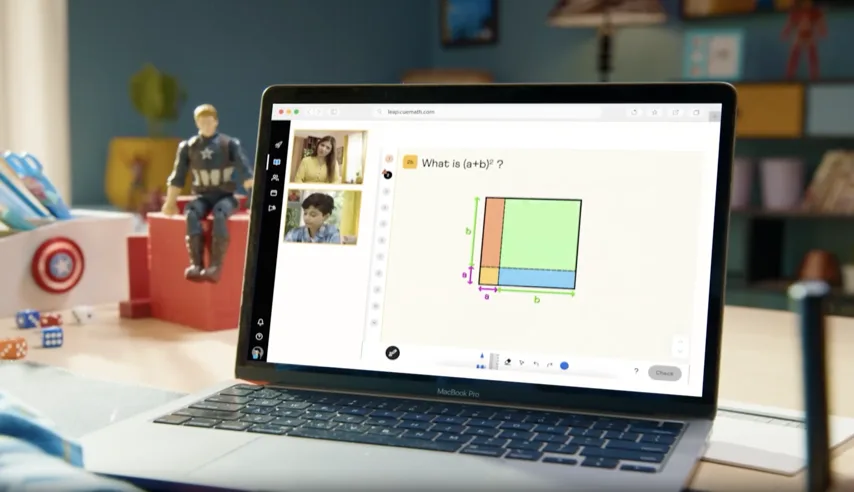
Fractions and Decimals Take Over
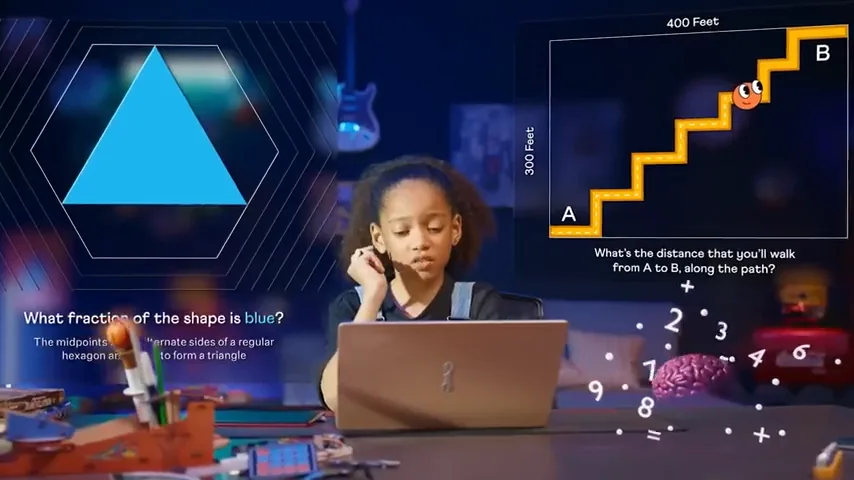
5th grade math leans heavily on multi-step problems with fractions and decimals — unlike denominators, decimal place value, dividing by a fraction — which can be a real jump for a child who was comfortable with whole numbers.
A Tutor Who Explains the Why
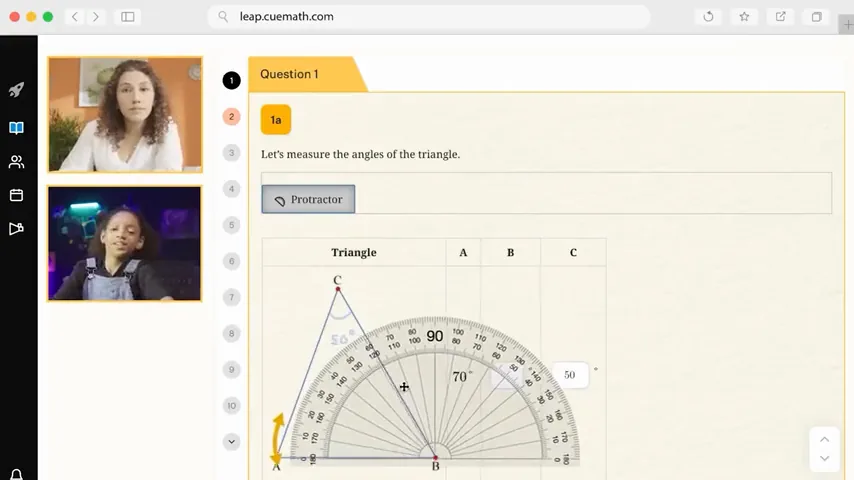
Cuemath helps students master these topics with 1:1 personalized math lessons for 5th grade from a dedicated tutor who breaks down procedures like multiplying fractions or dividing decimals with visual models, so your child understands why each step works.

Every Question Gets Answered
Unlike a busy classroom where questions can go unanswered, our tutors give the focused, individual attention needed to build confidence and close gaps before middle school.
The Same Tutor, Long-Term
We believe trusted, engaging teachers who connect well with children matter deeply — that's why your child learns with the same tutor long-term, building a relationship that feels supportive and consistent.
In our 100% personalized online 5th grade math class, the tutor doesn't just teach 5th grade math topics; they listen, guide, and encourage. This creates a safe space where kids feel comfortable asking questions and admitting confusion without hesitation. They become eager, confident learners who finish 5th grade math ready for middle school.
Learn from Videos
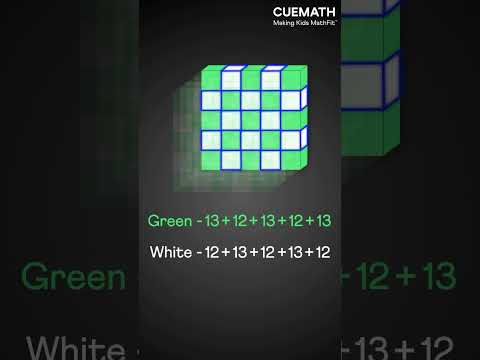
Quick video explanations for tricky 5th grade math topics.

Explore Other Grade Levels
5th grade math is the last year of elementary math in the U.S. It finishes whole-number arithmetic and makes fractions and decimals the main focus, while introducing volume, the coordinate plane, and the order of operations. Cuemath's 5th grade math curriculum covers each of these in detail above.
The math taught in 5th grade covers all four operations with fractions and decimals, multiplying and dividing multi-digit whole numbers, place value and powers of ten, writing and evaluating expressions with the order of operations, converting measurement units, finding the volume of rectangular prisms, graphing points on a coordinate plane, and classifying triangles and quadrilaterals.
A typical week is a mix of short lessons on one new idea, guided practice, and multi-step word problems, with homework questions and a quiz at the end of each unit. Most of the time goes to fractions and decimals.
Grade 5 math covers place value and powers of ten, multi-digit multiplication and division, all four operations with fractions and decimals, numerical expressions and the order of operations, measurement conversions, volume, line plots, the coordinate plane, and classifying 2D shapes. If you're wondering what math is taught in 5th grade at your child's school, it follows this same list; the full set of 5th grade math topics, with grade 5 math lessons for each, is in the curriculum section above.
The 5th grade math standards in the Common Core group the year into five main topics, called domains: Operations and Algebraic Thinking, Number and Operations in Base Ten, Number and Operations with Fractions, Measurement and Data, and Geometry. These five domains are what math is taught in 5th grade in most states.
If you remember one thing about what is 5th grade math, make it fractions. The most important 5th grade math topics are operations with fractions (especially adding and subtracting with unlike denominators) and fluency with decimal operations. These skills are fundamental for success with ratios, percents, and early algebra in middle school math.
It can feel harder than 4th grade because problems now take several steps and fractions no longer share a denominator. Most children who find 5th grade math hard are missing an earlier skill, usually multiplication facts or equivalent fractions, rather than struggling with the new ideas themselves. Once those gaps are closed, the topics build on each other in a predictable way.
For most students, the hardest part of 5th grade math is fraction work: adding and subtracting with unlike denominators, and dividing with unit fractions. Decimal division and multi-step word problems are close behind, because they combine several skills in one question.